
Clinically reviewed by Dr. Ponlawat Pitsuwan, Physician, Doctor Bangkok. Last reviewed: August 2026
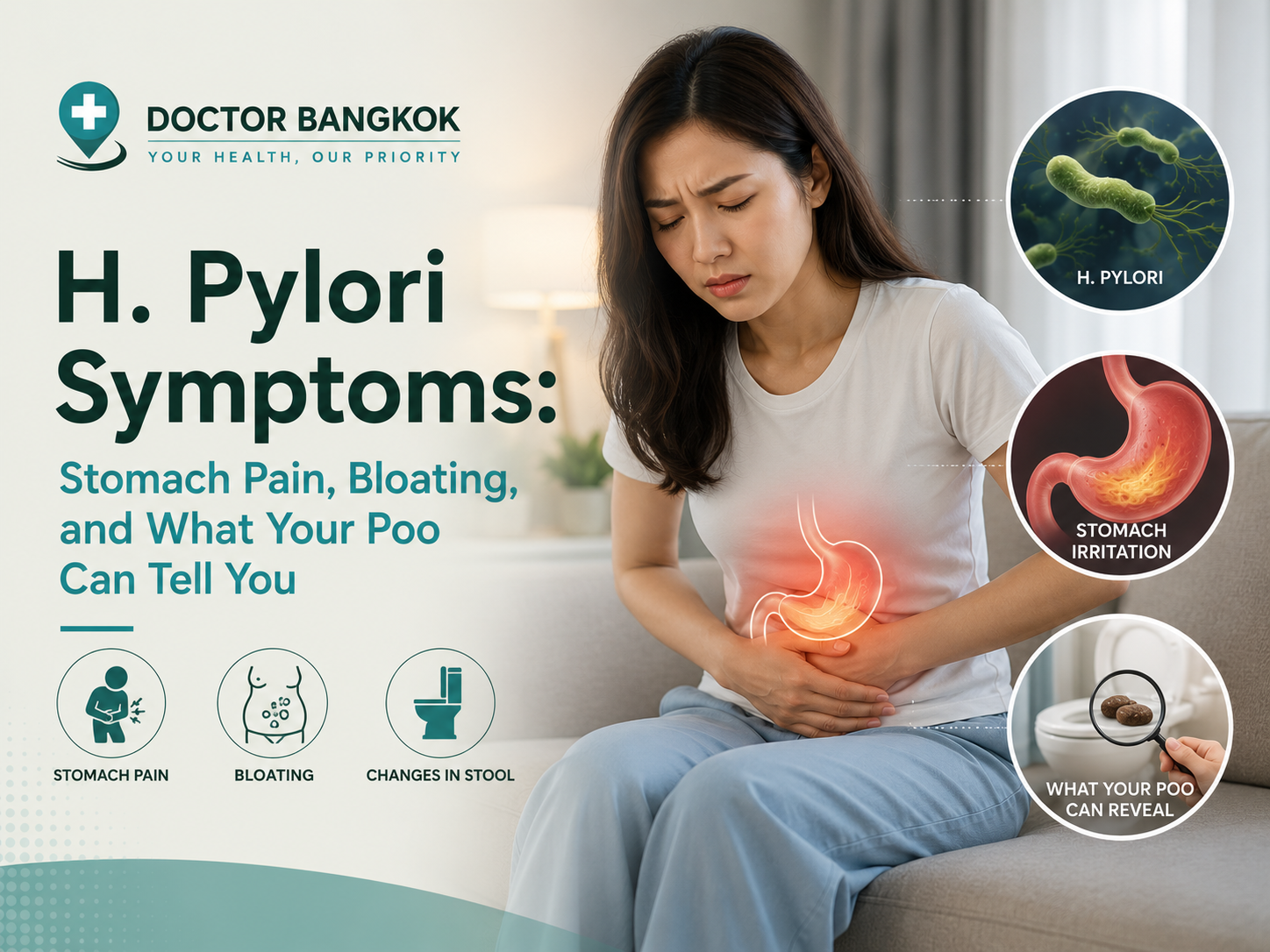
H. pylori most often causes no visible stool changes at all. When stool turns black and tarry, it usually means the bacteria has caused a bleeding ulcer, and that warrants same-day medical assessment. Normal-looking stool does not rule out infection. The only way to confirm H. pylori is with a stool antigen test, urea breath test, or endoscopy.
If your stomach has not been right for a few months and you just noticed something alarming in the toilet bowl, you are probably Googling this between meetings or on the BTS. That is fine. Let me give you the direct answer.
The most common question I get about H. pylori is some version of: what does the poo actually look like? Most of the time, it looks completely normal. But when it does not, that matters a great deal. Here is what you need to know.

What Does H. Pylori Poop Actually Look Like?
Most people with H. pylori have stool that looks entirely unremarkable. The bacteria lives in the stomach lining and causes inflammation, but that alone rarely causes visible bleeding.
The stool changes that do matter come from bleeding. When H. pylori damages the stomach lining enough to cause a peptic ulcer, that ulcer can bleed. Blood that travels slowly through the gut turns black by the time it exits. This is called melena.
Melena is sticky, tar-like, and has a very distinct foul smell. It is not just dark brown. It is black, and it looks almost greasy in the bowl. If you are seeing that, come in the same day.
Bright red blood in the stool usually points to bleeding lower in the gut, not the stomach. That can still be serious but is less likely to be H. pylori directly. Any visible blood in stool warrants assessment.
When Your Poo Looks Normal But H. Pylori Is Still There
This is the part most articles skip, and it is arguably the most important point.
You can have an active H. pylori infection for years with stool that looks completely normal every single day. The bacteria can cause low-level bleeding that is invisible to the naked eye. Over time, this can quietly drain your iron levels and cause anaemia. Some patients come in tired and pale, and that is when we find it.
Normal-looking stool does not mean you are clear. If your symptoms match, you need a test. That is the only way to know.

Other Gut Symptoms That Come With H. Pylori
A burning or gnawing pain in the upper stomach is the most common complaint. It often comes on when you are hungry and eases briefly after eating, then returns.
Bloating that will not shift, burping more than usual, and feeling full after only a few bites are all things I hear regularly. Some patients notice loose stools or a mild change in bowel frequency, though H. pylori is not a classic cause of diarrhoea the way a gut infection like giardia is.
Foul-smelling stool without any colour change can also occur. If your gut has felt generally unreliable for more than two to three weeks, that is worth investigating rather than waiting out.
Other Causes of Black or Bloody Stool in Bangkok
Not every dark stool is melena. This is worth knowing before you panic.
Iron supplements turn stool dark green or almost black. If you started iron tablets recently and your stool changed colour, that is the most likely explanation. Bismuth, found in some stomach remedies, does the same. Certain foods including black beans, blueberries, and dark chocolate can temporarily darken stool without any bleeding at all.
NSAID-induced ulcers, from regular use of ibuprofen or aspirin, can also cause melena that looks identical to an H. pylori bleed. In fact, NSAIDs and H. pylori together significantly raise the risk of a serious bleed. If you take anti-inflammatories regularly and you are seeing black stool, that combination needs medical attention today.
True melena is sticky, tar-like, smells strongly of digested blood, and does not wash away cleanly. Food-darkened stool is softer, less sticky, and has no unusual smell. If you are genuinely unsure, come in. A stool test or blood check will clarify it quickly.
Why Expats and Visitors in Bangkok Face a Higher Risk
H. pylori spreads through contaminated food, water, and close contact. Bangkok’s street food scene is one of the great things about living here, but it also raises your exposure. Ingredients handled without refrigeration, shared utensils, and water used in food preparation that has not been filtered all create real opportunities for transmission.
Thailand has historically high H. pylori prevalence compared to Western Europe, Australia, or North America. If you moved here from a lower-prevalence country, you have little prior immunity.
I tell expats who have been here six months or more with persistent stomach symptoms: do not assume it is just the food. Testing is quick, non-invasive, and available at Doctor Bangkok with results that guide a clear treatment plan.
How H. Pylori Is Diagnosed Using a Stool Test
The stool antigen test is one of the best non-invasive options we have. You collect a small sample at home using a container we provide, then bring it in. The lab looks for fragments of H. pylori protein. It is accurate, affordable, and requires no special preparation beyond stopping certain medications beforehand.
The urea breath test is another strong option and does not require a stool sample at all. You take a small capsule or drink a solution, then breathe into a collection bag. Both tests are available at Doctor Bangkok.
If you have more serious symptoms, such as significant weight loss, vomiting blood, or persistent severe pain, an upper endoscopy with biopsy is the most thorough approach. That requires a gastroenterologist and a procedure facility, and we can refer you appropriately. For most patients, the stool antigen or breath test is where we start.
Stool Symptoms That Need Urgent Care in Bangkok
Some symptoms do not wait for a booked appointment.
Black tarry stool combined with dizziness, a rapid heartbeat, or vomiting blood is a medical emergency. Go to the nearest emergency department now. In central Bangkok, Bumrungrad, Samitivej, and Bangkok Hospital are all well-equipped for this. Do not drive yourself if you feel faint.
Same-day assessment at Doctor Bangkok is appropriate when you have black stool but feel otherwise stable, with no dizziness, no vomiting, no faintness. We can check your blood and determine whether you need emergency referral or whether we can investigate and manage from here.
If your stool is dark brown but not tar-like, you feel fine, and you recently started iron tablets or ate a lot of dark foods, that can wait for a regular appointment. Book within a few days, not weeks.
Getting Tested and Treated for H. Pylori in Bangkok
Testing is the first step. Treatment, when confirmed, is straightforward.
H. pylori eradication typically involves two antibiotics combined with a proton pump inhibitor, which is a medication that reduces stomach acid. This is taken together for ten to fourteen days. Antibiotic resistance is a genuine issue across Southeast Asia, and this matters in Thailand. The first-line regimen does not always clear the infection completely, which is why a follow-up test four weeks after finishing antibiotics is important.
At Doctor Bangkok, we guide patients through the full cycle: test, treat, and confirm the infection has cleared. Do not skip the follow-up. Feeling better and clearing the bacteria are not the same thing.
Persistent stomach pain, bloating, or any change in stool colour is worth taking seriously. Doctor Bangkok offers H. pylori stool antigen testing and urea breath testing in central Bangkok, with English-speaking physicians and same-day appointments available. Use the contact options below to book.
Frequently Asked Questions
Dr. Ponlawat Pitsuwan
Physician, Doctor Bangkok
a private medical clinic in central Bangkok. He sees expats, residents, and medical tourists for gastrointestinal complaints, H. pylori testing and treatment, general health consultations, and a broad range of acute and chronic conditions. His approach is direct, evidence-based, and delivered in plain language.
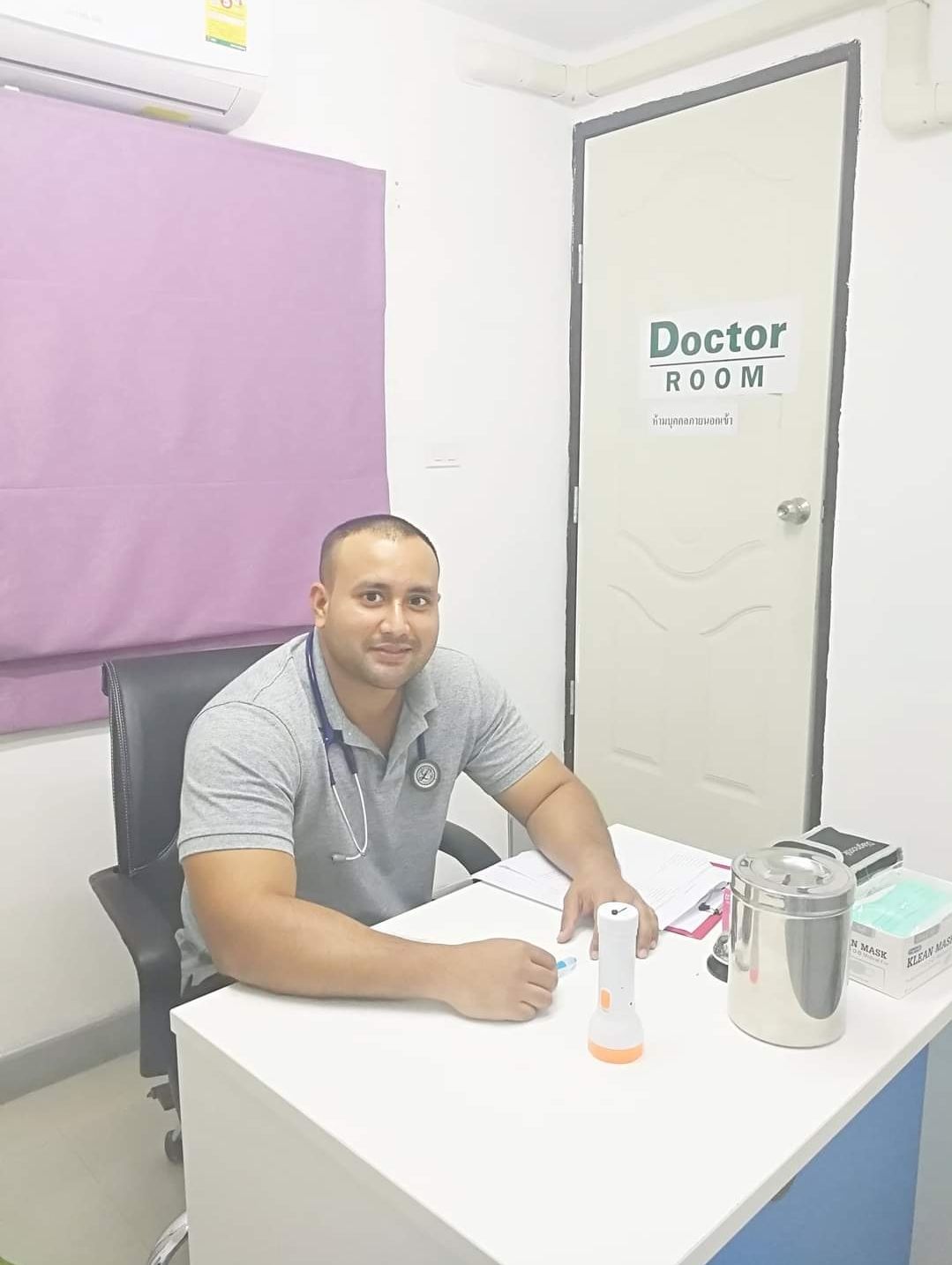
Dr. Ponlawat Pitsuwan is a physician at Doctor Bangkok, a private clinic in central Bangkok. He sees expats, residents, and medical tourists for general medicine, wellness consultations, and IV therapy. His focus is straightforward, evidence-based care delivered in plain language.