
Clinically reviewed by Dr. Ponlawat Pitsuwan, Physician, Doctor Bangkok. Last reviewed: August 2026
There is no antiviral drug for dengue fever. Treatment is supportive: rest, fluids, paracetamol, and close monitoring. The danger window is days three to seven, when platelet counts drop and fluid leaks from blood vessels. Most people recover at home. Some need IV fluids and daily blood tests. A few need hospital admission. Knowing which category you are in is what matters.
If you are reading this with a high fever, severe body pain, and a headache behind your eyes, here is the clearest picture I can give you of what to do. Dengue is one of the most common reasons expats and visitors come to our clinic in Bangkok. It is rarely fatal when managed correctly. It can become dangerous when it is not.
The good news is that most dengue cases do not require hospital admission. The key is knowing what to watch for, what medications are safe, when to get tested, and when to stop waiting and come in.

The Three Phases of Dengue and Why Days 3 to 7 Matter Most
Dengue moves through three phases. The phase you are in right now determines what I would do with you clinically.
The first phase is days one to three. Fever climbs fast, often to 39 or 40 degrees Celsius. The joint pain and headache are severe. This is when most patients in Bangkok get tested, and it is the right time to do it.
The second phase is days three to seven. The fever often drops here, which feels like good news. It is not. This is the most dangerous window. Platelet counts fall and fluid can shift out of your blood vessels into spaces where it does not belong. If severe dengue is going to develop, it happens here. This is the phase where I need to know where you are.
The third phase begins around day seven. Fluid shifts back, platelet counts recover, and most patients feel dramatically better within ten to fourteen days. Fatigue can linger for weeks after that.
Dengue Fever Treatment: What We Actually Do
Let me be direct. There is no drug that kills dengue. No antiviral, no antibiotic, nothing that targets the virus itself. Treatment is entirely about keeping your body stable while your immune system does the work.
The core of treatment is fluids and paracetamol. You need to stay well-hydrated. Paracetamol is the only safe option to bring your fever down. Oral rehydration solution, sold at every pharmacy in Bangkok, is useful if you are vomiting or not tolerating plain water.
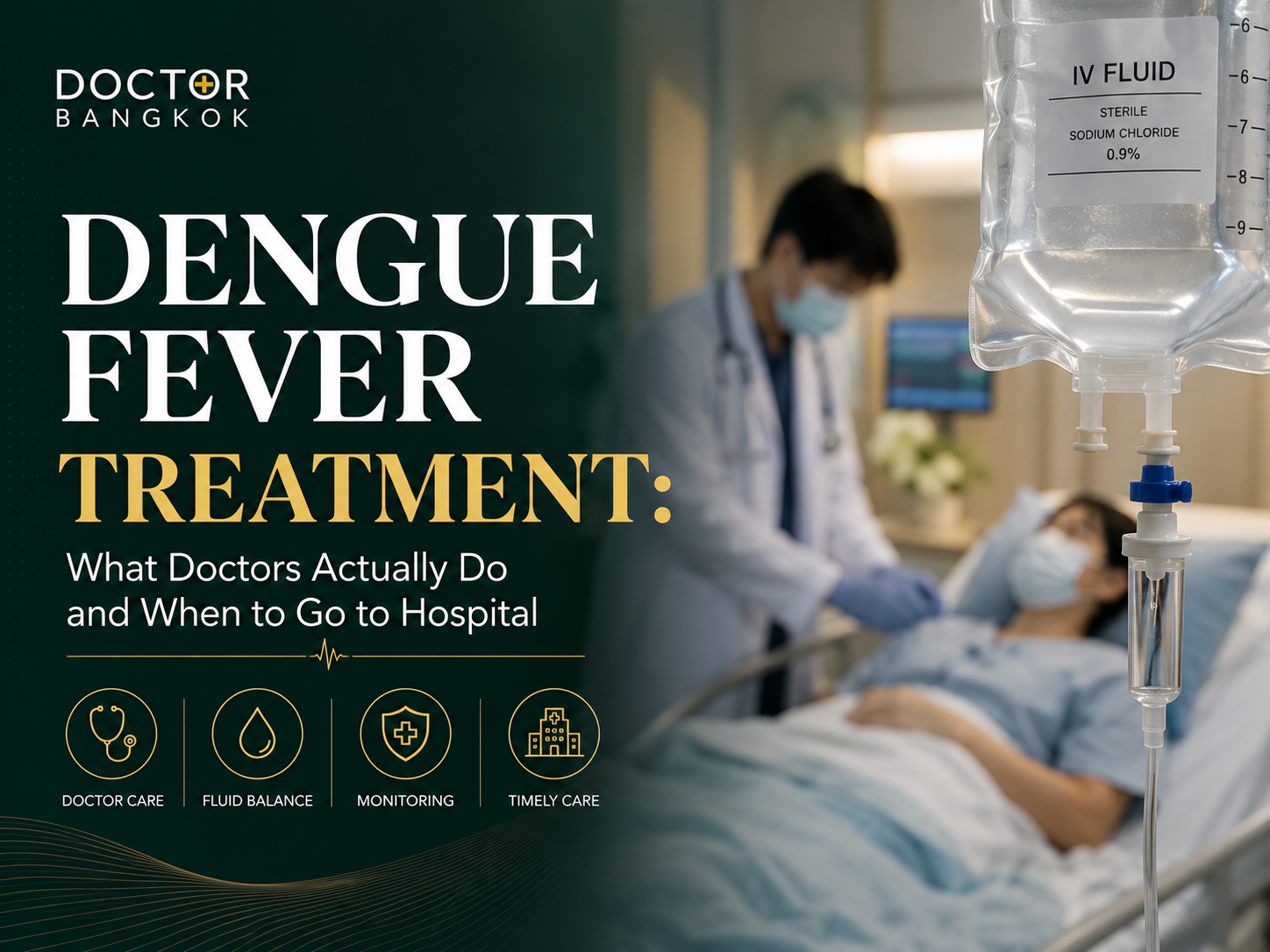
For patients who cannot keep fluids down, or whose blood tests show things are worsening, IV fluid therapy is the next step. At Doctor Bangkok, we can run IV fluids and monitor you closely without a full hospital admission. That is often the right middle ground for patients getting dehydrated who do not yet need inpatient care.

Why Ibuprofen Is Genuinely Dangerous in Dengue
This is the most important thing I tell dengue patients. Do not take ibuprofen, aspirin, or any anti-inflammatory painkiller. Not even once.
Dengue already causes your platelet count to drop. Platelets are the cells that help your blood clot. Ibuprofen and aspirin interfere with how platelets function on top of that. The combination puts you at real risk of internal bleeding.
I see expats every rainy season who took ibuprofen for two or three days thinking they had a bad flu before realising it was dengue. If that is you, come in today. We will check your platelet count and assess your bleeding risk.
Paracetamol is safe. Up to one gram, four times a day for adults. That is your ceiling.
How Dengue Is Diagnosed in Bangkok and Why Test Timing Matters
Testing too early or too late gives you a misleading result. Knowing which test to get and when makes a real difference.
The NS1 Antigen Test: Days 1 to 5
The NS1 test detects the dengue virus directly and is accurate from day one through roughly day five of illness. This is the test I use when a patient comes in early with fever and suspected dengue. Results are available within fifteen to twenty minutes at the clinic. If your NS1 comes back positive, we have a confirmed diagnosis and we start planning your monitoring from there.
If you get an NS1 test on day six or later and it comes back negative, that does not mean you do not have dengue. It means the test window has passed.
IgM and IgG Serology: From Day 5 Onward
After day five, a serology blood test measuring dengue IgM and IgG becomes the more reliable option. Your doctor will likely check a full blood count at the same time to look at your platelet and white cell counts.
Other infections, including malaria, leptospirosis, and chikungunya, can look very similar to dengue in the early days. Getting tested rules these in or out and makes sure you are getting the right treatment.
When to See a Doctor Versus When to Go Straight to Emergency
If you have fever, body pain, and headache with no warning signs, a clinic assessment is the right first step. At Doctor Bangkok, we can run your NS1 test, check your blood count, give you IV fluids if needed, and set up a monitoring plan. You do not need an emergency room for uncomplicated dengue.
The warning signs I take seriously are severe abdominal pain, persistent vomiting, bleeding from your gums or nose, blood in your urine or stools, unexplained bruising, rapid breathing, or feeling faint when you stand. Any of these: come in immediately.
Go directly to an emergency room if you are vomiting blood, have black tarry stools, feel confused or cannot be woken easily, or feel like you are going to pass out. These are signs of severe dengue and need inpatient care right now.
Dengue Risk in Bangkok: What Expats Need to Know
Dengue is endemic in Bangkok year-round. The peak season runs from June to September during the monsoon, but I see dengue cases every month of the year.
Urban Bangkok is not low risk. Aedes mosquitoes breed in very small amounts of stagnant water: plant pot saucers, drainage areas in condos, rooftop gardens, and construction site water. Expats in Sukhumvit, On Nut, Thong Lo, and Silom are routinely exposed. Living in a high-rise does not protect you.
DEET-based and picaridin repellents are effective. Use them during the day. Aedes mosquitoes are most active in the early morning and late afternoon.
Why a Second Dengue Infection Is More Dangerous
There are four dengue serotypes. Getting infected with one gives you lasting immunity against that serotype only. You remain vulnerable to the other three.
A second infection with a different serotype carries a significantly higher risk of severe dengue. If you have had dengue before and develop fever again in Bangkok, tell your doctor immediately. We treat second infections with a higher level of suspicion and monitor more closely from day one.
The Dengue Vaccine in Thailand: Is Qdenga Worth It?
Qdenga is a dengue vaccine approved in Thailand and available at Doctor Bangkok. Unlike the earlier Dengvaxia vaccine, Qdenga can be given regardless of previous dengue exposure. It covers all four serotypes and is given as two doses three months apart.
It is worth discussing if you are staying in Bangkok long-term or travelling frequently across Southeast Asia. It is not a replacement for mosquito avoidance. But for people with ongoing exposure, the evidence supporting it is reasonable and the safety profile is acceptable.
What to Expect During Dengue Recovery
Most patients feel genuinely unwell for seven to ten days. Do not rush back to normal.
Post-viral fatigue after dengue is real. Some patients feel tired and flat for two to four weeks after the fever resolves. Your platelet count will recover on its own. Eat well, sleep, stay hydrated, and avoid strenuous exercise until your doctor confirms your blood counts are back to normal.
Avoid alcohol until you have fully recovered. Your liver takes a hit with dengue, and alcohol adds to that load unnecessarily.
Worried you might have dengue? Doctor Bangkok offers same-day NS1 antigen testing, platelet count blood panels, and IV fluid therapy at our central Bangkok clinic. English-speaking physicians available seven days a week. We also offer hotel and home visit consultations across Bangkok. Visit doctorbangkok.co.th or call us to book today.
FAQ
Can I take ibuprofen or aspirin for dengue fever?
No. Dengue already reduces your platelet count, and ibuprofen and aspirin make platelets work less effectively on top of that. The combination raises your risk of serious internal bleeding. Use paracetamol only, up to one gram four times a day for adults. If you have already taken ibuprofen, come in for a same-day platelet count check at Doctor Bangkok.
When should I go to the hospital versus seeing a clinic doctor?
If your symptoms are fever, body pain, and headache with no warning signs, a private clinic like Doctor Bangkok is the right first step. We test, monitor, and provide IV fluids without a hospital stay. Go to an emergency room directly if you are vomiting blood, have black stools, feel confused, or feel like you are going into shock.
What is the NS1 antigen test and when should I get it?
The NS1 test detects the dengue virus directly and is accurate from day one through roughly day five of illness. After day five, we switch to an IgM and IgG serology test instead. Getting an NS1 test on day six or later and seeing a negative result does not clear you of dengue. Doctor Bangkok can run NS1 rapid testing with results in about fifteen minutes.
Is dengue fever common in Sukhumvit and central Bangkok?
Yes. Dengue is endemic across Bangkok year-round, with a peak from June to September. The Aedes mosquitoes that carry dengue breed in very small water collections such as plant pots, drainage areas, and construction sites. Living in a central neighbourhood or a high-rise condo does not meaningfully reduce your exposure. Use a DEET or picaridin repellent during daytime hours, especially early morning and late afternoon.
Can you get dengue fever more than once?
Yes. There are four dengue serotypes, and immunity from one does not protect against the others. A second infection with a different serotype carries a higher risk of severe dengue. If you have had dengue before and develop fever again in Bangkok, tell your doctor. The Qdenga vaccine, available in Thailand, is worth discussing if you are staying long-term.
How long does it take to recover from dengue fever?
Most people feel significantly better by day ten to fourteen. Post-viral fatigue is common and can last two to four weeks after the fever clears. Your platelet count recovers on its own without supplements. Avoid alcohol and intense exercise until your doctor confirms your blood work has normalised.
Do I need to be admitted to hospital for dengue in Bangkok?
Most dengue cases do not require hospital admission. What they do require is proper testing, monitoring, and fluid management. Doctor Bangkok can handle all of that at clinic level, which means IV fluids and blood count monitoring without a hospital stay. Hospital admission becomes necessary if you develop severe dengue signs such as active bleeding, shock, or a critically low platelet count.
Dr. Ponlawat Pitsuwan
Physician, Doctor Bangkok
a private medical clinic in central Bangkok. He sees expats, residents, and medical tourists for fever assessment, dengue testing and management, general illness, and travel medicine. His focus is straightforward, evidence-based care delivered in plain language.
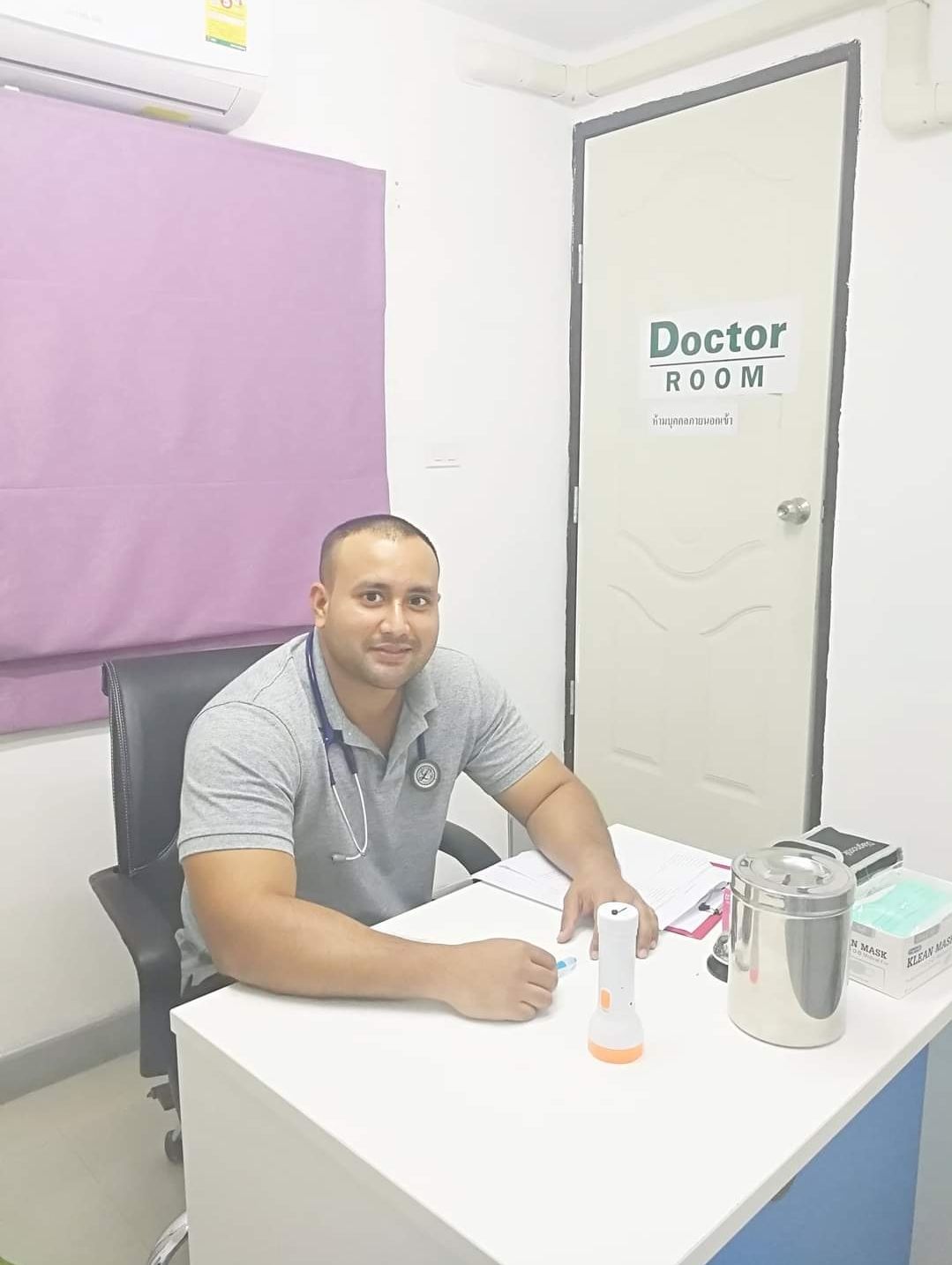
Dr. Ponlawat Pitsuwan is a physician at Doctor Bangkok, a private clinic in central Bangkok. He sees expats, residents, and medical tourists for general medicine, wellness consultations, and IV therapy. His focus is straightforward, evidence-based care delivered in plain language.