
Clinically reviewed by Dr. Ponlawat Pitsuwan, Physician, Doctor Bangkok. Last reviewed: August 2026
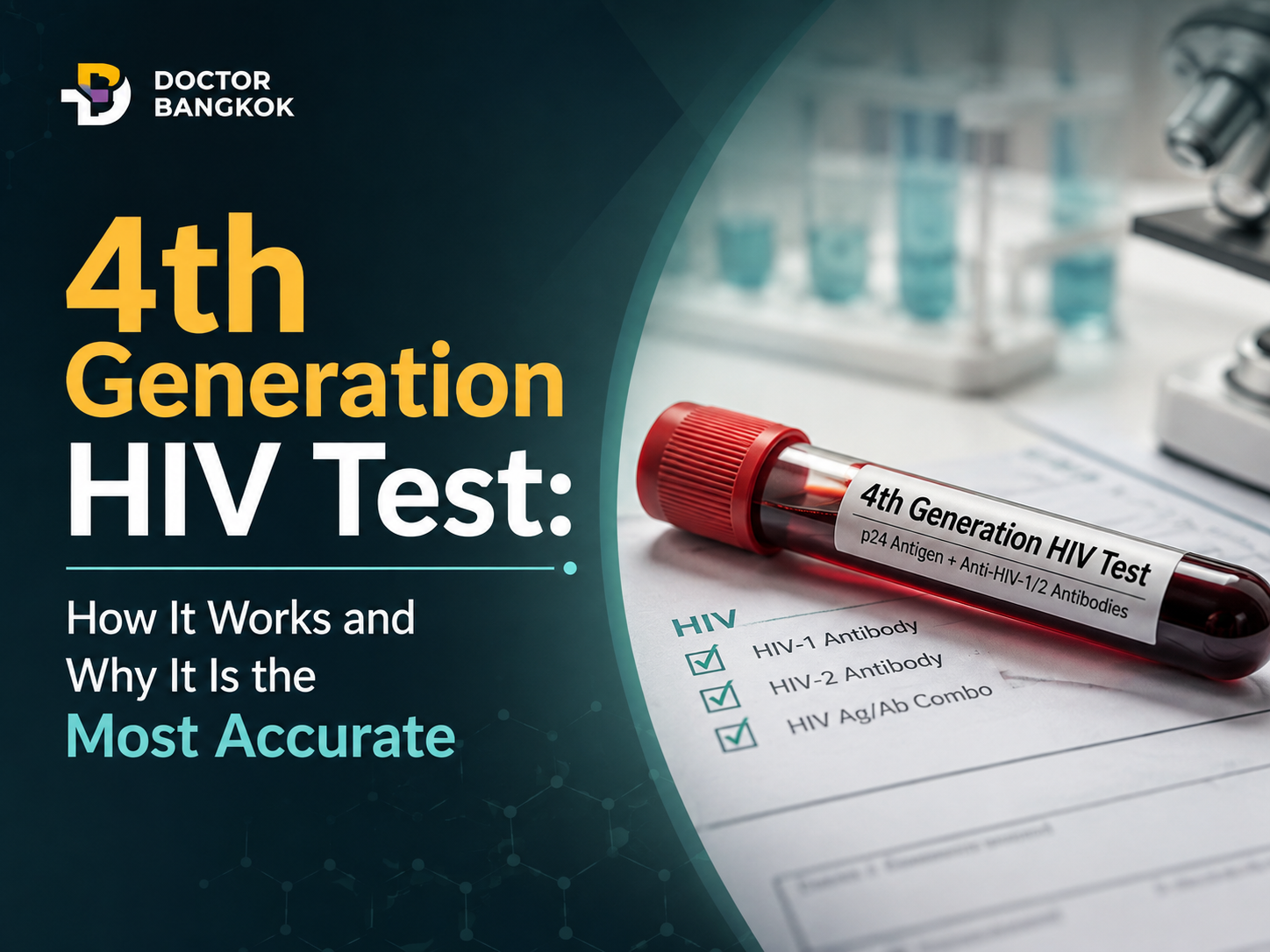
The 4th generation HIV test detects both the p24 antigen and HIV antibodies in a single blood draw. It can pick up infection as early as 18 days after exposure, with results becoming highly reliable from 28 days and conclusive at 45 days for most people. A negative result at 45 days meets the standard used by international guidelines including the CDC. If you have had a recent exposure, testing at Doctor Bangkok with an English-speaking doctor is the clearest next step.
If you are reading this after a night you are second-guessing, or you have been putting off a test for weeks, you are not alone. This is one of the most common situations I see in my clinic. The good news is that testing today is faster, more accurate, and more private than most people expect.
The 4th generation HIV test is the current gold standard for routine HIV screening. It catches infection earlier than older tests and gives you a clearer answer sooner. This article covers what it detects, when your result is reliable, and what to do with the answer you get.

What Does the 4th Generation HIV Test Actually Detect?
Older HIV tests only looked for antibodies. Antibodies are proteins your immune system makes in response to HIV, and your body takes time to produce them. That gap, where HIV is present but antibodies have not shown up yet, is called the window period.
The 4th generation test closes that gap by also detecting the p24 antigen, a protein that comes directly from the virus. It appears in your blood much earlier than antibodies, often within two to three weeks of infection. A single blood draw gives you information from two different angles at once.
This matters most in the early weeks after exposure, when the virus is most active and older tests would miss it entirely.
4th Generation vs Other HIV Tests
I get asked this regularly, especially by patients who have been tested elsewhere and want to understand what test they actually had.
The 3rd generation test looks for HIV antibodies only, with a window period of up to 90 days. The 4th generation test adds p24 antigen detection, which shortens that window to 45 days for most people. The HIV RNA PCR test goes further, detecting the virus itself from around 10 to 14 days after exposure. I recommend RNA PCR for patients who had a high-risk exposure in the last two weeks, or who are finishing a course of PEP and need clarity sooner.
For most people coming in for a standard check, the 4th generation test is exactly what they need.

The Window Period: When Can You Trust Your Result?
This is where there is the most confusion online. Let me give you a straight answer based on what I tell patients in the clinic.
At 18 days, the test can detect HIV, but a negative result at this point is not reliable. The virus or your immune response may simply not be detectable yet. At 28 days, a negative result gives you roughly 95% confidence. That is reassuring, but not final. At 45 days, a negative result is conclusive for the vast majority of people and meets the standard used by most international guidelines. At 90 days, you have final, definitive confirmation. This longer wait applies if you were on PEP, have a weakened immune system, or want absolute certainty.
Most patients who had a single exposure, tested negative at 45 days, and have no ongoing risk can stop there. If you are unsure which timeline applies to you, that is exactly what we are here to discuss.
How Accurate Is the 4th Generation HIV Test?
The short answer: very accurate, when tested at the right time.
Based on published immunoassay performance data, the 4th generation test has sensitivity and specificity both above 99% when tested at or after 45 days. In plain terms, if you have HIV and you test at 45 days, this test will almost certainly find it. And if you do not have HIV, it will almost certainly say so.
Testing too early is the main reason for an unreliable result. That is a timing issue, not a fault with the test. This is why I always ask patients about the exact date of exposure, not just the general timeframe.
A small number of people respond to HIV later than average. This is rare and usually linked to a suppressed immune system or recent PEP use. For everyone else, 45 days is a solid endpoint.
What Happens If Your Result Is Reactive?
A reactive result is not the same as a confirmed HIV diagnosis. I want to be clear about that.
The 4th generation test is a screening test. A reactive result means the sample needs further analysis. The next step is an HIV-1/HIV-2 antibody differentiation assay, run on the same blood sample. If that is also reactive, an additional confirmatory test such as an HIV RNA PCR is performed. Only after this process is a positive result confirmed.
False positives can occur, usually because of other recent infections, autoimmune conditions, or sometimes pregnancy. At Doctor Bangkok, any reactive result is followed up immediately, in English, with full explanation and clear next steps. You will not be handed a result and left to figure it out alone.
When Is a Negative Result Conclusive?
A negative result means different things depending on when you tested.
If you tested between 18 and 27 days, the result is not reliable. The window period is still open. Retest at 28 days at the earliest. If you tested between 28 and 44 days, a negative is strong evidence against infection, around 95% reliable. I recommend a follow-up at 45 days if you want certainty, especially before making decisions about partners or ongoing risk. If you tested at 45 days or later, a negative is conclusive for most people with a standard immune system and no recent PEP use. If you tested at 90 days, that is the final confirmation, and is only necessary in specific circumstances.
If you already have a negative result and are deciding whether to retest, bring that result with you and we can review the timing together.
Testing After PEP or While on PrEP
This applies to a lot of people in Bangkok, more than you might expect.
PEP is a 28-day course of antiretroviral medication taken after a potential HIV exposure. It works by suppressing viral activity early on, but this can also delay the appearance of the p24 antigen and HIV antibodies, extending the window period. If you finish PEP and test at 45 days, that result may not be fully reliable. Testing guidelines typically recommend a check at 4 to 6 weeks after completing PEP and a final conclusive test at 3 months.
PrEP does not affect your HIV test results if you are HIV-negative and taking it correctly. But if you are on a PrEP prescription, you should be testing every three months as part of your monitoring. Doctor Bangkok offers ongoing PrEP care including prescription refills and quarterly testing.
If you are currently on PrEP or have just finished PEP, always tell your doctor. It changes how we time your tests and how we read the results.
HIV Testing, PEP, and Sexual Health Screening at Doctor Bangkok
HIV does not travel alone. Most patients who come in worried about HIV exposure also have potential exposure to other STIs including gonorrhoea, chlamydia, syphilis, and hepatitis B and C. I recommend a full sexual health screen to anyone who is already coming in for HIV testing.
If you had a high-risk exposure in the last 72 hours and have not started PEP, that is urgent. PEP needs to begin as soon as possible and is significantly less effective after 72 hours.
The process at Doctor Bangkok is straightforward. You call, message on LINE, or walk in. No forms that identify why you are there. No awkward explanations at reception. We take a blood draw, and the 4th generation test result is typically back within one to two days. A doctor reviews your result with you in English and tells you exactly what to do next.
Doctor Bangkok is BTS accessible and open six days a week. If you are an expat, a visitor, or you just need a clinic where someone speaks your language and takes this seriously, we are here.
Doctor Bangkok offers confidential 4th generation HIV testing in central Bangkok, with English-speaking physicians and results within one to two days. Whether you need a routine HIV screen, post-exposure testing, or guidance on PrEP and PEP, we are here to help. Walk in or book online at doctorbangkok.co.th. BTS accessible. Open six days a week.
Frequently Asked Questions
How soon after unprotected sex can I take a 4th generation HIV test in Bangkok?
The test can detect infection as early as 18 days after exposure, but a result that early is not reliable. I recommend testing at 28 days for a strong early indicator, and again at 45 days for a conclusive result. If you are unsure about your specific exposure, come in and we will work out the right timeline together.
Is a negative 4th generation HIV test at 28 days conclusive?
Not fully. A negative at 28 days gives you around 95% confidence, which is reassuring but not final. A negative at 45 days is considered conclusive for most people by international guidelines. If you tested negative at 28 days after a single standard-risk exposure, one more test at 45 days closes the question.
What happens if my result is reactive in Bangkok?
A reactive result on the initial screen is not a confirmed diagnosis. The next step is a confirmatory test, typically an HIV-1/HIV-2 differentiation assay on the same sample, followed by additional testing if needed. At Doctor Bangkok, we walk you through every step in English and arrange all follow-up testing without delay.
I just finished PEP. When should I test and will the result be accurate?
PEP can delay your body’s response to HIV, which extends the window period. A first check at 4 to 6 weeks after finishing PEP is useful, but a conclusive result requires testing again at 90 days after your last dose. Always tell your doctor you were on PEP so the schedule is adjusted correctly.
I am on PrEP. Does it affect how my HIV test works?
If you are HIV-negative and taking PrEP correctly, it does not affect your test results. You should still be testing every three months as part of your PrEP monitoring. If you have missed a test or need a prescription refill, Doctor Bangkok handles ongoing PrEP care including quarterly HIV screening.
Will my HIV test result in Bangkok be shared with my employer or immigration?
Private clinic results in Thailand are subject to medical confidentiality and are not reported to employers, government bodies, or immigration authorities. Your result stays between you and your doctor. If you have specific concerns about privacy, ask at the time of booking and we can walk you through how your information is handled.
What is the difference between a 4th generation test and an HIV RNA PCR test?
The 4th generation test looks for the p24 antigen and HIV antibodies, and is reliable from 45 days post-exposure. The HIV RNA PCR test detects the virus directly and can identify infection from around 10 to 14 days after exposure, making it the better option for very early or post-PEP testing. Both are available at Doctor Bangkok, and we can advise which suits your situation.
Dr. Ponlawat Pitsuwan
Physician, Doctor Bangkok
a private medical clinic in central Bangkok. He sees expats, residents, and medical tourists for HIV testing, sexual health screening, and travel medicine. His focus is straightforward, evidence-based care delivered in plain language.
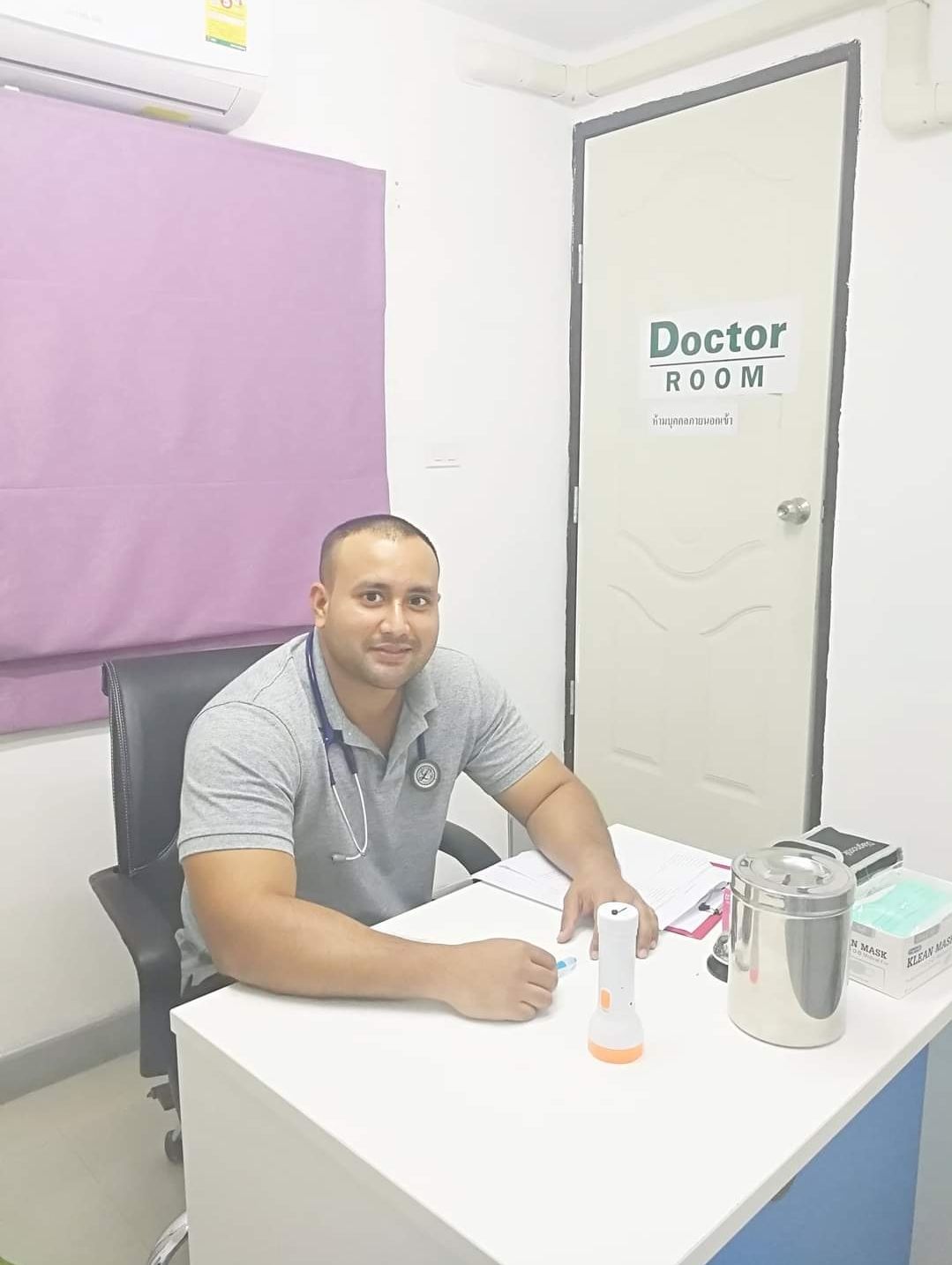
Dr. Ponlawat Pitsuwan is a physician at Doctor Bangkok, a private clinic in central Bangkok. He sees expats, residents, and medical tourists for general medicine, wellness consultations, and IV therapy. His focus is straightforward, evidence-based care delivered in plain language.