
Clinically reviewed by Dr. Ponlawat Pitsuwan, Physician, Doctor Bangkok.
Last reviewed: August 2026
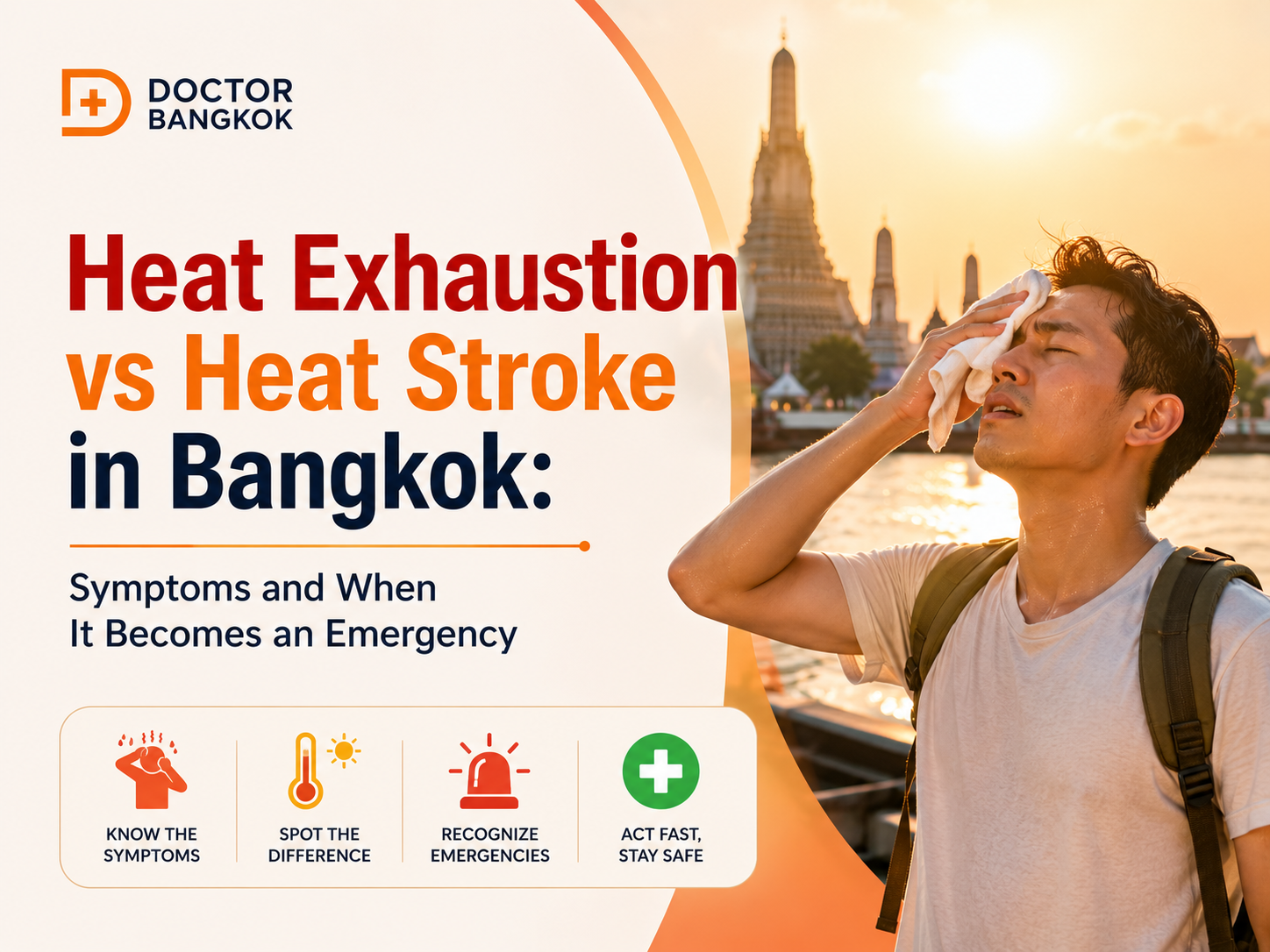
Heat exhaustion and heat stroke are not the same thing. Heat exhaustion is serious but treatable with rapid cooling and rest. Heat stroke is a medical emergency: core temperature above 40°C, confusion or loss of consciousness, and potential organ failure. In Bangkok’s humidity, one can become the other within minutes. If there is any confusion, aggression, or collapse, call for emergency help immediately and start cooling the person now.
You have been out in Bangkok for a few hours. Maybe sightseeing, walking between BTS stops, or just standing in the wrong place at the wrong time. Now you feel terrible: dizzy, soaked in sweat, nauseous, heart racing. You are wondering if this is serious or if you just need to sit down and drink some water.
That is exactly the right question. The honest answer depends on one thing. Are you still thinking clearly? If yes, you are probably dealing with heat exhaustion, and fast action right now can stop it getting worse. If you or someone nearby seems confused, is slurring words, or has stopped sweating entirely, that is heat stroke, and that is an emergency.

Why Bangkok’s Heat Is a Different Problem
Most people look at the air temperature and think they understand the risk. They do not. Bangkok’s air temperature in peak season sits between 35°C and 38°C. That sounds manageable. But Bangkok’s humidity is what causes the real danger.
When humidity is high, sweat cannot evaporate. Your body’s cooling system stops working. The Bangkok Metropolitan Administration recorded a heat index of 51.9°C in June 2026, classified as "danger" level, meaning heat stroke is possible with prolonged exposure even without exercise.
If you just arrived, this matters even more. Your body takes one to two weeks to adapt to tropical heat. Until then, a walk that a long-term Bangkok resident handles fine can put a newly arrived tourist in serious trouble.
The Spectrum: Cramps, Exhaustion, Stroke
Heat illness is not three separate conditions. It is one process moving along a line, and you can move along that line faster than you expect.
Heat cramps come first: painful muscle spasms, usually in the legs or abdomen, caused by fluid and salt loss. They are a warning. Heat exhaustion follows: heavy sweating, weakness, pale skin, a fast weak pulse, nausea, headache, dizziness. Your body is struggling but still fighting. Heat stroke is where the system breaks down. Core temperature passes 40°C, sweating may stop, and your brain begins to malfunction: confusion, aggression, slurred speech, seizure, unconsciousness.
The shift from heat exhaustion to heat stroke can happen in under 30 minutes if nothing is done. That window is everything.

Spot the Difference: Heat Exhaustion vs Heat Stroke
| Heat Exhaustion | Heat Stroke | |
|---|---|---|
| Core temperature | Below 40°C | Above 40°C |
| Sweating | Heavy sweating | May stop sweating |
| Mental state | Normal, anxious | Confused, aggressive, unconscious |
| Skin | Pale, cool, clammy | Red, hot, dry or wet |
| Pulse | Fast and weak | Fast and strong |
| Nausea or vomiting | Common | Possible |
| Is it an emergency? | Urgent, but manageable | Yes. Call for help now |
The one test that matters most: ask the person a simple question. What is your name? What day is it? If they cannot answer clearly, treat this as heat stroke until proven otherwise.
Who Is at Highest Risk in Bangkok
Age matters. Children and people over 65 have less efficient temperature regulation. But I see just as many problems in healthy adults in their 30s and 40s who simply were not prepared for what Bangkok’s climate actually does to the body.
Newly arrived expats and tourists are in the highest-risk group. Most outdoor heat fatalities occur in the first days of exposure, before the body has adapted. If you landed this week, slow down, stay in air conditioning during the hottest part of the day (roughly 11am to 4pm), and drink water before you feel thirsty.
Alcohol also suppresses your body’s heat response. A big night out followed by a day of sightseeing in July is a dangerous combination. The same applies if you have a fever from another illness: your baseline temperature is already elevated, leaving far less margin before things turn serious.
Medications That Make You More Vulnerable
This is something most people do not know, and it rarely gets covered. Certain common medications make it significantly harder for your body to manage heat.
Diuretics (water tablets) increase fluid loss and speed up dehydration. Antihistamines and some antidepressants reduce your ability to sweat. Beta blockers, used for heart conditions and blood pressure, limit how fast your heart can beat, which restricts your body’s ability to move heat to the skin. If you take any of these regularly, your heat risk in Bangkok is higher than average.
If you are unsure whether your medication puts you at risk, an English-speaking GP at Doctor Bangkok can review this with you quickly. It is worth knowing before you spend a day at a floating market in August.
First Aid: What to Do Before Help Arrives
If someone collapses or becomes confused in the heat, start cooling immediately. Do not wait for an ambulance before you act.
Move them to shade or air conditioning. Remove outer clothing. Apply cool water to the skin, especially the neck, armpits, and groin. If you have ice packs, use them on those same areas. Fan the skin to help evaporation. Do not give water to drink if the person is confused or unconscious as they may choke on it.
Bangkok’s BMA operates cooling centres during heatwave periods, including some BTS stations and government buildings. These are genuinely useful if you are caught without transport. For anything beyond mild heat exhaustion, get to a clinic or hospital without delay.
Heat Stroke Complications: Why Timing Matters
Heat stroke is not just about feeling terrible in the moment. If core temperature stays high for too long, the damage spreads beyond the brain.
Muscle tissue can break down rapidly and flood the kidneys with protein, a condition called rhabdomyolysis that can cause acute kidney injury. The liver can also sustain damage. In severe cases, the blood’s clotting system can fail. These complications can develop within hours and may not be visible until blood tests are run.
This is why I always recommend a blood test after any significant heat illness episode, even after someone has cooled down and feels better.
When to See a Doctor in Bangkok and What to Expect
For mild heat exhaustion that fully resolves within 30 minutes of rest, shade, and fluids: monitor closely and reconsider your plans for the day. For anything that does not clear within 30 minutes, or if any confusion appears at all, come in.
At Doctor Bangkok, we see heat illness regularly, particularly during the April to July peak season. A typical assessment includes a physical exam, core temperature check, and a blood panel covering kidney function, electrolytes, and muscle enzymes. If you are dehydrated, IV rehydration gets fluids and electrolytes back into your system far faster than drinking water alone.
If you cannot get to a clinic, a doctor can come to you. The hotel visit service covers central Bangkok and typically arrives within 45 to 75 minutes. For genuine heat stroke, go directly to a hospital emergency department. For heat exhaustion, a walk-in clinic visit is appropriate and often faster.
Doctor Bangkok is BTS accessible with English-speaking physicians available seven days a week. If you have never navigated Thai healthcare before, that matters. You can find more detail on staying safe in Bangkok’s climate in our travel health guide.
Concerned about heat exhaustion or heat stroke in Bangkok? Doctor Bangkok offers walk-in consultations, blood testing, and IV rehydration therapy for heat-related illness. English-speaking physicians are available seven days a week, and a doctor can come to your hotel in central Bangkok if you cannot travel. Visit doctorbangkok.co.th or walk in to our Sukhumvit clinic.
FAQ
What is the difference between heat exhaustion and heat stroke in simple terms?
Heat exhaustion means your body is struggling but still coping: heavy sweating, dizziness, nausea, weakness. Heat stroke means the system has broken down, with core temperature above 40°C, confusion or loss of consciousness, and risk of organ damage. The clearest sign of heat stroke is any change in mental state. Heat exhaustion can become heat stroke within 30 minutes if nothing is done.
How dangerous is Bangkok’s heat for tourists and expats who just arrived?
Very dangerous if you are not yet acclimatised. Bangkok’s heat index reached 51.9°C in June 2026, a level the BMA classifies as "danger." Newly arrived visitors are at the highest risk because their bodies have not yet adapted to tropical conditions. Avoid outdoor activity between 11am and 4pm for the first week, and drink water before you feel thirsty.
Can I treat heat exhaustion myself, or do I need a doctor?
If symptoms fully resolve within 30 minutes of rest, shade, and fluids, you can monitor closely and rest for the remainder of the day. If symptoms persist beyond 30 minutes, worsen, or any confusion appears, you need medical care. Doctor Bangkok offers walk-in care and IV rehydration therapy, and can send a doctor to your hotel if you cannot travel.
What medications increase my risk of heat stroke in Bangkok?
Diuretics, antihistamines, beta blockers, and certain antidepressants all reduce your body’s ability to regulate heat through sweating or circulation. If you take any of these regularly, your heat risk is higher than you may realise. An English-speaking GP at Doctor Bangkok can review your medications and advise on practical precautions before you head out.
Is heat stroke the same as a stroke?
No, they are completely different conditions. Heat stroke is your body overheating and failing to cool itself, leading to confusion and organ stress. A stroke is a blocked or ruptured blood vessel in the brain, causing sudden facial drooping, arm weakness, or slurred speech. Both are emergencies but need different treatment. The shared name causes real confusion, so it is worth knowing the distinction before you need it.
When should I go to a hospital versus a private clinic for heat illness?
If there is any confusion, loss of consciousness, seizure, or the person cannot be safely moved, go directly to a hospital emergency department. For heat exhaustion that has not resolved, or if you want blood tests and IV fluids after a heat illness episode, a private clinic like Doctor Bangkok is appropriate, faster, and fully English-speaking.
Dr. Ponlawat Pitsuwan
Physician, Doctor Bangkok
a private medical clinic in central Bangkok. He sees expats, residents, and visitors for heat-related illness, travel health concerns, general medical consultations, and acute care. His focus is straightforward, evidence-based care delivered in plain language.
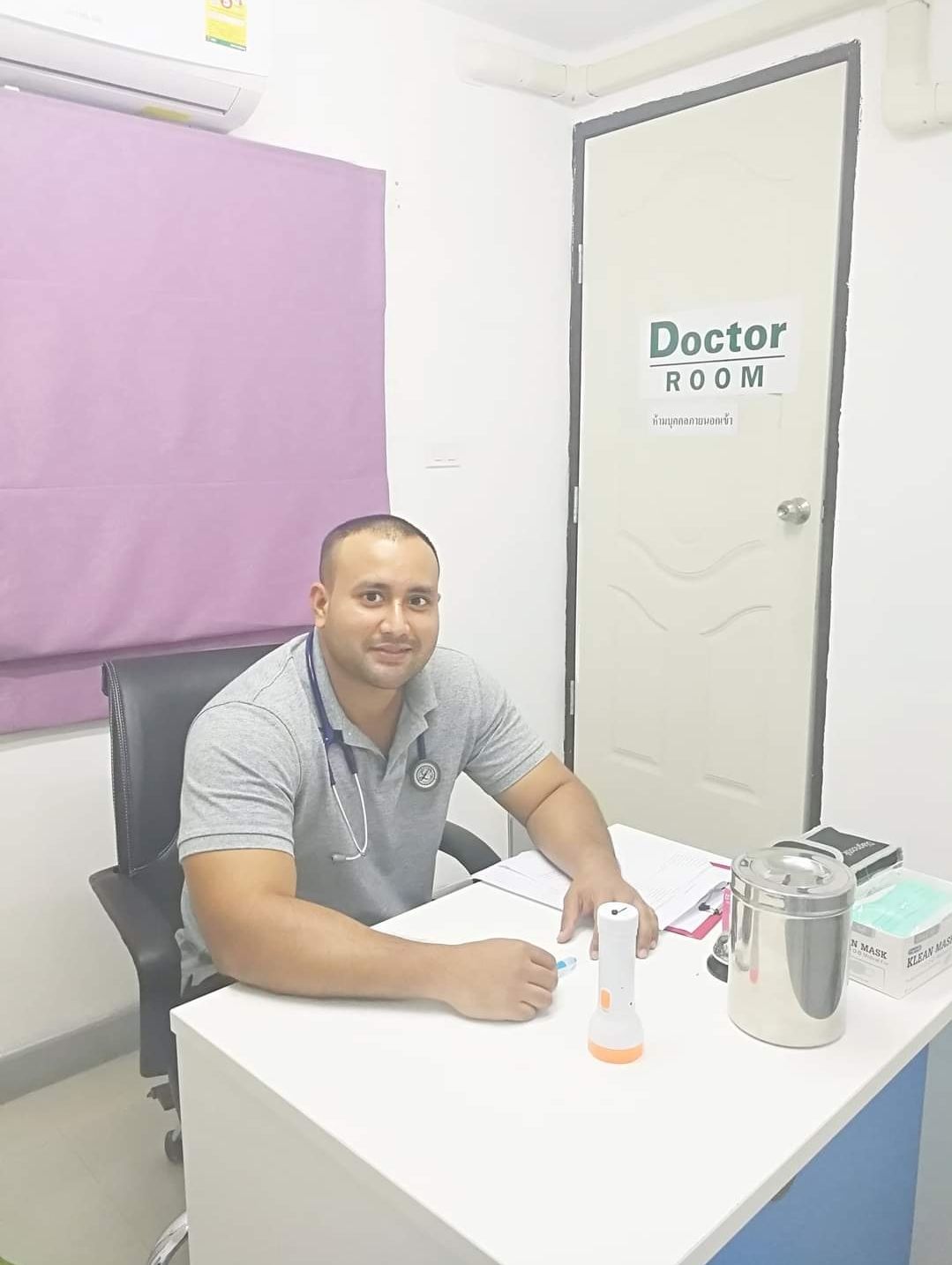
Dr. Ponlawat Pitsuwan is a physician at Doctor Bangkok, a private clinic in central Bangkok. He sees expats, residents, and medical tourists for general medicine, wellness consultations, and IV therapy. His focus is straightforward, evidence-based care delivered in plain language.