Clinically reviewed by Dr. Ponlawat Pitsuwan, Physician, Doctor Bangkok. Last reviewed: July 2026
Most baby diarrhea cases get better with fluids and time. But in Bangkok’s heat, dehydration can set in within hours, not days. If your baby is under 3 months old, has blood in their stool, or shows signs of dehydration like a sunken soft spot or no wet diapers, see a doctor the same day. Do not wait to see if things improve on their own.
You are in Bangkok. Your baby has had loose stools three times this morning. It is hot outside, you do not have a regular paediatrician here, and you are not sure whether to grab an ORS from the pharmacy or head straight to a clinic. This is exactly the situation I see parents walk into our clinic with several times a week.
The good news: most cases of diarrhea in babies and toddlers clear up within a few days with good fluid management. What matters is knowing which cases need more than that. In Bangkok’s climate, that window is shorter than most parents expect.

Is It Actually Diarrhea? What Counts as Abnormal
Before you worry, check your baby’s baseline. Breastfed babies can pass loose, seedy, mustard-yellow stools up to six or more times a day, and that is completely normal. Formula-fed babies tend to have firmer, less frequent stools.
Diarrhea is not about what the stool looks like in isolation. It is about a sudden change from your baby’s normal pattern: more stools than usual, watery or explosive output, or a shift in consistency. That change is the signal.
Green stools on their own are not usually a concern. White, pale grey, or red stools are different. Those warrant a call to a doctor.
Common Causes of Diarrhea in Babies in Bangkok
Most cases are viral. Rotavirus and norovirus are the two I see most often in young children here. Both spread easily through contaminated surfaces, food, and the hands of caregivers.
Bangkok also has a higher burden of bacterial causes than most Western cities. ETEC, or enterotoxigenic E. coli, is one of the main bugs behind diarrhea in children and adults here. Campylobacter and Salmonella come up regularly too, usually linked to undercooked food or contaminated water.
Bacterial cases often last longer and can come with fever, mucus in the stool, or blood. If your child is not improving after 48 hours, a bacterial cause is worth considering. That means a stool test, not more waiting.

Why Bangkok’s Heat Makes This More Urgent
Bangkok sits at around 35 degrees Celsius for most of the year, with high humidity on top. Babies lose fluid through sweat and breathing much faster in this climate. What might take 24 to 36 hours to become a dehydration concern in a cooler country can happen in under 12 hours here.
Toddlers who are active outside, or babies in a warm room, are at even higher risk. I always tell expat parents: the safe window for watching and waiting is shorter here than you are used to. If you would give it a few more hours back home, give it fewer hours here.
Acute vs Chronic Diarrhea: What Is the Difference
Acute diarrhea comes on suddenly and usually clears within a week. That is the type tied to a stomach bug or a food issue. Most of what I see falls into this category.
Chronic diarrhea lasts two weeks or more. In toddlers, one common cause is toddler’s diarrhea, a functional condition where a child passes multiple loose stools daily but is otherwise growing well and eating normally. It is linked to too much fruit juice and not enough fat in the diet. It looks alarming but is not dangerous.
Other causes of ongoing loose stools include malabsorption or an infection that has not been treated. If loose stools have continued for more than two weeks, that needs a proper assessment, even if your child seems otherwise fine.
Warning Signs: When to Stop Treating at Home
This is the section that matters most. Age makes a big difference here.
If your baby is under 3 months old and has diarrhea, call a doctor the same day. Full stop. Newborns dehydrate dangerously fast and cannot fight infections the way older children can.
If your baby is 3 to 6 months old, see a doctor if the diarrhea lasts more than 24 hours, or sooner if any warning signs appear. If your child is older than 6 months, you have a slightly longer window, but still watch closely and come in if symptoms run beyond 48 hours without improvement.
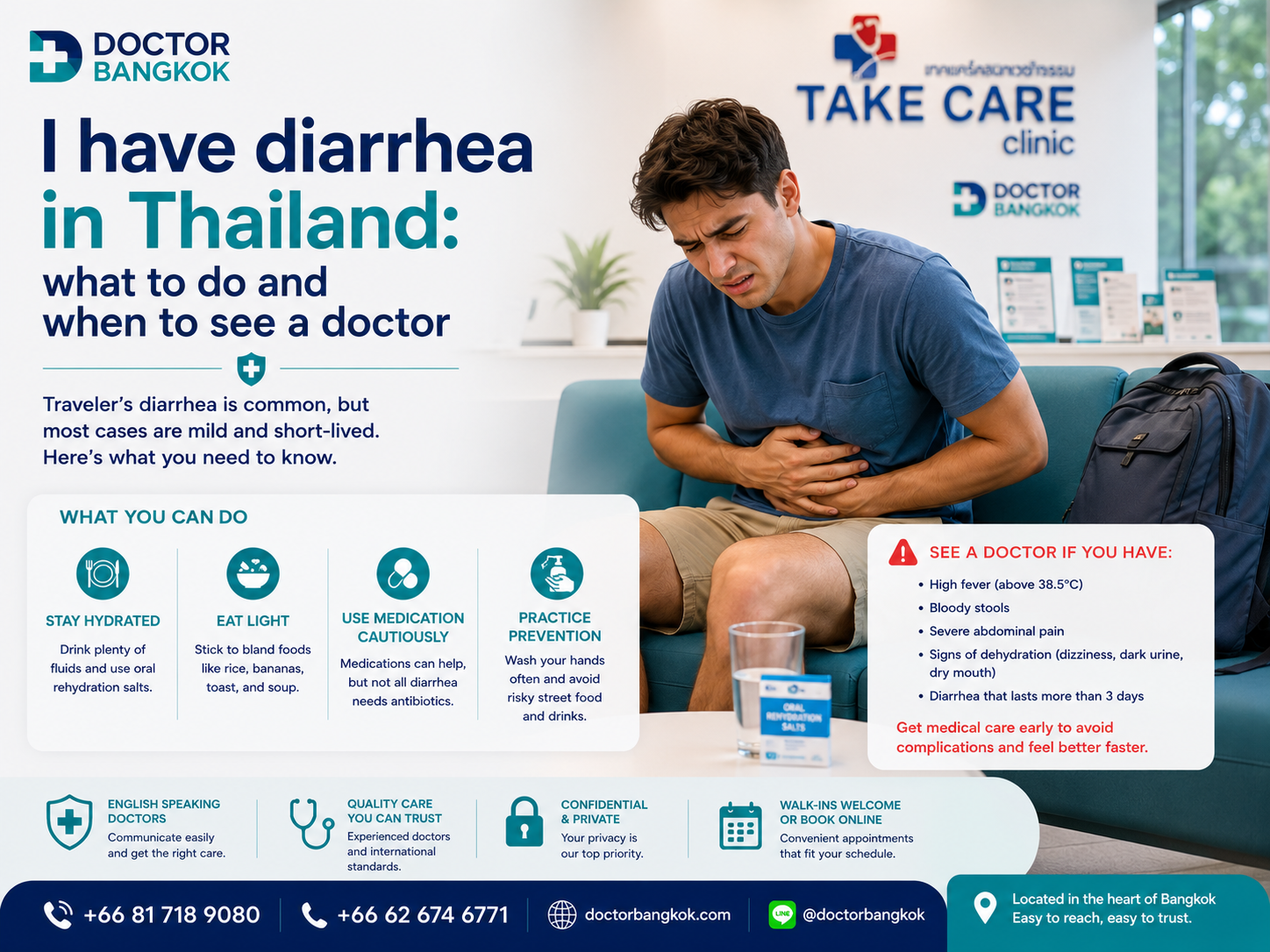
At any age, go to a clinic the same day if you notice: a sunken fontanelle (the soft spot on top of the head), no wet diaper in 6 hours, no tears when crying, a dry mouth, unusual drowsiness or limpness, blood or mucus in the stool, or a fever above 38 degrees Celsius. These are signs the body is struggling.
Safe Home Management: What to Do and What to Avoid
The main job is keeping your child hydrated. Oral rehydration solution, or ORS, is the right tool for this. It replaces fluids and electrolytes in the correct ratio. Plain water does not do that, and fruit juice, sports drinks, and sweet drinks can actually make diarrhea worse.
ORS sachets are available at pharmacies across Bangkok without a prescription. Ask for it by name, or look for sachets labelled for children. Mix it exactly as directed and offer it in small, frequent sips.
Keep breastfeeding if you are breastfeeding. Do not stop. Breast milk offers antibodies and hydration your baby needs right now. For formula-fed babies, continue formula unless your doctor tells you otherwise.
There is moderate evidence that specific probiotics, including Lactobacillus rhamnosus GG and Saccharomyces boulardii, can reduce how long diarrhea lasts in children. Ask your pharmacist or doctor about age-appropriate options.
Do not give loperamide to children under 2 years old. It can cause serious harm. Avoid anti-diarrhoeal medications in young children unless a doctor specifically prescribes one.
Getting Help in Bangkok: What Expat Parents Need to Know
Most expat parents I see do not have a regular paediatrician when their child gets sick. That is very common, especially in the first year of living here or during a visit. You do not need one to be seen quickly.
At Doctor Bangkok, we see children with diarrhea, fever, and signs of dehydration on a walk-in and same-day basis. Our physicians speak English and can arrange a stool test if a bacterial or parasitic cause is suspected. Results typically come back within one to two days.
If your child cannot keep fluids down or is showing signs of dehydration, IV fluid rehydration is available at our clinic. You can find more detail on how we manage this at our diarrhea treatment clinic page.
Prevention: What Expat Families Should Know in Bangkok
The rotavirus vaccine is available in Bangkok and is one of the most effective tools we have against severe diarrhea in infants. It is given orally, usually at 2 and 4 months, or 2, 4, and 6 months depending on the brand. If you are not sure whether your child is up to date, bring their vaccine record in and we can check.
Handwashing is the single most effective daily habit for the whole household. Wash hands before preparing food, after nappy changes, and after using the toilet. Babies and toddlers who are weaning should not have tap water or ice made from tap water. Use bottled or boiled water for mixing formula and food.
Street food is part of life in Bangkok, but choose stalls where food is cooked fresh and hot. Pre-prepared food left out in the heat is a real risk for the whole family.
Worried about diarrhea in your baby or toddler in Bangkok? Doctor Bangkok offers same-day English-speaking consultations, stool testing, and IV rehydration for children showing signs of dehydration. Walk-in appointments available. We are BTS accessible and open seven days a week. Visit doctorbangkok.co.th or contact us directly to arrange a same-day assessment for your child.
FAQ
How do I know if my baby’s loose stools are actually diarrhea and not just normal?
The key is your baby’s personal baseline, not a textbook number. Breastfed babies can have six or more loose stools a day and that is completely normal. Diarrhea is a sudden increase in frequency or wateriness compared to what is usual for your baby specifically.
When should I take my baby to a doctor for diarrhea in Bangkok?
Under 3 months old, see a doctor the same day regardless of how mild it seems. Between 3 and 6 months, come in if diarrhea lasts more than 24 hours or if any dehydration signs appear. Over 6 months, seek care if symptoms are not improving after 48 hours, if there is blood in the stool, or if your child has a fever above 38 degrees. Bangkok’s heat shortens the safe window at every age.
What is the best oral rehydration solution for babies in Bangkok and where can I buy it?
ORS sachets, which replace both fluids and electrolytes lost in diarrhea, are available at most pharmacies in Bangkok without a prescription. Ask specifically for an oral rehydration solution for children. If your child cannot keep fluids down at all, IV rehydration at a clinic is a faster and safer option than waiting it out at home.
Could my baby’s diarrhea be caused by something more serious than a stomach bug?
Yes, and in Bangkok that is worth taking seriously. Bacterial causes like ETEC, Campylobacter, and Salmonella are more common here than in many Western countries. Some of these infections need specific antibiotic treatment and will not clear on their own. A stool test can identify the cause and guide the right treatment.
Is the rotavirus vaccine available for babies in Bangkok?
Yes. The rotavirus oral vaccine is available in Bangkok and is recommended for infants starting at 2 months old. If your child has recently arrived in Thailand or you are unsure whether their vaccine schedule is complete, bring their vaccination record to a clinic and get it checked. Doctor Bangkok can review vaccine history and administer any outstanding doses.
My toddler has had loose stools for two weeks. Should I be worried?
Two weeks of loose stools is chronic diarrhea and it needs a proper assessment, even if your child seems otherwise well. In toddlers, a common and harmless cause is functional toddler’s diarrhea related to diet, but other causes including ongoing infection or malabsorption need to be ruled out. Come in and let a doctor take a look.
Dr. Ponlawat Pitsuwan
Physician, Doctor Bangkok
a private medical clinic in central Bangkok. He sees expats, residents, and medical tourists for paediatric and general health concerns including diarrhea, fever assessment, dehydration, and travel-related illness. His focus is straightforward, evidence-based care delivered in plain language.

Dr. Ponlawat Pitsuwan is a physician at Doctor Bangkok, a private clinic in central Bangkok. He sees expats, residents, and medical tourists for general medicine, wellness consultations, and IV therapy. His focus is straightforward, evidence-based care delivered in plain language.