

Clinically reviewed by Dr. Ponlawat Pitsuwan, Physician, Doctor Bangkok. Last reviewed: July 2026
Most cases of diarrhea with fever in Bangkok are caused by a stomach bug and clear up within two to three days with fluids and rest. But some cases are bacterial, and a few are something else entirely, like dengue or typhoid. If your fever is high, your stool is bloody, or you cannot keep fluids down after 48 hours, see a doctor the same day.
You had dinner last night and now it is 2am and you are running to the bathroom every hour with a fever. If you are in Bangkok right now, you are probably wondering whether to ride this out or do something about it. Most of the time it passes. But sometimes it does not, and the tricky part is knowing which situation you are in.
Diarrhea with fever has a wide range. It can be a mild viral bug that is gone in 48 hours. It can be a bacterial infection that needs antibiotics. In a smaller number of cases, it can be dengue or typhoid, which can both start with gut symptoms. The sections below will help you figure out where you sit and what to do next.

What Is Usually Causing Your Diarrhea With Fever?
Most cases I see at the clinic are viral gastroenteritis. Norovirus is the most common cause. It hits fast, usually within a day of exposure, and causes cramping, loose stool, and a low-grade fever. It burns out within two days. You feel awful but you are not in danger if you stay hydrated.
Bacterial infections are the next tier up. E. coli, Salmonella, and Shigella are the main ones here in Bangkok. These tend to produce higher fever, more gut pain, and sometimes blood or mucus in the stool. They often come from undercooked food, unwashed produce, or ice made from tap water. They can need antibiotics, though not always.
Food poisoning is slightly different. It usually starts within hours of eating something bad, the fever tends to be lower, and vomiting is often the main symptom. It typically resolves faster than a bacterial infection.
The Bangkok Factor: Why This Hits Harder Here
I tell every new expat the same thing: Bangkok accelerates everything. The heat and humidity mean you lose fluid faster when you are sick. A fever that causes mild dehydration elsewhere can cause serious dehydration here in the same timeframe.
Air conditioning makes this worse, not better. You are in a cold, dry room losing fluid through your skin without realising it, while your gut is losing it from the other direction. Add in a fever and you can go from uncomfortable to genuinely depleted within hours.
Bangkok’s food environment also matters. The risk factors are real: high-turnover kitchens, warm ambient temperatures, and ice that may not come from filtered water. Rainy season, roughly May through September, also raises the baseline risk of certain infections across the city.

Could It Be Dengue or Typhoid Instead?
This is the question I want every expat and visitor to ask themselves, because it is the one most people miss.
Dengue is common in Bangkok, especially during rainy season. It can cause abdominal pain and loose stools alongside fever. But dengue fever is sustained and high, usually between 38 and 40 degrees Celsius, and it comes with severe muscle and joint pain, headache behind the eyes, and sometimes a rash. If your symptoms feel more like a bad flu with gut involvement than a pure stomach bug, dengue needs to be ruled out. A same-day blood test can confirm or exclude it.
Typhoid is less common but worth knowing about if you have been eating out regularly in Bangkok for weeks. The fever tends to come first and persist, with gut symptoms developing a few days later. You usually get sick one to three weeks after exposure. If you have had a steady fever for several days that is not improving and gut symptoms alongside it, come in for a blood test.
The practical point is this: if your symptoms include high fever, significant body pain, or anything that feels beyond a stomach bug, do not just treat it as gastroenteritis and wait. Get tested.
Red Flag Symptoms: When to Stop Waiting and See a Doctor Today
Some symptoms mean you rest and hydrate at home. Others mean you come in the same day. Here is the line I draw.
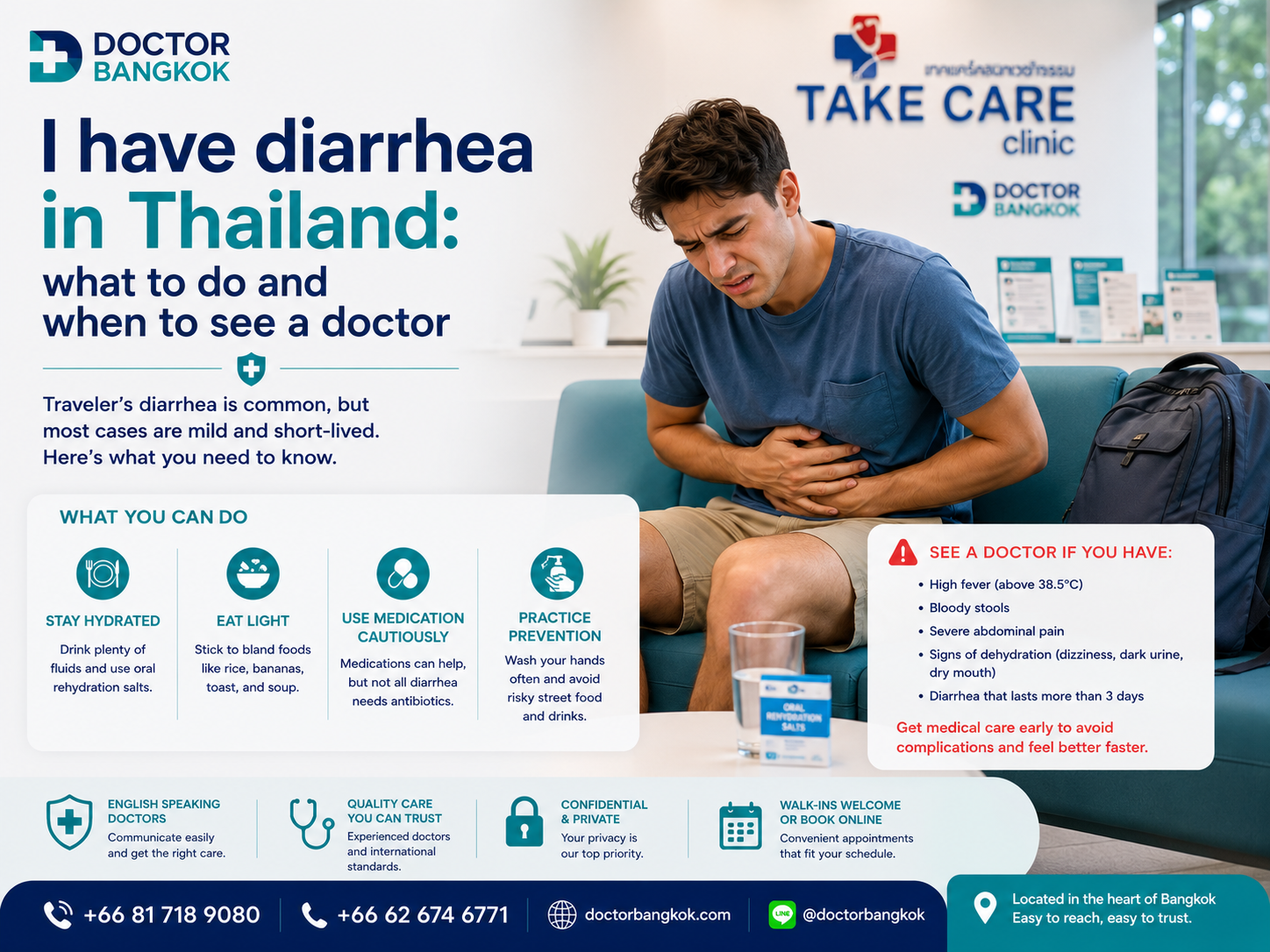
See a doctor today if your fever is above 38.9 degrees Celsius, your stool has blood or mucus in it, you cannot keep fluids down for more than a few hours, or your diarrhea has not improved after 48 hours. Also come in if you feel dizzy when you stand up, your urine is very dark, you have not urinated in several hours, or you have severe abdominal pain rather than general cramping. Each of these means home management alone is not enough.
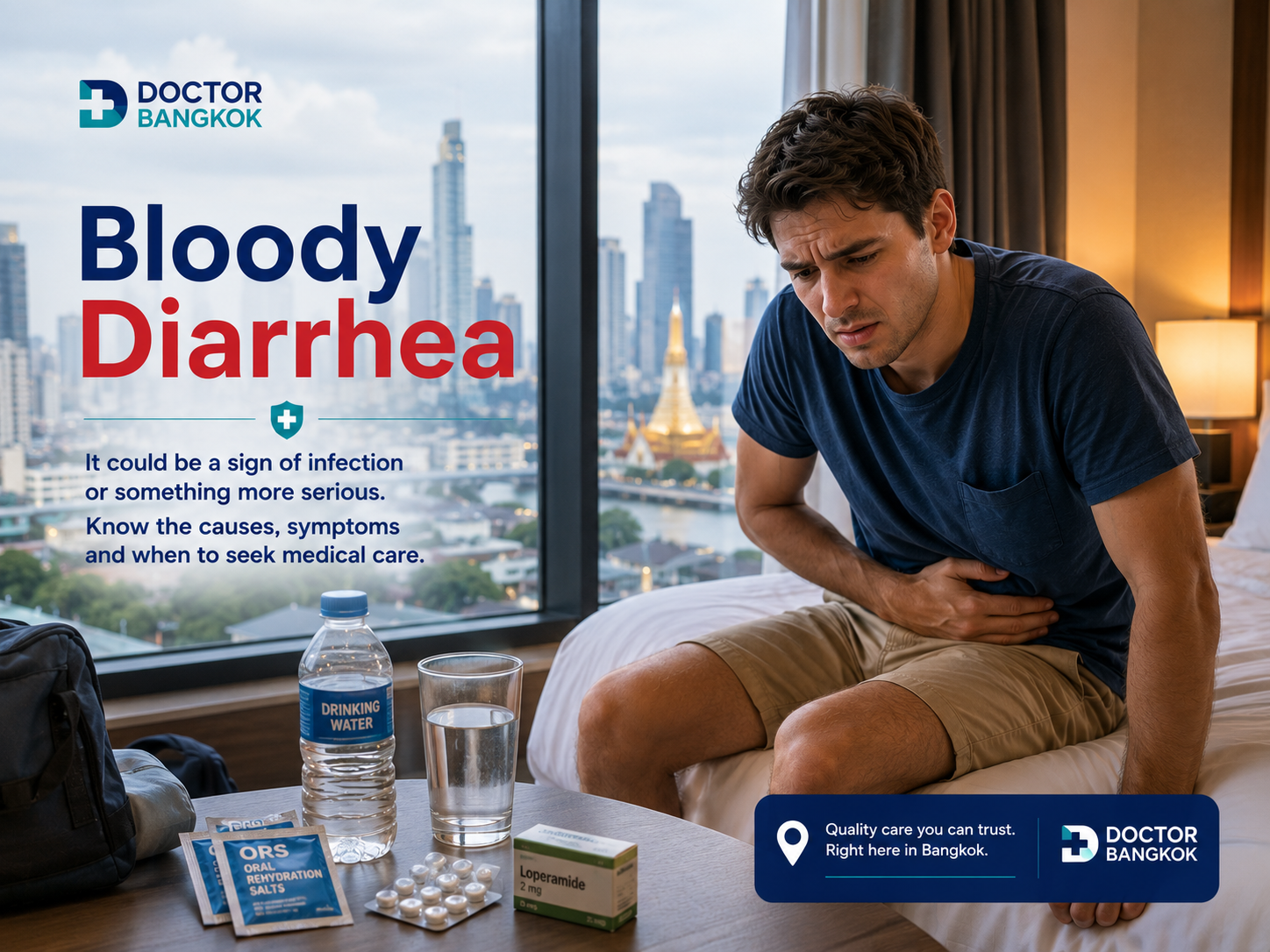
One more specific warning: do not take loperamide (Imodium) when you have fever or bloody stool. Loperamide slows your gut down, which sounds helpful, but with a bacterial infection like Shigella it can make things worse by keeping the bacteria inside your system longer. Save it for confirmed viral diarrhea with no fever.
What You Can Do at Home Before Seeing a Doctor
If your fever is below 38.5 degrees Celsius, your stool is watery but not bloody, and you can keep fluids down, you can manage at home for the first 24 to 48 hours.
The most important thing is oral rehydration. Water alone is not enough because you are losing electrolytes with every trip to the bathroom. Use an oral rehydration solution. In Bangkok, ORS sachets are available at every pharmacy, including 24-hour options near Sukhumvit. Drink small amounts frequently rather than gulping large volumes.
Eat when you can, but keep it bland. Plain rice, toast, banana. Avoid dairy and anything spicy. Paracetamol handles the fever. Rest somewhere cool.
If you are not improving after 48 hours, come in.
What Happens When You See a Doctor for This in Bangkok
A lot of patients tell me they put off coming in because they did not know what to expect. It is not complicated.
At Doctor Bangkok, I take a short history: what you ate, when symptoms started, what the fever pattern looks like, whether there is blood or mucus. I check your hydration, temperature, pulse, and abdomen. Depending on what I find, I may run a stool culture if a bacterial infection looks likely. If dengue or typhoid is possible, I add a blood test. A dengue NS1 and blood count can be done the same visit, and most other results come back within a day or two.
If you are dehydrated, IV hydration is available at the clinic. Patients who come in after two days of loose stools and vomiting often feel significantly better after a litre of fluids with electrolytes. You do not always need antibiotics. If the picture looks viral, I will tell you that and send you home with a clear plan. If it looks bacterial, I will prescribe appropriately for a short course.
For more detail on how we approach treatment, see our diarrhea treatment page.
If you are too unwell to travel, Doctor Bangkok offers doctor hotel visits across central Bangkok. You do not need to get in a cab when you are dehydrated and feverish. For international visitors, we can also provide documentation for travel insurance claims, including itemised receipts and clinical letters. Expats managing ongoing health in the city can find out more about travel health and illness prevention services on our site.
Diarrhea with fever in Bangkok and not sure what to do? Doctor Bangkok is a private clinic near BTS Nana on Sukhumvit Soi 13. English-speaking doctors are available for same-day walk-in appointments, IV hydration, and blood or stool testing. We also offer doctor hotel visits across central Bangkok if you cannot travel. Visit doctorbangkok.co.th or call ahead to be seen today.
FAQ
Should I take loperamide (Imodium) if I have diarrhea and a fever?
No, not when fever is present. Loperamide slows your gut down, which sounds helpful, but with a bacterial infection it can trap the bacteria and make things worse. Wait until you know the cause, or ask a doctor first.
How do I know if my diarrhea and fever in Bangkok is dengue rather than a stomach bug?
Dengue typically causes a sustained high fever for several days along with severe body and joint pain, headache, and sometimes a rash. A stomach bug is mostly gut symptoms and usually starts within hours of eating. If you are unsure, a same-day blood test at Doctor Bangkok can rule dengue in or out quickly.
When should I stop managing this at home and see a doctor?
Go the same day if your fever is above 38.9 degrees Celsius, you see blood in your stool, you cannot keep fluids down, or symptoms have not improved after 48 hours. Dizziness when standing, dark urine, or severe abdominal pain also mean come in now.
Do I need antibiotics for diarrhea with fever?
Not always. Viral gastroenteritis clears on its own and antibiotics make no difference. Bacterial infections like Salmonella or Shigella sometimes need them and sometimes do not. The decision is based on your clinical picture and test results, not just on the presence of fever.
Does Bangkok’s heat make dehydration from diarrhea worse?
Yes, significantly. The heat and humidity mean your body is already losing fluid through sweat, and fever increases that further. What would be mild dehydration elsewhere can become serious here much faster. Starting oral rehydration solution early is the best thing you can do before seeing a doctor.
Can a doctor come to my hotel in Bangkok if I am too sick to travel?
Yes. Doctor Bangkok offers hotel visits to hotels across central Bangkok. If you are dehydrated, feverish, and cannot face a cab ride, call us and we come to you. We can also provide documentation for travel insurance claims if you need it.
Dr. Ponlawat Pitsuwan
Physician, Doctor Bangkok
a private medical clinic in central Bangkok. He sees expats, residents, and medical tourists for acute illness including traveler’s diarrhea, fever assessment, dengue testing, and general medical care. His focus is straightforward, evidence-based care delivered in plain language.
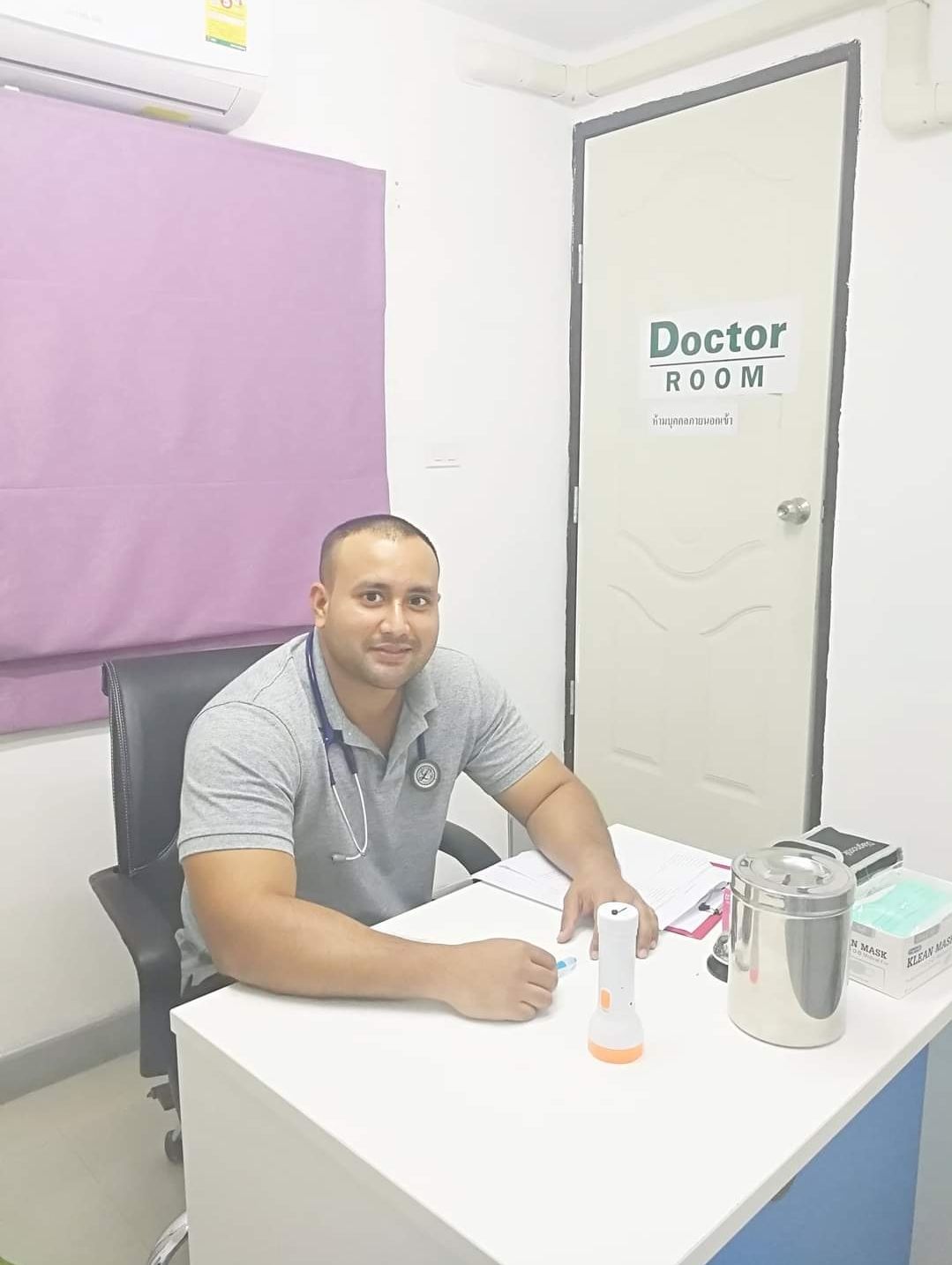
Dr. Ponlawat Pitsuwan is a physician at Doctor Bangkok, a private clinic in central Bangkok. He sees expats, residents, and medical tourists for general medicine, wellness consultations, and IV therapy. His focus is straightforward, evidence-based care delivered in plain language.