

Clinically reviewed by Dr. Ponlawat Pitsuwan, Physician, Doctor Bangkok. Last reviewed: July 2026
The NIPT test is a blood test done from 10 weeks of pregnancy. It screens for chromosomal conditions like Down syndrome with high sensitivity, particularly for trisomy 21. It is not a diagnostic test. A high-risk result needs confirmation with amniocentesis or CVS before any decisions are made.
If you are pregnant in Bangkok and trying to decide whether to get an NIPT test, you have probably seen the phrase "up to 99% accurate" on every clinic website. That number is real, but it tells only part of the story. Accuracy varies depending on what condition is being screened, how far along you are, and factors specific to your pregnancy.
This article explains what the NIPT test actually measures, what affects its reliability, and what to do if your result comes back high-risk or inconclusive. Whether you are an expat living here or visiting Bangkok for prenatal testing, this is what I would tell you face to face.

What the NIPT Test Actually Screens For
NIPT screens for a specific set of chromosomal conditions. It does not cover every possible genetic risk or birth defect, so knowing what is on your panel before you test matters.
The test looks primarily at three conditions. Down syndrome, which involves an extra copy of chromosome 21. Edwards syndrome, an extra chromosome 18. And Patau syndrome, an extra chromosome 13. Most panels also screen for sex chromosome abnormalities and, depending on the lab, some small deletions or duplications of genetic material called copy number variants.
The blood draw is from your arm. The lab analyses tiny fragments of placental DNA that circulate in your bloodstream. Results are usually returned within one to two weeks.
NIPT Accuracy by Condition — Not All Results Are Equal
The "99% accurate" claim applies most reliably to Down syndrome. Detection rates for trisomy 21 are consistently high, and false positives are low. For trisomy 18 and trisomy 13, detection rates are still strong but slightly lower. For sex chromosome abnormalities, accuracy drops further and false positive rates are higher.
What this means in practice: a high-risk result for Down syndrome has a reasonable chance of being a real finding, especially if you are over 35. A high-risk result for a sex chromosome condition is more likely to go unconfirmed on further testing.
The number that actually matters here is positive predictive value, or PPV. This is the likelihood that a high-risk result is a true positive. PPV is not fixed. It shifts based on your age, the specific condition flagged, and how common that condition is in someone your age.

Screening vs Diagnosis — The Most Important Distinction
This is the part most patients miss. NIPT is a screening test, not a diagnostic test. A high-risk result does not mean your baby has a chromosomal condition. It means the probability is elevated and further testing is needed.
The only tests that can confirm a chromosomal diagnosis are amniocentesis and chorionic villus sampling, known as CVS. Both involve a small sample taken from inside the uterus and carry a small risk of miscarriage. They are done under medical supervision and give a definitive answer.
If your NIPT comes back high-risk, the next step is always a conversation with your doctor about whether to proceed with confirmatory testing. Do not make decisions based on NIPT alone.
Understanding Fetal Fraction — Why It Matters for Your Result
Fetal fraction is the percentage of DNA in your blood that comes from the placenta rather than your own cells. The higher the fetal fraction, the more reliable the result. This is one of the most important variables in NIPT accuracy, and it is rarely explained clearly to patients.
Most labs need a fetal fraction of at least 4% to report a result. Below that threshold, the test cannot give a reliable answer. Fetal fraction rises as pregnancy progresses and tends to be lower at higher maternal body weight.
Testing before 10 weeks or at higher BMI can result in a lower fetal fraction and a less reliable or unreportable result. This is why timing and a pre-test consultation matter. At Doctor Bangkok, I always ask patients about these factors before we draw blood.
Factors That Affect NIPT Accuracy
Gestational age matters. Fetal fraction rises as pregnancy progresses. Testing at 11 or 12 weeks may give a stronger result than testing at exactly 10 weeks, particularly at higher BMI.
Maternal body weight is a factor. Higher BMI dilutes the fetal fraction, which can push it below the reliable reporting threshold.
Twin pregnancies are more complex to interpret. DNA from two placentas is present in the sample, and it is harder to attribute a result to a specific baby. Accuracy figures for twins are lower than for singleton pregnancies.
IVF pregnancies using donor eggs require careful interpretation. The placental DNA reflects the donor’s genetics, which changes how results should be read.
Confined placental mosaicism is a less common but real cause of false positives. This is when the placenta carries a chromosomal change that the baby does not. The test reads placental DNA, so it can flag a risk that does not exist in the baby. This is not a lab error. It is a biological feature of how the placenta develops.
When NIPT Results Are Inconclusive or Need Repeating
Sometimes NIPT does not return a result at all. This is called a no-call result, and it almost always comes down to low fetal fraction. The lab cannot generate a reliable answer from the sample.
A no-call result is not high-risk. It is not reassuring either. It means the test could not be completed reliably. In most cases, your doctor will recommend a repeat blood draw, ideally one to two weeks later when fetal fraction may be higher.
If two attempts both fail to produce a result, your doctor may suggest first-trimester combined screening or a direct discussion about amniocentesis, depending on your situation.
Getting an NIPT Test in Bangkok
Bangkok has several options for NIPT, including private hospitals and specialist clinics. For expats and visitors, the most important things are English-language reporting, a doctor who can explain your result, and a clear plan for what happens if the result is complex.
At Doctor Bangkok, NIPT is offered through our diagnostics service as part of a clinical consultation. Before the blood draw, a doctor talks with you about your gestational age, your risk factors, what the panel covers, and what to expect from your result. You are not just handed a tube and sent to a lab.
Results are reported in English. If your result comes back high-risk or inconclusive, you have direct access to a physician for follow-up. We can also prepare referral documentation formatted for your overseas OB-GYN if you are returning home after testing.
NIPT in Bangkok is available regardless of visa status. Tourists, expats, and short-stay visitors can all access prenatal testing at our diagnostics clinic without restriction.
When to Have the NIPT Test
The earliest the test can be reliably done is 10 weeks of gestation, confirmed by ultrasound. Most guidelines suggest the window from 10 to 22 weeks, with earlier testing preferred so results are available in time to inform decisions.
If you are not sure how far along you are, a dating ultrasound should come first. Testing before confirming gestational age is a common mistake that leads to unnecessary repeats or inconclusive results.
I usually recommend combining NIPT with a first-trimester ultrasound for nuchal translucency measurement. Together, they give a more complete picture of chromosomal risk than either test alone.
Who Should Consider NIPT
NIPT is a good option for anyone who wants early information about chromosomal risk without an invasive procedure. It is particularly relevant for women over 35, anyone with a previous pregnancy affected by a chromosomal condition, and those who had an abnormal result on earlier screening.
It is also a reasonable choice for younger patients who want early reassurance. The risk of chromosomal conditions is lower in younger pregnancies, which means the PPV of a high-risk result is also lower. That is not a reason to avoid testing. It is a reason to understand your result in the context of your age and risk profile.
For twin pregnancies or IVF conceptions using donor eggs, have an honest conversation with your doctor about the limitations of NIPT before proceeding.
Considering an NIPT test in Bangkok? At Doctor Bangkok, our English-speaking physicians walk you through the process before and after testing. We explain your results clearly, advise on next steps if your result is high-risk or inconclusive, and can prepare referral documentation for your obstetrician at home. Book through our diagnostics service at doctorbangkok.co.th.
Frequently Asked Questions
Is NIPT 99% accurate — and what does that actually mean?
The 99% figure most often refers to Down syndrome detection, which has the strongest evidence behind it. Accuracy is lower for trisomy 13, trisomy 18, and sex chromosome conditions. The number that matters most to your specific result is positive predictive value, which depends on your age, the condition flagged, and how common that condition is in someone your age.
Can NIPT give a false positive result?
Yes. The most common biological cause is confined placental mosaicism, where the placenta carries an abnormality the baby does not. Low fetal fraction can also affect reliability. A high-risk NIPT result is not a diagnosis. Confirmatory testing with amniocentesis or CVS is always needed before any decisions are made.
When is the best time to have an NIPT test in Bangkok?
From 10 weeks of pregnancy, confirmed by ultrasound. Testing closer to 11 or 12 weeks tends to produce higher fetal fraction and a more reliable result. If your BMI is higher, slightly later testing may improve accuracy. The team at Doctor Bangkok can advise on the best timing for your situation.
Can I get an NIPT test in Bangkok as a tourist or expat?
Yes. NIPT is available to anyone in Bangkok regardless of visa status, with no restrictions for tourists or short-stay visitors. Doctor Bangkok provides English-language results and can prepare documentation suited to your overseas obstetrician if you are returning home after testing.
What happens if my NIPT result is high-risk or inconclusive?
A high-risk result means elevated probability, not certainty. Your next step is a conversation with a doctor about confirmatory testing such as amniocentesis or CVS. An inconclusive result usually means low fetal fraction and often requires a repeat blood draw. Doctor Bangkok offers post-result consultations so you are not left interpreting a difficult result on your own.
Does NIPT detect all chromosomal conditions and birth defects?
No. NIPT screens for a specific set of chromosomal conditions, primarily trisomy 21, 18, and 13, sex chromosome abnormalities, and in some panels, select copy number variants. It does not screen for structural birth defects, single-gene disorders, or most rare genetic conditions. Your doctor can explain exactly what is covered by the panel you choose.
Is NIPT safe, and does it carry any risk to the pregnancy?
NIPT involves only a blood draw from your arm. There is no needle near the uterus and no risk of miscarriage associated with the test itself. This is one of its main advantages over diagnostic tests like amniocentesis, which carry a small procedural risk.
About the author: Dr. Ponlawat Pitsuwan is a physician at Doctor Bangkok, a private medical clinic in central Bangkok. He sees expats, residents, and medical tourists for prenatal screening, diagnostics, and general medical care. His focus is straightforward, evidence-based care delivered in plain language.
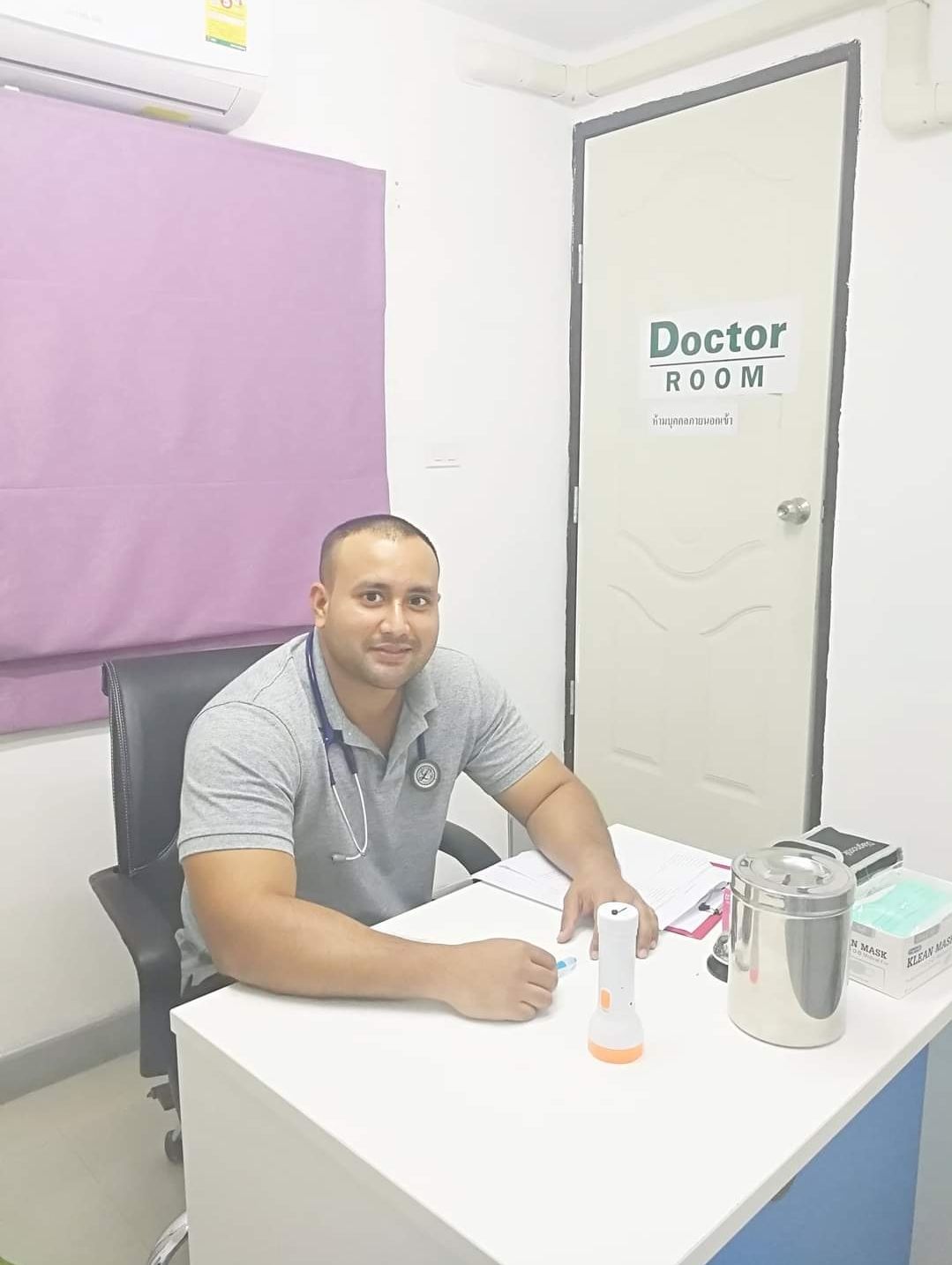
Dr. Ponlawat Pitsuwan is a physician at Doctor Bangkok, a private clinic in central Bangkok. He sees expats, residents, and medical tourists for general medicine, wellness consultations, and IV therapy. His focus is straightforward, evidence-based care delivered in plain language.