
Clinically reviewed by Dr. Ponlawat Pitsuwan, Physician, Doctor Bangkok.
Last reviewed: July 2026
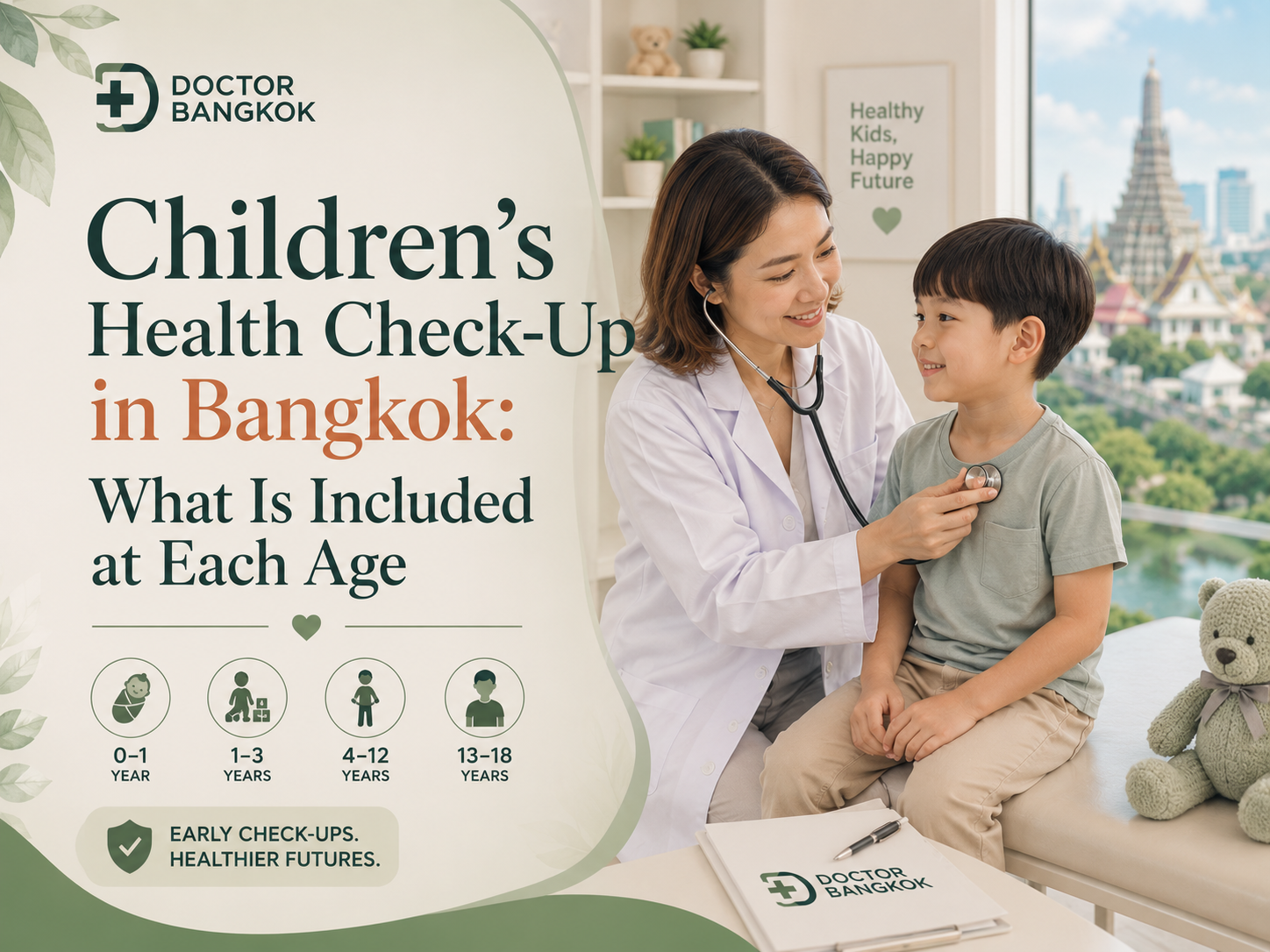
A children’s health check covers growth, development, vision, hearing, and vaccinations. The schedule broadly follows international guidelines, with visits most frequent in the first two years of life, then annually from age three onwards. Children living in Bangkok also need screening for local health risks that would not be on a standard home-country checklist, including dengue awareness, Japanese Encephalitis vaccination, and air quality effects on breathing.
If you have just moved to Bangkok with kids, one of the first things parents ask me is: where do I take my child for a check-up, and what should that visit include? It is a fair question when you are used to a GP or paediatrician back home and you are not sure how things work here. The good news is that children’s healthcare in Bangkok is solid, and at a private clinic with English-speaking doctors, the experience is much closer to what you know than you might expect.
What is different about Bangkok is the environment your child is living in. Tropical heat, air pollution, mosquito-borne illnesses, and food safety risks all factor into what a thorough children’s health check should cover here. This guide walks you through what to expect at each age, what Bangkok-specific risks are worth screening for, and how to keep your child’s vaccination records current after moving.

The Recommended Check-Up Schedule from Birth to 18 Years
The well-child schedule is built around the ages when children change most rapidly. In the first two years, I recommend checks at one month, two months, four months, six months, nine months, twelve months, fifteen months, and eighteen months. After that, annual visits from age two or three keep things on track.
This broadly aligns with what Thailand’s public health system follows. For expat families, the schedule rarely needs to be rebuilt from scratch. What we do is look at your child’s existing records and map them against what is recommended here.
What Is Covered at Each Age
Newborns to 12 Months
In the first year, every visit focuses on growth. That means weight, length, and head circumference plotted on a growth chart. We are watching for trends, not just single numbers.
Developmental checks at this age are mostly observational. Does your baby track faces? Respond to sound? Reach for objects? Sit unsupported? Vaccinations are heavily front-loaded in this period. If your baby was born abroad and you have moved to Bangkok, bring every vaccination record you have to the first visit.
Toddlers (1 to 3 Years)
Growth monitoring continues, and developmental milestones become more specific. Walking, talking, social interaction, and feeding independence all come into focus. If a toddler is not using single words by twelve months or two-word phrases by two years, that is something we want to follow up on promptly.
This is also when several important vaccines are given or completed. We check hearing and vision informally at this stage, with formal screening coming later.
Pre-School Children (3 to 5 Years)
By age three, the annual check is well established. Growth, weight, blood pressure, vision, and hearing all get reviewed. We start asking more detailed questions about language, behaviour, attention, and any anxiety you have noticed at home.
Vision screening becomes more reliable at this age because children can follow instructions. Catching problems before school starts makes a real difference to how a child copes in the classroom.
School-Age Children (5 to 12 Years)
Annual checks at this age tend to feel more like a conversation. I ask the child directly about headaches, sleep, energy, and any worries. Parents often learn things in these appointments they did not already know.
For children attending international schools in Bangkok, this visit often doubles as the annual health certificate required for enrolment. Most schools ask for an up-to-date immunisation record and a signed examination form from a registered doctor. We provide that documentation at Doctor Bangkok following a standard check-up.
Adolescents (12 to 18 Years)
Adolescent checks expand significantly. We review BMI, blood pressure, and cholesterol where there are risk factors. Menstrual health, testicular awareness, and mental health screening are all part of every adolescent visit I do. Anxiety, low mood, and sleep problems are common at this age and do not always surface unless you ask directly.
HPV vaccination is recommended for both boys and girls from age nine, but many children arrive in Bangkok not yet having received it. We can discuss this at the visit and administer it the same day if appropriate.

Vaccinations — What Your Child May Have Missed
This is the section most expat parents need most. If you have moved from the UK, US, Australia, or Europe, your child’s vaccination schedule will not map perfectly onto Thailand’s. It is close, but not identical.
The two most important Thailand-specific vaccines to know about are Japanese Encephalitis and rabies pre-exposure. Neither is routine in Western schedules. Japanese Encephalitis is spread by mosquitoes and is present across Southeast Asia. For children living long-term in Bangkok, vaccination is strongly recommended by the CDC and WHO. Rabies pre-exposure vaccination is worth considering for children who spend time outdoors, particularly young children who might not report an animal scratch or bite straight away.
Bring your child’s existing vaccination booklet or records to the first appointment. We review everything and tell you exactly what is current, what is missing, and what we recommend based on how long you plan to stay in Thailand.
Bangkok-Specific Risks Worth Knowing
Dengue Fever
Dengue is real in Bangkok. It is a mosquito-borne virus and it can make children very unwell. I advise every expat parent to use mosquito repellent on their children daily, not just during rainy season. If your child develops a high fever lasting more than two days, do not wait. Come in and get tested. Doctor Bangkok offers same-day dengue testing.
Air Quality
Bangkok’s PM2.5 levels are a genuine concern for children’s respiratory health, particularly from November through February. Children with asthma, recurrent coughs, or any history of breathing problems need closer monitoring during high-pollution periods. We factor in air quality history when assessing respiratory symptoms in children.
Intestinal Parasites
Children who eat from street stalls or attend school with variable hygiene standards can pick up intestinal parasites. This is more common than most parents realise. Symptoms can be subtle: stomach pain, fatigue, poor appetite. A stool test identifies most common parasites, and treatment is straightforward.
What Happens at a Children’s Health Check at Doctor Bangkok
When you come in, we start by going through your child’s records and any concerns you have. There is no rush. We measure height, weight, and blood pressure, and check vision and hearing at a level matched to your child’s age.
If blood tests are needed, we do those in-house with a fast turnaround. Children under two generally do not need to fast before a blood draw. Older children benefit from a light fast of four to six hours if we are checking cholesterol or fasting glucose. Our team is English-speaking and works with children regularly.
You leave with a written summary you can share with your home-country GP or specialist. If your child’s school requires a health certificate, we provide that on the same day. You can book a child health checkup at doctorbangkok.co.th/diagnostics/.
What to Bring to the Appointment
Bring your child’s vaccination records, any previous medical history, and their passport or ID. If your child has known allergies or takes regular medication, bring that information too. If you have results from previous check-ups, even from overseas, bring those as well. The more we know going in, the more useful the visit will be.
Doctor Bangkok offers children’s health check-ups for all ages, from newborns to teenagers. Our English-speaking physicians serve expat and resident families in central Bangkok, with BTS-accessible access. We review your child’s existing vaccination records, provide school health certificates, and screen for Bangkok-specific health risks in a single visit. Book your child’s health check-up at doctorbangkok.co.th/diagnostics/
Frequently Asked Questions
At what ages should my child have a health check-up in Bangkok?
The busiest period is the first two years, with visits at one, two, four, six, nine, twelve, fifteen, and eighteen months. After that, an annual check from age two or three is the standard recommendation. If your child is new to Bangkok, the first step is a baseline visit to review their records and vaccinations, regardless of age.
My child has vaccination records from our home country. Do we need to start again in Thailand?
No. We review what your child already has and identify any gaps against the Thai schedule. The main additions for children moving to Thailand are Japanese Encephalitis and possibly rabies pre-exposure vaccination, neither of which is routine in most Western countries. Bring every record you have and we will work through it together.
What health checks do international schools in Bangkok require?
Most international schools require an up-to-date immunisation record and a signed health examination certificate from a registered doctor, either at enrolment or annually. We provide both at Doctor Bangkok following a standard children’s health check. Check your school’s specific requirements before the appointment so we can make sure the paperwork is complete.
Are there health risks specific to Bangkok that a check-up should cover?
Yes. Dengue fever, Japanese Encephalitis, intestinal parasites, and PM2.5 air pollution are all real concerns for children living in Bangkok that would not appear on a standard home-country checklist. A good children’s health check here should factor all of these in, not just follow a generic template.
How do I prepare my child for a health check-up?
Bring all vaccination records, any allergy or medication information, and your child’s ID or passport. Children under two do not need to fast before blood tests. Older children benefit from a light fast of four to six hours if bloodwork is planned. Bring a comfort toy, explain the visit in simple terms beforehand, and arrive a few minutes early so your child has time to settle.
Can I get my child’s travel vaccinations and health check done at the same visit?
Yes. We can combine a children’s health check with a review of travel vaccinations in a single appointment. This works well for newly arrived families or those planning travel within Southeast Asia. Doctor Bangkok’s travel health service covers vaccines and destination-specific advice for the whole family.
Dr. Ponlawat Pitsuwan
Physician, Doctor Bangkok
a private medical clinic in central Bangkok. He sees expats, residents, and medical tourists for children’s health checks, travel medicine, and general medical consultations. His approach is straightforward, evidence-based care delivered in plain language.
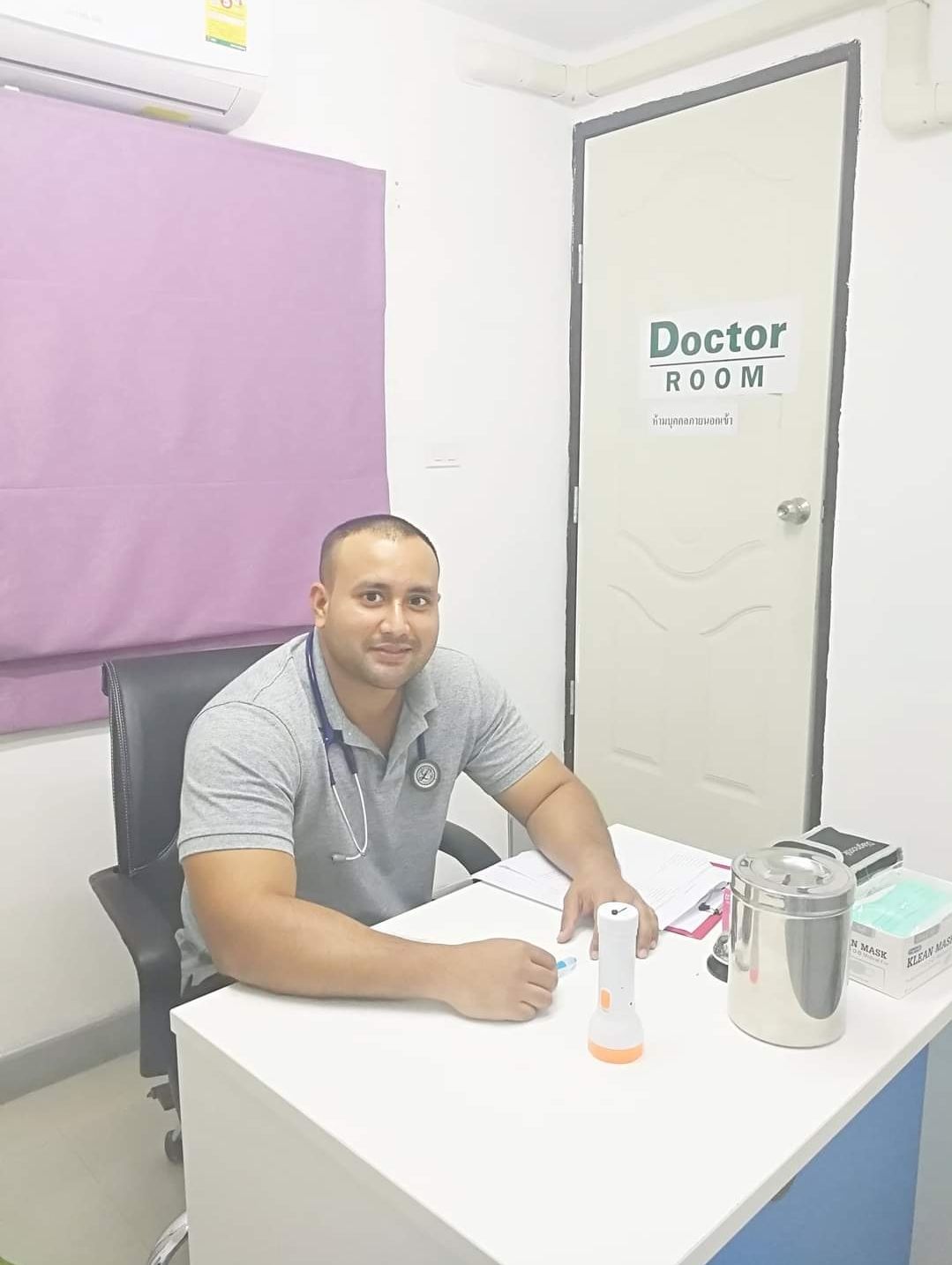
Dr. Ponlawat Pitsuwan is a physician at Doctor Bangkok, a private clinic in central Bangkok. He sees expats, residents, and medical tourists for general medicine, wellness consultations, and IV therapy. His focus is straightforward, evidence-based care delivered in plain language.