
Clinically reviewed by Dr. Ponlawat Pitsuwan, Physician, Doctor Bangkok. Last reviewed: July 2026
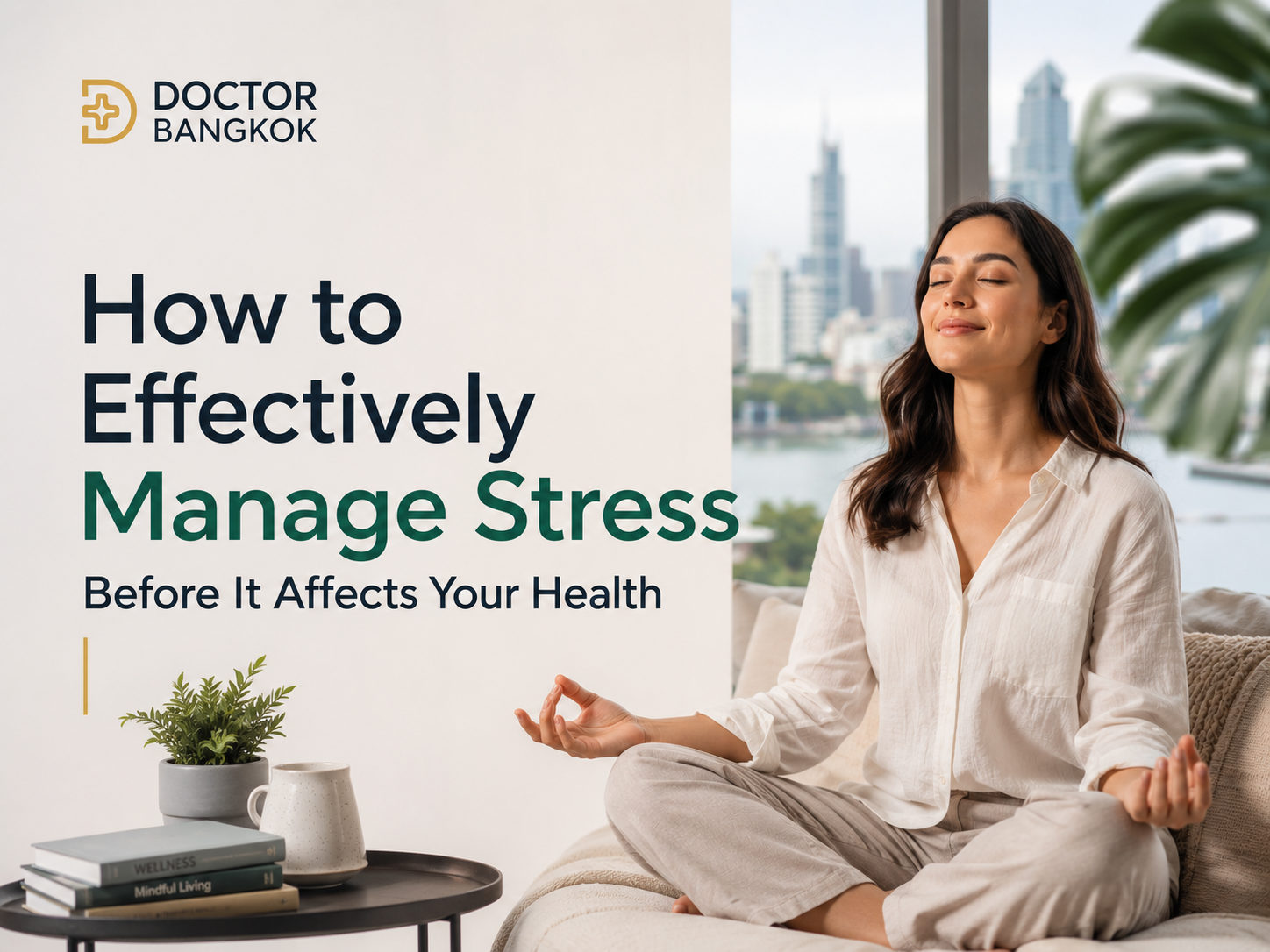
Chronic stress raises cortisol, your body’s main stress hormone, and over time this damages your immune system, sleep, digestion, and heart. The most effective way to manage stress is to catch it early, build daily habits that lower your body’s stress response, and see a doctor when self-management stops working. If you are an expat in Bangkok, the triggers are real and specific, and you do not have to figure this out alone.
If you are reading this, you are probably not doing great. Maybe you have been running on empty for weeks. Maybe you are sleeping badly, snapping at people, and getting sick more often than usual. That is exactly who this article is for.
Living in Bangkok as an expat adds layers to stress that most generic advice ignores. The heat, the traffic, the visa paperwork, being far from family, navigating a medical system in a language you do not speak. These are real stressors, and they compound. This guide will tell you what to do about it today, and when it is time to stop self-managing and see a doctor.

What Stress Actually Does to Your Body
Most people think of stress as a feeling. It is not just a feeling. It is a physical process.
When you are stressed, your adrenal glands release cortisol, your main stress hormone. In small doses, cortisol is useful. It sharpens focus, raises energy, and gets you through a hard day. The problem starts when cortisol stays elevated for weeks or months.
Chronic high cortisol suppresses your immune system, disrupts your gut, raises blood pressure, and wrecks your sleep. Most patients I see do not realise the physical toll until their body forces the issue.
Why Bangkok Expats Face a Different Kind of Stress
Generic stress advice was not written for someone living in a city of ten million people, far from home, in 35-degree heat.
Bangkok expat life has specific stressors that stack on top of each other. Culture shock is real, and it does not always hit immediately. Sometimes it arrives six months in, when the novelty wears off and the isolation sets in. Add visa anxiety, language barriers, and distance from family, and you have a set of pressures that people back home simply do not face.
The social culture here also normalises alcohol as the main way to decompress. I see this pattern constantly. It works short-term and makes things significantly worse over time.
Traffic in Bangkok is not just an inconvenience. A two-hour commute each way is a daily cortisol load that adds up. If you work long hours with no real routine for recovery, the damage accumulates quietly.

The Difference Between Stress and Burnout
These two words get used interchangeably. They are not the same thing.
Stress is a response to pressure. There is a cause you can identify. Remove the cause, or manage it well, and you recover. Burnout is what happens when stress goes unmanaged for too long. The World Health Organization classifies burnout as an occupational phenomenon with three specific features: emotional exhaustion, detachment from work and relationships, and a drop in performance that does not improve with a weekend off.
The key difference is this. With stress, rest helps. With burnout, rest does not feel like enough. You wake up from a full night of sleep still feeling empty. If that sounds familiar, you are past the self-help stage.
What Stress Does to Your Nutrition
This is the part most people miss entirely.
Chronic stress depletes specific nutrients your body needs to regulate mood and energy. Magnesium is one of the first to go, and most people in high-stress environments are not getting enough through diet alone. B vitamins, particularly B6, B9, and B12, are essential for mood regulation. When they drop, anxiety and low mood worsen. Vitamin C is used rapidly during the stress response, and most adults under chronic stress are running low.
Oral supplements help, but absorption through the gut is slow and inconsistent. IV therapy delivers nutrients directly into the bloodstream at doses your gut cannot match. At Doctor Bangkok, we offer IV drip therapy with formulations that target this kind of nutritional depletion. It is not a cure for stress, but it supports your body while you do the rest of the work.
A Daily Routine That Actually Works in Bangkok
Here is the reality of generic stress advice in Bangkok. "Go for a walk outside" is not useful when it is 38 degrees and the PM2.5 index is in the red.
Exercise is still the single most effective non-medical tool for lowering cortisol. In Bangkok, that means going early. Before 7am, the heat is manageable and pollution levels are typically lower. Lumpini Park and Benchakitti Park are both BTS-accessible and genuinely good options. If outdoor exercise is not realistic, any air-conditioned gym works. The point is to move consistently, not to optimise.
Sleep is where most Bangkok expats struggle hardest. Cortisol naturally drops at night and rises in the morning. If you are drinking to wind down and keeping irregular hours, that cycle breaks. One habit that has more evidence behind it than most supplements: keep a consistent wake time, even on weekends.
Deep breathing is not a wellness cliché. It directly activates the part of your nervous system that puts the brakes on the stress response. Four seconds in, hold for four, six seconds out. Five minutes of this works, and the evidence is solid.
Cognitive behavioural therapy, a structured approach to changing stress-driven thought patterns, is well-evidenced for long-term stress management. You do not need to go anywhere to access it. Several apps and online therapists are effective, and English-speaking therapists in Bangkok offer in-person sessions too.
When to Stop Self-Managing and See a Doctor
Self-management works until it does not. Here is what tells me a patient has crossed that line.
Persistent insomnia lasting more than three to four weeks. Unexplained weight changes. Heart palpitations or chest tightness. Getting sick repeatedly. Gut symptoms that will not settle. Feeling detached from things and people you used to care about. Any of these warrant a proper medical assessment, not another productivity app.
A stress consultation at Doctor Bangkok involves a conversation about what is going on, a physical check, and where needed, blood work covering relevant markers including thyroid function, inflammatory markers, and nutritional status. This gives us something objective to work with.
Expats in Bangkok often delay this because they do not know how to navigate the system, or they assume a private clinic will be slow and expensive. We offer same-day English-language consultations, clear pricing, and documentation you can submit to international health insurance. Do not wait until your body makes the decision for you.
Feeling burnt out, exhausted, or just not yourself? Doctor Bangkok offers same-day English-language consultations for stress, burnout, and general health assessment in central Bangkok. We also offer IV drip therapy and wellness blood panels for patients who want a clearer picture of what is happening physically. BTS accessible. No referral needed. Visit doctorbangkok.co.th or contact us directly to book.
FAQ
Is stress among expats in Bangkok actually that common, or is it just me?
It is very common, and you are not being dramatic. Expat stress in Bangkok has specific triggers that stack: cultural adjustment, distance from family, visa pressure, and a social environment that normalises drinking as the main way to cope. I see this pattern regularly in the clinic. It is a recognised problem, not a personal failing.
What physical signs tell me my stress has become a medical issue?
Persistent insomnia for more than three to four weeks, frequent infections, unexplained weight change, heart palpitations, chest tightness, or gut problems that will not settle are all signs to see a doctor. These suggest your body is under a load it cannot recover from on its own, and a clinical assessment will tell us what is actually going on.
What is the real difference between stress and burnout?
With stress, rest helps and you can usually identify what is driving it. With burnout, rest stops working. You feel emotionally empty, detached from things that used to matter, and your performance drops in ways that do not bounce back after a weekend. If that sounds like you, it is past the self-help stage.
Can IV therapy actually help with stress, or is it just a trend?
There is a real clinical rationale for it. Chronic stress depletes B vitamins, magnesium, and vitamin C, all of which your body needs to regulate energy and mood. Oral supplements work slowly and not always efficiently. IV therapy delivers these directly into the bloodstream, and at Doctor Bangkok we tailor formulations to what your blood work actually shows.
How do I find an English-speaking doctor in Bangkok for stress or burnout?
Doctor Bangkok offers direct-access English-language consultations with no referral needed. We see expats and residents regularly for stress, burnout, fatigue, and general health checks. Same-day appointments are usually available, we are BTS accessible, and we provide documentation for international insurance claims.
Does what I eat actually affect how stressed I feel?
Yes, in a direct and measurable way. Stress depletes key nutrients including magnesium, B vitamins, and vitamin C, and when those drop, anxiety and fatigue worsen. Eating a varied diet with enough protein, leafy greens, and whole grains helps replace what stress burns through. Where depletion is significant, IV supplementation can be more effective than diet alone.
Is it safe to exercise outdoors in Bangkok when I am already run down?
Yes, but time it properly. Before 7am is the window where heat and air pollution are most manageable. Lumpini and Benchakitti parks are practical options near the BTS. If the PM2.5 is elevated on a given day, move the session indoors. Consistent movement lowers cortisol over time, so regularity matters more than where you do it.
Dr. Ponlawat Pitsuwan
Physician, Doctor Bangkok
a private medical clinic in central Bangkok. He sees expats, residents, and medical tourists for stress and burnout assessment, general health consultations, and wellness care. His focus is straightforward, evidence-based care delivered in plain language.
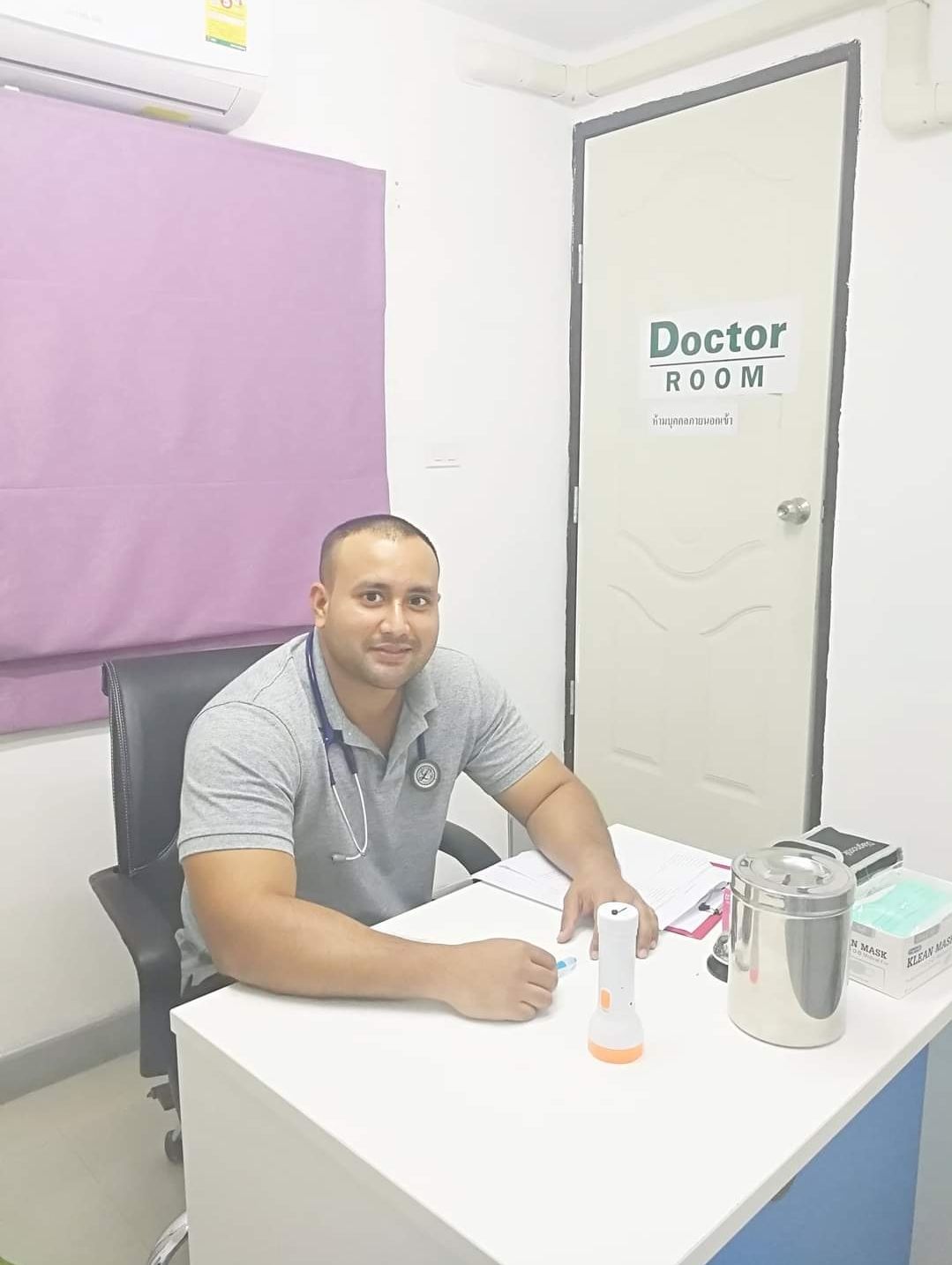
Dr. Ponlawat Pitsuwan is a physician at Doctor Bangkok, a private clinic in central Bangkok. He sees expats, residents, and medical tourists for general medicine, wellness consultations, and IV therapy. His focus is straightforward, evidence-based care delivered in plain language.