
Clinically reviewed by Dr. Ponlawat Pitsuwan, Physician, Doctor Bangkok. Last reviewed: July 2026
Thyroid disorders are common, often missed, and very treatable. If you have been feeling exhausted, gaining weight, or losing hair since arriving in Bangkok, a single blood test can tell you whether your thyroid is the problem. Doctor Bangkok offers same-visit thyroid testing with English-language results and on-site physician review.
You moved to Bangkok, or you have been here a while, and something feels off. You are tired in a way that sleep does not fix. Your weight is changing without explanation. You are sweating more than you think you should, or you feel cold when everyone else is fine. You Googled your symptoms, and now you are wondering about your thyroid. That is a reasonable thing to wonder.
Bangkok adjustment is real. The heat, the time zone shift, and the change in diet and routine all affect how you feel in the first few months. But thyroid symptoms do not go away after you settle in. They persist, and they tend to add up. If you are three months into life here and still not feeling right, it is worth ruling out a thyroid problem. It is a simple blood test, and the answer is usually clear.

What Your Thyroid Actually Does
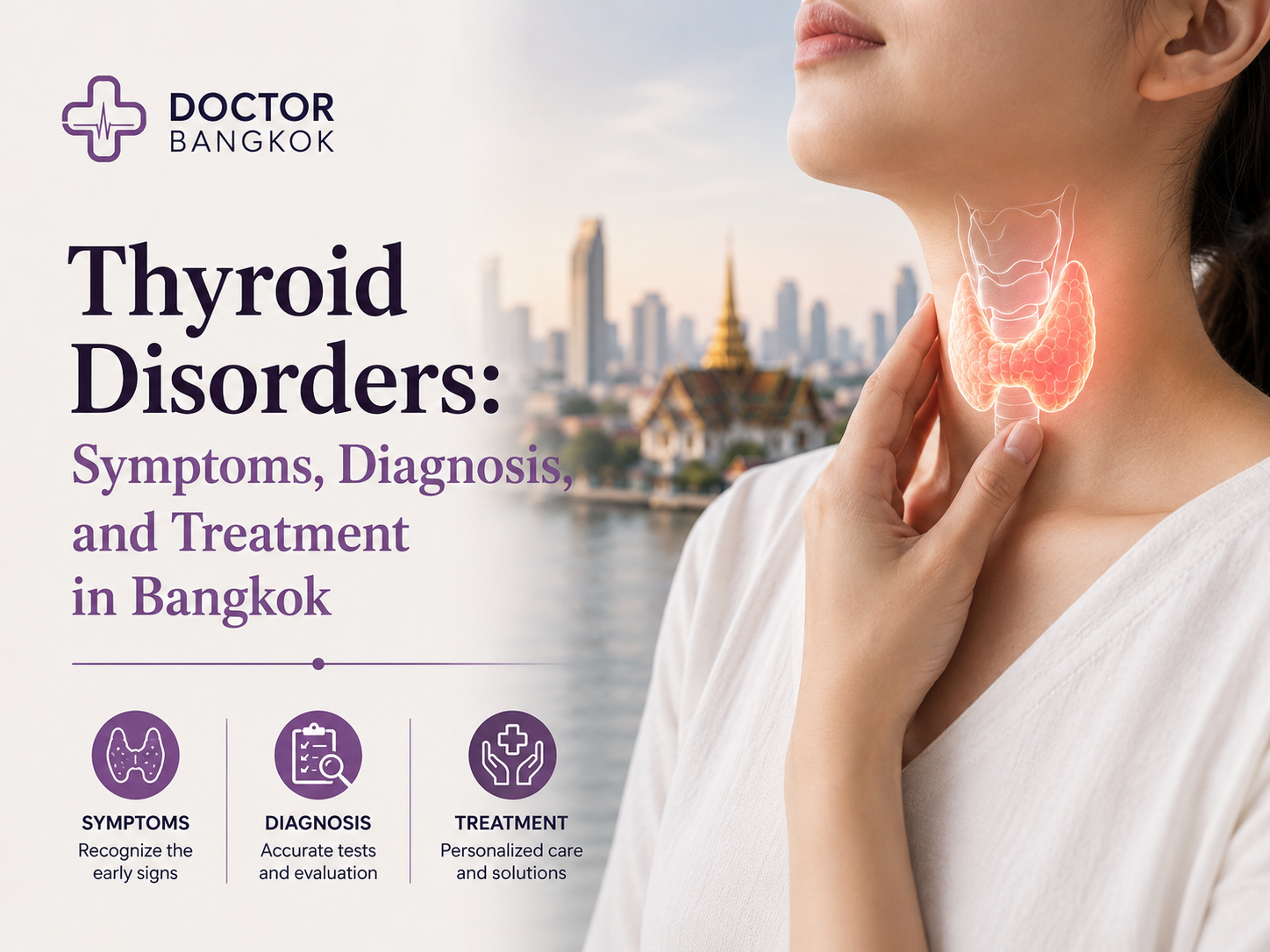
Your thyroid is a small gland at the front of your neck. It controls how fast or slow your body runs. When it produces too little hormone, everything slows down: your energy, your metabolism, your mood, your digestion. When it produces too much, everything speeds up: your heart rate, your temperature, your anxiety level.
Most people do not think about their thyroid until something goes wrong. You do not need to understand the gland in detail to understand what happens when it stops working properly.
The Main Types of Thyroid Disorder
Hypothyroidism — when your thyroid is underactive
This is the more common of the two. Your thyroid is not producing enough hormone, and your body slows down as a result. You feel tired, you gain weight without eating more, your skin gets dry, and your hair thins or falls out. Some people feel cold all the time, even in Bangkok’s heat.
Hashimoto thyroiditis is the most common cause. It is an autoimmune condition where your immune system gradually damages the thyroid. Many expats who come in with low-grade fatigue and hair loss turn out to have Hashimoto’s that was never diagnosed.
Subclinical hypothyroidism is worth flagging here. Your TSH, the main marker we check, is slightly elevated, but your T4 is still normal. You may have mild symptoms or none at all. It does not always need treatment, but it does need monitoring.
Hyperthyroidism — when your thyroid is overactive
Here, the thyroid is producing too much hormone. Your heart races. You feel anxious and wired. You may be losing weight despite eating normally, sweat more than usual, and struggle to sleep. Some patients notice their hands shaking or their eyes appearing more prominent.
Graves disease is the most common cause. Like Hashimoto’s, it is autoimmune. Your immune system is pushing the thyroid to overproduce.
Thyroid nodules and goiter
Some people develop lumps within the thyroid, called nodules, or a visible swelling in the neck, called a goiter. Most nodules are not cancerous, but they do need evaluation. If you notice any swelling in your neck, come in and have it looked at.

Why Expats in Bangkok Are at Higher Risk
This is the part that most thyroid articles skip, and it matters if you are living here.
Moving countries is a significant physical stress, even when it is a positive move. Cortisol, the body’s stress hormone, stays elevated for weeks or months after a major life change. High cortisol can suppress thyroid hormone regulation and bring a borderline condition into symptomatic territory. It can also unmask a condition that was sitting quietly in the background.
Diet changes matter too. Iodine, which the thyroid needs to make hormone, is present in different amounts in Thai food compared to many Western diets. A significant drop in iodine intake over months can affect thyroid function. Sleep disruption, common in the first months of relocation, adds another layer of hormonal stress.
The bottom line: if your thyroid was functioning on the edge before you moved, Bangkok’s adjustment period may push it into symptomatic territory.
When Bangkok Symptoms Are Not What They Seem
Fatigue, heat intolerance, weight changes, and mood dips are also what the first few months in a tropical city feel like. Most of it is normal adjustment. But there is a point where it should have resolved, and if it has not, that is a signal.
The difference with thyroid symptoms is that they do not settle with time. They often get worse. They also come with things that climate adjustment does not explain: hair loss, persistent cold sensitivity, a racing heart at rest, or a visible change in your neck. If your symptoms have lasted more than eight to ten weeks and are not improving, a thyroid test is the right next step.
Getting Tested for Thyroid Disorders in Bangkok
A thyroid blood test is straightforward. Blood is drawn at the clinic, and results come back the next day in most cases.
TSH is the main screening marker. Think of it as the signal your brain sends to your thyroid. If TSH is high, your brain is working hard to push a sluggish thyroid. If it is very low, the thyroid is overproducing on its own. We then check Free T4 as a direct measure of what the thyroid is actually releasing. If autoimmune disease is suspected, we add antibody tests.
At Doctor Bangkok, a full thyroid panel is available as part of our thyroid disorder diagnosis and treatment service. Blood is drawn on-site, your physician reviews results with you in English, and you do not need a referral or a large hospital system to get this done.
Managing a Pre-existing Thyroid Condition in Bangkok
If you arrived already on thyroid medication, this section is for you.
Levothyroxine, the standard treatment for hypothyroidism, is available in Thailand. Brands differ from what you may know at home, but the medication is the same. If your supply is running low or your prescription has lapsed, a private clinic can review and refill it without restarting the whole diagnostic process.
What you do need before any dose adjustment is a current TSH result. Thyroid requirements can shift after a major life change, and the dose that was right at home may need recalibrating here. I see this regularly in patients who have been in Bangkok six months or more.
For patients on anti-thyroid drugs such as carbimazole or methimazole, the same applies. Bring whatever documentation you have from your home physician. The chronic conditions service at Doctor Bangkok is set up exactly for this kind of ongoing care.
Thyroid Disorders and Women’s Health
Thyroid disorders affect women far more often than men. If you are a woman in your thirties, forties, or going through perimenopause, thyroid screening deserves a place in your regular health checks.
Postpartum thyroiditis can develop in the months after giving birth and often goes unrecognised because the symptoms, fatigue, mood changes, and weight fluctuation, are attributed to new parenthood. If you gave birth in the last year and are not feeling right, ask for a thyroid test. Unexplained cycle changes, especially in women who have relocated and are under more stress than usual, can also point to an underlying thyroid issue.
How Thyroid Disorders Are Treated
Treatment depends on which direction your thyroid is going.
Hypothyroidism is treated with levothyroxine, a synthetic version of the hormone your thyroid is not making enough of. Most patients feel noticeably better within four to six weeks of starting the right dose. TSH levels are monitored every few months to keep the dose on track.
Hyperthyroidism has several treatment paths. Anti-thyroid medications are usually the first step. Some patients go on to other options, and those decisions are made with a specialist. If that is the path you need, we will refer you appropriately.
The part that matters most is starting. Thyroid disorders left untreated tend to worsen over time. Treatment is effective, and for most patients, life with a well-managed thyroid condition is entirely normal. You can book a thyroid consultation at Doctor Bangkok without a referral, at a clinic that is BTS accessible and set up for expat care.
Feeling exhausted, gaining weight, or noticing hair loss that will not stop? Doctor Bangkok offers same-visit thyroid blood testing, English-speaking physicians, and ongoing thyroid management for expats and long-term residents in central Bangkok. If you are already on thyroid medication and need a prescription review, we handle that too. Book your thyroid consultation at doctorbangkok.co.th, no referral needed, BTS accessible.
FAQ
Can moving to Bangkok trigger or worsen a thyroid disorder?
It can, especially if you already have a predisposition. Relocation raises cortisol, which can suppress thyroid hormone regulation and bring a borderline condition into symptomatic territory. It will not cause autoimmune thyroid disease from scratch, but it can accelerate or unmask one that was already developing. A baseline TSH check in your first few months here is a sensible precaution.
How do I know if my fatigue and weight changes are thyroid-related or just Bangkok adjustment?
Climate and lifestyle adjustment should improve over the first two to three months. Thyroid symptoms do not follow that pattern. They persist and often worsen, and they tend to come with other signs like hair loss, persistent cold sensitivity, or a racing heart at rest. One TSH blood test answers the question quickly.
Can I get my thyroid medication refilled at a private clinic in Bangkok?
Yes. If you are on levothyroxine or an anti-thyroid drug and need a prescription review or refill, a primary care clinic can handle that. Bring your current medication or any documentation from your home doctor, and your physician will check your current levels and manage from there.
What thyroid blood tests should I ask for in Bangkok?
TSH is the main screening marker, and Free T4 is usually added alongside it. If autoimmune disease is suspected, antibody tests are included. Your physician will guide which panel fits your situation. You do not need to memorise the list beforehand.
Is thyroid screening recommended even without symptoms?
Routine thyroid screening is not universally recommended for all adults. That said, women over 30, anyone with a family history of thyroid disease, and those who have made a significant life change like international relocation have good reasons to include a thyroid panel in their annual health check.
How long does it take to feel better on thyroid treatment?
Most patients on levothyroxine for hypothyroidism notice improvement within four to six weeks, though full stabilisation can take a few months. Getting the dose right requires TSH monitoring along the way. Once levels are in range, most people feel back to normal.
Are there thyroid risks specific to living in Thailand?
Dietary iodine levels in Thailand differ from many Western countries, and a significant change in intake can affect thyroid function over time. Heat and humidity can also mask or mimic some thyroid symptoms, which sometimes delays people from getting tested. A routine check covers both possibilities.
Dr. Ponlawat Pitsuwan
Physician, Doctor Bangkok
a private medical clinic in central Bangkok. He sees expats, residents, and medical tourists for thyroid disorders, chronic condition management, and general health concerns. His focus is straightforward, evidence-based care delivered in plain language.
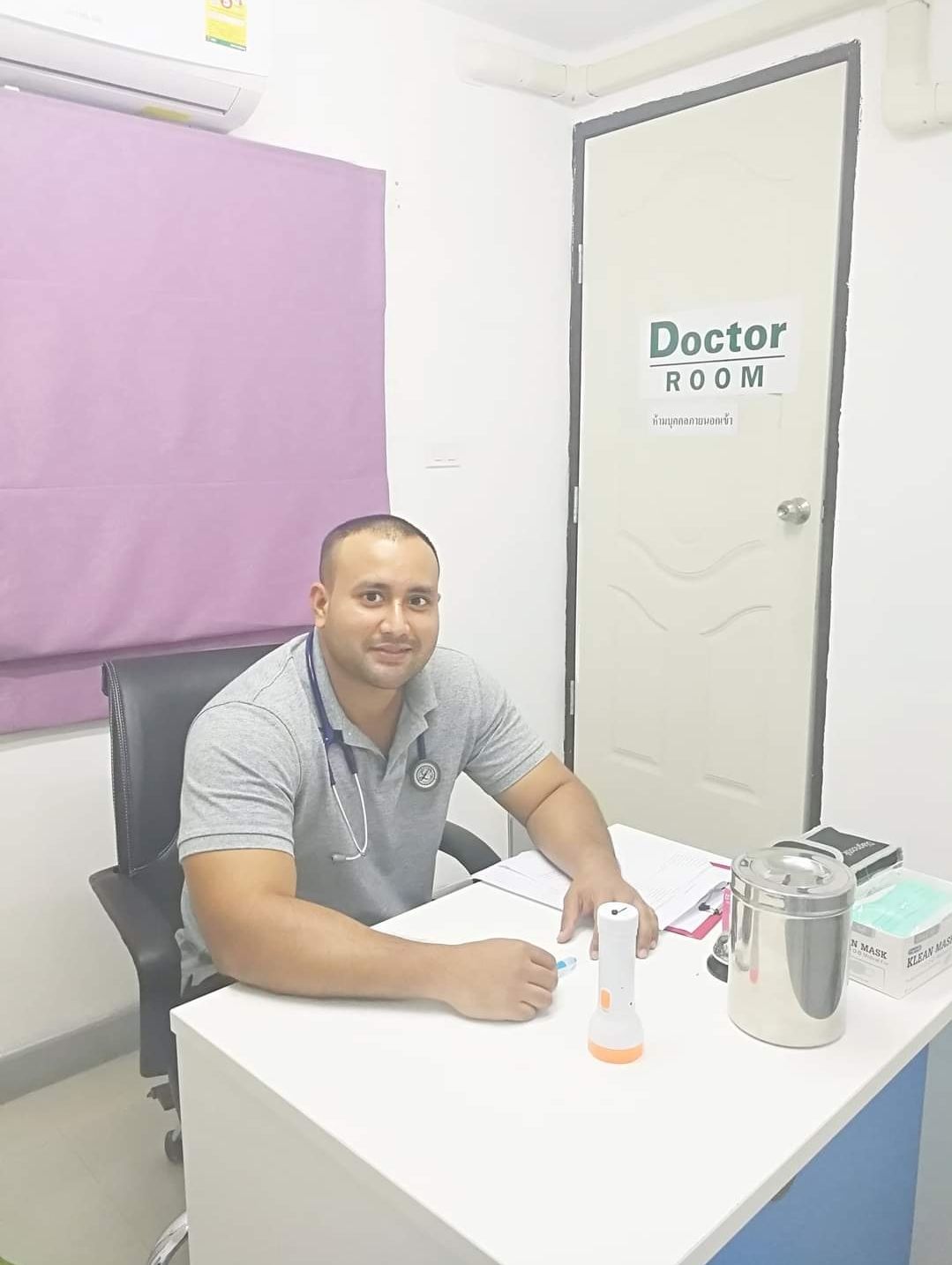
Dr. Ponlawat Pitsuwan is a physician at Doctor Bangkok, a private clinic in central Bangkok. He sees expats, residents, and medical tourists for general medicine, wellness consultations, and IV therapy. His focus is straightforward, evidence-based care delivered in plain language.