
Clinically reviewed by Dr. Ponlawat Pitsuwan, Physician, Doctor Bangkok.
Last reviewed: July 2026
STD rates in Thailand have risen sharply over the past several years, with syphilis, HIV, gonorrhea, and chlamydia all increasing in Bangkok. Many infections cause no symptoms at all, which means most people who have one do not know it. If you have had any unprotected sex in Thailand, getting tested is the only way to know where you stand.
If you are living in Bangkok, visiting for a few weeks, or here for reasons you would rather keep private, this article is for you. STDs in Thailand are not a scare story. They are a real, measurable, and largely manageable health issue. They affect expats and travellers more than most people realise, partly because of behaviour, and partly because testing just does not happen often enough.
Rates are going up. Syphilis has more than doubled nationally since 2018, according to Thailand’s Department of Disease Control. HIV remains a significant concern, particularly among men who have sex with men in Bangkok. Gonorrhea is becoming harder to treat due to antibiotic resistance. None of this is a reason to panic. It is a reason to understand what you are dealing with and get tested if there is any chance you need to be.

Which STDs Are Most Common in Thailand Right Now
The infections that show up most often in my clinic, and in national data, are syphilis, HIV, gonorrhea, chlamydia, hepatitis B, and HPV.
Syphilis is the one that has changed the most. Cases have risen sharply, and Bangkok accounts for a significant share of those numbers. Early syphilis can look like almost nothing: a small sore that heals on its own, a faint rash. People carry it for months without knowing.
Gonorrhea is common and becoming trickier to treat. Drug-resistant strains are now circulating in Bangkok. If you pick up gonorrhea here and try to treat it with older antibiotics back home, there is a real chance they will not work.
Chlamydia is probably the most under-diagnosed infection I see. Most people with chlamydia have no symptoms at all. No discharge, no burning, nothing. The only way to find it is to test for it.
The Syphilis Surge and What It Means for You
Thailand’s syphilis rate reached 18.6 cases per 100,000 people by 2022 and has continued rising, according to Thailand’s Department of Disease Control. Congenital syphilis, passed from mother to baby during pregnancy, quadrupled over a similar period.
For a foreign adult in Bangkok, this means the pool of potential exposure is larger than it was five years ago. Even one unprotected encounter with someone who looks and feels completely well carries real risk. Early syphilis is infectious and invisible.
The good news is that syphilis is completely curable with a single antibiotic injection if caught early. The longer it goes untreated, the more complicated it becomes. This is one infection where testing early genuinely changes the outcome.

Why Expats and Travellers Face a Different Risk Profile
I want to be direct about this because most articles dance around it. Expats and short-stay visitors in Bangkok often have more sexual contacts than they would at home. Some of that is nightlife. Some of it is dating apps. Some of it is simply being in an unfamiliar city where normal routines do not apply.
On top of that, many expats have not had a sexual health check in years. At home, a GP might prompt them. Here, there is no system nudging you toward it, and public hospitals can be hard to use without Thai language skills.
There is also a stigma barrier. Many people worry about privacy. They wonder if results will be shared with their employer, their insurance provider, or Thai immigration. At a private clinic, they will not be. The FAQ below covers this directly.
For more on staying healthy as a visitor or expat, our travel health page covers what you need to know before and after potential exposures in Thailand.
Asymptomatic Infections: The Part That Catches People Off Guard
This is the most important clinical point in this article. Most common STDs produce no symptoms, at least not at first.
Chlamydia is silent in the majority of cases. Early HIV often feels like a brief flu. Early syphilis causes a painless sore that disappears on its own. Gonorrhea in the throat or rectum almost never causes symptoms.
People come to me saying they feel fine, so they are probably okay. That reasoning does not work with STDs. Feeling fine and being clear are two completely different things. Routine testing, not symptom-driven testing, is the only way to actually know.
What to Do After a Possible Exposure in Bangkok
This is what I would tell you if you walked in right now.
If HIV exposure is possible, the 72-hour window for PEP (post-exposure prophylaxis, a 28-day course of antivirals) is real and it is hard. Every hour matters. Do not wait until morning. Do not wait until Monday. Doctor Bangkok is open around the clock and no appointment is needed.
Within the first two weeks, get a baseline STD panel. This gives us a starting point even before all infections are detectable. Then retest at the right window periods: four weeks for a fourth-generation HIV test, six weeks for syphilis, and a further check at three months to confirm.
You can read more about what a full STD screening in Bangkok covers and what to expect on the day.
Window Periods: When Can a Test Actually Find It
A test can only find an infection once your body has had time to react. Testing too soon gives a false negative, a clean result that is not actually clean.
| Infection | Earliest Reliable Test | Recommended Retest |
|---|---|---|
| HIV (4th generation) | 4 weeks | 3 months to confirm |
| Syphilis | 3 to 6 weeks | 6 weeks, confirm at 3 months |
| Gonorrhea | 1 to 2 weeks | Sooner if symptomatic |
| Chlamydia | 1 to 2 weeks | Sooner if symptomatic |
| Hepatitis B | 6 weeks | 3 months |
| Hepatitis C | 8 to 11 weeks | 6 months |
If you are not sure when to test, come in and we will work out the right timing based on your specific situation.
Prevention Beyond Condoms
Condoms, used correctly, are still the most effective barrier against most STDs. But there are other tools worth knowing.
PrEP (pre-exposure prophylaxis) is a daily pill that is highly effective at preventing HIV in people at ongoing risk. It is available at Doctor Bangkok without Thai residency or a prior prescription. If you are having sex with multiple partners or with someone whose HIV status you do not know, PrEP is worth a conversation.
HPV vaccination protects against the strains most likely to cause cervical cancer and genital warts. It is recommended for adults up to age 45 who have not been vaccinated. Hepatitis B vaccination is also available if you are not already immune.
DoxyPEP, a dose of doxycycline taken within 72 hours of unprotected sex, has shown in recent research to reduce bacterial STDs including chlamydia, gonorrhea, and syphilis in certain higher-risk groups. It is not right for everyone, but it is something I discuss with patients who have had repeated exposures.
Getting Tested at Doctor Bangkok: What to Expect
Walking into a clinic for an STD test can feel awkward. I see that every day, and there is no judgment here.
Testing at Doctor Bangkok is anonymous. You do not need to show a passport or ID. Results are confidential and will not be shared with employers, insurance companies, or immigration authorities. We can run a full panel covering HIV, syphilis, gonorrhea, chlamydia, hepatitis B, hepatitis C, herpes, and HPV, or focus on specific infections based on your situation.
Many results are available the same day. We provide fully itemised receipts compatible with international travel insurance reimbursement claims, which matters for a lot of visitors. If a result comes back positive, we walk you through what it means and what happens next, clearly, in English.
Concerned about a possible exposure in Bangkok? Doctor Bangkok offers confidential, anonymous STD testing with same-day results and no appointment needed, open 24 hours on Sukhumvit Soi 13. PrEP, PEP, full screening panels, and English-speaking physicians are all available. Visit doctorbangkok.co.th or walk in any time.
How common are STDs in Bangkok compared to other cities?
Bangkok has a higher STD transmission environment than many Western cities, driven by a large population, active nightlife, and significant tourism. Thailand’s Department of Disease Control reported 96.87 diagnosed STD cases per 100,000 Bangkok residents in recent data, and syphilis rates nationally have more than doubled since 2018. These numbers reflect diagnosed cases only, so the real figure is almost certainly higher given how many infections go undetected.
Can I get tested in Bangkok without showing my passport?
Yes. At Doctor Bangkok, testing is fully anonymous. No passport, no ID, no registration under your real name if you prefer not to. Your results stay between you and the doctor.
I had unprotected sex last night. What should I do right now?
If HIV exposure is a possibility, come in immediately to discuss PEP. It must be started within 72 hours, and earlier is more effective. Get a baseline STD panel within two weeks, then retest at the appropriate window periods to confirm. Doctor Bangkok is open 24 hours with no appointment needed.
Will my travel insurance cover STD testing in Bangkok?
Many international travel insurance policies cover consultations and testing for new infections acquired during travel. Doctor Bangkok provides fully itemised medical receipts that work with most reimbursement processes. Check your specific policy, as some exclude lifestyle-related claims, but a new infection during travel is commonly covered.
What is the difference between PrEP and PEP?
PrEP is a daily medication taken before potential HIV exposure to prevent infection, suited to people at ongoing or regular risk. PEP is an emergency 28-day course started within 72 hours after a potential exposure. Both are available at Doctor Bangkok without a prior prescription or Thai residency, but PEP is time-critical, so do not delay.
Can you get an STD from oral sex in Thailand?
Yes. Gonorrhea, syphilis, herpes, and HPV can all be transmitted through oral sex. Throat gonorrhea is particularly common and almost always causes no symptoms, which is why a throat swab should be part of your panel if oral sex was involved. These infections are easily missed if you only test based on what you feel.
What happens if my result comes back positive?
We tell you directly, explain what it means, and go through your treatment options the same day. Bacterial infections like chlamydia, gonorrhea, and syphilis are curable with antibiotics. HIV is manageable with daily medication, and a positive result does not change your ability to live a full, healthy life. Nothing is shared outside the consultation without your consent.
Dr. Ponlawat Pitsuwan
Physician, Doctor Bangkok
a private medical clinic in central Bangkok. He sees expats, residents, and medical tourists for sexual health consultations, STD screening, PrEP and PEP assessment, and travel medicine. His focus is straightforward, evidence-based care delivered in plain language.
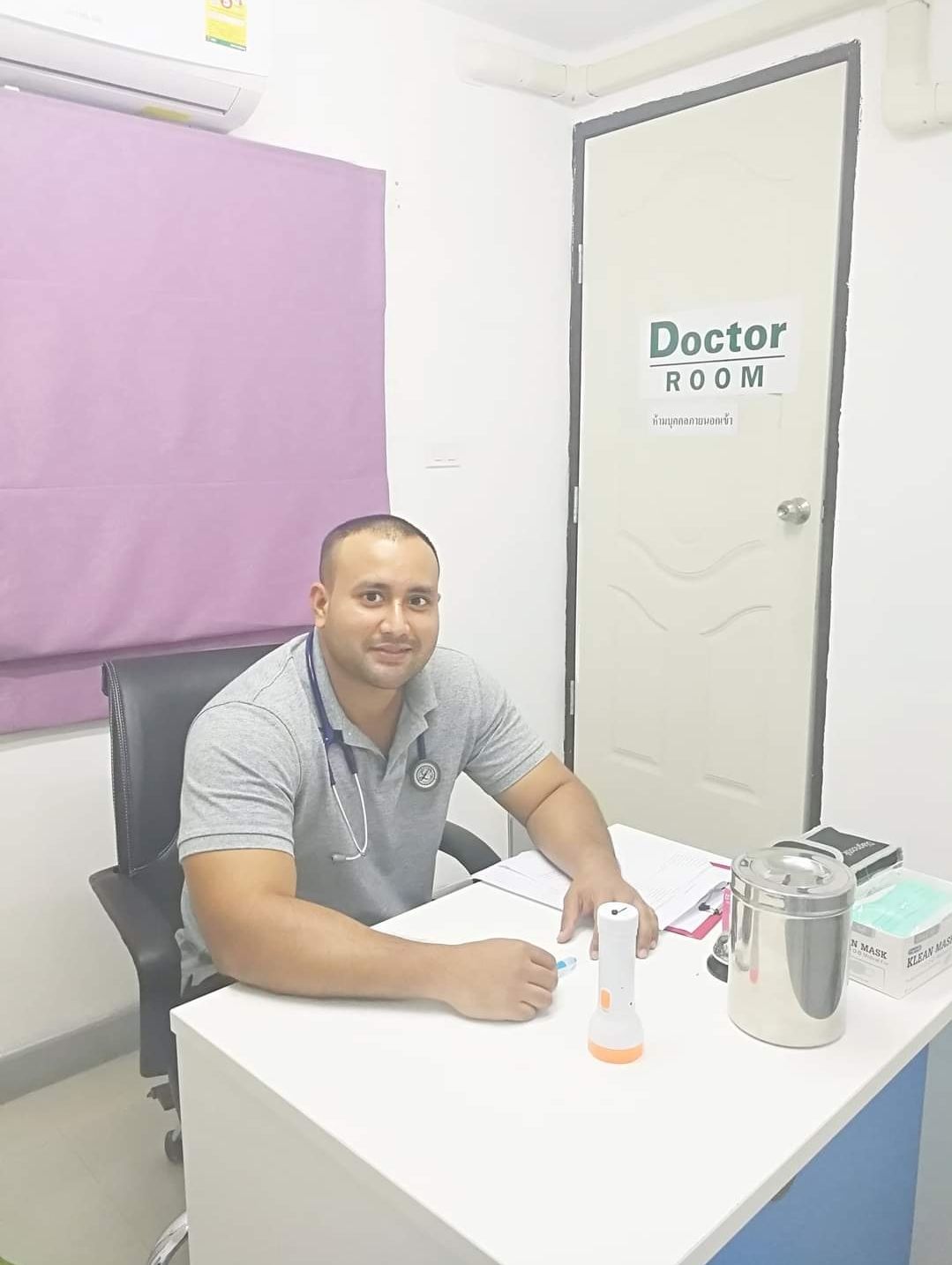
Dr. Ponlawat Pitsuwan is a physician at Doctor Bangkok, a private clinic in central Bangkok. He sees expats, residents, and medical tourists for general medicine, wellness consultations, and IV therapy. His focus is straightforward, evidence-based care delivered in plain language.