
Clinically reviewed by Dr. Ponlawat Pitsuwan, Physician, Doctor Bangkok. Last reviewed: July 2026
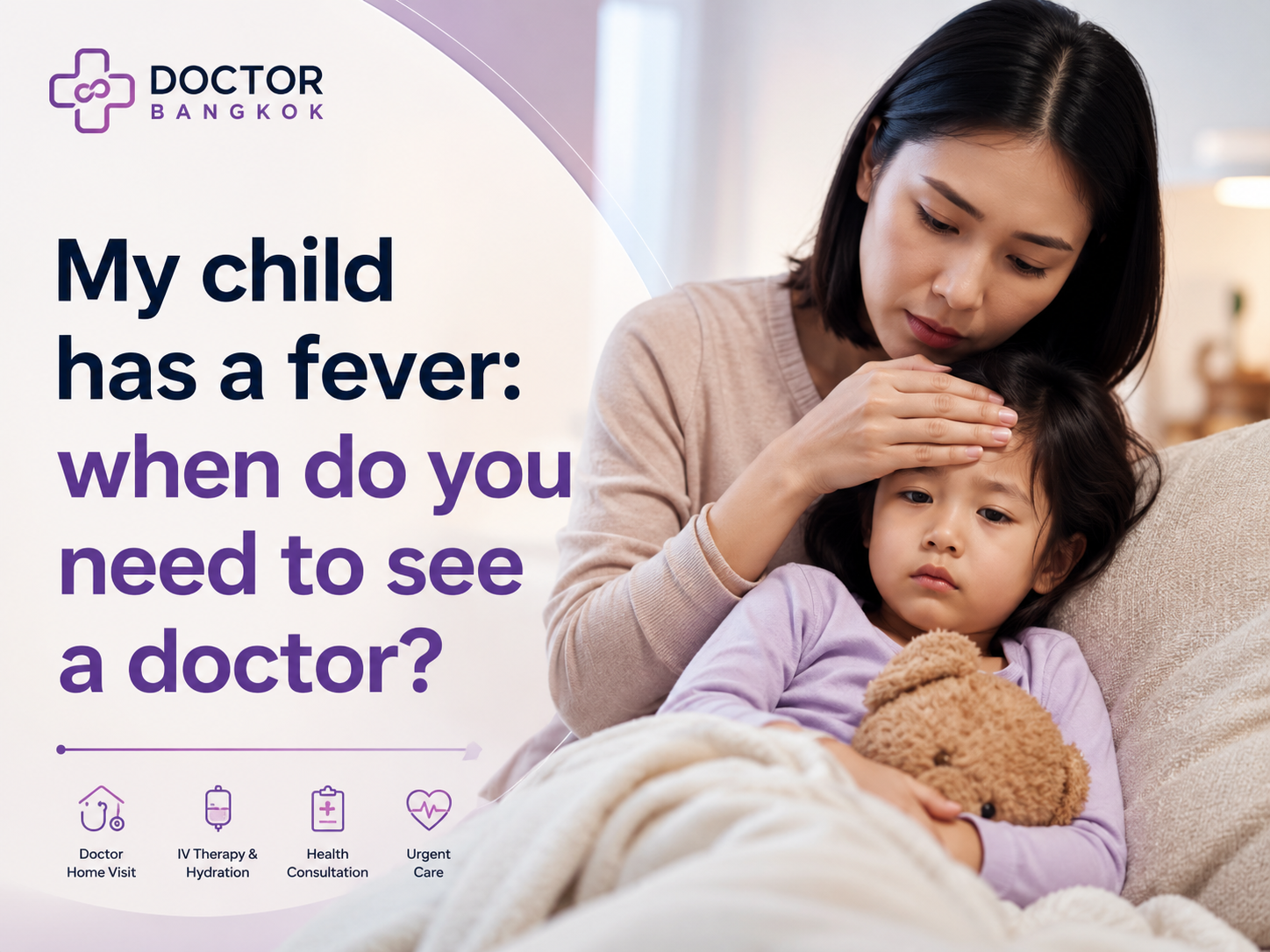
A fever in children is a temperature of 38°C (100.4°F) or above. Any fever in a baby under 3 months needs same-day medical review. For older children, how your child looks and behaves matters as much as the number. In Bangkok, a fever lasting more than 2 days without a clear cause always warrants a doctor visit to rule out dengue and other tropical infections.
If you are a parent, you know the feeling. You put your hand on your child’s forehead, something feels off, and suddenly you are Googling at midnight trying to work out whether to panic or wait until morning. That anxiety is completely normal. There is even a name for it: fever phobia. Parents tend to overestimate how dangerous fevers are, and that fear can lead to either unnecessary panic or, sometimes, waiting too long when it actually matters.
A fever is not an illness. It is your child’s immune system doing its job. Most childhood fevers come from ordinary viral infections and clear up on their own. But some need a doctor, and a few need a doctor today. If you are raising a child in Bangkok, you also have tropical infections to consider, including dengue, that no overseas parenting website will flag for you. Here is exactly what to watch for.

Baby fever chart: what temperature is normal and what needs treatment?
Normal body temperature in children sits around 36.5°C to 37.5°C. A fever starts at 38°C. Anything above 39°C is a high fever. Above 40°C, you need to act now.
How you measure temperature matters. Rectal measurement is the most accurate in babies under six months. Ear thermometers are reliable from around six months. Forehead strip thermometers, the kind sold in most Thai pharmacies, are not accurate enough to rely on for an infant.
| Child’s Age | Temperature | What to Do |
|---|---|---|
| Under 3 months | 38°C or above | See a doctor today. No exceptions. |
| 3 to 6 months | 38°C to 38.9°C | Call or visit a doctor if it persists |
| 3 to 6 months | 39°C or above | See a doctor today |
| 6 months and older | 39.5°C or above | See a doctor if there is no obvious cause |
| Any age | 40°C or above | Seek medical care today |
| Any age | Fever lasting more than 48 hours | See a doctor |
The number gives you a starting point. Your child’s behaviour tells you the rest. UK guidelines from NICE organise fever assessment around how your child looks, breathes, and drinks, not just what the thermometer reads.
Fever in babies under 3 months: why it is always urgent
A baby under three months with a temperature of 38°C or above needs to be seen the same day. Every time. No waiting to see if it comes down.
Young babies cannot fight infection the way older children can. An infection that would be minor in a toddler can become serious very quickly in a newborn. We cannot tell from the outside how unwell they actually are.
Watch for these signs in any young baby: a cry that sounds high-pitched or unusual, skin that looks mottled or pale, a soft spot on the head that appears to bulge, breathing that seems faster than normal, or a baby who is unusually floppy or hard to wake. Any of these means go now.

My toddler has a fever but no other symptoms: what could it be?
This comes up constantly in my clinic. A toddler with a fever of 38.5°C or 39°C, no runny nose, no cough, eating reasonably well, but clearly not themselves. Parents want to know what is going on.
The most common answer is a viral infection with no obvious external signs. One worth knowing about is roseola, which is very common in children under two. It causes several days of high fever, then disappears and is followed by a pink rash across the trunk. The rash tells you the fever is over. It looks alarming but is harmless.
In Bangkok, there is another possibility every parent here needs to keep in mind: dengue fever. Dengue causes a high fever, often 38.5°C to 40°C, that lasts several days. It does not always come with a rash at first, and it does not always come with obvious symptoms beyond the fever and your child looking unwell. If your child has had a fever for more than two to three days with no clear cause, dengue needs to be ruled out. This is especially true between May and October during the rainy season, but dengue circulates year-round in Bangkok.
Warning signs that make dengue more urgent: a rash appearing after the fever, pain behind the eyes, any sign of bleeding such as a nosebleed or small red spots on the skin, or a child who looks worse after the fever drops. Do not give ibuprofen if you suspect dengue. It increases bleeding risk. Use paracetamol only and come in for a dengue rapid test. Doctor Bangkok offers same-day dengue testing without a referral.
How to bring down a fever in a child: safe options at home
The goal is your child’s comfort, not forcing the thermometer to read normal. A child who is distressed, miserable, or refusing to drink needs help. A child who is warm but playing and drinking is probably fine to watch at home.
Paracetamol is safe from three months of age. Ibuprofen is safe from six months. Both must be dosed by weight, not age. This matters more than most parents realise. Dosing by the age printed on the box can mean under-treating a heavier child. If you are not sure of the right dose, ask a pharmacist or doctor.
One thing that catches expat parents out in Bangkok: Thai pharmacies sell paracetamol under brand names like Sara and Tempra. If you give one of these and then also give a generic paracetamol tablet, you are giving a double dose. Check the active ingredient before combining anything.
Keep your child hydrated. Offer fluids regularly, in small amounts if needed. A cool damp cloth on the forehead helps with comfort. Dress them lightly. A lukewarm bath is fine if they are distressed. Do not use cold water, ice, or rubbing alcohol on the skin. And do not give aspirin to children. Aspirin is linked to a rare but serious condition called Reye syndrome. You can read more practical guidance on our page about how to reduce fever in a child naturally.
Does teething cause fever? What the evidence actually says
The evidence is clear: teething does not cause a true fever. Temperature changes during teething are very small, well below the 38°C threshold. If your child is teething and has a temperature of 38.5°C or above, teething is not the cause.
I have seen parents wait several days to seek care, assuming a real fever was just teething. If your child has a fever during a teething period, treat it the same way you would any fever at that age. Do not dismiss it.
Febrile seizures: what they are, what to do, and how worried should you be?
Febrile seizures are terrifying to witness. Parents describe it as one of the most frightening moments of their lives. But they are common, usually brief, and they do not cause brain damage.
A febrile seizure is a convulsion triggered by a rapidly rising fever. They affect roughly one in thirty children between six months and five years. The child goes stiff, shakes, their eyes may roll, and then within a few minutes it stops.
Here is what to do if it happens: place your child on their side on the floor, time the seizure, do not put anything in their mouth, and do not try to hold them still. Stay with them.
A simple febrile seizure lasts less than fifteen minutes, involves the whole body, happens once in a twenty-four hour period, and the child recovers fully afterwards. A complex febrile seizure lasts more than fifteen minutes, affects only one side of the body, or happens again within twenty-four hours. A complex seizure requires emergency attendance right away. A simple one still needs same-day medical review, especially the first time, to rule out meningitis.
Febrile seizures do not mean your child has epilepsy. Most children grow out of them by age five. At Doctor Bangkok, we can assess your child after a febrile seizure and talk through what to expect going forward.
Worried about your child’s fever in Bangkok? Doctor Bangkok offers same-day consultations for children with fever, including dengue rapid testing and fever assessment for all ages. Our English-speaking doctors are here seven days a week in central Bangkok, close to BTS. If your child has had a high fever for more than two days, a fever with no obvious cause, or any of the warning signs in this article, do not wait. Book online or walk in at doctorbangkok.co.th.
FAQ
My child has had a fever for 3 days in Bangkok with no other symptoms. Could it be dengue?
Yes, it could be, and it is worth testing. A fever lasting more than two to three days without an obvious cause warrants a dengue rapid test in Bangkok, especially between May and October. Dengue often presents as a plain fever early on, with no rash and no other dramatic symptoms. Avoid ibuprofen until dengue is ruled out, and come in for same-day testing at Doctor Bangkok.
What temperature is a fever in a baby, and should I use Celsius or Fahrenheit?
A fever starts at 38°C, which is 100.4°F. Use Celsius in Thailand: that is what thermometers display and what doctors use here. For babies under six months, rectal measurement is the most accurate method. Ear thermometers are reliable from around six months, and forehead strip thermometers from Thai pharmacies are not accurate enough for infants.
My toddler has a fever but is acting completely normal. Do I need to see a doctor?
Behaviour matters as much as the temperature. If your child is alert, drinking, and not distressed, a low fever can be watched at home for twenty-four to forty-eight hours. But if the fever has no clear cause and lasts more than two days, come in, because in Bangkok that warrants a check for tropical infections including dengue. A child who is unusually drowsy or seems different from their normal unwell self always needs to be seen.
Should I give paracetamol or ibuprofen, and what dose is right for my child’s weight?
Both are appropriate options: paracetamol from three months, ibuprofen from six months. Always dose by weight, not age. In Bangkok, do not give a branded product like Sara or Tempra alongside a generic paracetamol at the same time, as they contain the same drug. If dengue is a possibility, use paracetamol only, and ask a pharmacist or doctor for the correct dose rather than estimating.
My child just had a febrile seizure. Do I need to go to the emergency room?
If the seizure lasted less than fifteen minutes, involved the whole body, stopped on its own, and your child is now recovering, it is most likely a simple febrile seizure, but it still needs same-day medical review, especially the first time it happens. If the seizure lasted more than fifteen minutes, affected only one side of the body, or happened more than once today, go to emergency now. Doctor Bangkok can assess children after a febrile seizure and guide next steps.
My child’s fever is not going down after paracetamol. What should I do?
First, check the dose was correct for your child’s weight. If it was and the fever is still high after an hour, you can give ibuprofen as an alternative, provided your child is over six months and dengue has not been flagged as a concern. If the fever stays above 39.5°C despite medication, your child is not drinking, or they seem more unwell rather than better, come in for a review. A fever that does not ease with paracetamol is always worth a doctor’s eyes.
About the author
Dr. Ponlawat Pitsuwan
Physician, Doctor Bangkok
a private medical clinic in central Bangkok. He sees expats, residents, and medical tourists for fever assessment, paediatric consultations, tropical illness testing, and general medical care. His focus is straightforward, evidence-based care delivered in plain language.
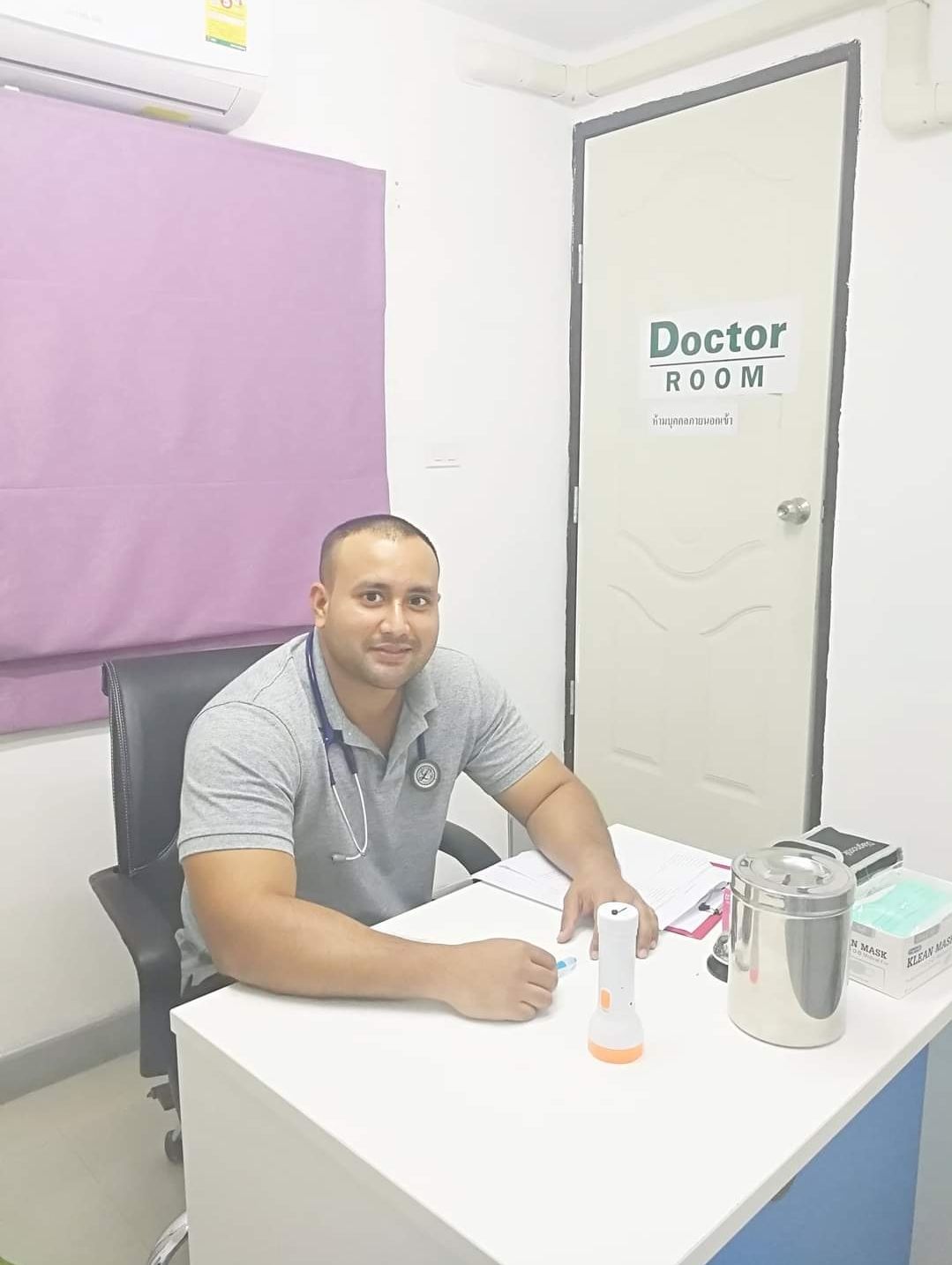
Dr. Ponlawat Pitsuwan is a physician at Doctor Bangkok, a private clinic in central Bangkok. He sees expats, residents, and medical tourists for general medicine, wellness consultations, and IV therapy. His focus is straightforward, evidence-based care delivered in plain language.