Clinically reviewed by Dr. Ponlawat Pitsuwan, Physician, Doctor Bangkok.
Last reviewed: July 2026
A fever in Bangkok is not the same as a fever at home. Dengue is common here, and the wrong medication can make things worse fast. Do not take ibuprofen or aspirin until dengue has been ruled out. Take paracetamol, drink fluids, and if your temperature is above 38.5°C or you feel very unwell, get a doctor to your room. Doctor Bangkok can reach most central Bangkok hotels within the hour.
You are lying in your hotel room. It is the middle of the night. You feel terrible, your head is pounding, and your thermometer says 39°C. You are not sure whether to tough it out, take something from the minibar, or search for the nearest hospital. If that is where you are right now, keep reading.
Most fevers in Bangkok are manageable. What matters is knowing what to do in the first few hours, and what not to do. There is one medication mistake I see tourists make repeatedly, and it can turn a manageable situation into a serious one. I will get to that shortly.

Why fever in Bangkok is different from fever at home
Back home, a 38.5°C fever usually means rest, paracetamol, and a day in bed. Here, that same fever could be dengue, food poisoning, a respiratory infection, or heat exhaustion on top of dehydration. Several of those behave very differently from a standard cold, and one of them has a specific medication rule most tourists do not know about.
Bangkok’s heat speeds things up. You lose fluid faster here than in a cooler climate, especially if you have been out in 35-degree heat all day and wake up feverish at 2am. That makes your fever feel worse and your body less able to cope.
Bangkok is also a dengue-endemic city. Cases come in year-round, with a peak during the rainy season from roughly May to October. The mosquitoes that carry dengue bite during the day, so if you have been sightseeing or eating at outdoor markets, exposure is possible.
How high is too high — your temperature guide for tonight
Here is how I would think about your reading right now.
| Temperature | What it means | What to do |
|---|---|---|
| Below 37.5°C | Not a fever | Monitor. Rest. Hydrate. |
| 37.5°C to 38.4°C | Low-grade fever | Paracetamol if uncomfortable. Watch for other symptoms. |
| 38.5°C to 39.9°C | Significant fever | Call a doctor. Do not wait until morning if you feel very unwell. |
| 40°C or above | High fever | This needs assessment tonight, not tomorrow. |
| 40°C with confusion, seizure, or difficulty breathing | Emergency | Call 1669 or go to the emergency room now. |
These are general guidelines. Any temperature combined with a rash, bleeding gums, severe joint pain, or blood in urine or stool changes the picture immediately and needs urgent attention.
The Bangkok fever medication rule — do not take ibuprofen
This is the most important thing on this page.
If you have a fever in Bangkok and have not yet seen a doctor, take paracetamol. Do not take ibuprofen. Do not take aspirin. Do not take any anti-inflammatory painkiller until dengue has been ruled out by a blood test.
Ibuprofen and aspirin increase bleeding risk in dengue patients. I have seen tourists take ibuprofen for days before realising they had dengue. Some needed hospital admission that might have been avoided.
Paracetamol is safe with dengue. Stick to the dose on the packet and do not exceed 4 grams in 24 hours. If you cannot keep tablets down because of vomiting, that is another reason to call a doctor.
What could be causing your fever right now
Most fevers in Bangkok tourists come down to a few things. A respiratory virus is still the most common cause, just as it is anywhere in the world. Food poisoning is also very common, especially if you have had street food or shellfish in the last 24 to 48 hours.
Dengue typically starts with a sudden high fever, severe headache, pain behind the eyes, and muscle or joint pain. A rash may appear a few days in, but not everyone gets one. Many patients describe dengue as the worst flu of their life.
Heat exhaustion can also cause a low-grade fever, especially if you have not been drinking enough water. This usually improves quickly with rest, cool air, and fluids. The only way to know which of these you are dealing with is a blood test.
What happens when you call a doctor to your hotel room
When you contact Doctor Bangkok, we can send a doctor to your room in most central Bangkok hotels, serviced apartments, and guesthouses. The doctor takes a full history, examines you properly, and can arrange a dengue blood test at your bedside. If you are dehydrated and cannot keep fluids down, IV rehydration can be set up in your room. If you need prescription medication, the doctor brings it or arranges delivery.
You do not have to navigate a Thai hospital at 2am. That matters more than it sounds when you are sick, exhausted, and far from home. You can read more about how our hotel doctor visits work before you call.
When to go to the emergency room instead
A hotel doctor visit is right for most fevers. Some situations need an emergency room.
Go directly to the ER, or call 1669 for an ambulance, if your fever is 40°C or above with confusion, difficulty breathing, or a seizure. Go if you have a stiff neck with sensitivity to light, are vomiting blood, or notice blood in your stool. Cold hands and feet alongside a high fever also need emergency assessment.
If the patient is an infant under three months old, that is an emergency regardless of temperature.
The nearest English-language emergency departments to central Bangkok are Bumrungrad International Hospital, Bangkok Hospital, and Samitivej Sukhumvit. If you are not sure whether your situation needs an ER or a hotel doctor, message Doctor Bangkok on WhatsApp and describe your symptoms. We will tell you honestly.
Travel insurance and your Bangkok fever — what to document
Most travel insurance policies cover urgent medical care including hotel doctor visits. You usually pay upfront and claim when you get home.
Before the doctor leaves, ask for an itemised receipt in English, a written medical report, and the diagnosis. Doctor Bangkok provides all of this as standard. Check your policy beforehand if you can, as some insurers require pre-authorisation before you seek care. If your situation is urgent, get care first and handle the paperwork second.
Keep everything: receipts, the medical report, any prescription labels. Photograph them on your phone as a backup.
Follow-up care after the doctor visits
If your test shows dengue or a bacterial infection, one visit is usually not the end of it.
With dengue, daily monitoring during days three to seven of fever is important. This is when symptoms can worsen and platelet counts can drop. If you are otherwise stable, a doctor can return to your hotel each day rather than you going to hospital. For bacterial infections treated with antibiotics, most patients start to feel better within 48 hours. If you are not improving by then, let the doctor know.
Doctor Bangkok can arrange follow-up hotel visits throughout your stay. Once you are well enough to travel, you are also welcome at our clinic on Sukhumvit Soi 13. You can find full details on our fever treatment page. Either way, you will not be left to manage alone in a hotel room with no idea whether you are getting better or worse.
Fever in your Bangkok hotel room tonight? Doctor Bangkok sends English-speaking doctors to hotels, serviced apartments, and guesthouses across central Bangkok, any time of day or night. We test for dengue at your bedside, start IV fluids if you need them, and arrange same-day follow-up. Message us on WhatsApp or visit our hotel doctor service page to reach us now.
Frequently asked questions
Should I take ibuprofen for my fever in Bangkok?
No. Until dengue has been ruled out by a blood test, ibuprofen and aspirin are not safe choices here. Both increase bleeding risk in dengue patients. Take paracetamol instead and call a doctor for a proper assessment.
How quickly can a doctor reach my hotel in Bangkok?
Doctor Bangkok reaches most central Bangkok hotels within 45 to 75 minutes of a WhatsApp message. Response time varies with traffic and your distance from our Sukhumvit Soi 13 clinic. We are available 24 hours a day, seven days a week, including public holidays.
Can the doctor test me for dengue in my hotel room?
Yes. Doctor Bangkok can arrange a dengue blood test at your bedside or take a sample for laboratory processing. The right test in the first five days of fever is the NS1 antigen test, and the result directly guides how we manage your care.
Will my travel insurance cover a hotel doctor visit in Bangkok?
Most travel and expat insurance policies cover urgent hotel doctor visits. You typically pay upfront and claim on return. Ask the attending doctor for an itemised English-language receipt and a written medical report before they leave. Doctor Bangkok provides both as standard.
When should I go to the emergency room instead of calling a hotel doctor?
Go to the ER if your temperature is 40°C or above with confusion, seizures, or difficulty breathing, if you are vomiting blood or have blood in your stool, or if the patient is an infant under three months old. The Thai ambulance number is 1669. If you are unsure, message Doctor Bangkok on WhatsApp and we will advise you honestly.
I only have a mild fever. Do I still need a doctor?
Not necessarily tonight. If you are below 38.5°C, not vomiting, and have no rash or severe pain, you can monitor yourself with paracetamol and fluids for now. If you are still feverish after 48 hours, or your symptoms get worse at any point, get assessed. Dengue can look mild on day one and worsen significantly on days three to five.
Can the doctor set up an IV drip in my hotel room?
Yes. If you are dehydrated and cannot keep fluids down, IV rehydration can be given at your bedside. This is one of the most common reasons people call a hotel doctor in Bangkok, especially after a stomach illness or a high fever in hot weather.
Dr. Ponlawat Pitsuwan
Physician, Doctor Bangkok
a private medical clinic in central Bangkok. He sees expats, residents, and tourists for fever assessment, dengue testing, travel medicine, and general medical consultations. His focus is straightforward, evidence-based care delivered in plain language.
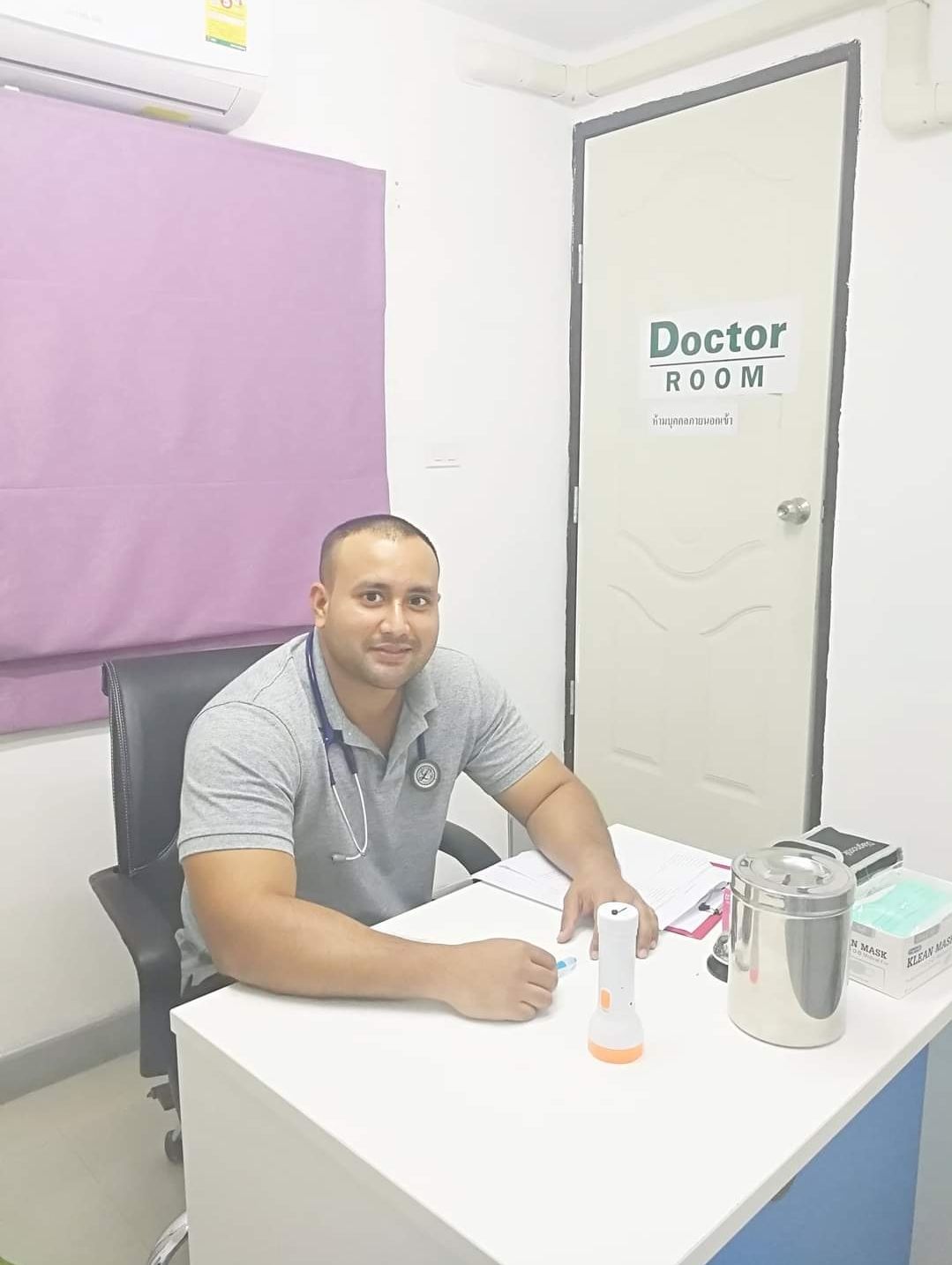
Dr. Ponlawat Pitsuwan is a physician at Doctor Bangkok, a private clinic in central Bangkok. He sees expats, residents, and medical tourists for general medicine, wellness consultations, and IV therapy. His focus is straightforward, evidence-based care delivered in plain language.