
Clinically reviewed by Dr. Ponlawat Pitsuwan, Physician, Doctor Bangkok. Last reviewed: July 2026
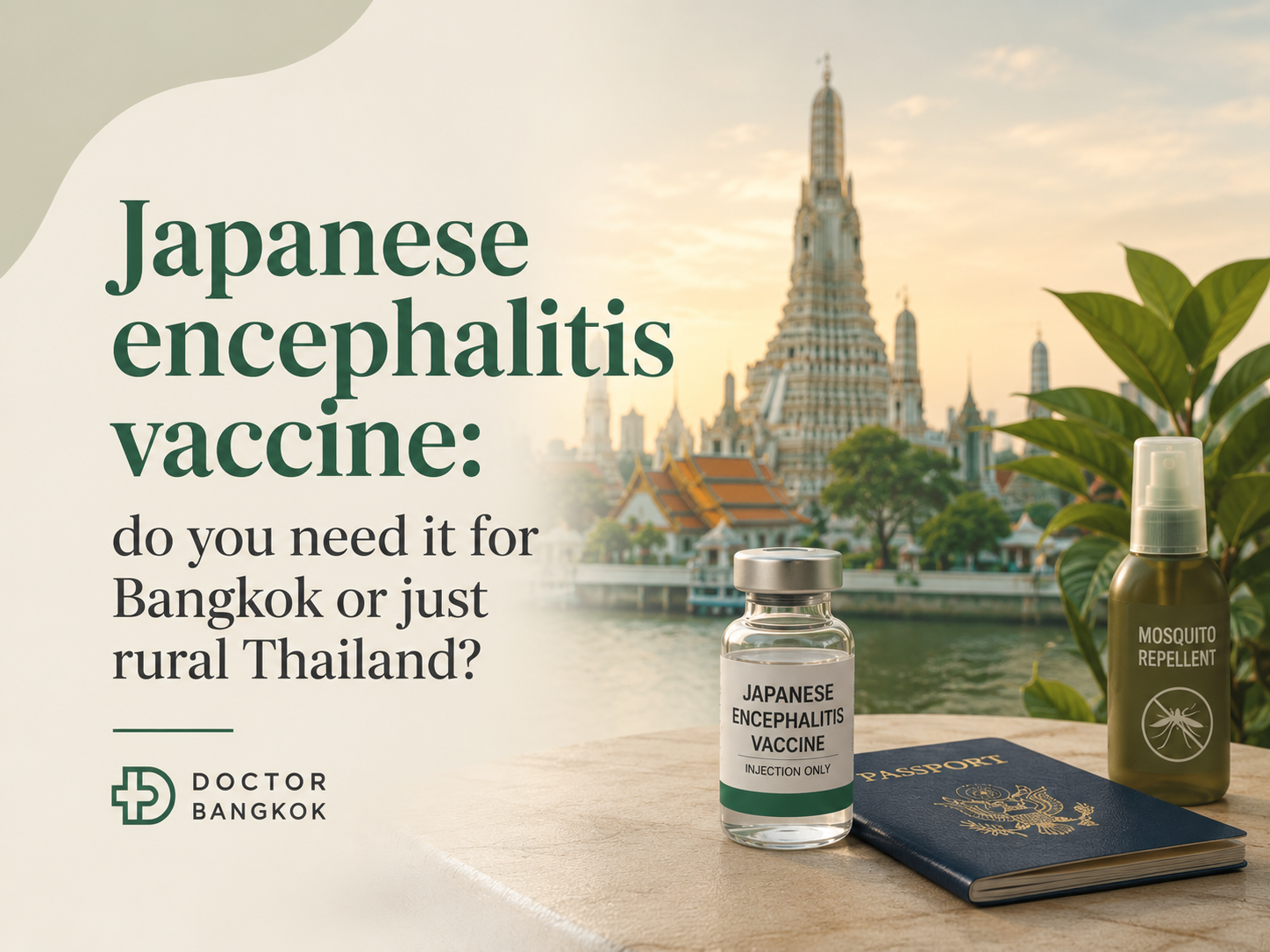
Most people living in Bangkok city do not need the Japanese encephalitis vaccine for daily life there. But if you travel to rural northern or northeastern Thailand during the rainy season, the picture changes. A single dose of IMOJEV, the vaccine available in Thailand, gives strong protection. The right answer depends on how you actually live and travel, not just which country you are in.
If you are an expat in Bangkok trying to figure out whether you need this vaccine, you are not alone. I get this question often, and the generic answer you find online, "Thailand is endemic, get vaccinated," is not particularly helpful if you live in a Bangkok condo and rarely leave the city. The real answer depends on your lifestyle, your travel habits, and how often you end up in rural areas.
Here is the short version: Bangkok itself carries very low risk. But Thailand is a large country, and Japanese encephalitis is genuinely present in rural areas, particularly during the rainy season from May to October. If you weekend in Chiang Mai, visit family in Isan, or volunteer in farming communities, your risk profile is very different from someone who stays in the city.

What Japanese encephalitis actually is
Japanese encephalitis, or JE, is a viral infection spread by Culex mosquitoes. These mosquitoes breed in rice paddies and irrigation water, which is why rural agricultural areas carry the highest risk. In severe cases the virus causes brain swelling, and that can lead to permanent neurological damage. Most infections are mild or cause no symptoms at all, but the cases that progress are serious.
There is no specific treatment once you have it. Prevention through vaccination and mosquito bite avoidance is what actually protects you.
Bangkok vs rural Thailand: your real risk level
Risk in Bangkok city is low. The Culex mosquito that carries JE thrives in rural agricultural settings, not in urban environments. If your life is Bangkok offices, malls, and city restaurants, this is not an infection you face regularly.
The picture shifts the moment you leave the city. Chiang Mai, the Chiang Rai valleys, Isan rice provinces like Udon Thani and Khon Kaen, and northern border regions all have documented JE activity, especially from May through October. If you travel to those areas even a few times a year, particularly for rural stays or outdoor activity, the vaccine conversation becomes relevant.
I see this pattern often: an expat living in Bangkok for two years who has never thought about JE, then takes a month volunteering on a farm in northern Thailand. That person needed to be vaccinated well before the trip, not after. Duration of rural exposure matters more than simply being in Thailand.

IMOJEV and what happened to IXIARO
If you were vaccinated in the UK, US, or Australia, you probably received IXIARO. In Thailand, IXIARO is not available. The vaccine used here is IMOJEV.
These are not the same thing and are not interchangeable. IXIARO is an inactivated vaccine. IMOJEV uses a weakened live form of the virus. They work differently, and you cannot continue one series with the other. If you had IXIARO doses abroad and now need ongoing protection in Bangkok, the right step is a clinic consultation to review your records and decide what comes next. At Doctor Bangkok, we deal with exactly this situation regularly.
For most people starting fresh in Thailand, IMOJEV is highly effective. Strong evidence supports a single dose building adequate protection in adults. One dose, one visit.
Who should and who should not get vaccinated
If you travel to rural Thailand regularly, plan any rural or agricultural stay during rainy season, or visit other JE-endemic countries like Vietnam, Cambodia, or Myanmar, vaccination is worth discussing seriously.
Some groups need extra caution before getting IMOJEV. Because it is a live vaccine, it is not suitable during pregnancy. If you are pregnant, or planning to become pregnant within 28 days of the injection, you should not receive IMOJEV. People who are immunocompromised, whether from medication or illness, should not receive live vaccines without specialist guidance. If either of these applies to you, speak to a doctor before making any decision.
Children can receive IMOJEV from nine months of age. If you take family trips to rural areas or your children travel with you to endemic countries, their risk profile is worth reviewing at a travel medicine appointment.
Dosing, timing, and booster guidance
Adults need one dose of IMOJEV for primary protection. Children under three need two doses given 28 days apart. Protection in adults typically develops around two weeks after the injection. In children, allow about four weeks.
If your trip is coming up soon, come in as early as possible. A single dose four weeks before a rural stay gives you good coverage. Closer to departure is still better than nothing.
For boosters, current guidance supports a second dose at 12 to 24 months if you are still living in or regularly visiting endemic areas. After that, protection may last several years. For long-stay expats who travel domestically on weekends and holidays, I recommend reviewing your vaccination status annually rather than waiting until a trip is already booked.
What to expect at the clinic
The process at Doctor Bangkok is straightforward. You book a travel medicine appointment, we review your history and travel plans, and if IMOJEV is appropriate we give it the same visit. We ask you to wait 15 to 30 minutes after the injection, which is standard for all vaccines and allows us to respond immediately if any reaction occurs.
Side effects are usually mild: soreness at the injection site, a mild headache, or low-grade fever for a day or two. Serious reactions are rare.
Mosquito bite prevention matters too
The vaccine significantly reduces your risk, but it does not replace bite prevention. Culex mosquitoes are most active at dusk and dawn, so that is when your guard needs to be highest.
Use a DEET-based repellent when outdoors in rural areas during those hours. Cover your arms and legs if you are near rice paddies or irrigation water in the evening. Choose accommodation with screened windows or air conditioning. These steps stack well on top of vaccination and together give you strong practical protection.
Thinking about the Japanese encephalitis vaccine in Bangkok? At Doctor Bangkok, our English-speaking doctors can review your travel plans, check your vaccination history, and give you IMOJEV in a single appointment. We are centrally located and BTS accessible. Book a travel vaccination appointment at doctorbangkok.co.th/vaccination/.
Do I need the Japanese encephalitis vaccine if I only live in Bangkok city?
Bangkok itself carries very low JE risk, so for purely city-based life the vaccine is not urgent. But if you regularly travel to rural northern or northeastern Thailand, or visit endemic countries nearby, your risk goes up meaningfully. The honest answer depends on your actual lifestyle, which is worth discussing at a travel medicine appointment.
I had IXIARO doses in my home country. Can I continue with IMOJEV in Bangkok?
IXIARO and IMOJEV are different vaccine types and are not interchangeable for a primary series. If you started IXIARO abroad and are now in Bangkok, the best step is a clinic consultation where we can review your records and advise properly. Do not assume you can simply pick up where you left off.
Is the Japanese encephalitis vaccine safe during pregnancy?
IMOJEV is a live vaccine and is not suitable during pregnancy or for women who may become pregnant within 28 days of the dose. If you are pregnant but face genuine high-risk rural exposure, speak to a doctor about your individual situation. This is a case-by-case decision that needs a proper consultation.
How long before travel do I need to get vaccinated?
Ideally at least four weeks before your trip to allow full protection to develop. If your departure is sooner, come in anyway as earlier vaccination still helps. At Doctor Bangkok, we can advise on timing based on exactly when and where you are going.
How often do I need a booster if I live long-term in Thailand?
A booster at 12 to 24 months is generally recommended if you are still at risk, with protection potentially lasting several years after that. Long-stay expats who travel domestically should review their vaccination status annually rather than waiting until a trip is already planned.
Can children get the Japanese encephalitis vaccine in Bangkok?
Yes. IMOJEV is approved from nine months of age. Children under three need two doses given 28 days apart; older children and adults need one dose. If your family travels to rural Thailand or nearby endemic countries, bring your children’s vaccination records to a travel medicine appointment and we can advise from there.
Dr. Ponlawat Pitsuwan
Physician, Doctor Bangkok
a private medical clinic in central Bangkok. He sees expats, residents, and medical tourists for travel medicine, vaccinations, and general health consultations. His focus is straightforward, evidence-based care delivered in plain language.
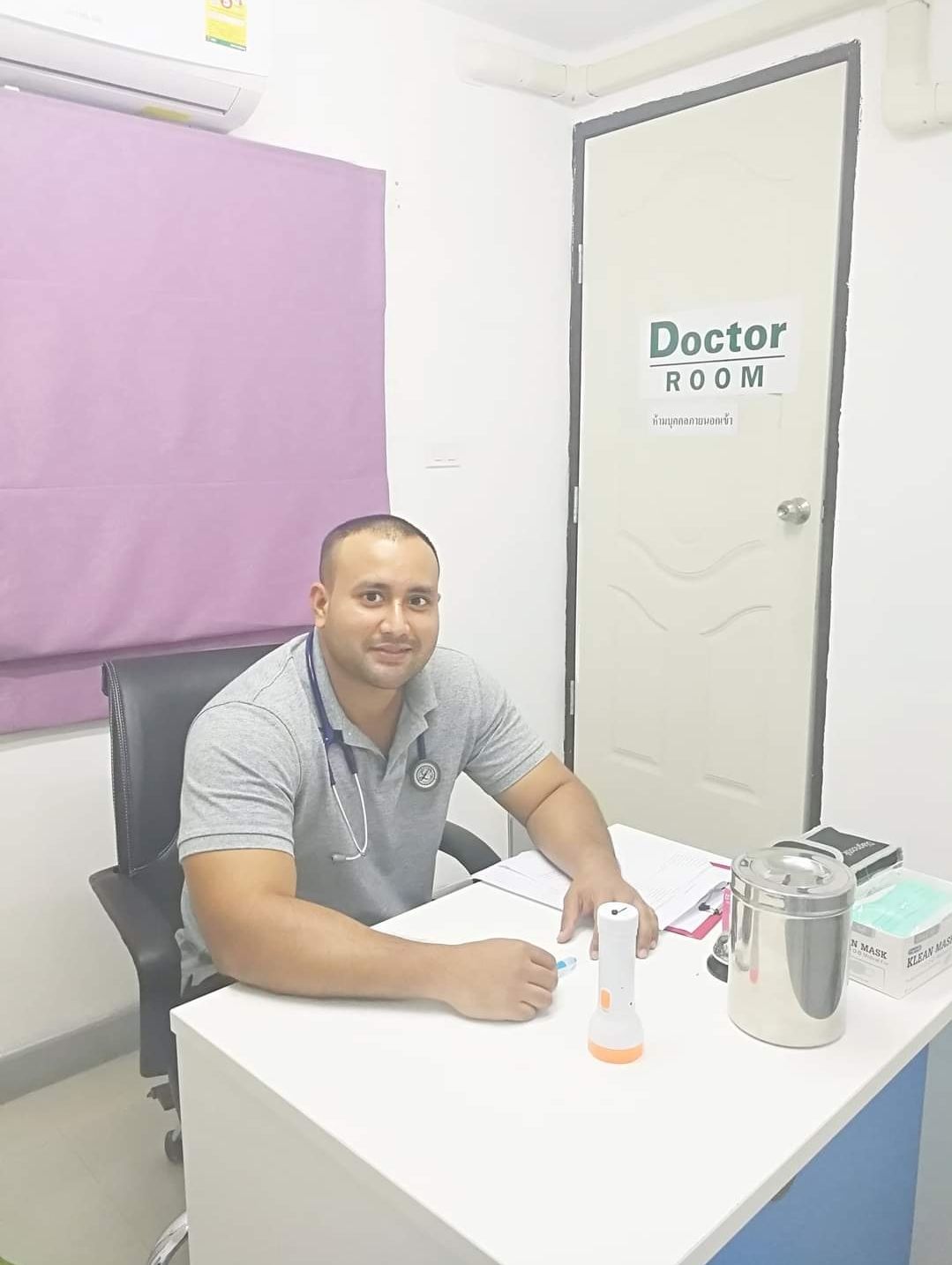
Dr. Ponlawat Pitsuwan is a physician at Doctor Bangkok, a private clinic in central Bangkok. He sees expats, residents, and medical tourists for general medicine, wellness consultations, and IV therapy. His focus is straightforward, evidence-based care delivered in plain language.