
Clinically reviewed by Dr. Ponlawat Pitsuwan, Physician, Doctor Bangkok.
Last reviewed: July 2026
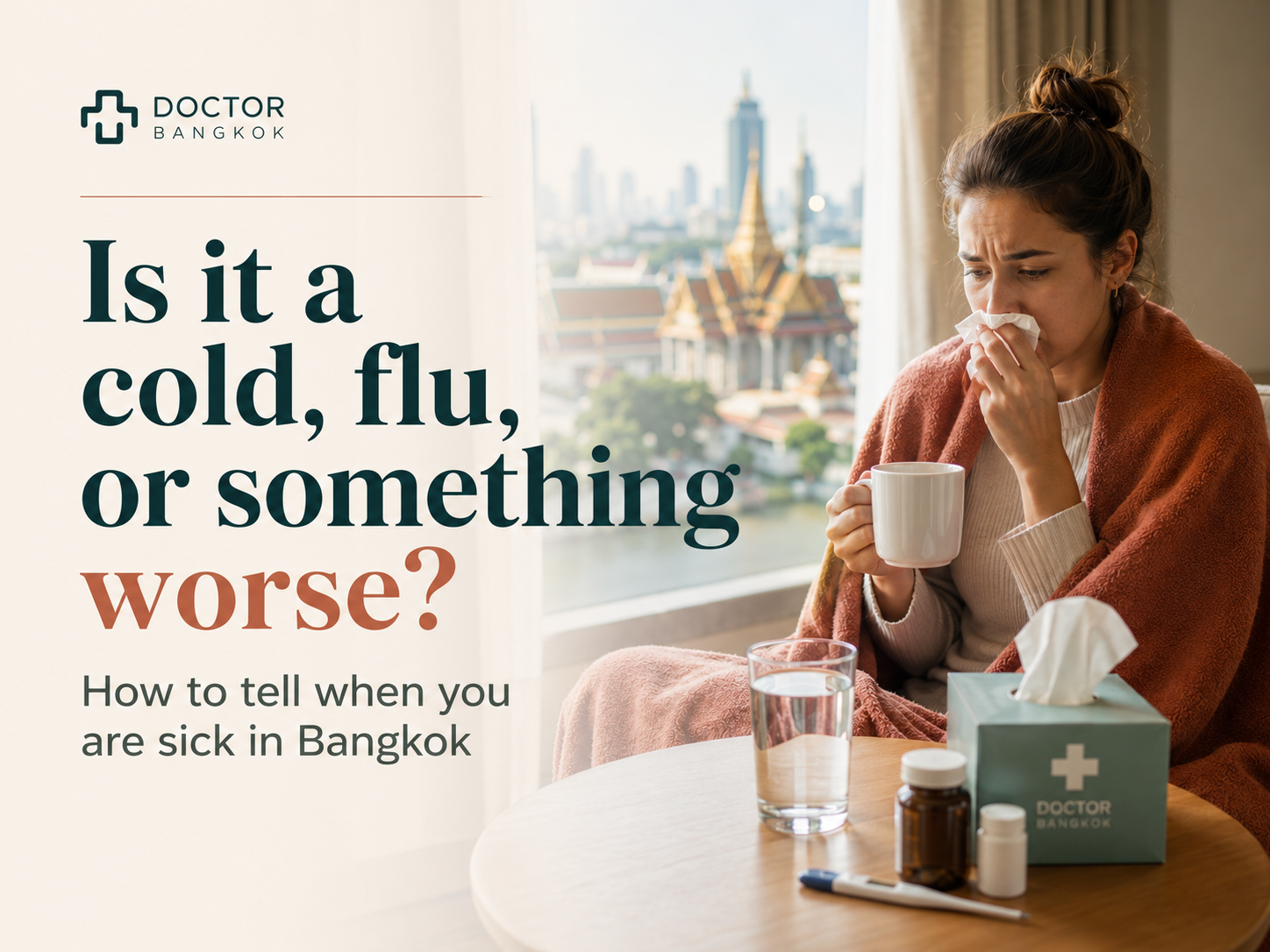
A cold comes on gradually and stays above the neck: runny nose, mild sore throat, no fever. Flu hits fast, hits hard, and usually brings fever above 38°C, body aches, and exhaustion. In Bangkok, a third possibility matters: dengue. Any high fever with a severe headache behind your eyes needs a blood test, not just rest and paracetamol.
You woke up feeling rough. Maybe it started with a scratchy throat yesterday, or a sudden fever at 3am. Now you are lying in a Bangkok hotel room or apartment, trying to decide if you need a doctor or just need to push through. That decision is harder here than back home.
Bangkok throws variables at you that most cold and flu guides ignore. The air conditioning is brutal. You step between 40-degree heat and 18-degree office air dozens of times a day. Dehydration hits faster than you expect. And unlike back home, dengue is a real possibility year-round. Here is how to sort out what you are dealing with, and what to do about it.

Cold vs flu in Bangkok: why it hits differently here
The constant shift between outdoor heat and aggressive air conditioning stresses your respiratory tract in ways most expats underestimate. Your nasal passages dry out. Your immune defences take a hit. Add Bangkok’s humidity, high social density, and the shared air in malls, BTS carriages, and office buildings, and respiratory illness spreads fast.
A cold builds slowly over a day or two. Symptoms stay mostly above the neck: runny nose, mild sore throat, sneezing, maybe a low-grade temperature. You feel annoying, not demolished.
Flu is different. It hits fast, often within hours. You feel fine at noon and wrecked by evening. Fever above 38°C, chills, deep muscle and joint aches, headache, and real exhaustion are the hallmarks. It is not just a bad cold. It is a different illness entirely.
| Symptom | Cold | Flu |
|---|---|---|
| Onset | Gradual, 1-2 days | Sudden, within hours |
| Fever | Rare or low-grade | Common, often above 38°C |
| Body aches | Mild | Severe |
| Headache | Mild or none | Often significant |
| Runny nose | Common | Less common |
| Fatigue | Mild | Severe, can last weeks |
| Sore throat | Common | Sometimes |
| Cough | Mild | Common, can be severe |
Bangkok has two flu peaks each year. January to March is the dry season surge. June to August is the rainy season spike. Unlike countries with a single winter flu season, you are at risk twice a year. If you have not had the flu vaccine recently, getting it before either window makes sense. Doctor Bangkok offers the updated annual flu vaccine and can advise on timing.
When you are flu-sick, rest matters. Stay well-hydrated and replace electrolytes, especially with Bangkok’s heat draining you faster than usual. Paracetamol helps with fever and aches. Antivirals like oseltamivir (Tamiflu) or baloxavir, a single-dose option, can shorten how long flu lasts if you start within 48 hours of symptoms. Both require a prescription. That window closes fast, so do not sit on it.
Cold, flu, or dengue? The symptom overlap Bangkok doctors watch for
This is the question I get most often from expats, and it matters. Dengue fever is endemic in Bangkok year-round. It is not a rural problem. People pick it up in the city, from a single mosquito bite, often without knowing they were bitten.
The overlap with flu is real. Both cause sudden high fever, headache, and muscle pain. The difference that matters most: dengue causes a severe pain behind the eyes. You will know it. It feels like pressure pushing out from behind your eye sockets. Joint and muscle pain is often extreme, which is why dengue earned the old name "breakbone fever." A skin rash usually appears around day three to five. Flu does not cause a rash or that behind-the-eye pressure.
Here is the practical rule I give patients. If you have a fever above 38.5°C lasting more than 48 hours, especially with a headache behind your eyes or severe joint pain, get a blood test the same day. A dengue NS1 rapid test can be done alongside a flu antigen test at the same visit. You can have results from both within the hour at a clinic like Doctor Bangkok. Test for both at once. Dengue can deteriorate quickly, and catching it early changes the management entirely.

Sore throat in Bangkok: when is it strep and when do you need antibiotics?
Most sore throats are viral. Roughly 80 percent of them. That means antibiotics will do nothing except contribute to antibiotic resistance and possibly cause side effects.
Antibiotics are easier to get at Thai pharmacies than back home. Pharmacists often hand them over without a prescription. I understand why people do it: you feel terrible, you want a fix, and the pharmacy is on the corner. But taking antibiotics for a viral sore throat does not help and can make things worse.
The sore throat that actually needs antibiotics is strep throat, caused by a specific bacteria called group A streptococcus. The signs that point toward it: sudden severe sore throat, fever, white patches on the tonsils, swollen glands in the neck, and no cough. When I see that pattern, I use a rapid throat swab test. Results come back in minutes. If the swab is positive, you get the right antibiotic for the right number of days. If it is negative, you avoid unnecessary medication entirely.
When is a headache a sign of something serious in Bangkok?
A tension headache is a tension headache. A hangover is a hangover. Not every headache needs urgent attention.
But Bangkok headaches warrant more thought than usual, because of dengue. A sudden severe headache with fever, especially with pain behind the eyes, is a dengue red flag. A headache that gets worse instead of better over 24 to 48 hours also needs assessment.
Warning signs that need urgent attention: the worst headache of your life coming on in seconds, headache with neck stiffness and light sensitivity, headache with confusion or weakness on one side of the body, or high fever with headache not responding to paracetamol. These are not cold and flu symptoms. Do not wait to see if they improve.
For most people, headache during illness is part of the flu or a dehydration effect from Bangkok’s heat. Drink water, take paracetamol, monitor your temperature. If fever stays above 38.5°C past 48 hours, come in.
Can you fly with a fever or active infection?
If you have a fever, you should not be boarding a plane.
Most airlines use 38°C as the threshold for refusing boarding. Masking your fever with paracetamol before the gate does not make flying safe. Cabin pressure changes make sinus and ear congestion significantly worse. For flu, the general rule is to wait until you have been fever-free for 24 to 48 hours without fever-reducing medication. For suspected or confirmed dengue, get your blood counts confirmed stable first. Dengue can drop your platelet count rapidly, and in-flight deterioration is a real risk.
If you need to delay travel, Doctor Bangkok can issue an unfit-to-fly certificate the same day. Airlines typically require a letter from a physician to process a medical rebooking waiver. Get it in writing rather than trying to explain at the airport. Once you are cleared to fly, a nasal decongestant spray before boarding helps with congestion from cabin pressure. Stay hydrated during the flight and avoid alcohol.
Fever, sore throat, or aching muscles you cannot shake? Doctor Bangkok is a private English-speaking clinic in central Bangkok, accessible from BTS. We offer same-day walk-in consultations, rapid flu and dengue testing, strep throat swabs, fit-to-fly certificates, and flu vaccinations. Visit doctorbangkok.co.th or walk in to get checked today.
Frequently asked questions
How do I know if my fever and headache in Bangkok is dengue or just the flu?
Both start with sudden fever and can look identical on day one or two. Dengue tends to cause severe pain specifically behind the eyes, extreme joint and muscle pain, and a skin rash around day three to five. Flu does not cause a rash or that behind-the-eye pressure. Any fever above 38.5°C lasting more than 48 hours with a headache behind the eyes needs a blood test the same day, and we can run a dengue NS1 test and a flu antigen test together at the same visit.
Can I get antibiotics for a sore throat at a Bangkok pharmacy without seeing a doctor?
You can, but you probably should not. About 80 percent of sore throats are viral, and antibiotics do nothing against viruses. The only sore throat that genuinely needs antibiotics is strep throat, which requires a rapid swab test to confirm. A quick in-clinic test tells you in minutes whether you actually need them.
Is it safe to fly home from Bangkok if I have a fever?
No. Most airlines will not let you board above 38°C, and masking the fever with paracetamol does not fix the underlying problem. For flu, wait until you have been fever-free for 24 to 48 hours without medication. For dengue, get your blood counts confirmed stable first. Doctor Bangkok can issue a same-day unfit-to-fly certificate, which most airlines accept for medical rebooking.
When is flu season in Bangkok and should I get vaccinated?
Thailand has two flu peaks: January to March and again June to August. Unlike most countries, Bangkok expats are at real risk twice a year. Annual vaccination is recommended because strains change each season, and vaccinating before either peak gives you the best protection. Doctor Bangkok offers the updated flu vaccine year-round.
My cold has lasted more than a week in Bangkok. Could it be something else?
A straightforward viral cold should start improving within five to seven days. If symptoms are getting worse after day five, or if a fever returns after initially improving, come in. Bangkok’s heat and dehydration can slow recovery, but persistent or worsening symptoms after a week need a clinical look, not more waiting.
What is the 48-hour window for flu treatment and why does it matter?
Antivirals like oseltamivir (Tamiflu) or baloxavir work best when started within 48 hours of your first symptoms. After that window closes, they become much less effective. If you think you have flu, do not spend two days hoping it gets better on its own. See a doctor the same day symptoms hit hard and ask about antiviral options.
Dr. Ponlawat Pitsuwan
Physician, Doctor Bangkok
a private medical clinic in central Bangkok. He sees expats, residents, and medical tourists for fever assessment, respiratory illness, dengue evaluation, and general medical consultations. His focus is straightforward, evidence-based care delivered in plain language.
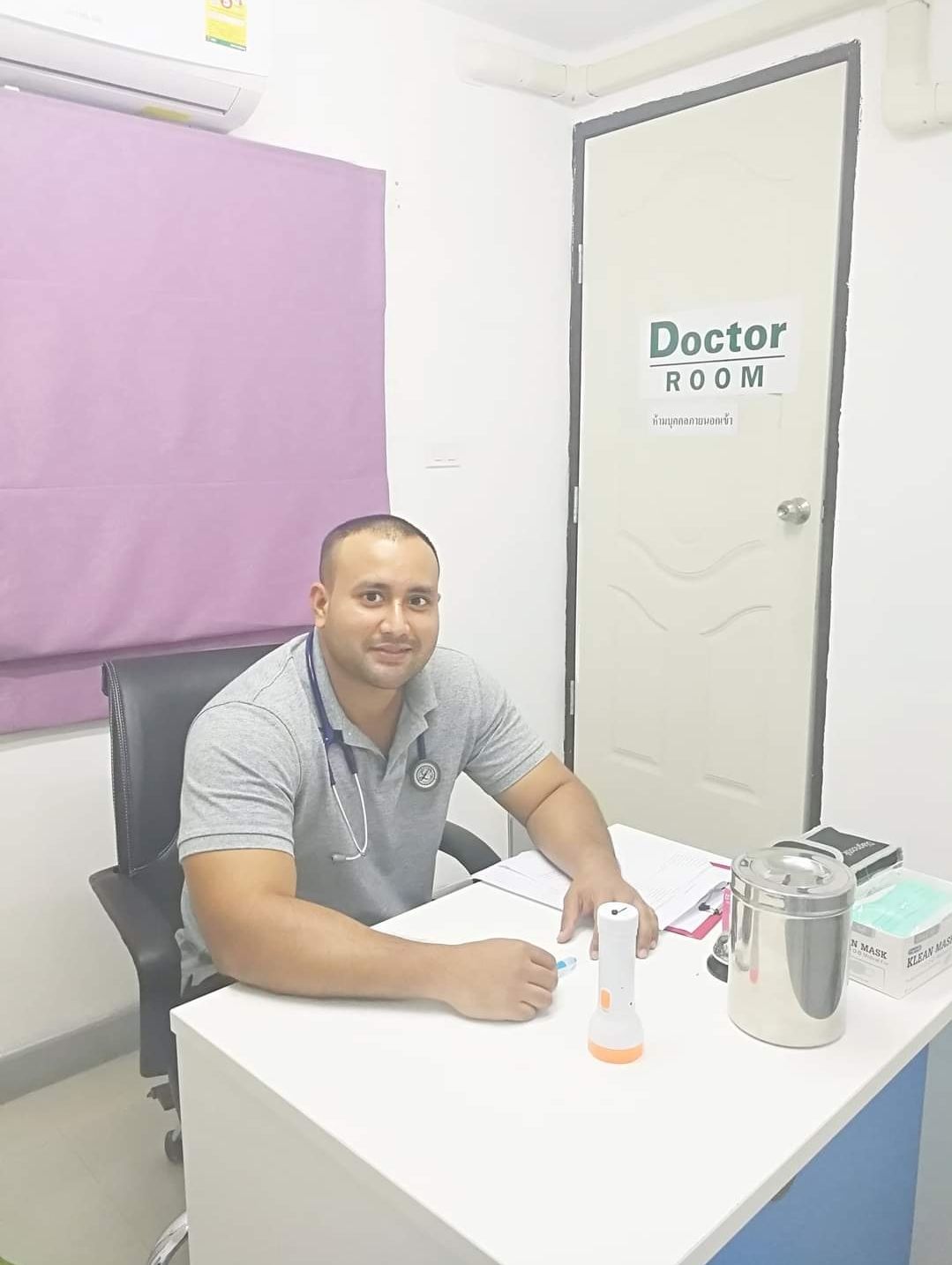
Dr. Ponlawat Pitsuwan is a physician at Doctor Bangkok, a private clinic in central Bangkok. He sees expats, residents, and medical tourists for general medicine, wellness consultations, and IV therapy. His focus is straightforward, evidence-based care delivered in plain language.