

Clinically reviewed by Dr. Ponlawat Pitsuwan, Physician, Doctor Bangkok.
Last reviewed: July 2026
Children travelling to Bangkok need vaccines for hepatitis A, typhoid, and possibly Japanese encephalitis, depending on their age and itinerary. Tap water is not safe for babies or toddlers. Bangkok’s heat index regularly pushes past 40°C, and children overheat much faster than adults. If your child develops a fever here, give paracetamol by weight and see a doctor the same day. Do not give ibuprofen until dengue has been ruled out.
Bringing children to Bangkok is very doable, and families do it every day. But the tropical climate, the food, the mosquitoes, and the heat create risks that are genuinely different from a European city break. Parents who know what to watch for are in a much better position when something goes wrong.
This guide is written for parents who are planning the trip or already here. I will cover which vaccines matter, what to do if your child gets a fever, how to keep toddlers safe around food and water, and what Bangkok’s heat actually does to small bodies. If you have a sick child right now, skip straight to the fever section.

Which vaccines do children need before travelling to Thailand?
This is the question I get most from parents before a trip. The honest answer is: it depends on your child’s age, how long you are staying, and what you plan to do.
For most children travelling to Bangkok, hepatitis A is the most important vaccine to sort out. It spreads through contaminated food and water, and street food exposure here is essentially unavoidable. Typhoid is also recommended, particularly for children who will be eating outside hotels or trying local food. Both are well-tolerated in children.
MMR should be up to date before you travel. Thailand has seen measles outbreaks in recent years, and the MMR schedule in some countries runs behind Thailand’s exposure risk. Check your child’s vaccination record before you book.
Japanese encephalitis is worth discussing if your child is spending more than a month here, visiting rural areas, or living in Bangkok long-term. The wet season, roughly May to October, brings higher mosquito activity and increased risk. The vaccine requires two doses, so you need at least four to six weeks before departure to complete it.
Rabies pre-exposure vaccination is something most parents do not think about. I raise it specifically for young children. Toddlers approach stray dogs and monkeys without thinking. They do not always tell you when they have been scratched or bitten. A pre-exposure course does not remove the need for treatment after a bite, but it simplifies and buys time for that treatment. Bangkok has stray dogs. Lopburi has monkeys. It is worth a conversation.
Rotavirus vaccine is given in infancy and protects against a common cause of severe diarrhoea in young children. If your baby is in the right age window, make sure this is done before travel. In Bangkok’s heat, a baby with diarrhoea can dehydrate faster than you expect.
Book a pre-travel health consultation at least six weeks before departure. That is the minimum time needed to complete multi-dose schedules and allow immunity to build.
My child has a fever in Bangkok: what should I do?
If your child wakes up with a fever in Bangkok, the most important thing to know before you reach for the medicine cabinet is this: do not give ibuprofen.
Ibuprofen is a reasonable choice for fever at home. In Bangkok, it is not, until a doctor has seen your child and ruled out dengue. Dengue affects platelet function and can cause bleeding. Ibuprofen makes that worse. Paracetamol, dosed correctly by your child’s weight, is safe and is what you should use first.
Dengue is the most common mosquito-borne illness in Bangkok. During the wet season, numbers go up noticeably. Symptoms in children include high fever, severe headache, pain behind the eyes, and muscle aches. A rash may appear after the first couple of days. Chikungunya is another mosquito-borne illness circulating in Thailand with similar early symptoms. You cannot tell them apart without a blood test.
If the fever is above 38.5°C, bring your child in the same day. We run an NS1 antigen test, which picks up dengue from day one of fever. Results come back quickly. You do not need to wait for a rash or wait to see if things get worse.
Febrile seizures are brief convulsions triggered by a rapid rise in temperature. They can occur in children under five and look terrifying. If this happens, lay your child on their side, clear the space around them, and time the seizure. If it lasts more than five minutes, or your child does not return to normal within ten minutes, call 1669 or go straight to a hospital emergency room.
For most fevers, the path is simple: paracetamol by weight, fluids, and see a doctor today. Do not manage a Bangkok fever at home for more than 24 hours without getting tested.
Food and water safety for babies and toddlers in Bangkok
Bangkok’s tap water is not safe for children. Do not use it for baby formula, and do not use it to rinse bottles or dummies. Bottled water is sold at every 7-Eleven, Tops, and Villa Market in the city. The habit of checking is the thing to build.
For formula, use commercially bottled water or water brought to a rolling boil and cooled. This applies even if your hotel says the water is filtered.
Ice is a common issue for parents with older children. In restaurants and cafes, ice is usually machine-made from treated water and is generally fine. Ice served from a bag or in informal street settings carries higher risk. For babies and toddlers, avoid it entirely.
Street food is one of Bangkok’s great pleasures and I am not going to tell you to avoid it. Freshly cooked food served hot is much safer than cold buffet items, pre-cut fruit left in the sun, or anything sitting out for a while. For toddlers, fresh fruit you peel yourself is a safer choice than pre-cut.
If your child gets diarrhoea, start oral rehydration salts straight away. Sachets are available at any pharmacy. If diarrhoea is frequent, bloody, or comes with a fever, see a doctor rather than waiting it out.
Sun and heat safety for children in Bangkok’s tropical climate
Bangkok’s heat is not like summer heat at home. The heat index, which factors in humidity, regularly exceeds 40°C between March and May and stays above 35°C for much of the year. Children under five have immature heat regulation and overheat faster than adults.
Acclimatisation takes a few days. Keep outdoor time short at first, especially around midday. The hottest period is typically 11am to 3pm. If you are visiting Wat Pho, Lumpini Park, or any outdoor site, go early morning or late afternoon.
Heat exhaustion happens when the body cannot cool itself fast enough. Signs include heavy sweating, pale and clammy skin, fatigue, and nausea. Move your child indoors into air conditioning, give cool water, and apply a cool damp cloth to the neck and armpits.
Heatstroke is a medical emergency. The skin becomes dry and hot. The child may be confused, very drowsy, or lose consciousness. Temperature above 40°C is a warning sign. Do not wait. Call 1669 or go to an emergency room immediately. The window between heat exhaustion and heatstroke can be short in young children.
For infants, keep them out of direct sun entirely. Use SPF 50 sunscreen on exposed skin from six months of age. Under six months, use shade and clothing rather than sunscreen, and keep outings brief. Light-coloured, loose cotton clothing works better than synthetic fabrics in this heat.
Mosquito repellent is necessary in Bangkok, not optional. DEET-based repellents are considered safe for children over two months at concentrations up to 30 percent. For younger infants, use a DEET-free repellent and cover the pram with a fine mesh net. Reapply after sweating, which in Bangkok happens fast.
If your child has a fever in Bangkok, do not manage it alone. Doctor Bangkok sees children at our Sukhumvit Soi 13 clinic and can arrange visits to your hotel or residence. Dengue testing is available same-day. English-speaking physicians are available seven days a week, and you can reach us on WhatsApp to describe your child’s symptoms before coming in. For pre-travel vaccinations for the whole family, book a travel medicine consultation at least six weeks before departure. Visit doctorbangkok.co.th or message us on WhatsApp to book.
Frequently asked questions
Can I give my child ibuprofen for a fever in Bangkok?
Not until dengue has been ruled out by a doctor. Ibuprofen increases bleeding risk in dengue, which is a common cause of fever in Bangkok. Give paracetamol at the correct dose for your child’s weight and see a doctor the same day for testing.
At what age can children receive the Japanese encephalitis vaccine?
Some formulations are licensed from two months of age. The schedule requires two doses, so you need to start at least four to six weeks before travel. It is particularly worth considering for children spending a month or more in Thailand, or travelling during the wet season.
How do I know if my child has heat exhaustion or heatstroke?
Heat exhaustion means the child is still sweating, skin is pale and cool, and they are tired or nauseous. Move them indoors, cool them down, and give fluids. Heatstroke is a medical emergency: skin is dry and hot, the child is confused or very drowsy, and temperature is above 40°C. Call 1669 or go to the emergency room right away.
Is tap water safe for making baby formula in Bangkok?
No. Use commercially bottled water or water brought to a full rolling boil and then cooled. This also applies to water used for rinsing bottles and dummies. Bottled water is available at every convenience store in the city.
Does Doctor Bangkok see children, and can a doctor come to our hotel?
Yes to both. Doctor Bangkok provides consultations for children at our Sukhumvit Soi 13 clinic and via visits to hotels and residences across the city. Dengue testing can be done bedside. Message us on WhatsApp and we can usually respond quickly, which matters when you have a sick child and do not want to travel across Bangkok.
What mosquito repellent is safe for my baby in Bangkok?
DEET-based repellents up to 30 percent are considered safe for children over two months. Under two months, use a DEET-free formula and keep the pram covered with a fine mesh net. Reapply regularly because Bangkok’s heat causes heavy sweating.
My toddler has diarrhoea in Bangkok. When should I see a doctor?
Start oral rehydration salts straight away and see a doctor if the diarrhoea is frequent, bloody, or comes with a fever. In Bangkok’s heat, toddlers dehydrate quickly. If your child is not keeping fluids down, seek assessment within a few hours rather than waiting.
Dr. Ponlawat Pitsuwan
Physician, Doctor Bangkok
a private medical clinic in central Bangkok. He sees expats, residents, and visiting families for travel medicine, paediatric consultations, fever assessment, and general medical care. His focus is straightforward, evidence-based care delivered in plain language.
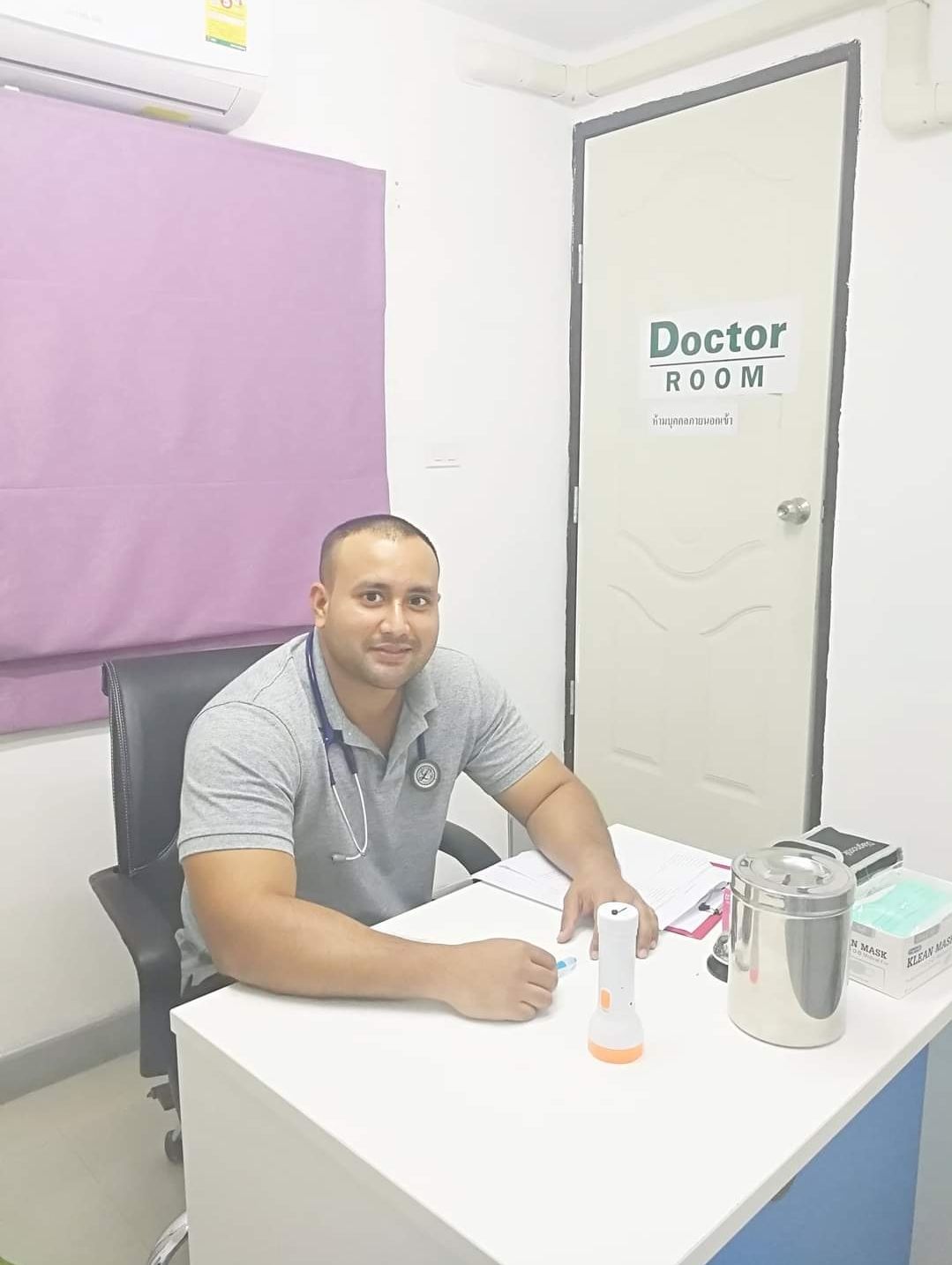
Dr. Ponlawat Pitsuwan is a physician at Doctor Bangkok, a private clinic in central Bangkok. He sees expats, residents, and medical tourists for general medicine, wellness consultations, and IV therapy. His focus is straightforward, evidence-based care delivered in plain language.