
Clinically reviewed by Dr. Ponlawat Pitsuwan, Physician, Doctor Bangkok. Last reviewed: July 2026
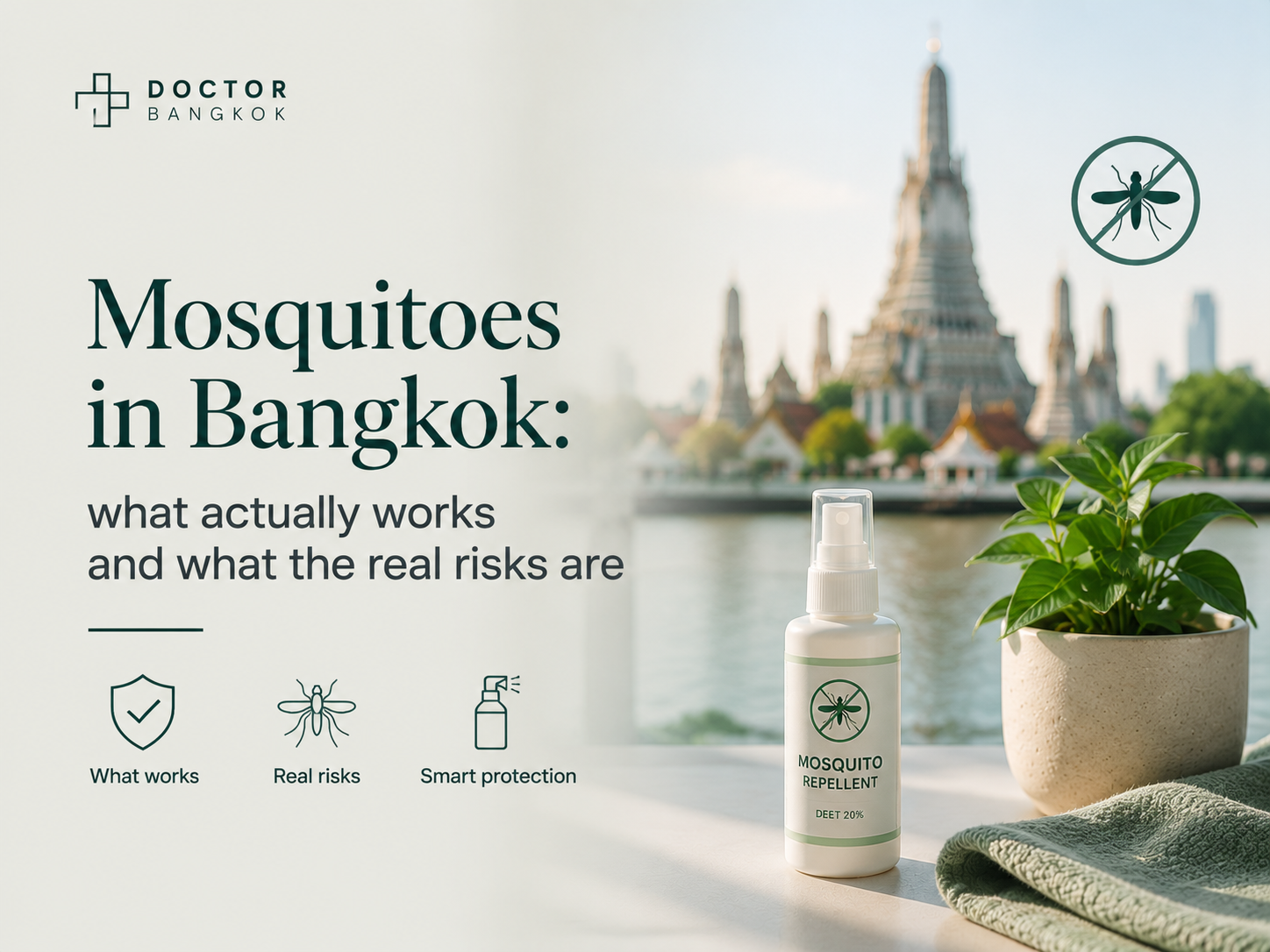
Bangkok has no malaria risk. The real threat is dengue fever, carried by a mosquito that bites during the day, not at night. A 20 to 30 percent DEET repellent applied daily gives solid protection for most urban Bangkok situations. If you develop fever, rash, or joint pain within two weeks of mosquito bites, get a blood test the same day.
If you are reading this from a Bangkok condo, watching a mosquito disappear behind your curtain, you are probably wondering two things. Do I need malaria tablets? And what should I actually be using to protect myself? I get asked both constantly, especially by expats who just arrived or visitors who read conflicting advice online before flying.
Here is the short version. Bangkok has no malaria. The risk that genuinely matters here is dengue fever, and the mosquito that carries it bites during the day. That changes what good protection actually looks like. The rest of this article covers what works, what you can buy locally, and when you need to see a doctor.

Is there actually a malaria risk in Bangkok or just rural Thailand?
No malaria risk in Bangkok. None. This is confirmed by the CDC, WHO, and NaTHNaC. You do not need malaria tablets for a stay in central Bangkok, no matter how long you are here.
Malaria in Thailand exists, but it is confined to rural forested areas near the borders with Myanmar, Cambodia, and Laos. The mosquito that carries it does not breed in cities. Bangkok is a dense urban environment, and that mosquito has no foothold here.
What Bangkok does have is Aedes aegypti, the mosquito behind dengue, chikungunya, and Zika. This is your actual concern, and it is a very different situation from malaria in both risk and prevention.
If your trip includes border areas or forest stays in the north or west of Thailand, that is a separate conversation and worth a proper pre-travel consultation before you go.
Do you need malaria tablets for Bangkok?
No. If you are staying in Bangkok, including Sukhumvit, Silom, Chatuchak, or any other city district, malaria prevention tablets are not needed. Taking them for a Bangkok-only trip offers no benefit and adds unnecessary side effects.
The situation changes if you are heading to rural northern or western Thailand, particularly forested zones near the Myanmar or Cambodian borders. Malaria in those regions includes drug-resistant strains, which is why current guidance from the CDC and WHO favours atovaquone-proguanil or doxycycline for border travel.
If your itinerary includes Bangkok plus a border trek or rural stay, come in for a travel medicine consultation before you go. We look at your full route, your health history, and give you a prescription and advice that fits your actual trip.

How effective is DEET and what strength should you use in Thailand?
DEET works. It is the most studied repellent available, and in Bangkok’s heat and humidity it remains the practical first choice for most people.
For daily urban Bangkok use, 20 to 30 percent DEET is the right range. This gives you roughly four to eight hours of protection, which covers a full day of outdoor exposure. Higher concentrations do not repel better, they just last longer. In Bangkok, where you are indoors with air conditioning for much of the day, 20 to 30 percent is enough. Apply it to all exposed skin. If you are also wearing sunscreen, apply sunscreen first, wait a few minutes, then apply DEET on top.
Picaridin 20 percent is a strong alternative. It is less greasy, less smelly, and equally effective for most Bangkok conditions. Some patients stick with it better long-term because it is more comfortable in the heat.
For children under 12, use lower concentrations and keep the product away from hands, eyes, and mouth. I always recommend parents apply it themselves rather than letting children do it.
Permethrin is worth knowing about if you spend time outdoors regularly. You spray it on clothing and gear, not on skin. It bonds to fabric and keeps repelling even after washing. Permethrin-treated clothing combined with DEET on exposed skin is the strongest combination available without a prescription.
In Bangkok pharmacies and 7-Elevens you will find Soffell, a widely available local brand with DEET in the 10 to 15 percent range. It works for short outings. For longer outdoor exposure during rainy season, look for higher concentrations at larger pharmacies on Sukhumvit or in the Silom area. Boots Pharmacy branches in BTS malls usually stock imported products with 30 percent or higher DEET.
One thing most people miss: Aedes aegypti breeds in very small amounts of standing water. Flower pot saucers, uncovered containers, air conditioning drip trays. If you live in Bangkok long-term, eliminating these in and around your home matters as much as what you put on your skin.
Which insects in Thailand can actually make you seriously ill?
The mosquito to worry about in Bangkok is Aedes aegypti. It is small and striped, and it bites during the day, with peak activity in the morning and late afternoon. Not at dusk. Not at night. This surprises most people who have always been told to worry about mosquitoes around sunset.
Dengue is the main disease it carries here. Bangkok circulates all four dengue serotypes. Prior infection with one type does not protect you against the others. A second dengue infection, particularly with a different serotype, carries a higher risk of severe dengue. This is why I take dengue history seriously in every expat patient I see.
The symptoms are hard to miss: high fever, severe bone and muscle pain, a rash, and a headache that sits behind the eyes. In severe cases the body loses fluid from the bloodstream, which can cause dangerous drops in blood pressure. That is a medical emergency.
Chikungunya is rising in Thailand and is spread by the same mosquito, so the same prevention applies. It causes fever and joint pain that can persist for weeks or months after recovery. It is frequently mistaken for dengue on symptoms alone. A blood test tells them apart.
Zika circulates in Thailand at low levels. It is relevant for pregnant women or women planning to become pregnant, where the risks to a developing baby are established. If this applies to you, speak with a doctor before and during your stay.
Japanese encephalitis is vaccine-preventable and the risk in urban Bangkok is very low. It is worth discussing if you are spending extended time in rural agricultural areas, but not an urgent concern for most Bangkok-based residents and visitors.
When should you actually see a doctor after a mosquito bite in Bangkok?
If you develop fever, rash, or joint pain within two weeks of significant mosquito exposure in Bangkok, come in the same day. Do not wait to see if it improves. A blood test for dengue is most accurate in the first few days of illness, and that early window matters.
Seek urgent attention if you have severe abdominal pain, bleeding from the gums or nose, vomiting that will not stop, or feel faint after a fever. These can be signs of severe dengue and need assessment right away.
Joint pain that persists for more than a week after fever, with or without a rash, may point to chikungunya. Come in for a panel that checks both.
If you are pregnant, immunocompromised, or have been treated for cancer, do not take a wait-and-see approach with any post-bite fever. You should be seen promptly.
At Doctor Bangkok, we run same-day dengue testing with results typically available within a few hours. Mosquito season in Bangkok is essentially year-round, but peaks during rainy season from May to October. If you have a fever during that window, come and get checked.
Expats living in Bangkok long-term versus short-stay visitors
If you are a tourist here for a week, good repellent and a bit of awareness gets you through safely.
If you are living here, the picture is different. Four dengue serotypes circulate in Bangkok, and each year you are here is another season of potential exposure. I have patients who have lived here for five or ten years and had dengue twice. The second time is often worse.
For long-term residents, I recommend building repellent use into your daily routine during rainy season the way you would sunscreen. Keep a small bottle at the door and apply it before heading out each morning. Permethrin-treating your outdoor clothes every few months adds another layer.
Know where your nearest clinic with rapid dengue testing is before you actually need it. The dengue vaccine Qdenga is now available in Bangkok. Whether it suits you depends on your prior dengue history and other factors. If you have been in Bangkok for a while, ask about it at your next visit to Doctor Bangkok.
Worried about dengue? Just back from a rural area and unsure about malaria risk? Or living in Bangkok and want to sort out a proper protection plan? Doctor Bangkok offers same-day dengue blood testing, travel medicine consultations for pre-departure advice, and general medical assessment for fever and post-bite symptoms. We are centrally located in Bangkok, BTS accessible, and all our physicians speak English. Book an appointment at doctorbangkok.co.th.
FAQ
Can you get malaria from a mosquito bite in central Bangkok?
No. Bangkok has no malaria transmission risk, confirmed by the CDC, WHO, and NaTHNaC. Malaria in Thailand only exists in rural forested border regions near Myanmar, Cambodia, and Laos. The mosquito that carries malaria does not live in Bangkok. Your actual risk in the city is dengue and chikungunya, carried by the day-biting Aedes aegypti mosquito.
I had dengue once before. Am I more at risk if I get bitten again in Bangkok?
Yes, and this is something I discuss with every returning expat who has had dengue. Four serotypes circulate in Bangkok, and prior infection with one does not protect you against the others. A second infection with a different serotype carries a higher risk of severe dengue. If you have had dengue before, speak with a doctor about your ongoing risk and whether the Qdenga vaccine is right for you.
What DEET percentage should I use in Bangkok, and is it safe to use every day?
Use 20 to 30 percent for daily Bangkok use. It gives solid protection for a full day of outdoor exposure and is well tolerated on skin in high heat. Higher concentrations just last longer, they do not repel better. Daily use at 20 to 30 percent is considered safe for adults. For children under 12, use lower concentrations and keep it away from hands, mouth, and eyes.
What is the difference between dengue and chikungunya?
Both are spread by the same mosquito and both cause fever and joint or muscle pain. Chikungunya tends to cause more severe joint pain that can last for weeks or months after recovery. Dengue is more associated with a distinctive rash, severe headache behind the eyes, and the risk of serious complications. You cannot reliably tell them apart on symptoms alone. A blood test is needed, and Doctor Bangkok runs same-day panels for both.
Do long-term expats in Bangkok need to approach this differently from tourists?
Yes. Tourists need repellent awareness for a week. Expats face year-round, cumulative risk across all four dengue serotypes over years of residence. I recommend daily repellent use during rainy season, eliminating standing water in your home, considering permethrin on outdoor clothing, and knowing where to get rapid dengue testing before you need it. The dengue vaccine may also be relevant depending on your history.
What symptoms after a mosquito bite should make me see a doctor right away?
Come in the same day if you develop fever, rash, or joint pain within two weeks of significant bites. Get urgent care if you have severe abdominal pain, bleeding from the gums or nose, vomiting that will not stop, or feel faint after a fever. These can be signs of severe dengue and need immediate assessment. Do not wait overnight to see if it settles.
Is the dengue vaccine available in Bangkok and should I get it?
Yes, Qdenga is available in Bangkok. Whether it is right for you depends on your prior dengue history and other health factors. It is not a straightforward decision for everyone. Book a consultation at Doctor Bangkok to go through your individual situation properly before deciding.
Dr. Ponlawat Pitsuwan
Physician, Doctor Bangkok
a private medical clinic in central Bangkok. He sees expats, residents, and medical tourists for travel medicine consultations, dengue and fever assessment, and general medical care. His approach is straightforward and evidence-based, delivered in plain language.
Part of our guide to travel health in Bangkok.
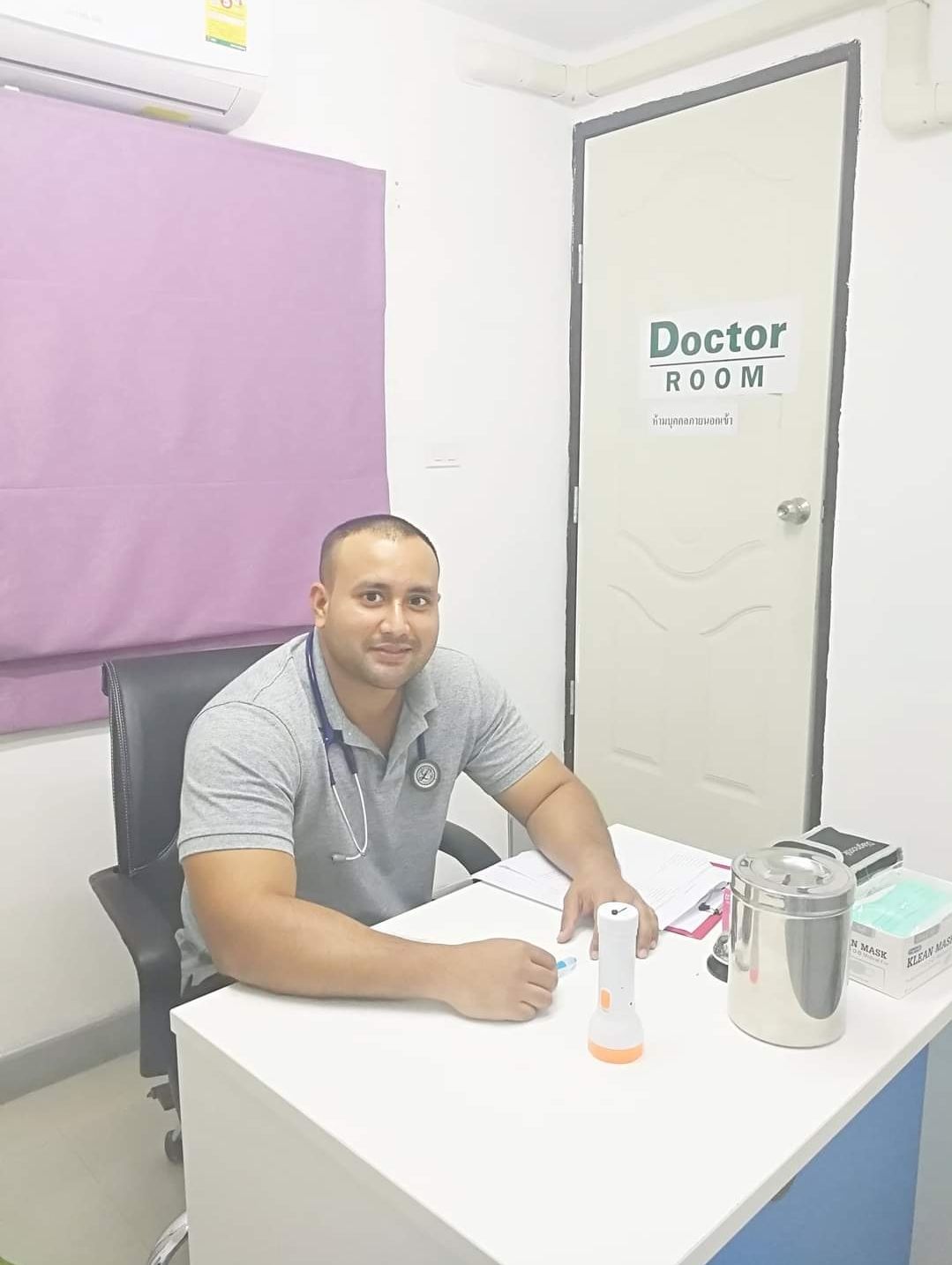
Dr. Ponlawat Pitsuwan is a physician at Doctor Bangkok, a private clinic in central Bangkok. He sees expats, residents, and medical tourists for general medicine, wellness consultations, and IV therapy. His focus is straightforward, evidence-based care delivered in plain language.