
Clinically reviewed by Dr. Ponlawat Pitsuwan, Physician, Doctor Bangkok. Last reviewed: July 2026
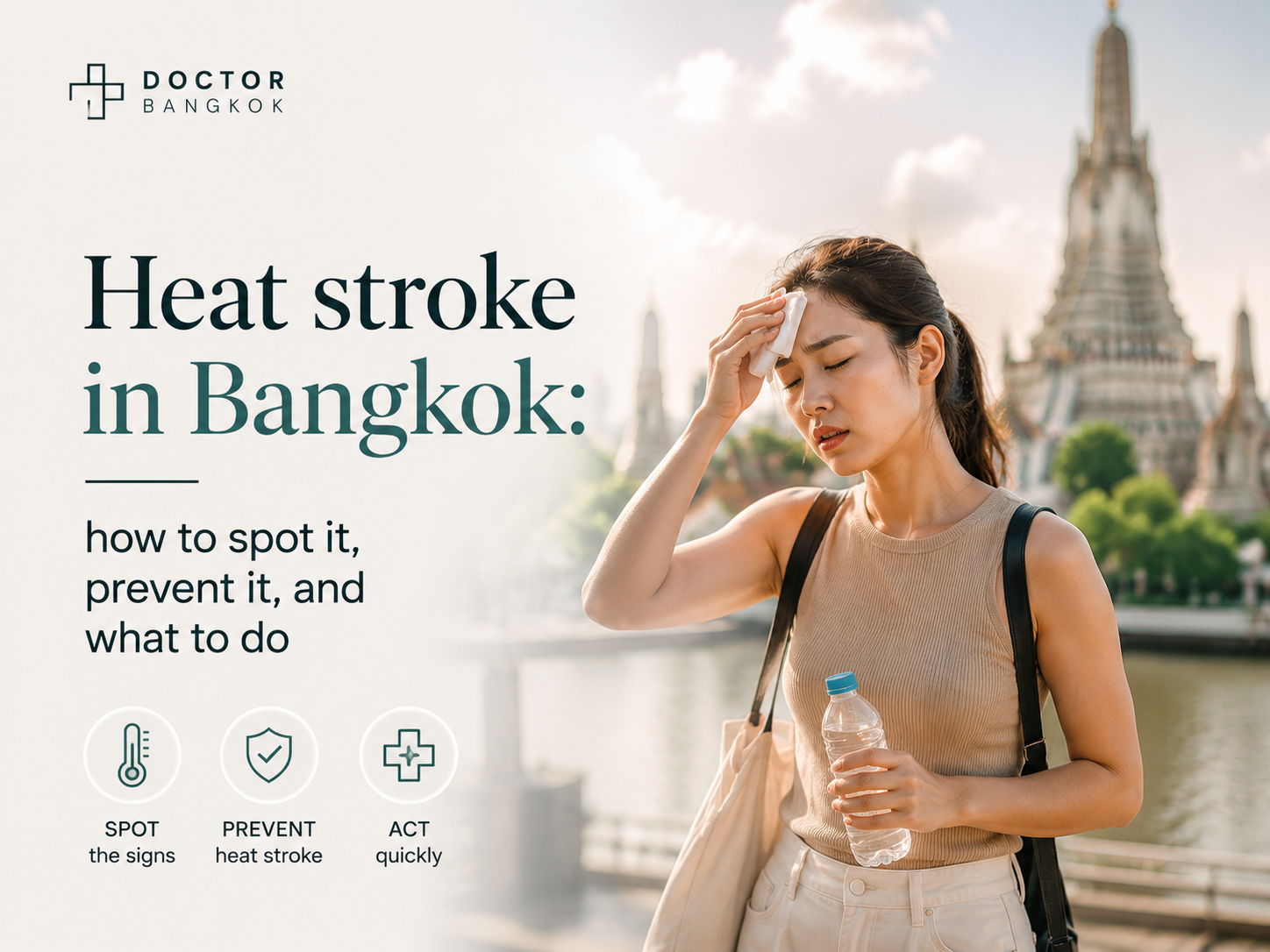
Heat stroke is a medical emergency. In Bangkok’s heat and humidity, your core temperature can rise to dangerous levels faster than you expect. The key warning signs are stopping sweating despite extreme heat, confusion, and a body temperature above 40°C. If you or someone near you has these signs, call 1669 and start cooling immediately. Do not wait to see if it gets better on its own.
If you are in Bangkok right now feeling dizzy and overheated, here is what matters most. Heat exhaustion is serious but manageable. Heat stroke can kill, and it can move from one to the other in less than an hour. Knowing which one you are dealing with is the most important call you will make today.
Bangkok does not just feel hot. It feels brutal. Add humidity above 80 percent and the urban heat island effect, and a day that reads 34°C on your phone can feel closer to 45°C on your skin. That gap matters, and it catches visitors off guard every year.

Why Bangkok’s heat hits harder than the thermometer suggests
The number on your weather app is air temperature in the shade. It does not account for humidity. When humidity is high, sweat cannot evaporate, and your body loses its main cooling mechanism. On a typical Bangkok afternoon in April, the feels-like temperature regularly exceeds 45°C.
Bangkok’s concrete, traffic, and dense buildings trap and radiate heat. Some parts of the city run several degrees hotter than the outskirts. If you are walking between BTS stations or moving through Sukhumvit at noon, you are dealing with a heat environment most bodies were not built for.
Most expats take two to four weeks to fully adjust to this. Until then, your sweat response is less efficient and your heart works harder to keep you cool. New arrivals and visitors are at the highest risk, and that risk peaks between March and June.
Heat exhaustion vs heat stroke: what is the difference?
This is the question I get asked constantly, and the answer changes what you do next.
Heat exhaustion means your body is struggling to stay cool but is still trying. You will be sweating heavily, your skin will look pale and feel clammy, and you may feel nauseated, dizzy, and weak. Your temperature may be raised, but usually below 40°C. You are still thinking clearly.
Heat stroke is different. Your cooling system has failed. Your core temperature climbs above 40°C, and this is the critical sign: you become confused, disoriented, or unable to speak clearly. Your skin may be hot and dry, though it can still feel damp in some cases.
Confusion in the heat is always a 1669 call. Do not drive someone to a hospital. Call emergency services, move the person to shade, apply ice to the neck and armpits, fan them with a wet cloth, and wait for help.
One more thing worth knowing: some common medications make heat illness more likely. Diuretics, beta-blockers, antihistamines, and some antidepressants all affect how your body manages heat. If you take any of these, your warning signs may arrive earlier and at lower temperatures than for others. Discuss this with your doctor before Bangkok’s hot season, not during it.

Can dehydration give you a fever in Bangkok’s heat?
Yes, it can, and this confuses a lot of patients. When you are severely dehydrated, your body can lose some ability to regulate temperature. Your core temperature creeps up even without any infection. Patients come in convinced they have a virus, when the real issue is they have not drunk anything meaningful since breakfast and walked around in 38-degree heat for three hours.
The problem is that genuine infections are also common in Bangkok. Dengue fever and gastroenteritis cause real fevers too. If your temperature is elevated and you have also been out in the heat, rehydrate and rest first. If the fever does not improve within a couple of hours, or if you have a rash, joint pain, vomiting, or any confusion, come in for a blood test. At Doctor Bangkok, a dengue test takes about 20 minutes and can rule out one of the most common causes of fever in the city.
Heat syncope, briefly fainting from the heat, is another thing people confuse with more serious illness. Fainting once and recovering quickly when you lie down and drink fluids is usually heat syncope. Fainting and not recovering quickly, or fainting with confusion, warrants urgent care.
How to stay hydrated when it is 35 degrees in Bangkok
Plain water is fine if you are mostly indoors in air conditioning. But if you are sweating heavily, plain water alone is not enough and can be dangerous in large amounts. Drinking several litres of plain water without replacing sodium can cause a drop in blood sodium levels that produces symptoms, nausea, headache, confusion, very similar to heat illness itself. It is rare, but I have seen it.
For anyone doing outdoor activities or spending significant time in the heat, electrolyte replacement matters. Oral rehydration salts are cheap and available at every pharmacy in Bangkok, including Boots and Watsons. Electrolyte drinks from 7-Eleven are a practical option and widely used. Coconut water works well too. Alcohol and caffeine both increase fluid loss and should be limited on hot days.
Check your urine. Pale yellow means you are doing well. Dark yellow or amber means you are already behind. No urine at all despite drinking is a sign to seek medical attention.
Sun safety in Bangkok: UV levels, sunburn, and heat rash
Bangkok’s UV index during the hot season, roughly March through October, regularly reaches 12 to 14 at midday. That is classified as extreme. At those levels, unprotected pale skin can start to burn in around ten minutes.
Sunscreens sold in Thai pharmacies carry a second rating called the PA system, which grades protection against UVA rays. UVA rays do not cause burning but cause deeper skin damage and are present even on cloudy days. You want at least PA+++ for Bangkok. PA++++ is better. SPF 50 PA+++ applied 20 minutes before going out, and reapplied every two hours, is what I recommend here. Cloud cover does not significantly reduce UV exposure in the tropics, so do not skip sunscreen on an overcast day.
Heat rash appears as small red itchy bumps, often on the chest, back, or neck. It happens when sweat glands become blocked in high humidity. Loose clothing, cool showers, and air conditioning usually clear it within a few days. If it spreads, becomes painful, or does not improve, a clinic visit is reasonable.
When to stop treating yourself and go to a clinic
Most mild heat exhaustion can be managed at home. Move to a cool room, drink electrolytes, rest, and check on yourself every 20 minutes.
Go to a clinic if you have been cooling down for 30 minutes without improvement. Also come in if you have a fever that does not improve with rehydration, if you are vomiting and cannot keep fluids down, or if you are on medications that affect heat tolerance and are feeling worse than expected. Doctor Bangkok can assess and treat moderate heat illness, severe dehydration, and fever, and provides IV rehydration for patients who need it.
Call 1669 and do not attempt to travel if there is confusion or disorientation, if the person has stopped sweating despite obvious heat exposure, if there is loss of consciousness, or if body temperature is above 40°C. These are the signs of heat stroke, and it is a genuine emergency. A clinic is not the right place for heat stroke with altered consciousness. That needs hospital emergency care.
Feeling unwell from Bangkok’s heat? Doctor Bangkok is a walk-in clinic in central Bangkok, BTS accessible, with English-speaking physicians. We assess and treat heat exhaustion, dehydration, and fever, and provide IV drip therapy for patients who need rapid rehydration. We also offer dengue testing, general medical consultations, and health checks. Visit doctorbangkok.co.th or walk in during clinic hours.
Frequently asked questions
How do I know if I have heat exhaustion or heat stroke while I am out in Bangkok?
The most reliable sign is whether you have stopped sweating. Heat exhaustion means heavy sweating, pale clammy skin, and feeling awful but thinking clearly. Heat stroke means your sweating has stopped or sharply reduced, your skin is hot, and you are confused or disoriented. If there is any confusion, treat it as heat stroke, call 1669, and start cooling immediately.
Can dehydration actually give you a fever in Bangkok’s heat?
Yes, severe dehydration can raise your core temperature enough to feel like a low-grade fever. The problem is that real infections like dengue also cause fever in Bangkok. If you rehydrate and rest for a couple of hours and your temperature does not come down, or if you have a rash or joint pain, come in for a blood test to rule out infection.
What should I actually drink to stay hydrated in Bangkok?
For low-activity indoor days, water is fine. For anyone sweating heavily outdoors, electrolyte replacement matters. ORS sachets from any Bangkok pharmacy are a solid option. Local electrolyte drinks from 7-Eleven work well too. Avoid alcohol and excessive caffeine on hot days, and do not rely on large amounts of plain water alone when you are losing a lot of salt through sweat.
I am on blood pressure medication. Am I at higher risk in Bangkok’s heat?
Yes, meaningfully so. Diuretics, beta-blockers, and calcium channel blockers all affect how your body manages heat. Your warning signs may appear earlier and at lower temperatures than for someone not on medication. Talk to your doctor before you travel, avoid peak heat hours, and carry electrolyte drinks when you are outdoors.
What does the Bangkok UV index actually mean and when do I need more than standard sunscreen?
A UV index of 12 to 14, which Bangkok regularly hits at midday during the hot season, is classified as extreme. Burn time for unprotected skin can be around ten minutes. You need SPF 50 minimum, reapplied every two hours, and a PA+++ or PA++++ rating for UVA protection. Most sunscreens in Thai pharmacies carry the PA rating on the label. If yours does not, it may not be protecting you against UVA at all.
What is heat rash and how do I treat it in Bangkok?
Heat rash appears as small itchy red bumps usually on the chest, back, or neck. It happens when sweat glands get blocked in high humidity. Cool showers, loose breathable clothing, and air conditioning usually clear it within a few days. If it spreads significantly, feels painful rather than itchy, or does not improve after a few days, get it checked at a clinic.
Dr. Ponlawat Pitsuwan
Physician, Doctor Bangkok
a private medical clinic in central Bangkok. He sees expats, residents, and visitors for heat illness, fever, dehydration, and general medical consultations. His focus is practical, evidence-based care delivered in plain language.
Part of our guide to travel health in Bangkok.
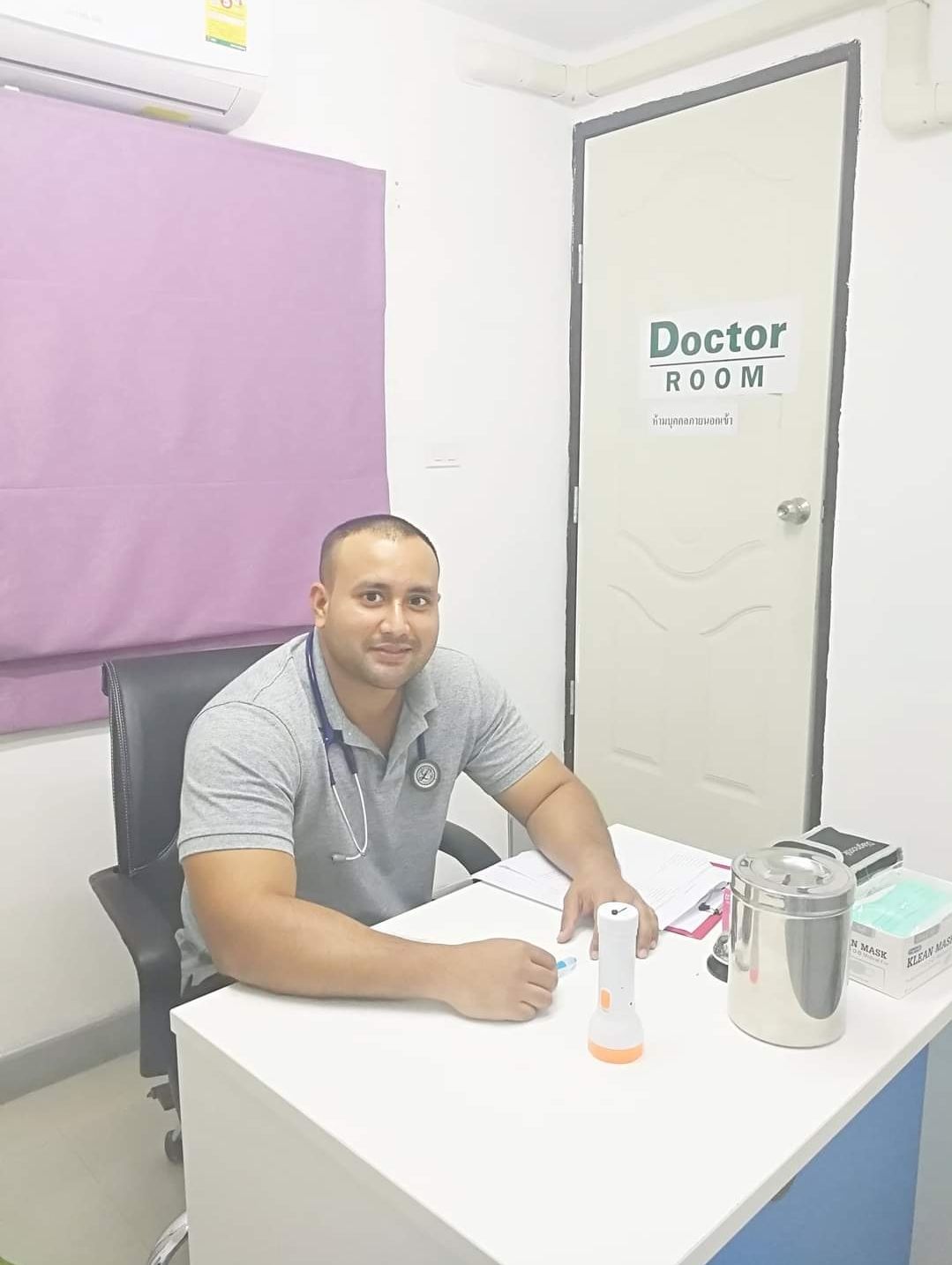
Dr. Ponlawat Pitsuwan is a physician at Doctor Bangkok, a private clinic in central Bangkok. He sees expats, residents, and medical tourists for general medicine, wellness consultations, and IV therapy. His focus is straightforward, evidence-based care delivered in plain language.