

Clinically reviewed by Dr. Ponlawat Pitsuwan, Physician, Doctor Bangkok. Last reviewed: July 2026
Allergy tests work by exposing your immune system to small amounts of suspected allergens and watching for a reaction. The two most common methods are the skin prick test, which gives results in about 15 minutes, and the specific IgE blood test, which takes a few days but works even if you are taking antihistamines. Neither test alone confirms an allergy. A doctor needs to match the result to your symptoms before any diagnosis is made.
A lot of people who walk into my clinic have been sneezing, itching, or breaking out in hives for months. Many of them had no allergy history before moving to Bangkok. They have tried antihistamines from the pharmacy, maybe changed their washing powder, and still feel terrible. They want to know what they are actually reacting to.
If that sounds like you, an allergy test is the right starting point. Tests look for signs that your immune system has reacted to something specific. But which test you need, and what the result actually means, depends on your symptoms and your situation. Let me walk you through it.

Why Expats in Bangkok Often Develop New Allergies
I see this constantly. Someone arrives in Bangkok with no allergy history and within six months they are waking up with a blocked nose, itchy eyes, or a rash they cannot explain.
Bangkok’s climate is the main reason. High humidity means dust mites thrive year-round, especially inside poorly ventilated condos. Cockroach allergen is common in Bangkok buildings and is a major but underappreciated trigger. Tropical grass and tree pollens are also completely different from what your immune system grew up with.
Bangkok’s air pollution adds to the problem. PM2.5 particles do not cause allergies directly, but they lower the threshold at which your immune system reacts. You may have been mildly sensitised to dust mites for years and never noticed. In Bangkok, that same exposure can push you over the edge.
Allergy, Intolerance, or Sensitivity: What Test Do You Actually Need?
This is where a lot of people go wrong, and I want to be direct about it.
A true allergy involves your immune system producing IgE antibodies, proteins that trigger a fast reaction when you encounter an allergen. Symptoms tend to arrive within minutes to an hour. This is what standard allergy tests are designed to detect.
Food intolerance is different. Lactose intolerance, for example, is a digestive issue with no IgE antibodies involved. A standard allergy test will not find it. If your reaction to certain foods comes hours later, intolerance is more likely than allergy.
A word of warning: IgG food sensitivity panels are heavily marketed in Bangkok’s wellness scene. These tests are not clinically validated for diagnosing food allergy or intolerance. They measure a normal immune response to eating, not evidence of a harmful reaction. Talk to a doctor about which test actually fits your symptoms before spending money on one of these.

Types of Allergy Tests
Skin Prick Test
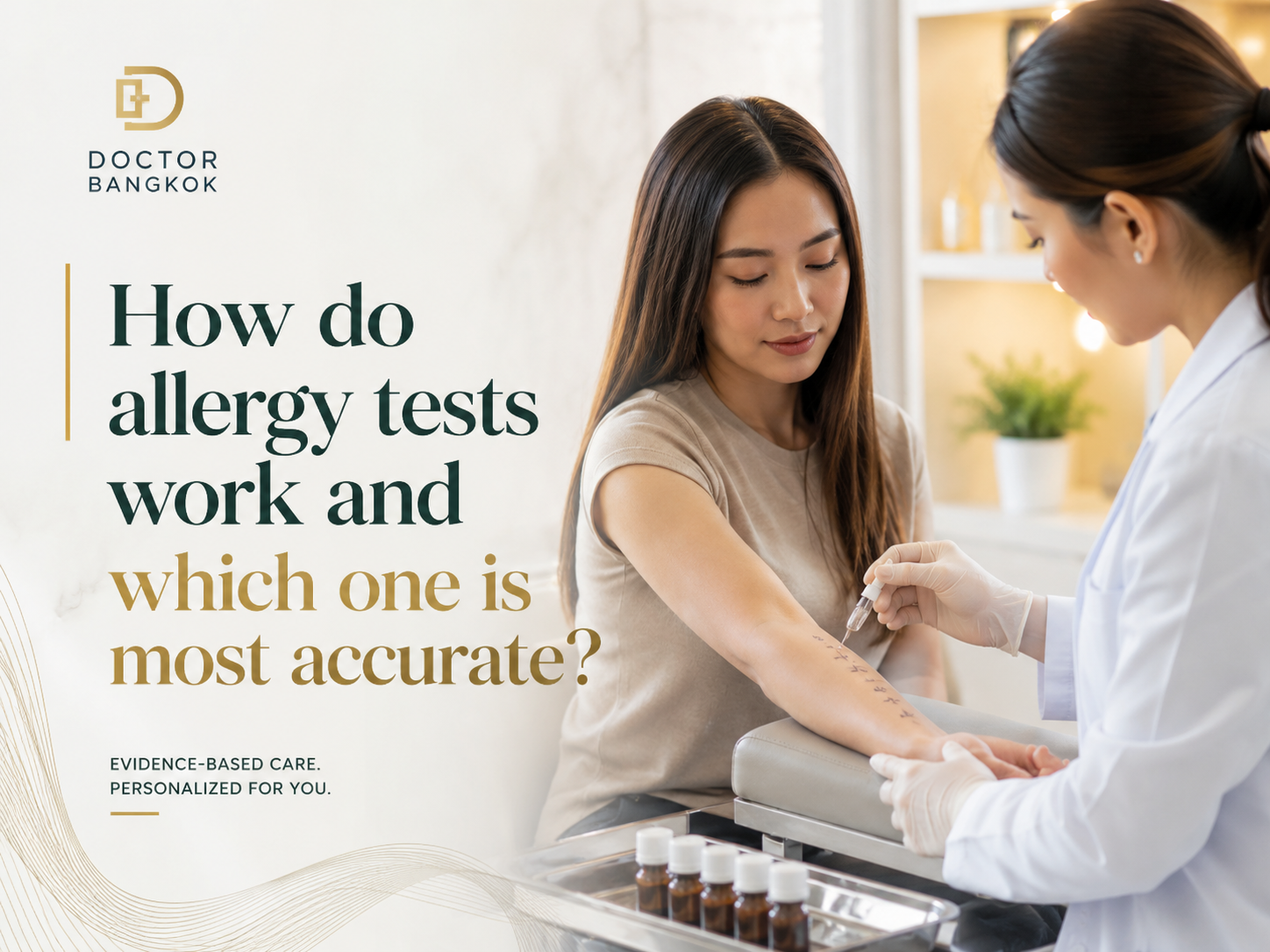
This is the test I use most often. A small drop of allergen extract is placed on your forearm, and a tiny lancet gently pricks the skin through the drop. It barely hurts. If you are sensitised to that allergen, a small raised bump appears within 15 minutes. We test multiple allergens at once, so you get a lot of information quickly.
The catch is preparation. You need to stop antihistamines beforehand, usually three to seven days depending on the type you take. Antihistamines suppress the reaction we are looking for. If you live in Bangkok and take antihistamines every day, the blood test below may be a better fit.
Specific IgE Blood Test
A blood sample is taken and sent to a lab. Results come back within a few days. Because antihistamines do not affect the result, you do not need to stop your medication first. This makes it a practical choice for many Bangkok residents.
It is also the preferred option if you have had a severe allergic reaction before, or for young children. In practice, both the skin prick test and the blood test are reliable when read by an experienced doctor.
Patch Test
This is for contact dermatitis, a delayed skin reaction caused by things like nickel, fragrances, preservatives, or latex. Suspected substances are applied to your back on small discs, kept in place for 48 hours, and then read at 48 and 96 hours. If you have a persistent rash from jewellery, skincare, or workplace chemicals, this is the test for you.
Oral Food Challenge
This involves supervised food exposure under controlled conditions to confirm or rule out a food allergy. It is the most definitive test for food allergy but requires specialist oversight and emergency equipment. It is not routinely done at general clinics.
What Happens at Your Allergy Test Appointment
You start with a consultation. The doctor asks about your symptoms, when they happen, how long they last, and what you have already tried. This guides which allergens to test. There is no standard panel that works for everyone.
For a skin prick test, the whole process takes about 30 to 40 minutes including the wait for the reaction. We read the results together before you leave, so you walk out knowing the basics that day. For a blood test, the appointment takes 10 to 15 minutes, and I contact you when results are ready, usually within two to three days.
Come wearing a short-sleeved top and bring a list of all medications and supplements you currently take. If you have had a severe allergic reaction before, mention it before the appointment starts.
How to Read Your Allergy Test Results
A positive result does not automatically mean you are allergic. It means your immune system has encountered that allergen before and produced IgE antibodies against it. Sensitisation without symptoms is common. You might test positive to cat dander but have no reaction when around cats.
A larger skin reaction or a higher antibody level in blood does not predict how severe your reaction will be. Results also need to be interpreted carefully because of cross-reactivity. If you are allergic to latex, you may test positive to banana or avocado because the proteins look similar to your immune system.
This is why professional interpretation matters. Numbers and wheal sizes are data points. They only make sense alongside your actual history of symptoms.
What Happens After Your Allergy Test
Once we know what you are reacting to, we build a plan. The first step is usually avoidance: practical changes to reduce your exposure to confirmed triggers. For dust mites in Bangkok, this means mattress covers, air purifiers, and managing indoor humidity.
For ongoing conditions like allergic rhinitis, immunotherapy is worth discussing. Sublingual immunotherapy, drops placed under the tongue, gradually retrains your immune system over months. It is not a quick fix, but it is one of the most evidence-backed long-term approaches available. You can read more on the Doctor Bangkok allergy treatment page.
Antihistamines and nasal sprays manage day-to-day symptoms well for many people. The goal is finding the right combination for your situation.
Why At-Home Allergy Tests Are Not Worth Your Money
Hair analysis, IgG food panels, and postal kits are sold widely in Bangkok and online. None of them are clinically validated for diagnosing true allergy. IgG testing in particular is frequently misrepresented. Producing IgG antibodies to a food is a normal immune response to eating, not a sign of allergy or intolerance.
Acting on these results can lead to unnecessary food restriction, nutritional gaps, and a lot of confusion. If you want to know what you are actually allergic to, a proper clinical test with professional interpretation is the only route that gives you reliable, actionable information. Doctor Bangkok offers both skin prick testing and specific IgE blood testing for exactly this reason.
Not sure what is triggering your symptoms in Bangkok?
>
At Doctor Bangkok, we offer skin prick testing and specific IgE blood tests for expats, residents, and visitors. English-speaking doctors. Central Bangkok, BTS accessible. Same-week appointments available.
>
Visit doctorbangkok.co.th/allergy-treatment/ to book or find out more.
Frequently Asked Questions
Do I need to stop taking antihistamines before an allergy test in Bangkok?
Yes, for a skin prick test. Antihistamines suppress the skin reaction we are looking for, so we usually ask you to stop them three to seven days beforehand depending on the type. If you take antihistamines daily and cannot stop, the specific IgE blood test is a valid alternative that does not require stopping any medication.
Can I develop new allergies after moving to Bangkok?
Yes, and it is more common than people expect. Bangkok’s year-round humidity drives high dust mite and mould exposure, cockroach allergen is widespread, and local pollens are different from those in most home countries. An allergy test is the most reliable way to identify your new triggers.
What is the difference between a food allergy test and a food intolerance test?
A food allergy involves your immune system and produces fast reactions, detected by skin prick or IgE blood test. Food intolerance is a digestive issue, not immune-mediated, and standard allergy tests will not detect it. IgG food panels marketed in Bangkok are not validated for diagnosing either condition, so talk to a doctor about which test suits your actual symptoms.
How long does an allergy test take, and will I get results the same day?
Skin prick test results are ready within 15 to 20 minutes and you leave knowing the basics the same day. Blood IgE test results take a few days once the sample reaches the lab. Patch test results require a follow-up visit at 48 and 96 hours. If you are visiting Bangkok short-term, mention that at booking and we can plan around your schedule.
Is a positive allergy test result always serious?
No. A positive result means your immune system has encountered that allergen and produced antibodies, not that you will have a severe reaction. The result must be matched to your symptoms and history by a doctor before any conclusions are drawn. This is why self-ordered panels without professional interpretation can be misleading.
Which allergy test is the most accurate?
Neither the skin prick test nor the blood test is superior in every situation. Skin prick testing is slightly more sensitive for inhalant allergies and gives same-day results. The blood test is more practical if you take antihistamines daily or have had severe reactions before. In experienced hands, both are reliable, and results always need to be read alongside your symptom history.
Dr. Ponlawat Pitsuwan
Physician, Doctor Bangkok
a private medical clinic in central Bangkok. He sees expats, residents, and medical tourists for allergy assessment, general medicine, and health consultations. His focus is straightforward, evidence-based care delivered in plain language.
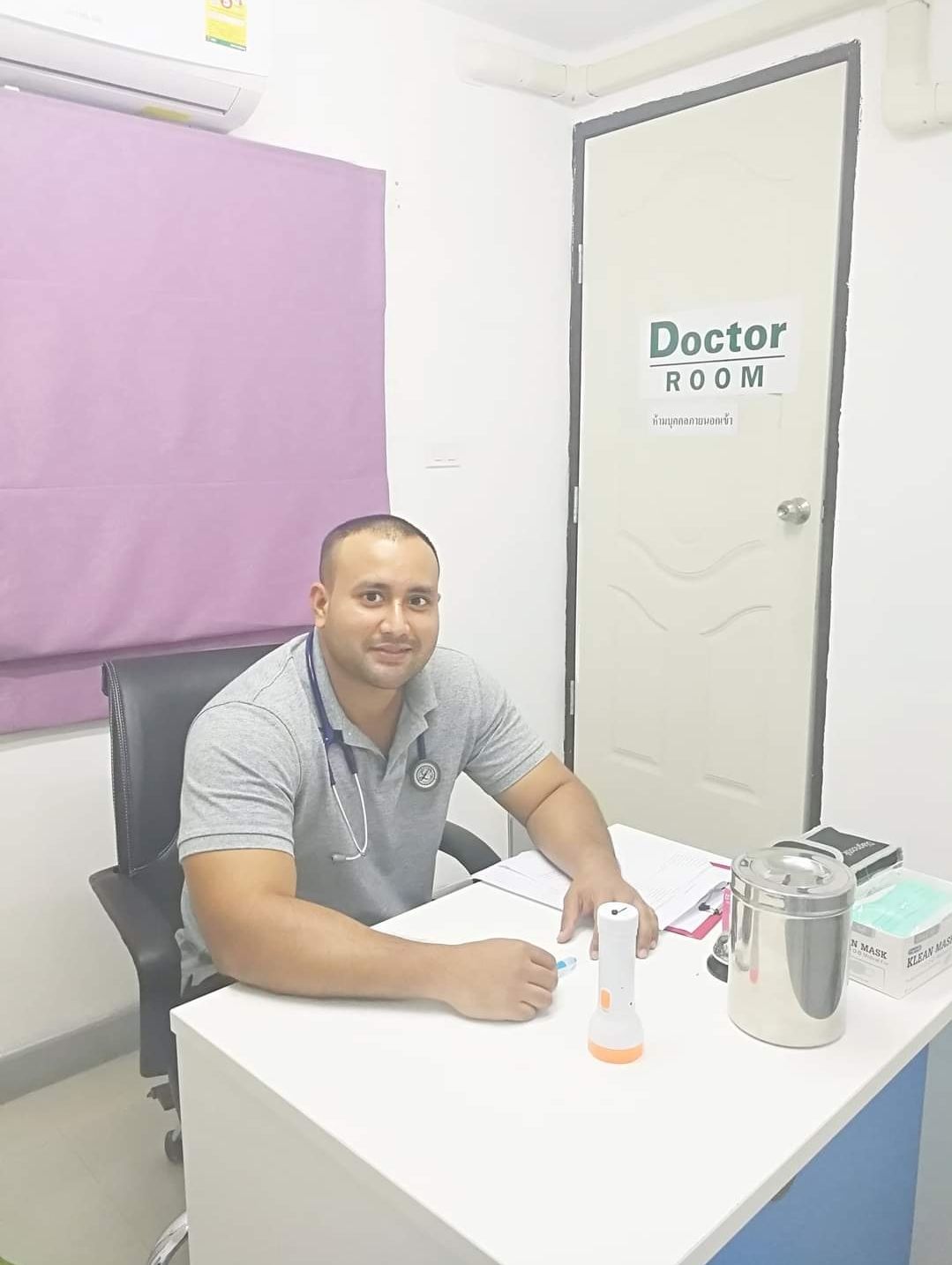
Dr. Ponlawat Pitsuwan is a physician at Doctor Bangkok, a private clinic in central Bangkok. He sees expats, residents, and medical tourists for general medicine, wellness consultations, and IV therapy. His focus is straightforward, evidence-based care delivered in plain language.