

Clinically reviewed by Dr. Ponlawat Pitsuwan, Physician, Doctor Bangkok. Last reviewed: June 2026
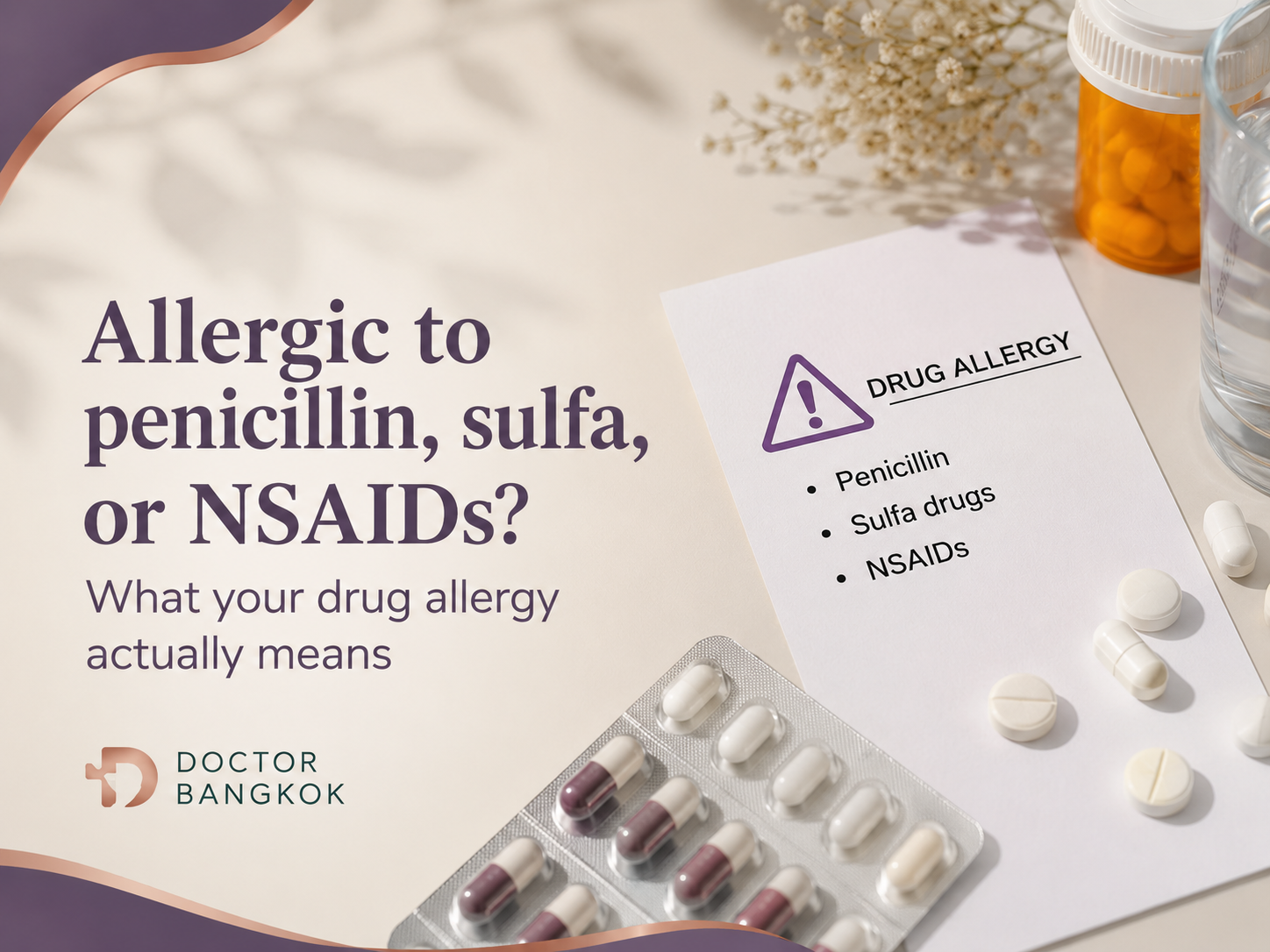
A drug allergy is a real immune reaction to a medication, not just a side effect. The most common signs are rashes, hives, and swelling, but serious reactions can affect breathing and blood pressure. Penicillin, sulfa antibiotics, and NSAIDs like ibuprofen are the most frequent causes. If you are unsure whether your reaction was a true allergy, get properly evaluated before you need that drug again.
A lot of patients come in carrying an allergy label they were given years ago, sometimes as a child, and have never had it checked. "I am allergic to penicillin" is one of the most common things I hear. But what that actually means medically, and what it means for the medications you can safely take, is often very different from what people assume.
A true drug allergy is an immune system reaction. Your body recognises the drug as a threat and fights it. That is different from a side effect, which is a predictable response almost anyone might get. Nausea from antibiotics is a side effect. Hives or facial swelling after a dose is more likely an allergy. The distinction matters, because it changes which medications you can use safely and which you genuinely need to avoid.

Drug allergy vs drug intolerance: why the difference matters
Most people use the words "allergy" and "intolerance" interchangeably. Doctors do not. A true drug allergy involves your immune system and can range from a mild rash to anaphylaxis, a severe whole-body reaction affecting breathing and blood pressure. A drug intolerance is unpleasant but not immune-driven. An upset stomach after taking codeine is an intolerance. It will not become anaphylaxis.
This matters practically. If you have been labelled allergic to a drug you only had a side effect to, you may be denied the best treatment for a future infection or illness. Inaccurate allergy labelling is very common. A proper evaluation can sometimes clear that label entirely.
Penicillin allergy: cross-reactivity with cephalosporins and beta-lactams
If you are allergic to penicillin, you cannot take amoxicillin. Amoxicillin is a penicillin, full stop.
The more complicated question is whether you can take cephalosporins, which are related antibiotics. For years, patients were told to avoid all cephalosporins if they had a penicillin allergy. Current evidence puts true clinical cross-reactivity at around 2% or lower, and it depends on whether the two drugs share a similar chemical side chain.
What this means in practice: some cephalosporins are more similar to penicillin than others. Your doctor needs to look at which specific drugs are involved before deciding what is safe. A formal drug allergy evaluation, including a skin test, can often answer this clearly. At Doctor Bangkok, we can assess your allergy history and guide you toward safe alternatives, rather than defaulting to broad avoidance.
Beta-lactam allergy: cross-reactivity between penicillins and cephalosporins
Beta-lactams are a large family of antibiotics that includes penicillins, cephalosporins, and carbapenems. They share a common ring structure. But allergy cross-reactivity is driven more by the side chains attached to that ring than the ring itself.
Two drugs can both be beta-lactams and have very little immunological similarity. Blanket avoidance of all beta-lactams in a penicillin-allergic patient is often unnecessary. It should be a decision made drug by drug, with proper clinical assessment.

Sulfa allergy: which drugs to avoid and safe alternatives
Sulfa allergy refers to a reaction to sulfonamide antibiotics. The most common one is trimethoprim-sulfamethoxazole, sold as Bactrim or Septra, widely used for urinary tract infections and other bacterial infections.
Here is where patients often get confused. Some other medications contain a sulfonamide chemical group but are structurally very different from sulfonamide antibiotics. Furosemide (a water tablet), hydrochlorothiazide (a blood pressure medication), and celecoxib (a pain medication) fall into this category. The evidence that a sulfa antibiotic allergy automatically means you will react to these other drugs is weak. The decision needs to be made individually, with a doctor who knows your full history.
If you have a confirmed sulfa antibiotic allergy, avoid other sulfonamide antibiotics. Beyond that, speak to your doctor before assuming every sulfonamide-containing drug is off limits.
One more thing worth clearing up: sulfa and sulfite are not the same thing. A sulfa drug allergy does not mean you need to avoid sulfites in wine, dried fruit, or food. They are chemically unrelated.
If you genuinely need a sulfonamide antibiotic and no good alternative exists, a supervised drug desensitisation or oral challenge in a clinical setting can sometimes be done safely. This is not something to attempt on your own.
NSAID and aspirin allergy: symptoms and safer pain relief options
NSAIDs include ibuprofen, aspirin, naproxen, and diclofenac, all available over the counter at pharmacies across Bangkok. If you are sensitive to one of them, there is a real chance you will react to others in the same group.
The most common NSAID reaction pattern is hives, often with swelling. Some people with asthma develop breathing problems triggered by NSAIDs. If you have asthma and find that ibuprofen makes your chest tight, that is a recognised pattern and worth discussing with a doctor.
If you are aspirin-sensitive, ibuprofen is often not a safe swap. They work the same way and carry similar risk for reactive patients. Paracetamol, which works differently, is usually well tolerated by NSAID-sensitive patients. Selective COX-2 inhibitors, such as celecoxib, are another option for people who need anti-inflammatory relief but cannot tolerate standard NSAIDs. These require a prescription and a conversation with your doctor first.
Contrast dye allergy: what happens during a reaction and how it is managed
If you are having a CT scan, you may be given contrast dye injected into a vein to make certain structures more visible. Reactions do happen, ranging from mild flushing and nausea to hives, and in rare cases a more serious response.
If you have had a reaction to contrast dye before, tell your doctor and the imaging team before your scan. Do not downplay it or forget to mention it.
Modern contrast agents used in Bangkok hospitals are typically low-osmolality agents, which carry a lower reaction risk than older types. For patients with a previous mild reaction, doctors will often use a premedication protocol before the scan, usually corticosteroids and antihistamines given in advance. The decision to use contrast despite a previous reaction is made jointly by the ordering doctor and the radiologist. If you are heading for imaging and have a contrast allergy history, see us first at Doctor Bangkok so we can advise and coordinate.
Drug allergy rash: what it looks like and how long it lasts
The most common drug allergy rash is flat pink-red spots and slightly raised bumps appearing first on the trunk, then spreading outward. It usually starts five to fourteen days after beginning the drug. It is itchy and can look a little like a viral rash.
This type of rash typically fades one to two weeks after stopping the medication. It is uncomfortable but not dangerous on its own.
Watch for these red-flag signs: blistering, peeling skin, involvement of the mouth or eyes, fever alongside the rash, swelling of the face or lips, or a rash that is spreading very fast. These features can point to Stevens-Johnson syndrome or DRESS syndrome, which is a drug reaction with widespread internal involvement. Both are serious and need same-day medical care.
Hives and deeper swelling under the skin usually appear within one to two hours of taking the drug. This is a faster reaction and can escalate quickly. Do not ignore facial swelling or throat tightness.
If you are in Bangkok and unsure whether your rash needs attention, do not sit on it. Our allergy treatment service page explains what an assessment involves.
How drug allergies are diagnosed
The most reliable way to know whether you have a true drug allergy is a structured evaluation. For penicillin, this often involves a skin prick test followed by an intradermal test. If skin tests are negative, a supervised oral drug challenge, where you take a small amount of the drug under observation, is often the next step. This can confirm whether the allergy is real or whether the original label was based on a side effect.
Not every drug has a validated skin test. But for penicillin, the testing is well-established and widely available in Bangkok. An inaccurate allergy label can follow you for decades and restrict your treatment options unnecessarily. Getting properly tested is worth it.
Managing a drug allergy in Bangkok
If you have had a drug reaction here and are not sure what to do, stop the medication and seek clinical assessment. For mild rashes, oral antihistamines are a reasonable first measure while you get seen. For anything involving the face, throat, breathing, or significant swelling, treat it as urgent and go to a clinic or emergency room directly.
Bangkok pharmacies stock antihistamines, including chlorpheniramine, over the counter. This can help with a mild rash or hives while you arrange to be seen. Antihistamines do not treat anaphylaxis. If you are struggling to breathe, call for help and get to an emergency room.
When you see a Thai-language doctor without an interpreter, showing your allergy list in writing helps. Keep a note on your phone in both English and Thai listing the drug name, reaction type, and when it occurred. If you have been seen at Doctor Bangkok, we can provide written documentation you can carry with you.
Getting your allergy history assessed in English, by a doctor who has time to go through it with you, is something we do regularly. Most patients find their allergy history is more nuanced than the one-line label they were given years ago. You can read more about what that process looks like on our drug allergy assessment page.
Have a drug allergy you need assessed, or unsure whether a past reaction was a true allergy? Doctor Bangkok offers English-language drug allergy evaluation in central Bangkok, BTS accessible. We can review your history, advise on safe alternatives, and provide written documentation for your records. Book a consultation through our allergy treatment page.
Frequently asked questions
I was told I am allergic to penicillin. Does that mean I cannot take amoxicillin or cephalosporins?
Amoxicillin is a penicillin, so yes, avoid it if you have a confirmed penicillin allergy. Cephalosporins are a different story. True cross-reactivity is much lower than old guidance suggested, around 2% or less, and depends on whether the two drugs share a similar chemical side chain. A skin test and formal evaluation can often tell you which cephalosporins, if any, are safe for you.
What is the difference between a sulfa allergy and a sulfite allergy?
They are completely different things. A sulfa allergy is a reaction to sulfonamide antibiotics like Bactrim. A sulfite sensitivity relates to preservatives found in wine, dried fruit, and some processed foods. Having one does not mean you have the other. If someone tells you to avoid wine because of your sulfa antibiotic allergy, that advice is not correct.
I have a drug allergy rash. How do I know if it is serious?
A flat pink-red rash starting on the trunk, appearing one to two weeks into a new medication, is usually a typical drug rash and fades after stopping the drug. Get seen urgently if you notice blistering, peeling skin, involvement of your mouth or eyes, facial swelling, fever with the rash, or a rash spreading very quickly. Those signs need same-day medical assessment.
I need a CT scan in Bangkok. What should I tell the team if I have had a reaction to contrast dye?
Tell them before the scan, not after. Disclose which agent caused the reaction, what happened, and when. If the reaction was mild, a premedication protocol with steroids and antihistamines before the scan is often used to reduce risk. The ordering doctor and radiologist will decide together whether contrast is still appropriate for you.
Can I take ibuprofen if I am allergic to aspirin?
Probably not. Ibuprofen and aspirin work through the same pathway, and patients with aspirin hypersensitivity often react to ibuprofen as well. Paracetamol is usually a safe alternative for most aspirin-sensitive patients. If you need anti-inflammatory pain relief specifically, ask your doctor about COX-2 inhibitors, which carry lower risk for NSAID-sensitive patients.
I have had a drug reaction in Bangkok and do not know what medication caused it. What should I do?
Stop taking all non-essential medications if it is safe to do so, note what you were taking and when the reaction started, and come in for an assessment. Bringing the medication packaging or names helps enormously. A drug allergy evaluation can review your history and help identify the likely cause so you have a documented record going forward.
Dr. Ponlawat Pitsuwan
Physician, Doctor Bangkok
a private medical clinic in central Bangkok. He sees expats, residents, and medical tourists for drug allergy evaluation, general medical consultations, and medication safety reviews. His focus is straightforward, evidence-based care delivered in plain language.
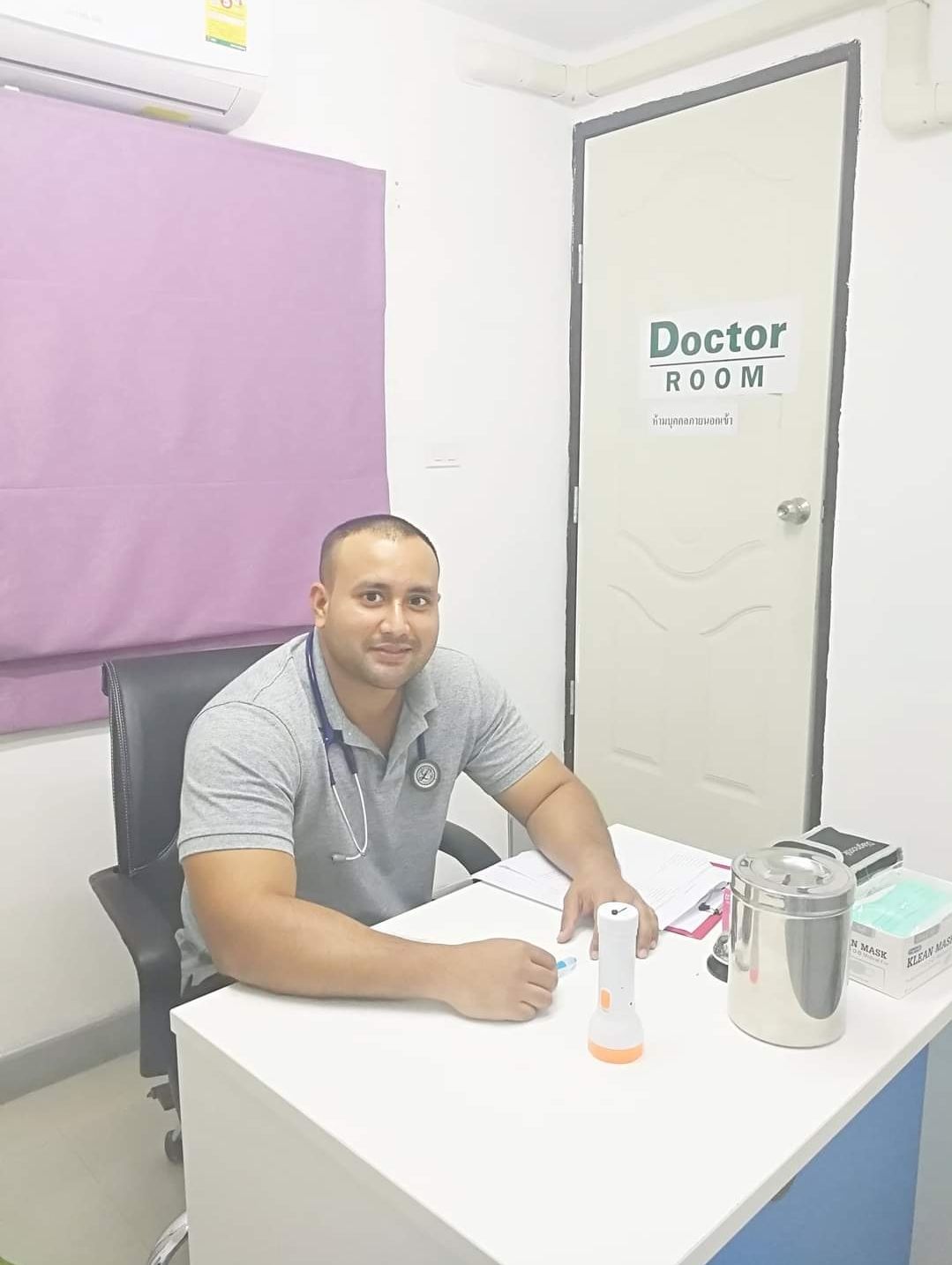
Dr. Ponlawat Pitsuwan is a physician at Doctor Bangkok, a private clinic in central Bangkok. He sees expats, residents, and medical tourists for general medicine, wellness consultations, and IV therapy. His focus is straightforward, evidence-based care delivered in plain language.