
Clinically reviewed by Dr. Ponlawat Pitsuwan, Physician, Doctor Bangkok. Last reviewed: June 2026
The rabies vaccine is given as either two doses before a bite (pre-exposure, Days 0 and 7) or a course of doses after a bite (post-exposure). If you have had pre-exposure vaccination, you do not need rabies immunoglobulin after a bite, which is a major advantage in Thailand where it can be hard to obtain quickly. Anyone living in or visiting Bangkok should know which schedule applies to them before an animal encounter happens.
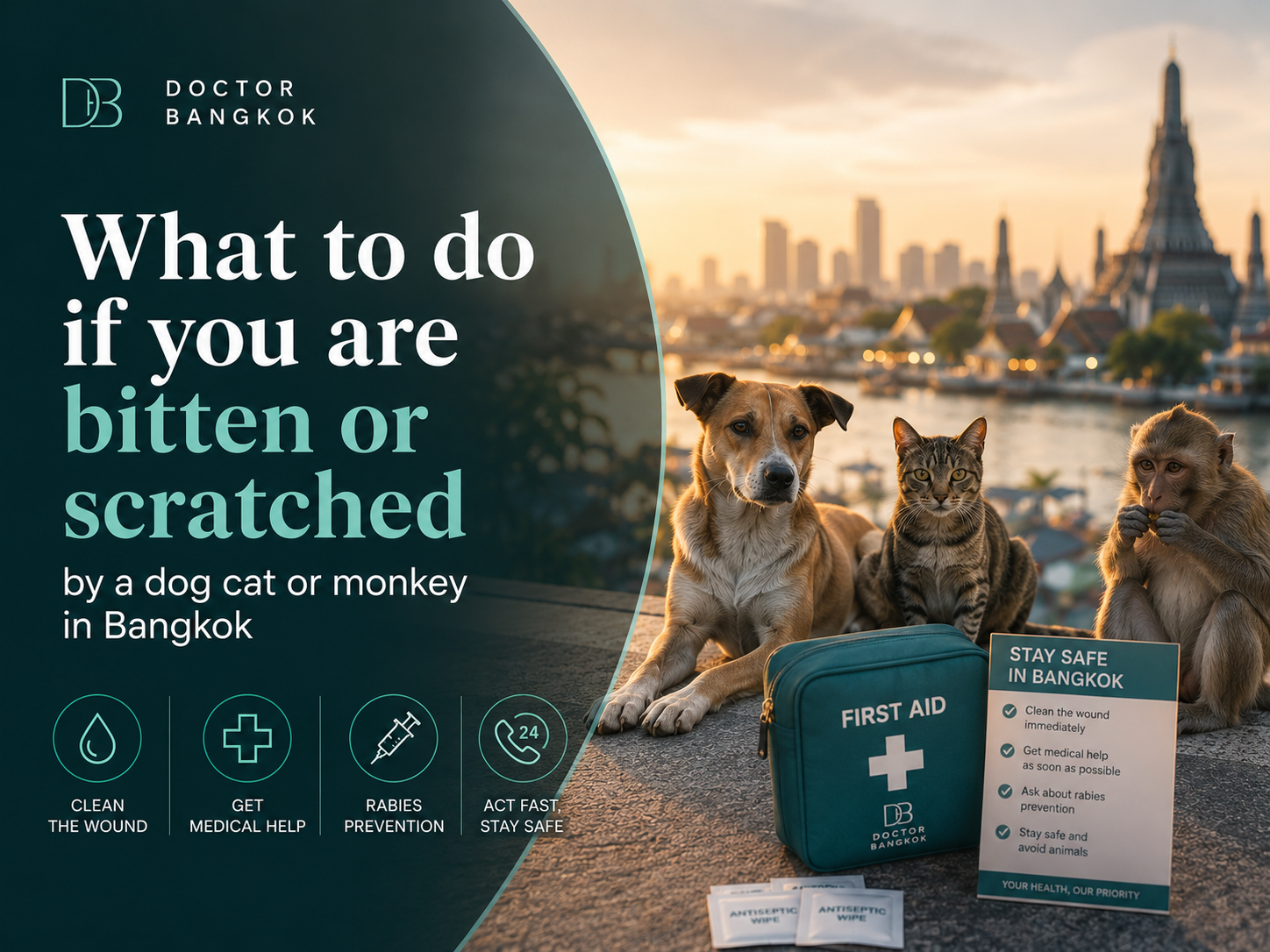
If you have just been bitten by a stray dog in Bangkok and you are Googling what to do at midnight, here is the short answer: wash the wound with soap and water for at least 15 minutes, then get to a clinic today. Do not wait. Rabies is fatal once symptoms start, but it is completely preventable with the right treatment given in time.
If you are reading this before anything has happened, good. Bangkok has a real rabies risk. Soi dogs, temple monkeys, and stray cats are everywhere, and not all of them have been vaccinated. Getting the pre-exposure vaccine before you need it is one of the smartest things you can do as an expat or long-stay visitor here.

What is pre-exposure prophylaxis (PrEP) for rabies?
Pre-exposure prophylaxis, or PrEP, means getting vaccinated before any animal bite happens. It does not make you immune. What it does is prime your immune system so that if you are bitten, your body can respond much faster.
Here is the part that actually matters for Bangkok: if you have had pre-exposure vaccination and you are bitten, you do not need rabies immunoglobulin. Rabies immunoglobulin is a treatment given alongside the vaccine after a bite in unvaccinated people. In Thailand, it is frequently delayed, sometimes unavailable, and expensive. Pre-vaccination removes that problem entirely.
Who should get pre-exposure rabies vaccination?
I recommend it for almost everyone spending more than a few weeks in Thailand. This is a rabies-endemic country. You do not have to work with animals to be at risk.
Expats with children especially need to think about this. Kids are more likely to approach stray dogs and less likely to tell you they were scratched or licked. Monkey bites at temples are more common than people expect. If you are regularly around animals, cycling in rural areas, or living here long-term, pre-exposure vaccination is not optional in my view.
What is the pre-exposure rabies vaccine schedule?
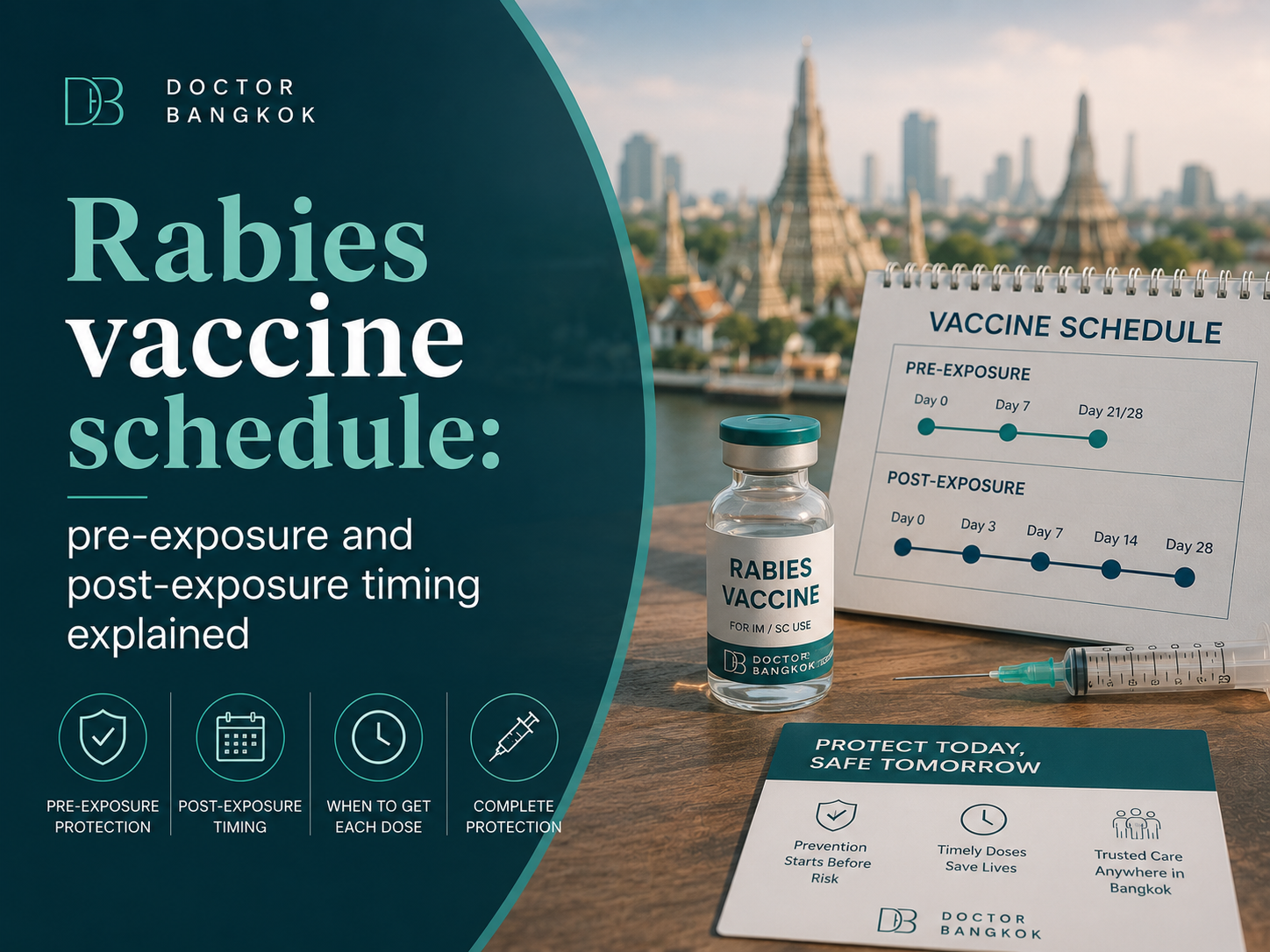
The current standard is two doses given into the muscle of your upper arm. You get the first dose on Day 0 and the second on Day 7.
Some Thai clinics and older references still list a three-dose schedule on Days 0, 7, and 21 or 28. Both schedules are protective. If you started a three-dose course elsewhere, you do not need to restart.

What is the full rabies vaccine schedule?
This depends on whether you have been vaccinated before.
If you have had pre-exposure vaccination and are bitten, you need two post-exposure doses on Days 0 and 3. No rabies immunoglobulin required. Clean the wound thoroughly, come in as soon as possible, and complete both doses.
If you have never been vaccinated and are bitten, you need vaccine doses on Days 0, 3, 7, and 14, plus rabies immunoglobulin given as early as possible on Day 0. Washing the wound with soap and water for 15 minutes is the first step regardless of your vaccination history.
Rabies vaccine timeline: when to get each dose
| Situation | Day 0 | Day 3 | Day 7 | Day 14 | Day 21/28 | RIG needed? |
|---|---|---|---|---|---|---|
| Pre-exposure (PrEP), unbitten | Dose 1 | — | Dose 2 | — | Optional 3rd dose (older schedule) | No |
| Post-exposure, previously vaccinated | Dose 1 | Dose 2 | — | — | — | No |
| Post-exposure, not previously vaccinated | Dose 1 | Dose 2 | Dose 3 | Dose 4 | — | Yes, Day 0 |
How long does the rabies vaccine last?
The two-dose pre-exposure series protects you for up to three years. After that, protection may decline.
How long do rabies shots last before a booster is needed?
At the three-year mark, you have two options. You can have a blood test to check your antibody level, with a target of 0.5 IU/mL or above. If your level is still adequate, you may not need a booster yet. If it has dropped, a single booster dose is all you need.
For most long-term Bangkok expats, I suggest either a booster at three years or an antibody check, depending on your ongoing animal exposure risk. If you work with animals or are frequently around them, err on the side of the booster.
Rabies vaccine: how long does it last and when do you need a top-up?
Protection is not permanent. People who had their pre-exposure course before moving to Bangkok five years ago and have not had a booster may have lower protection than they think. This is one of the things we review at general health checks at Doctor Bangkok. It takes one blood test and often one injection to get you back to full protection.
Does pre-exposure vaccination mean you do not need treatment after a bite?
No. You still need post-exposure treatment after any bite. But the treatment is much simpler and faster.
Without prior vaccination, you need four vaccine doses over two weeks plus rabies immunoglobulin at the wound site. When immunoglobulin is not available immediately, and in Thailand that happens regularly, your window for optimal treatment starts to narrow.
With prior vaccination, you need two vaccine doses over three days and no immunoglobulin at all. Faster, cheaper, and it removes the most difficult-to-source element entirely. That is the real argument for getting vaccinated before anything happens.
What are the side effects of the rabies vaccine?
Side effects are common but mild. Most people get some soreness, redness, or swelling at the injection site. Some people feel tired or get a mild headache for a day or two.
Serious allergic reactions are very rare. The vaccine is safe for children, pregnant women, and people who are immunocompromised. For immunocompromised patients, an antibody check after the course is a good idea to confirm an adequate response. There are no absolute contraindications. If you are acutely unwell with a fever, we may defer by a few days, but that is the only typical reason to wait.
Rabies vaccine guidelines: what the WHO recommends
The WHO updated its rabies guidance in 2018 and confirmed the two-dose intramuscular pre-exposure schedule as the global standard. It also endorsed intradermal administration as a lower-cost alternative where appropriate.
Current rabies vaccination guidelines for travellers
For travellers and expats going to or living in rabies-endemic countries, the WHO recommends pre-exposure vaccination for anyone at risk of animal exposure. Thailand is classified as endemically rabid. The Thai Red Cross uses an intradermal regimen for post-exposure treatment, which delivers a smaller dose into the skin rather than the muscle. It is WHO-approved, widely used in Thailand, and equally effective.
What is an anti-rabies vaccine?
Anti-rabies vaccine is just another name for the rabies vaccine. You may see this term on Thai clinic price lists or prescription records. It refers to the same cell culture vaccines used for both pre-exposure and post-exposure treatment.
Anti-rabies vaccine for humans: which brands are used in Thailand?
Three WHO-approved rabies vaccines are routinely available in Thailand. Verorab is made by Sanofi. Rabipur, also known as Chirorab, is made by GSK. Speeda is made by Liaoning Chengda. All three meet WHO safety and efficacy standards.
Where possible, complete your full course using the same brand. Switching between WHO-approved vaccines within a course is acceptable if needed. What matters most is completing the schedule on time. At Doctor Bangkok, we can advise on continuity if you have already started a course elsewhere.
What happens if you are bitten by an animal in Bangkok and are not vaccinated?
Come in immediately. Do not wait to see if the wound looks serious. Do not wait until the next morning. Wash the wound first, then get to a clinic.
We will assess the wound, start your post-exposure course, and source rabies immunoglobulin if required. You can book an urgent appointment at Doctor Bangkok or walk in. We see this situation regularly and know how to manage it quickly. Full details on our rabies vaccine service are on our website.
Need the rabies vaccine in Bangkok? Whether you want pre-exposure protection before anything happens or need post-exposure treatment after an animal bite, Doctor Bangkok’s English-speaking physicians can help. We offer the full rabies vaccine course, wound assessment, and bite management in central Bangkok. Walk-ins welcome. Visit doctorbangkok.co.th/rabies-vaccine/ to book or learn more.
FAQ
If I have had the pre-exposure rabies vaccine, do I still need treatment after a dog bite in Bangkok?
Yes, you still need to come in, but the treatment is much simpler. You will need two vaccine doses on Days 0 and 3, and you will not need rabies immunoglobulin. Wash the wound immediately with soap and water, then get to a clinic as soon as possible.
How many doses of the rabies vaccine do I need before travelling to or living in Bangkok?
The current standard is two doses on Days 0 and 7. Some clinics still follow the older three-dose schedule on Days 0, 7, and 21 or 28. Both are protective, and you do not need to restart if you began either schedule at another clinic.
How long does the rabies vaccine last, and when do expats in Bangkok need a booster?
The two-dose pre-exposure series protects for up to three years. After that, you should either have an antibody level checked or get a single booster dose. If you have been in Bangkok for several years without a review, check at your next appointment.
What are the side effects of the rabies vaccine, and are they serious?
Most people get mild soreness at the injection site and possibly a headache or fatigue for a day or two. Serious reactions are very rare. The vaccine is safe for children, pregnant women, and people who are immunocompromised.
Which rabies vaccine brands are used in Thailand, and does the brand matter?
Verorab, Rabipur, and Speeda are the three WHO-approved vaccines commonly available in Thailand. It is best to complete your course with the same brand, but switching between WHO-approved vaccines within a series is acceptable. All three are equally protective.
Can children get the rabies vaccine in Thailand?
Yes. The rabies vaccine is safe for children at any age. The schedule is the same, though the injection site may differ for very young children. Given how often children approach stray dogs and temple monkeys, pre-exposure vaccination is something I discuss with most expat families at Doctor Bangkok.
Do I need a rabies vaccine just for a short holiday in Bangkok?
It depends on your plans. If you are staying in central Bangkok mostly in hotels, the risk is lower. If you are visiting temples, trekking, or spending time around animals, pre-exposure vaccination is worth considering. The course requires only two doses a week apart, so it is easy to arrange before you leave home.
Dr. Ponlawat Pitsuwan
Physician, Doctor Bangkok
a private medical clinic in central Bangkok. He sees expats, residents, and visitors for travel medicine, vaccinations, and infectious disease concerns including rabies risk assessment and post-bite management. His focus is straightforward, evidence-based care delivered in plain language.

Dr. Ponlawat Pitsuwan is a physician at Doctor Bangkok, a private clinic in central Bangkok. He sees expats, residents, and medical tourists for general medicine, wellness consultations, and IV therapy. His focus is straightforward, evidence-based care delivered in plain language.