
Clinically reviewed by Dr. Ponlawat Pitsuwan, Physician, Doctor Bangkok.
Last reviewed: June 2026
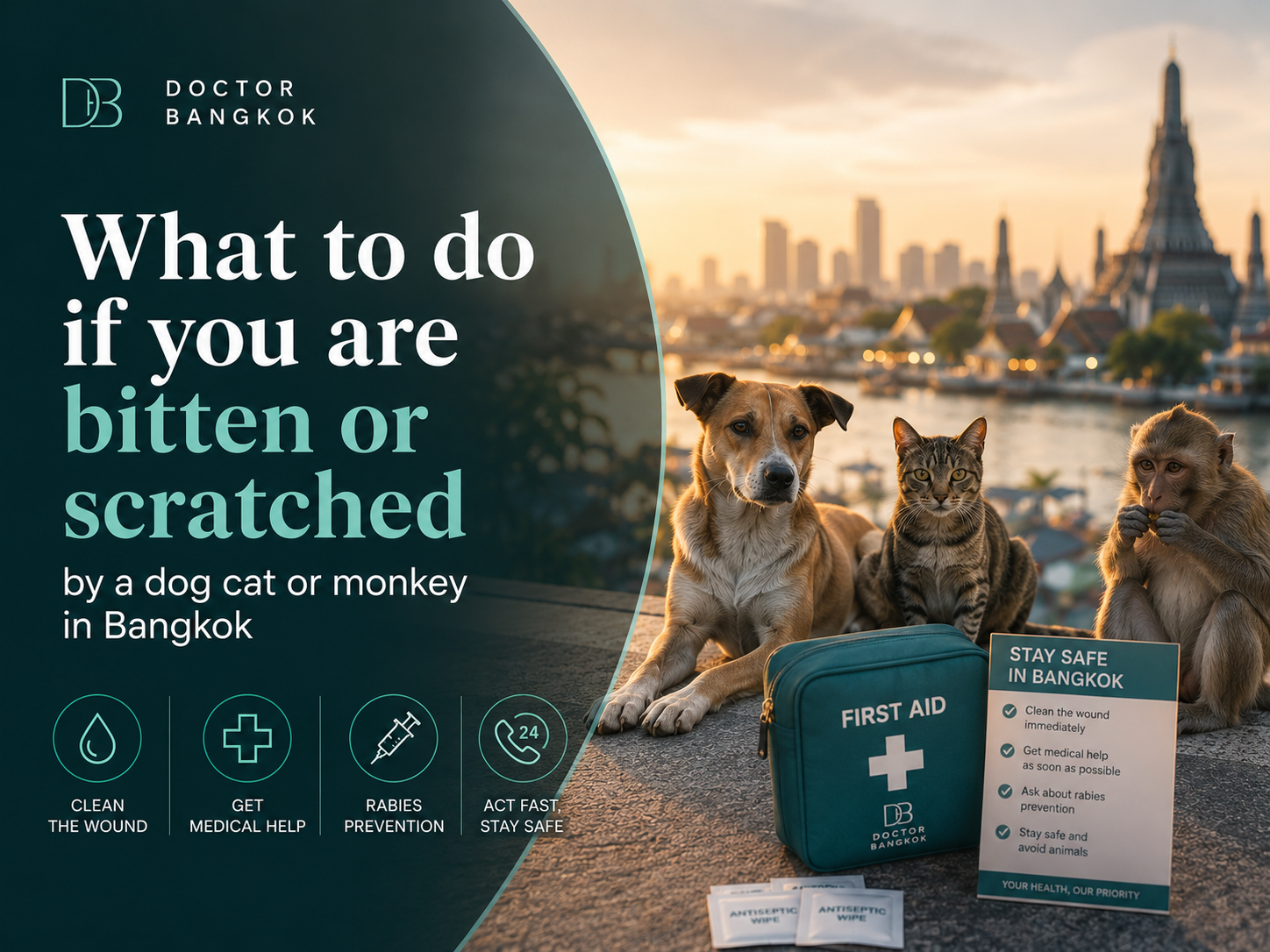
If you are bitten or scratched by a dog, cat, or monkey in Bangkok, wash the wound immediately with soap and running water for at least 15 minutes, then get to a clinic the same day. Rabies is present in Thailand and is fatal once symptoms appear. Post-exposure treatment is highly effective, but only if you start it quickly. Do not wait to see if the animal looks sick.
If you are reading this after a bite or scratch in Bangkok, here is the most important thing I can tell you: do not wait. I see patients who put this off for days because the wound looked minor, or because the dog seemed fine. That is exactly the wrong call with rabies. Bangkok has a real and ongoing risk. There was a confirmed rabies alert in Prawet district in late 2025, and a rabies death in Rayong in 2026. This is not a theoretical problem.
The good news is that post-exposure treatment works extremely well when you start it promptly. Once symptoms appear, rabies is almost always fatal. But before symptoms, you have a real window to protect yourself. This article tells you what to do right now, what to expect at the clinic, and what questions to ask. If you have already been bitten today, stop reading after the first-aid section and come in.

First aid: do this before anything else
Wash the wound. That is the first step. Use soap and running water and keep washing for a full 15 minutes. This sounds like a long time. It is, but it matters. Thorough washing reduces the amount of virus at the wound site.
After washing, apply an antiseptic. Povidone-iodine is best if you have it. Alcohol or hand sanitiser works if that is all you have. Then get to a clinic the same day. Do not bandage the wound tightly, and do not suck or squeeze it.
Is rabies still a real risk in Bangkok?
Yes. Thailand is a rabies-endemic country, meaning the virus is present in the local animal population. Stray dogs, known as soi dogs, are the most common source. Stray cats, monkeys near tourist sites, and bats also carry the risk.
Bangkok sees regular cases in animals, and the 2025 alert in Prawet confirmed active circulation in the city. The animals do not always look sick. A dog can be infectious before it shows any obvious signs. This is one of the most dangerous misconceptions I deal with regularly.

What to do after a cat bite in Thailand
Cat bites are often underestimated. They leave small, deep puncture wounds that close over quickly, which means bacteria and virus can be trapped inside. Cat bites in Thailand carry two separate risks: bacterial infection and rabies.
The bacterial risk is fast. A cat bite that is not properly cleaned and assessed can become severely infected within 24 to 48 hours. The rabies risk depends on the type of contact, which I will cover below.
If you were bitten or scratched by a stray cat in Bangkok, treat it the same as a dog bite. Come in the same day. Do not assume a friendly cat or a small scratch is low risk.
Can a dog scratch transmit rabies?
Yes, it can. This is one of the questions I get most often. A scratch from a dog can carry the virus if the dog’s saliva was on its claws, which is common since dogs lick their paws.
Whether you need full treatment depends on how deep the scratch is and whether it broke the skin. The short version: any scratch that breaks the skin needs assessment. I will explain the WHO categories below.
Can you get rabies from a cat scratch?
The same logic applies. If a cat’s claws were wet with saliva and they broke your skin, that is a potential exposure. Bangkok’s stray cat population carries the same risk as stray dogs.
A scratch that only reddened the skin without drawing blood is lower risk. A scratch that bled requires the same response as a bite.
WHO rabies exposure categories explained: I, II, and III
The WHO divides animal exposures into three categories. These determine what treatment you need.
| Category | Type of contact | What you need |
|---|---|---|
| I | Touching or feeding animals, licks on intact unbroken skin | No treatment needed |
| II | Minor scratches or abrasions without bleeding, licks on broken skin | Vaccine series only, no RIG |
| III | Bites or scratches that break the skin and cause bleeding, saliva contact with eyes, mouth, or nose, bat contact | Vaccine series plus RIG immediately |
A lick to your eye, mouth, or nose is Category III even without a bite. Most people do not realise this. If a dog or cat licked an open cut, that is also Category III.
What is post-exposure prophylaxis (PEP) for rabies?
PEP is the treatment you receive after a rabies exposure. It involves a series of vaccine injections given over several weeks. When started promptly and completed in full, it is highly effective at preventing rabies from developing.
I also check whether you need a tetanus booster at the same visit. Bites and deep scratches carry a tetanus risk that is separate from rabies, and it is easy to address both at once.
What does rabies PEP involve?
There are two main vaccination schedules used in Thailand. The standard schedule gives injections on days 0, 3, 7, and 14. Thailand also uses the modified Thai Red Cross intradermal schedule, where smaller doses are given at multiple skin sites on the same day, which can reduce cost and the number of clinic visits.
Both are WHO-endorsed and effective. At Doctor Bangkok, we will discuss which schedule suits your situation, including whether you started PEP elsewhere and need to continue or adjust. Do not skip doses. A missed injection reduces how well the treatment works.
What if I already had the pre-exposure rabies vaccine?
This changes things significantly. If you completed a full pre-exposure course before coming to Thailand, you only need two booster injections after a bite, on day 0 and day 3. You do not need rabies immunoglobulin.
This is a strong reason I recommend pre-exposure vaccination for anyone planning to live in or spend extended time in Thailand. It simplifies treatment, reduces cost, and removes the need for RIG. If you have not had your pre-exposure course, we can arrange that through our rabies vaccine service.
What is rabies immunoglobulin (RIG) and do you need it?
RIG is a separate injection given alongside the first vaccine dose for Category III exposures. It is injected into and around the wound site. Its job is to provide immediate protection while your body is still building a response to the vaccine, which takes several days.
If your bite is close to your head, face, or neck, the virus can reach the brain faster than the vaccine alone can protect. RIG is critical in those cases. For a bite to the foot, the timeline is longer. For a bite to the face, it is not.
How is the rabies immunoglobulin dose calculated?
The dose is calculated by body weight: 20 IU per kilogram. A 70 kg person receives 1,400 IU. As much of that dose as physically possible is injected directly into and around the wound. Any remaining volume is given elsewhere by injection.
In Thailand and across Southeast Asia, equine RIG is the standard. It is derived from purified horse antibodies, is WHO-endorsed, and is safe and effective. A skin-prick allergy test is done before the full dose is given. Doctor Bangkok stocks equine RIG for Category III exposures.
Where to get a post-exposure rabies vaccine in Bangkok
You need a clinic that stocks both the rabies vaccine and RIG, can assess your wound category, and can start treatment the same day. Not all clinics carry RIG routinely.
At Doctor Bangkok, we see bite and scratch exposures regularly and can begin PEP on the day you come in. We are BTS accessible and serve expats, residents, and medical tourists. If you have travel insurance, keep your receipts and ask us for documentation, as most insurers cover rabies PEP for travellers.
If you have not yet had your pre-exposure vaccination and you are planning to stay in Bangkok, I strongly recommend getting it done before you need it. Visit our rabies vaccine page for details on the pre-exposure schedule and what it costs.
Bitten or scratched by an animal in Bangkok? Do not wait. Doctor Bangkok offers same-day rabies post-exposure assessment, wound care, and PEP including rabies immunoglobulin for Category III exposures. We are English-speaking, BTS accessible, and see walk-in patients. Visit doctorbangkok.co.th/rabies-vaccine/ or contact us directly to book today.
FAQ
I was scratched by a stray cat in Bangkok. Do I need a rabies injection?
It depends on the scratch. If the skin was broken and it bled, that is a Category III exposure and you need both the vaccine series and RIG, starting today. If the scratch only grazed the surface without breaking skin, it is Category II and you need the vaccine series without RIG. Either way, come in for an assessment. Bangkok stray cats carry the same risk as stray dogs, and an animal appearing healthy does not rule out rabies.
I already had the pre-exposure rabies vaccine. Do I still need treatment after a bite?
Yes, but the protocol is much simpler. You need just two booster injections, on day 0 and day 3, and you do not need RIG at all. This is one of the strongest reasons to get vaccinated before living in Thailand. If you are unsure whether your previous course was complete, bring your vaccination records and we can advise.
How long do I have to get rabies PEP after a dog bite in Bangkok?
Start the same day if at all possible, and definitely within 24 hours. There is no hard cut-off after which PEP stops working entirely, but delays reduce its effectiveness, especially for bites to the face or head where the virus travels faster. Do not wait for symptoms. By the time symptoms appear, it is too late for treatment to help.
Can rabies be transmitted through a lick if I have a small cut?
Yes. A lick on broken skin is a Category III exposure under WHO guidelines, the same category as a bite that draws blood. The virus is carried in saliva. Licks on intact, unbroken skin are Category I and do not require treatment. If there was any cut, abrasion, or open area where the lick occurred, come in for assessment.
What is the difference between equine RIG and human RIG, and which one is used in Bangkok?
Both work by neutralising the virus at the wound site immediately after exposure. Human RIG is made from human donor antibodies and is extremely scarce outside Western countries. Equine RIG is made from purified horse antibodies, is WHO-endorsed, and is the standard across Southeast Asia. It is safe and effective. We perform a skin-prick test before the full dose to check for allergy. Doctor Bangkok stocks equine RIG for Category III exposures.
Does the animal need to look sick for me to be at risk?
No, and this is a dangerous assumption. Animals can be infectious before they show any visible signs of rabies. A dog that seemed friendly and healthy can still transmit the virus. Never use the animal’s appearance or behaviour to decide whether to seek treatment. The only thing that matters is the type of contact you had.
Can I get rabies from a monkey in Bangkok?
Yes. Monkeys near temples and tourist areas in Thailand can carry and transmit rabies. A bite or scratch from a monkey should be treated exactly the same as a dog or cat exposure. Wash the wound immediately, assess the category of contact, and come in the same day. Monkey bites are not minor incidents.
Dr. Ponlawat Pitsuwan
Physician, Doctor Bangkok
a private medical clinic in central Bangkok. He sees expats, residents, and medical tourists for travel medicine, animal bite assessment, rabies post-exposure prophylaxis, wound care, and general medical consultations. His focus is straightforward, evidence-based care delivered in plain language.
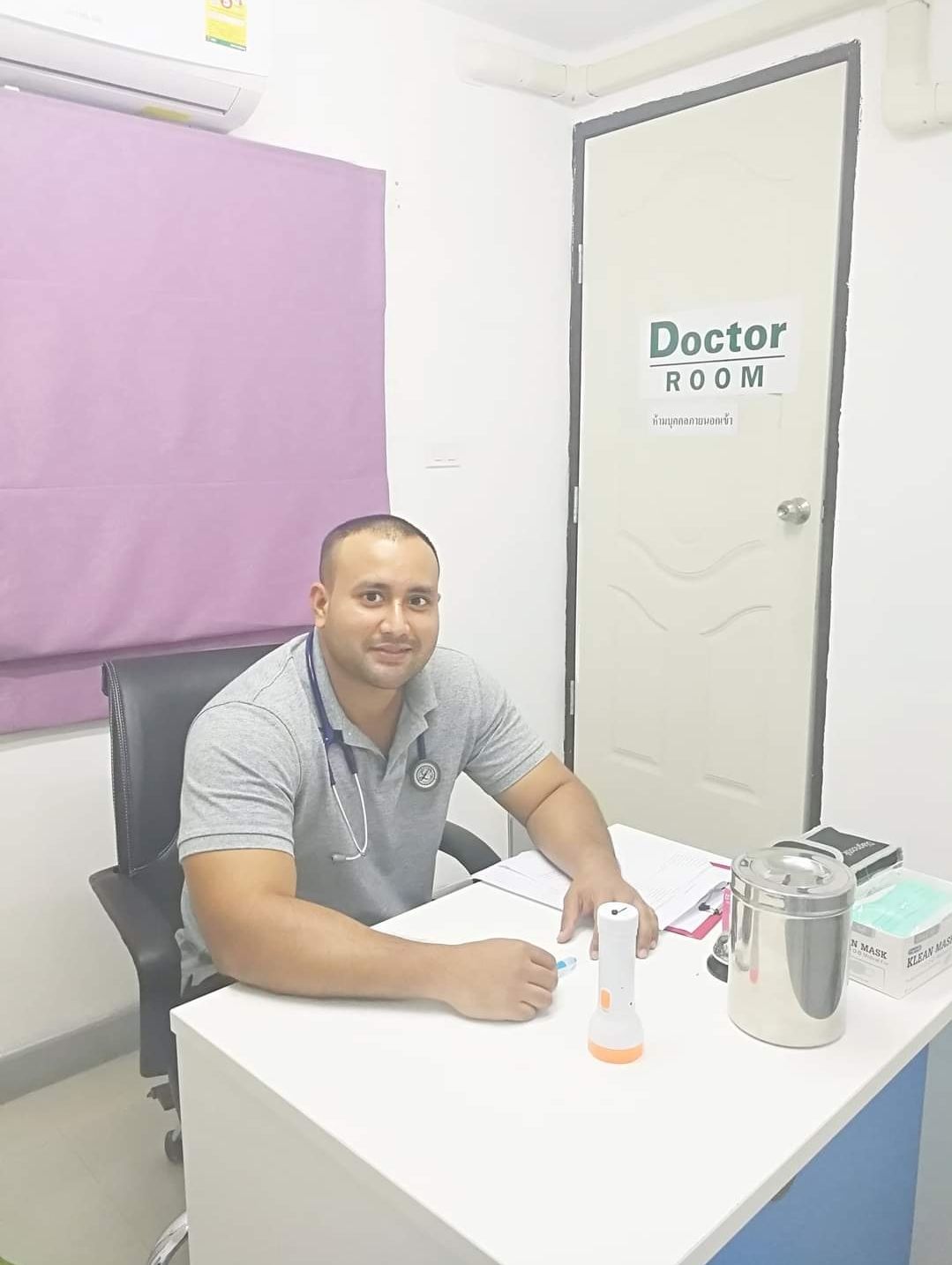
Dr. Ponlawat Pitsuwan is a physician at Doctor Bangkok, a private clinic in central Bangkok. He sees expats, residents, and medical tourists for general medicine, wellness consultations, and IV therapy. His focus is straightforward, evidence-based care delivered in plain language.