
Clinically reviewed by Dr. Ponlawat Pitsuwan, Physician, Doctor Bangkok. Last reviewed: June 2026
HIV is not curable, but it is manageable. With antiretroviral therapy, most people living with HIV reach an undetectable viral load, meaning they cannot sexually transmit the virus to a partner and can expect a near-normal lifespan. Treatment works best when started early and taken consistently. If you are in Bangkok and need HIV care, confidential English-language appointments are available at Doctor Bangkok.
If you have just tested positive, or you are already on treatment and need to continue your care in Bangkok, this article is for you. A new diagnosis is frightening. Being far from home makes it worse. What I want you to know first is this: HIV in 2025 is a chronic, manageable condition. With the right treatment, most people live long, healthy lives and never develop AIDS.
This guide covers what to expect when you start treatment, how monitoring works, what undetectable means for your relationships, and what HIV care looks like during pregnancy. Everything here is written for expats and visitors in Bangkok, not for a medical textbook.

How Antiretroviral Therapy Works
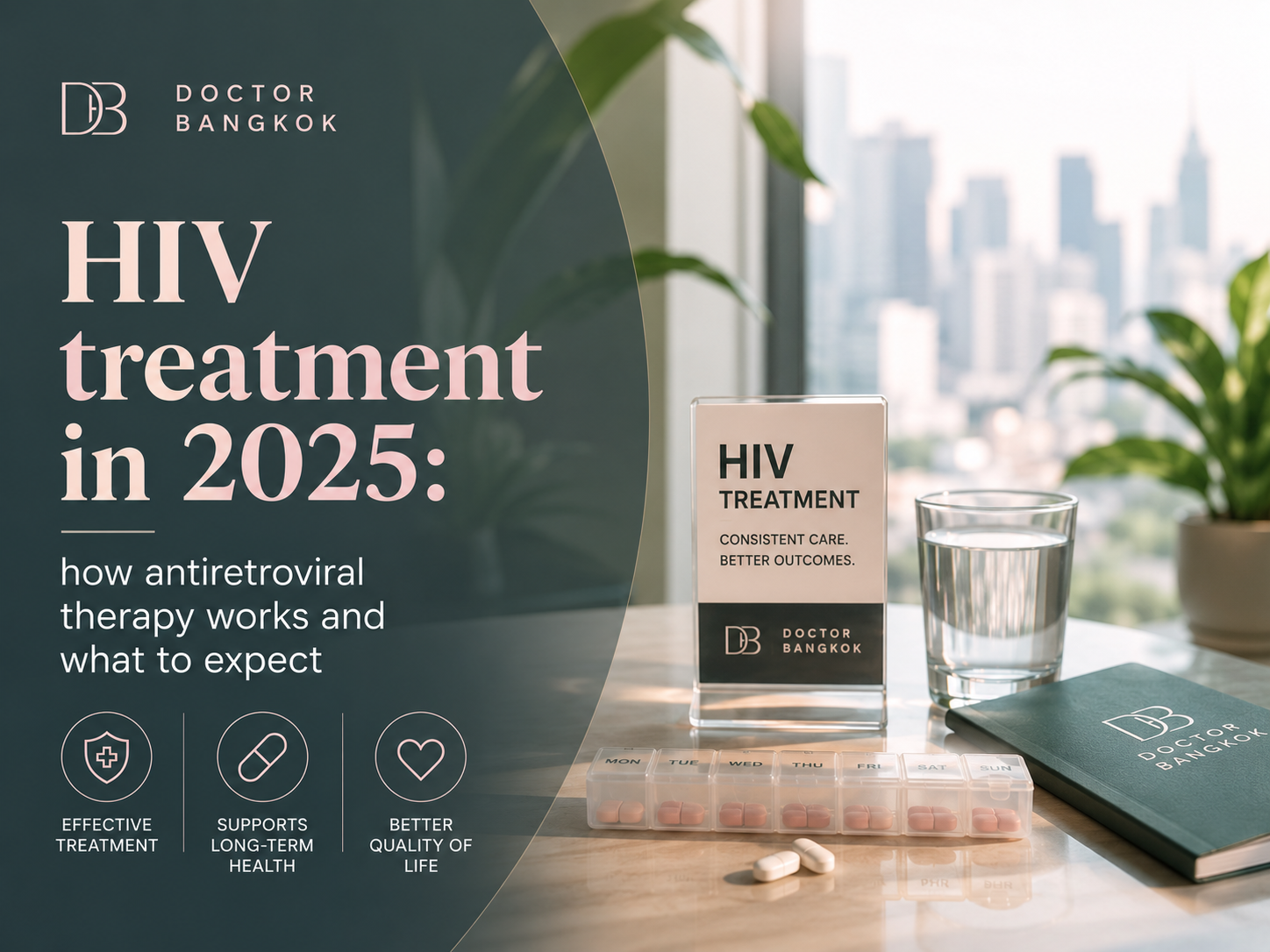
ART, short for antiretroviral therapy, does not cure HIV. What it does is suppress the virus so completely that your immune system can recover and the virus cannot damage your body. You take medication every day, and it stops the virus from copying itself inside your cells.
Most people today take a single tablet once a day. That one pill usually contains two or three drugs working together. Dolutegravir-based combinations are widely used in Thailand and globally because they work well, have few side effects, and are very hard for the virus to resist.
The goal is viral suppression, meaning your viral load drops to undetectable levels. This usually happens within three to six months of starting treatment. Once you are undetectable, your immune system typically recovers over time.
Starting Treatment: What Happens at Your First Appointment
Most people have no idea what to expect. Here is exactly what happens.
First, we run baseline blood tests. This includes your CD4 count, your viral load, kidney and liver function, and a drug resistance test. The resistance test checks whether your strain of HIV has any mutations that would make certain drugs less effective. We use those results to choose your medication. We do not guess.
We may start you on treatment at the first appointment or shortly after. Current WHO and US guidelines support starting ART as soon as possible after diagnosis, regardless of CD4 count. Waiting does not help.
If you are already on ART from another country, bring your medication, your most recent results, and a prescription or letter from your previous doctor if you have one. At Doctor Bangkok, we can review your regimen, order any updated blood tests, and continue your treatment with minimal disruption. Most first-line drugs used globally are available in Thailand.

Monitoring Your Treatment: Viral Load, CD4 Count, and What the Numbers Mean
Starting treatment is step one. Staying on top of it is what actually keeps you healthy.
After you begin ART, we check your viral load at around four to eight weeks, then again at three to six months. Once you are stable and undetectable, monitoring typically moves to every six months.
Your viral load is the most important number. A rising viral load while on treatment is a signal to act, usually checking whether there is a resistance issue or an adherence gap. Your CD4 count matters most at the start, especially if you come to us with a low count or an active infection. Once you have been undetectable for a year or two, what matters long-term is staying on your medication.
Undetectable Equals Untransmittable: What This Means for Your Life
This is the part that changes how people feel about their diagnosis.
U=U stands for Undetectable equals Untransmittable. It means that a person on effective treatment with a sustained undetectable viral load has zero risk of sexually transmitting HIV to a partner. Zero. This is backed by large clinical studies and is now the consensus of WHO, CDC, and UNAIDS.
What U=U requires is consistent adherence and regular monitoring to confirm you stay undetectable. It does not protect against other STIs, so condoms still have a role. But if staying undetectable is your goal, and it should be, U=U is one of the most important things modern HIV medicine has achieved.
Long-Acting Injectable ART and What Is New in 2025
Daily pills are not the only option anymore.
Long-acting injectable ART is now approved and increasingly available. The main option is cabotegravir plus rilpivirine, given as injections once a month or once every two months. For patients who struggle with daily adherence or simply prefer not to take a pill every day, this is a real alternative.
Lenacapavir is a newer drug given every six months by injection. It is currently used mainly for patients who have developed drug resistance, but research into broader use is ongoing and showing strong results.
Not all injectable options are available at every private clinic in Thailand right now. If this interests you, ask us directly at your appointment. Availability is expanding, and what was inaccessible six months ago may now be an option.
Is HIV Curable? What Treatment Can and Cannot Do in 2025
HIV cannot be cured. The virus integrates into your DNA, and no current treatment removes it. What treatment can do is suppress it so completely that it causes no harm and cannot be passed on.
A small number of patients have achieved long-term viral suppression after stopping treatment, but these involved bone marrow transplants for cancer, not routine HIV care. Do not let social media convince you otherwise.
What I tell every patient is this: the goal of treatment is not a cure. The goal is a full, healthy life. With modern ART started early and taken consistently, life expectancy is close to that of someone without HIV.
Drug resistance is worth mentioning here. If you take your medication inconsistently, the virus can mutate and become harder to treat. This is why adherence matters so much, and why resistance testing before you start helps us choose the right regimen for you.
HIV in Pregnancy: Treatment, Safety, and Protecting Your Baby
If you are HIV positive and pregnant, your baby’s risk depends almost entirely on whether your viral load is controlled during pregnancy.
Without treatment, the risk of passing HIV to a baby is roughly 15 to 30 percent, according to WHO data. With ART that achieves an undetectable viral load, that risk drops to under one percent. Near zero is achievable.
ART is safe in pregnancy. Dolutegravir-based regimens are the current global standard for pregnant women living with HIV. Your newborn will also receive short-course preventive medication after birth and will be tested for HIV. The sooner treatment is optimised, the better the outcome for your baby.
Breastfeeding requires its own conversation. In Bangkok, as an expat with access to safe formula, the guidance generally leans toward formula feeding, but this should be an individual discussion with your doctor.
If your partner does not have HIV and you are trying to conceive, confirmed undetectable status for you and PrEP for your partner together make natural conception safe. Doctor Bangkok can support you through this with the right clinical guidance.
Antenatal HIV screening is offered to all pregnant women in Thailand. If you are pregnant and have not been tested, do it now. Early diagnosis means early treatment, which means a protected baby.
If you are living with HIV in Bangkok, whether newly diagnosed, already on treatment, or pregnant and needing specialist guidance, Doctor Bangkok offers confidential, English-language HIV care in central Bangkok, accessible by BTS. We provide baseline testing, ART management, viral load and CD4 monitoring, and pregnancy-related HIV care. Book your appointment at doctorbangkok.co.th or visit our HIV testing and sexual health page to learn more.
Frequently Asked Questions
Can I continue my HIV medication if I move to or visit Bangkok?
Yes. Bring your current medication, your most recent viral load and CD4 results, and a prescription or letter from your previous doctor if possible. At Doctor Bangkok, we review your regimen, order any updated blood tests, and continue your treatment. Most first-line antiretroviral drugs used globally are available in Thailand.
If my viral load is undetectable, can I still transmit HIV to a partner?
No. A sustained undetectable viral load means zero risk of sexual transmission. This is the U=U principle, confirmed by large clinical studies and endorsed by WHO and CDC. It only holds when you stay consistently on treatment and are confirmed undetectable through regular monitoring. U=U does not protect against other STIs.
I am HIV positive and pregnant. What is the risk to my baby?
Without treatment, the risk of passing HIV to your baby is roughly 15 to 30 percent. With ART that achieves an undetectable viral load, that drops to under one percent. Treatment is safe in pregnancy, and your newborn will also receive short-course preventive medication after birth. The sooner you start, the better the outcome.
Will my HIV status be shared with immigration, my employer, or my insurance company?
Private clinics in Thailand operate under patient confidentiality obligations. Your HIV status will not be reported to immigration or your employer. Insurance implications depend on your individual policy and what you have declared. Doctor Bangkok does not share your information without your consent.
What is the difference between HIV and AIDS, and does treatment prevent progression?
HIV is the virus. AIDS is the advanced stage, defined by a severely weakened immune system or the presence of certain serious infections. With modern ART started early, the vast majority of people living with HIV never reach that stage. Treatment keeps the virus suppressed so your immune system stays strong.
What is long-acting injectable ART and is it available in Bangkok?
Long-acting injectable ART replaces daily pills with injections given monthly or every two months. The main option currently is cabotegravir plus rilpivirine. It is not yet available at every private clinic in Thailand, but availability is expanding. Ask us directly at your appointment and we will advise on what is currently accessible.
When should I start ART after a positive HIV diagnosis?
As soon as possible. Current guidelines recommend starting antiretroviral therapy promptly after diagnosis, regardless of CD4 count. Early treatment protects your immune system, reduces long-term health risks, and brings you to undetectable faster. There is no benefit to waiting.
Dr. Ponlawat Pitsuwan
Physician, Doctor Bangkok
a private medical clinic in central Bangkok. He sees expats, residents, and visitors for HIV care, ART management, sexual health, and general medicine. His focus is straightforward, evidence-based care delivered in plain language.
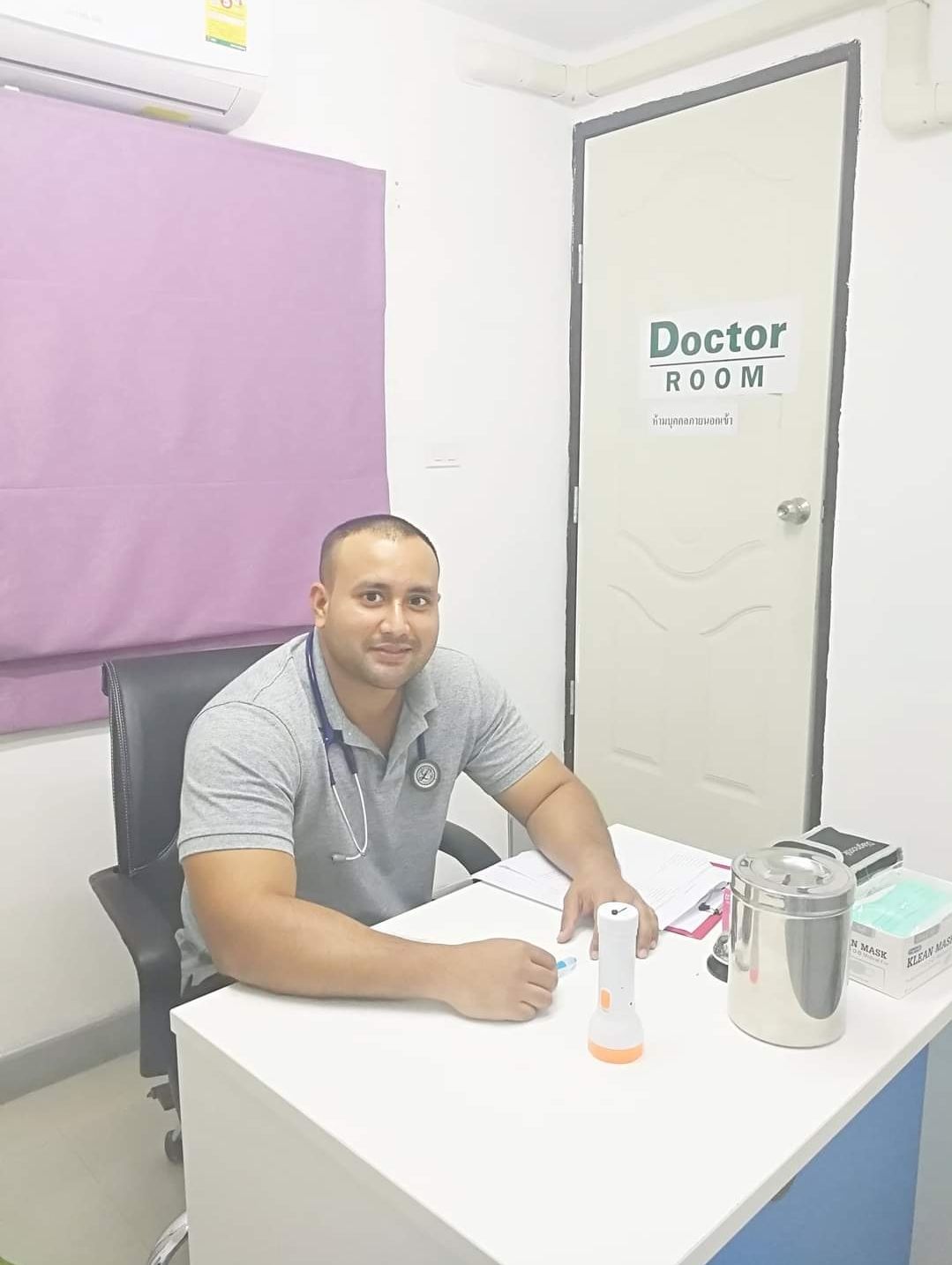
Dr. Ponlawat Pitsuwan is a physician at Doctor Bangkok, a private clinic in central Bangkok. He sees expats, residents, and medical tourists for general medicine, wellness consultations, and IV therapy. His focus is straightforward, evidence-based care delivered in plain language.