
Clinically reviewed by Dr. Ponlawat Pitsuwan, Physician, Doctor Bangkok. Last reviewed: June 2026
HIV passes through specific body fluids: blood, semen, pre-seminal fluid, rectal fluid, vaginal fluid, and breast milk. It cannot spread through saliva, sweat, tears, air, or casual contact. Your risk depends on the activity, the fluid involved, and whether that fluid reaches your bloodstream or a mucous membrane. Knowing the actual routes helps you make real decisions.
Most people who come to me with questions about HIV are not asking out of nowhere. Something happened. Maybe a condom broke. Maybe they had unprotected sex with someone whose status they do not know. Maybe they are living in Bangkok, sexually active, and starting to think they should probably understand this better. Whatever brought you here, you deserve a straight answer.
HIV is transmitted in a small number of specific ways. It is not transmitted through most of the things people worry about. This article covers the real risks and what to do if you think you have been exposed. If you had a potential exposure in the last 72 hours, skip to the PEP section now. That window matters more than anything else on this page.

How does HIV actually spread?
HIV needs a direct route into your body. It cannot pass through intact skin, air, water, or food.
The fluids that carry enough virus to cause infection are blood, semen, pre-seminal fluid, rectal fluid, vaginal fluid, and breast milk. If one of these fluids from an HIV-positive person reaches your bloodstream or a mucous membrane, transmission is possible.
The highest-risk activities are receptive anal sex, insertive anal sex, and vaginal sex. Sharing needles or injecting equipment also carries serious risk.
One thing that changes all of these risks: viral load. If someone living with HIV is on effective treatment and their viral load is undetectable, they cannot sexually transmit HIV to a partner. This is called U=U, Undetectable equals Untransmittable. It is not a theory. It is backed by large clinical trials, and it genuinely changes the picture.
Routes that do not transmit HIV
I get asked about this constantly. People worry about the wrong things, and that worry stops them from thinking clearly about real risks.
HIV does not spread through saliva, sweat, tears, or mucus from a cough or sneeze. It does not spread through toilet seats, shared cutlery, hugging, handshakes, or mosquito bites. You cannot get it from a swimming pool or a shared bathroom.
Casual, everyday contact with someone living with HIV carries zero risk. If a colleague, friend, or housemate has HIV, your daily interactions with them do not put you at risk in any way.

Can you get HIV from oral sex?
The risk is very low, but it is not zero, and context matters.
Oral sex on a man carries a small risk, mostly for the person performing it. The risk goes up if there are cuts, ulcers, or bleeding gums in the mouth. Oral sex on a woman carries an even lower risk. If the person with HIV has an undetectable viral load, U=U applies here too, and the risk drops to effectively zero.
For most people in real situations, oral sex is not a high-risk activity for HIV. The bigger concern with oral sex is other STIs. Gonorrhoea, syphilis, and herpes can all pass this way with much greater ease.
Can HIV be transmitted through saliva or kissing?
No. Kissing, including deep kissing, does not transmit HIV.
Saliva contains very low concentrations of HIV, far too low to cause infection. There is also a protein in saliva that inhibits the virus. HIV transmission through saliva alone has not been documented in any case.
The only theoretical edge case is if both people have open, bleeding sores in their mouths at the same time. This is not a practical concern for most people. If you are worried about kissing someone, you do not need to be.
Can a condom prevent HIV?
Used correctly and consistently, latex and polyurethane condoms are highly effective at preventing HIV. Evidence from studies on couples where one partner has HIV shows that condoms reduce transmission risk by around 90% or more when used correctly every time.
The key words are "correctly" and "consistently." A condom put on after penetration starts, used without lubrication, or allowed to slip or break does not offer full protection. Use water-based lubricant with latex condoms. Oil-based products degrade latex and cause breakage.
One thing most people do not know: lambskin or natural membrane condoms do not prevent HIV. They block sperm but have pores large enough for viruses to pass through. Use latex or polyurethane condoms when HIV prevention is the goal.
For couples where one partner has HIV and one does not, combining condoms with U=U, or condoms with PrEP for the HIV-negative partner, provides strong layered protection.
What to do after a potential HIV exposure: PEP and your 72-hour window
If you have had unprotected sex, a condom failure, or any other potential HIV exposure in the last 72 hours, this is the section you need.
PEP stands for post-exposure prophylaxis. It is a course of antiretroviral medication taken for 28 days after potential exposure. When started early, it is highly effective at preventing HIV from taking hold. The earlier you start, the better. After 72 hours, it is no longer effective and should not be started.
Do not wait to see if you develop symptoms. HIV does not always cause obvious early signs. At Doctor Bangkok, we can assess your exposure, prescribe PEP if indicated, and walk you through what happens next.
After finishing PEP, you will need an HIV test at the right interval to confirm the result. A fourth-generation HIV test can usually give a reliable result from around 45 days after exposure. Testing earlier than that can produce a false negative.
HIV in Thailand: what you actually need to know
Thailand has one of the higher HIV prevalence rates in Southeast Asia. Around 580,000 people are living with HIV in the country, and a significant number are unaware of their status. This matters when thinking about partner risk.
Prevalence is higher among men who have sex with men and sex workers compared to the general population. If you are an expat or traveller who is sexually active in Bangkok, regular HIV testing is not an overreaction. It is just sensible.
Stigma around HIV remains real in Thailand, and it affects how people access testing and treatment. People can live with HIV for years without knowing. That is why knowing your own status matters.
At Doctor Bangkok, we offer confidential HIV testing in English. If you are considering PrEP, which is daily medication that prevents HIV in HIV-negative people, we can discuss whether it is right for you. PrEP is available in Bangkok and has significantly changed the risk picture for people with regular exposure. Do not let stigma stop you from getting tested.
Concerned about a potential HIV exposure, or just overdue for a test? Doctor Bangkok offers confidential HIV testing, PEP, and PrEP consultations in English, with same-day appointments available at our central Bangkok clinic. If you are within 72 hours of a potential exposure, do not wait. Come in now.
How soon after a potential HIV exposure should I get tested?
If you were exposed in the last 72 hours, testing is not your first step. Starting PEP is. After completing PEP, or if your exposure was more than 72 hours ago, a fourth-generation HIV test gives a reliable result from around 45 days after the exposure. Testing earlier can produce a false negative. At Doctor Bangkok, we will tell you exactly when to test based on your specific situation.
Does PrEP replace the need for condoms?
PrEP, when taken as prescribed, is highly effective at preventing HIV. But it does not protect against other STIs. Gonorrhoea, syphilis, chlamydia, and herpes can all still be transmitted. Using PrEP and condoms together gives you the most complete protection. A consultation at Doctor Bangkok can help you decide if PrEP is the right choice for you.
If my partner has HIV and is on treatment, can they still transmit it to me?
If your partner is on effective treatment and their viral load is confirmed undetectable, they cannot sexually transmit HIV to you. This is U=U, supported by large clinical studies including the PARTNER trials. The key word is confirmed. It only applies when viral load is regularly monitored and consistently undetectable. Condoms still protect against other STIs.
Can I get HIV from a tattoo or piercing in Thailand?
Theoretically yes, if equipment is contaminated and not properly sterilised. Reputable studios using single-use needles carry an extremely low risk. The concern is real in settings with poor infection control. If you are unsure about the studio you used, get tested after the window period has passed.
What is the HIV risk for expats and tourists in Bangkok?
Thailand has an adult HIV prevalence of around 1.1%, with higher rates in certain groups. A meaningful proportion of people living with HIV in Thailand do not know their status. For sexually active expats and travellers, this is a reason to test regularly, not a reason to panic. Knowing your own status and using protection consistently are the two most practical steps you can take.
What is the difference between HIV and AIDS?
HIV is the virus. AIDS is the most advanced stage of HIV infection, when the immune system has been severely weakened. With modern treatment, most people living with HIV never reach the stage of AIDS. Early diagnosis and consistent treatment mean a near-normal life expectancy for most people today.
Dr. Ponlawat Pitsuwan
Physician, Doctor Bangkok
a private medical clinic in central Bangkok. He sees expats, residents, and medical tourists for HIV testing, PrEP and PEP consultations, STI screening, and general sexual health. His focus is straightforward, evidence-based care delivered in plain language.
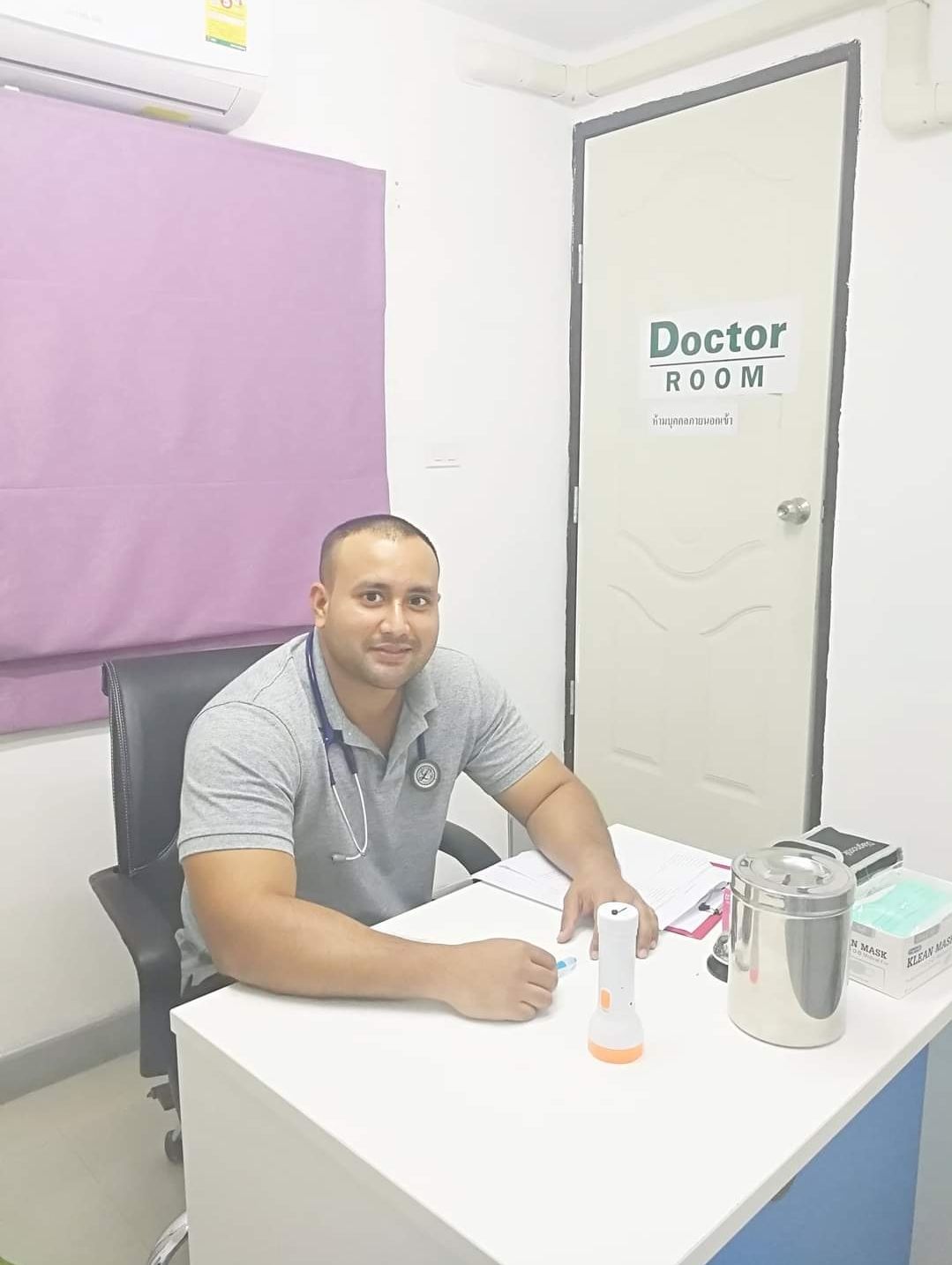
Dr. Ponlawat Pitsuwan is a physician at Doctor Bangkok, a private clinic in central Bangkok. He sees expats, residents, and medical tourists for general medicine, wellness consultations, and IV therapy. His focus is straightforward, evidence-based care delivered in plain language.