
Clinically reviewed by Dr. Ponlawat Pitsuwan, Physician, Doctor Bangkok. Last reviewed: June 2026
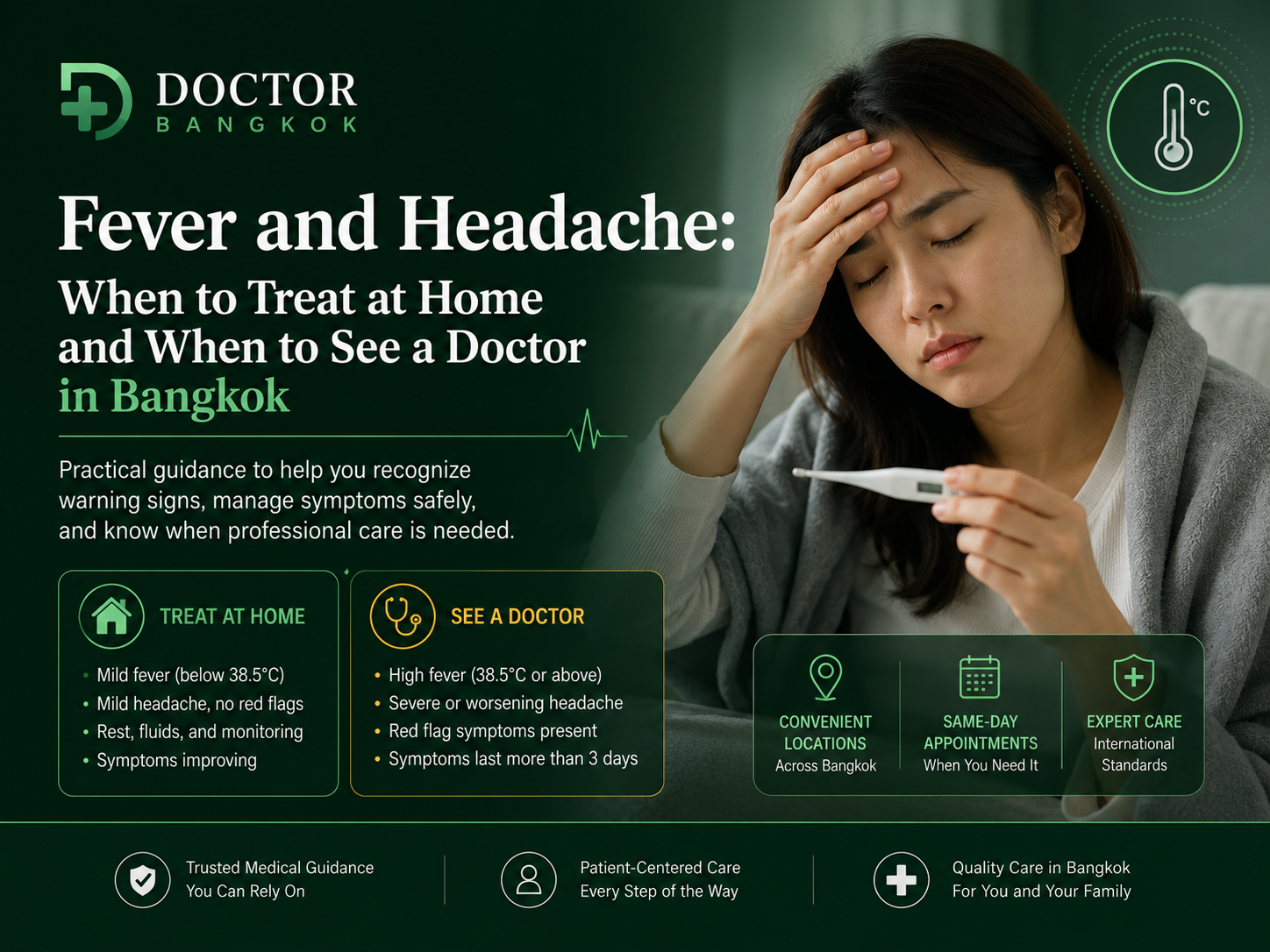
Fever and headache together are usually caused by a viral illness and settle within a few days with rest, fluids, and paracetamol. Seek same-day medical assessment if your temperature exceeds 39.5°C, your headache is severe or sudden-onset, you have a stiff neck or skin rash, or symptoms have not improved after 72 hours. In Bangkok, dengue must always be considered and requires a blood test to rule out.
Fever and headache are two of the most common reasons people walk into a private clinic in Bangkok. They usually arrive together, and most people want an answer quickly. In most cases, the cause is a viral illness and it resolves on its own.
The real challenge in Bangkok is spotting the small number of cases where the combination points to something more serious, such as dengue, typhoid, or meningitis. Bangkok’s climate, dense population, and steady flow of international travellers mean tropical infections circulate year-round. Many expats and visitors develop fever and a persistent headache within days of arriving and are unsure whether to rest at home or find a clinic.
That uncertainty is reasonable. The decision depends on the severity of your symptoms, how quickly they are progressing, and a few specific warning signs that paracetamol alone cannot safely manage.

Red flag symptoms: when a fever and headache is a medical emergency
Most fever and headache combinations are not emergencies. But some are, and they can deteriorate fast. Knowing which symptoms require immediate attention is more useful than general reassurance.
The most urgent warning sign is a severe headache that comes on suddenly, especially one patients describe as the worst of their life. Combined with fever, this raises concern for bacterial meningitis (infection of the membranes around the brain) or bleeding around the brain. These need emergency assessment, not a scheduled appointment.
A stiff neck with fever and headache is the classic triad for bacterial meningitis. This is not ordinary neck tension. It is a genuine inability to bring the chin toward the chest without severe pain. If that is happening, go to an emergency department.
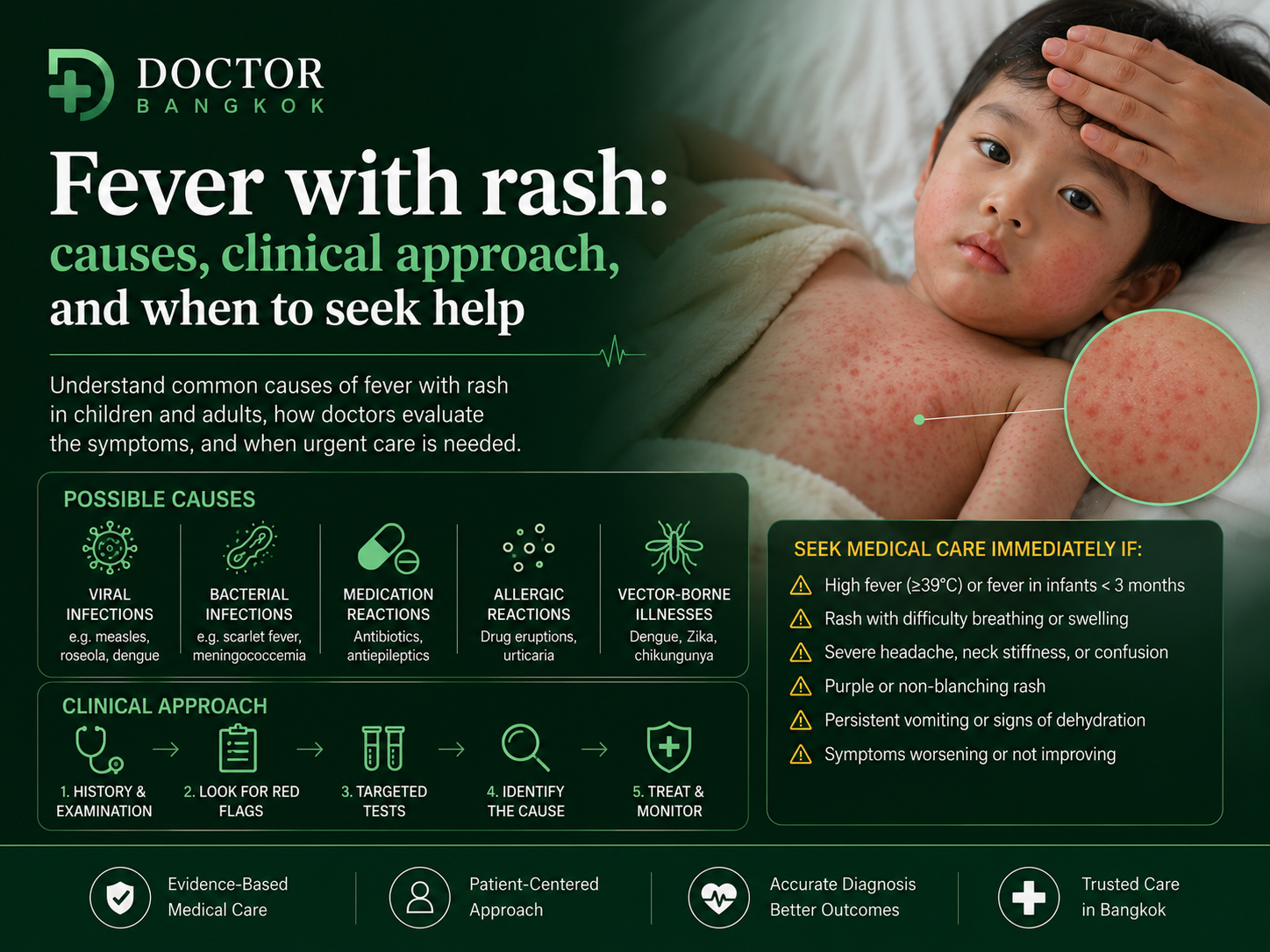
Other red flags include a skin rash that does not fade when you press glass against it, confusion, severe sensitivity to light, weakness in the limbs, slurred speech, visual changes, fever above 39.5°C not responding to paracetamol, and seizures in an adult. Any of these warrants urgent care, not home observation.
Fever and headache in Bangkok: tropical diseases to consider
Living in or visiting Bangkok means your list of possible causes is longer than it would be in a temperate country. This is not a reason for alarm, but it is a reason to take the symptoms seriously.
Dengue fever
Dengue is the most common tropical cause of fever and headache in Bangkok. It is spread by a mosquito that bites during the day and breeds in standing water. The typical picture is a sudden high fever, a severe headache often felt behind the eyes, muscle and joint pain, and significant fatigue. A rash may appear early or later.
There is no specific antiviral treatment for dengue. Management is rest, hydration, and monitoring. The reason early diagnosis matters is that dengue can cause platelets, the blood cells that help clotting, to drop sharply. A blood test identifies dengue and tracks platelet levels. If dengue is possible, avoid ibuprofen and aspirin entirely. Both increase bleeding risk. Use paracetamol while you wait for results.
Dengue occurs throughout the year in Bangkok. If you have fever and headache and have been outdoors in the city, dengue should be tested for.
Malaria
Malaria is uncommon in central Bangkok but relevant for anyone who has recently travelled to northern Thailand, the Thai-Myanmar border, or other rural areas. Symptoms include cyclical fever, severe headache, chills, sweating, and fatigue. A blood test is required for diagnosis. Do not assume low risk based on Bangkok alone if you have been travelling elsewhere in Thailand in the past four weeks.
Typhoid fever
Typhoid presents with a gradually rising fever, headache, and abdominal discomfort. It is contracted through contaminated food or water and responds to antibiotics. The right antibiotic should be guided by blood culture results, because resistance patterns in Southeast Asia affect which treatments work.
Other infections worth knowing about
Leptospirosis, Japanese encephalitis, and chikungunya are less common but relevant in Southeast Asia. Contact with floodwater, animal environments, or specific rural exposures can raise the likelihood of these. A physician taking a careful history can usually narrow the possibilities before any test is ordered.

Fever and headache at home: when to treat and when to see a doctor
Viral upper respiratory infections frequently cause fever and headache alongside runny nose, sore throat, and cough. In otherwise healthy adults, these illnesses are self-limiting.
Paracetamol at 1,000 mg every four to six hours, with a maximum of 4,000 mg in 24 hours, is the right first-line choice. It will not shorten the illness, but it makes things more bearable. Ibuprofen is an alternative for adults without dengue suspicion or stomach or kidney concerns. If dengue is possible, avoid ibuprofen until excluded by blood test.
Hydration matters during any fever. Fever increases fluid loss, and dehydration makes headache worse. Plain water, oral rehydration solutions, and coconut water are all good options. Avoid alcohol until you have recovered.
Rest is not optional. Sleep and reduced activity allow your immune response to work properly. Pushing through significant symptoms tends to prolong the illness.
See a doctor if fever has not improved after three days, if temperature climbs above 39.5°C and does not respond to paracetamol, if your headache is getting worse rather than better, or if you develop difficulty breathing, chest pain, or a cough with blood. If dehydration cannot be corrected with fluids at home, signs include very dark urine, dizziness on standing, and confusion, a clinic can provide IV fluids quickly.
If you are pregnant, over 65, immunocompromised, or have diabetes, heart disease, or another significant condition, your threshold for seeking review should be lower than for a healthy adult.
Bronchitis with fever: does it need antibiotics?
Acute bronchitis is a common reason people attend a general medical clinic in Bangkok. It causes a persistent cough, often with mucus, and sometimes fever and headache. Most cases do not need antibiotics.
The evidence is clear: the large majority of acute bronchitis cases in healthy adults are viral. Antibiotics do not work against viruses. They will not shorten the illness or reduce symptoms faster. Yellow or green sputum is commonly misunderstood as a sign of bacterial infection. The colour comes from white blood cells and is present in both viral and bacterial illness. Sputum colour alone is not a reason to prescribe antibiotics.
Antibiotics may be appropriate when fever is high and persistent, typically above 38.5°C for more than five days, when chest examination suggests pneumonia rather than simple airway irritation, or when blood tests show a pattern consistent with bacterial infection. A physician makes this decision based on the full clinical picture, not symptoms alone.
If your cough has lasted more than three weeks, this is beyond acute bronchitis and needs separate evaluation. Causes include post-infectious airway irritability, asthma, and in some cases tuberculosis, which remains prevalent in parts of Southeast Asia including Thailand.
What to expect at a Bangkok clinic for fever and headache
For expats and visitors unfamiliar with private healthcare in Thailand, attending a clinic can feel uncertain. In practice, private clinics in Bangkok handle these presentations routinely and efficiently.
A nurse will check your temperature, blood pressure, oxygen saturation, and heart rate on arrival. The physician will then take a detailed history covering how symptoms started, how they have progressed, recent travel within Thailand and internationally, what you have already taken, and your medical background. Physical examination includes the throat, lymph nodes, ears, sinuses, and skin. A neurological check is performed if any headache features are concerning.
If dengue or another infection is suspected, a blood test is arranged on-site. Results for dengue NS1 antigen and antibody tests, full blood count, and inflammatory markers are typically available within one to two hours. Treatment decisions are based on those findings, not on symptoms alone.
Doctor Bangkok sees these presentations daily. If a viral illness is confirmed, the physician will explain what to expect and what should bring you back. If a bacterial infection is identified, the appropriate antibiotic and duration will be prescribed with clear instructions. Same-day and walk-in appointments are available at the central Bangkok clinic, with English-speaking physicians and on-site blood testing including dengue screening. No referral is needed. Book directly at doctorbangkok.co.th.
If you have fever and headache in Bangkok and you are unsure whether to wait or get checked, the safer answer is usually to get checked. Doctor Bangkok offers walk-in and same-day appointments with English-speaking physicians and on-site dengue testing. No referral needed. Book at doctorbangkok.co.th.
Frequently asked questions
When should fever and headache send me straight to a doctor in Bangkok?
Seek same-day assessment if your fever is above 39.5°C and not responding to paracetamol, if your headache is the most severe you have ever had or came on suddenly, or if you have a stiff neck, skin rash, confusion, or severe sensitivity to light. These combinations can indicate bacterial meningitis or other serious infections that worsen rapidly without treatment. In Bangkok, dengue must also be considered and can only be excluded with a blood test.
Can a headache with fever be dengue fever?
Yes. Dengue commonly presents with a high fever, severe headache behind the eyes, significant muscle and joint pain, and fatigue. Dengue is endemic in Bangkok and is a realistic possibility for anyone who has been outdoors in the city, not only in rural areas. There is no specific antiviral treatment, but early diagnosis is important because it allows platelet levels to be monitored and guides decisions about whether hospital admission is needed.
Does bronchitis always need antibiotics if I have a fever?
No. Most acute bronchitis in healthy adults is viral, and antibiotics are not effective against viruses. A physician will consider how long the fever has lasted, what the chest examination shows, and blood test results before deciding whether to prescribe. Yellow or green sputum and the presence of fever are not on their own sufficient grounds to prescribe antibiotics for bronchitis.
Is it safe to take paracetamol while waiting to see a doctor?
Yes. Paracetamol at the correct adult dose is safe and appropriate while you arrange assessment. The standard dose is 1,000 mg every four to six hours, with a maximum of 4,000 mg in 24 hours. Do not take it if you have significant liver disease without medical guidance. If dengue is possible, avoid ibuprofen and aspirin, as both increase bleeding risk. Paracetamol controls symptoms but does not replace the need for a diagnosis if symptoms are worsening or have persisted beyond two to three days.
How long should fever and headache last before I become concerned?
In a straightforward viral illness, fever and headache typically ease within 48 to 72 hours, even if some fatigue or cough lingers. If fever has not reduced after three full days, or if it improved and then came back, both patterns need clinical review. A fever that returns after apparent improvement can be seen in dengue, which sometimes follows two distinct waves of symptoms. How your symptoms change over time matters as much as how severe they feel at any one moment.
How quickly can I get a same-day appointment for fever and headache in Bangkok?
Doctor Bangkok offers walk-in and same-day appointments at its central Bangkok clinic, accessible by BTS Skytrain. English-speaking physicians are available, and on-site blood tests including dengue screening and full blood count are processed within the same appointment in most cases. No referral letter or pre-registration is required. You can check availability and book at doctorbangkok.co.th.
About the Author
Dr. Ponlawat Pitsuwan
Physician, Doctor Bangkok
A private medical clinic in central Bangkok. He sees expats, residents, and medical tourists for fever assessment, tropical illness evaluation, respiratory infections, and general medical consultations. His approach is evidence-based care explained in plain language.
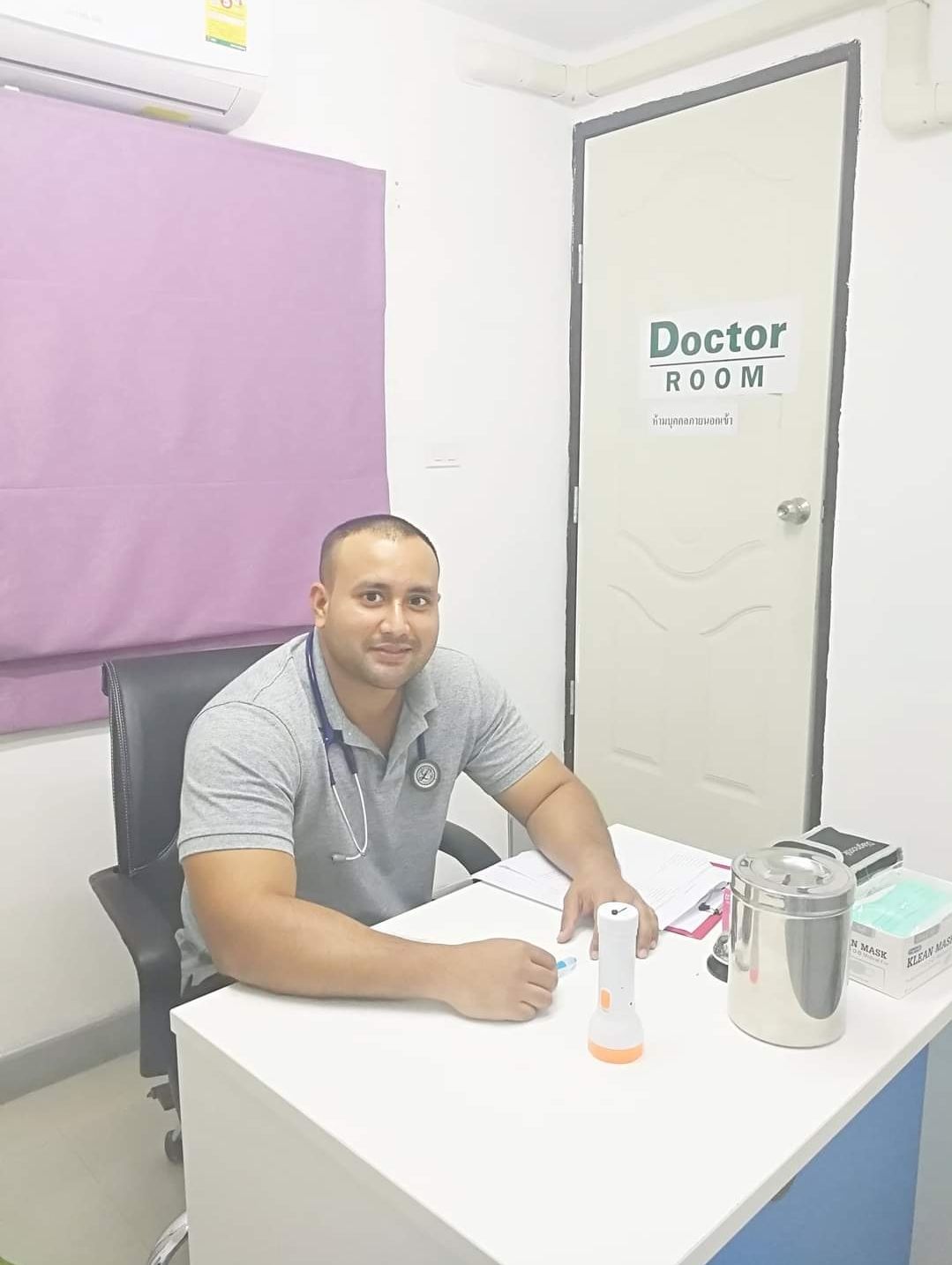
Dr. Ponlawat Pitsuwan is a physician at Doctor Bangkok, a private clinic in central Bangkok. He sees expats, residents, and medical tourists for general medicine, wellness consultations, and IV therapy. His focus is straightforward, evidence-based care delivered in plain language.