

Clinically reviewed by Dr. Ponlawat Pitsuwan, Physician, Doctor Bangkok. Last reviewed: August 2026
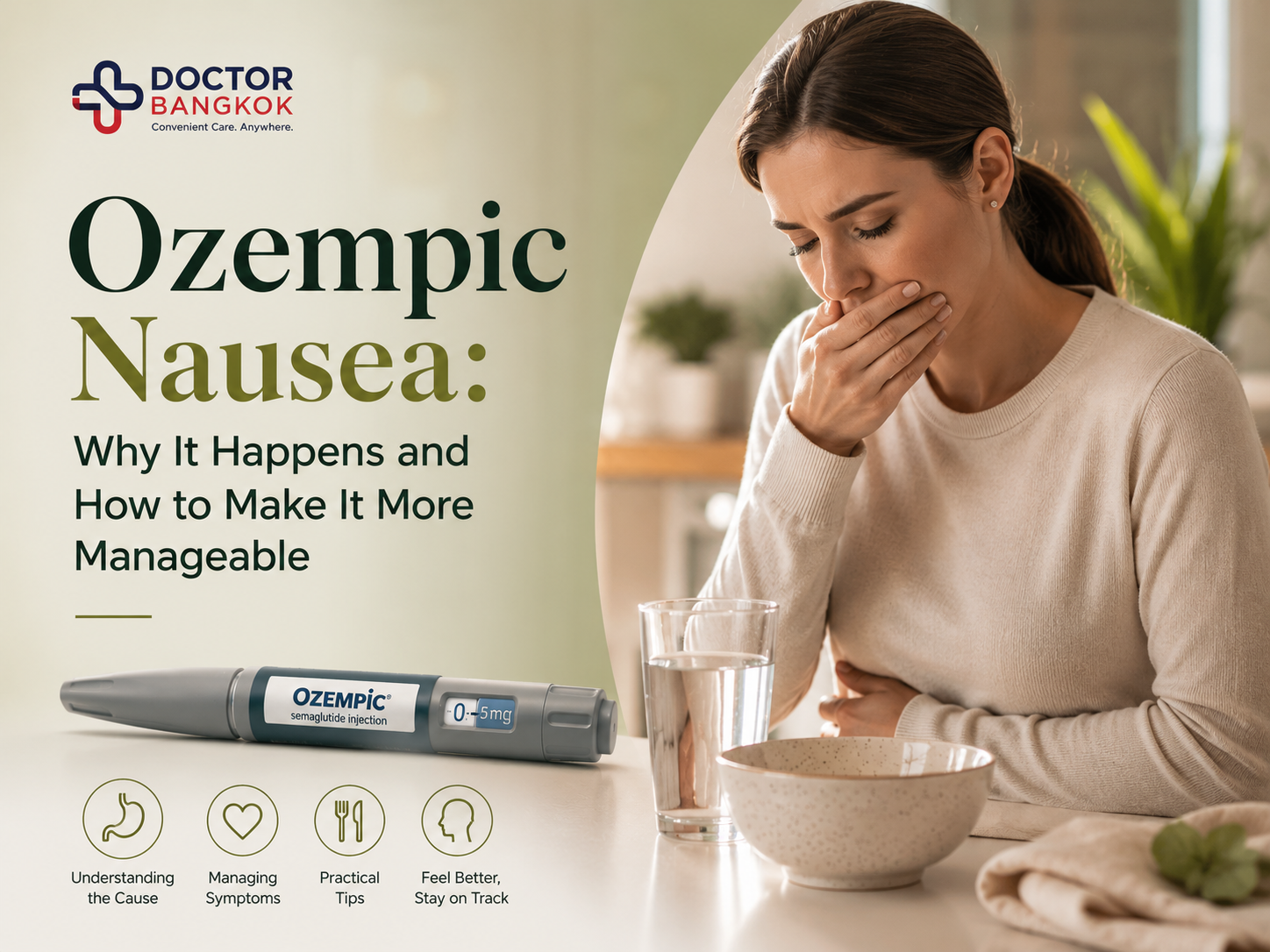
Ozempic nausea is real, common, and for most people, manageable. It tends to peak in the first one to two weeks after each dose increase and improves over four to eight weeks at any given dose level. It can return each time your dose goes up, but the waves usually get shorter and easier. The right food choices, injection timing, and sometimes a short course of anti-nausea medication can make a significant difference.
If you are reading this because you felt sick after your last Ozempic injection, you are not alone. Nausea is the most common side effect I hear about from patients starting semaglutide, and it catches a lot of people off guard, especially when it comes back every time the dose goes up.
The good news is that most Ozempic nausea is manageable. You do not have to white-knuckle through it, and you do not have to stop treatment. What you need is the right information and, sometimes, a small adjustment to your routine. This guide covers what to expect and what actually helps, including some Bangkok-specific advice that most online guides completely miss.

Why Ozempic Makes You Feel Sick
Ozempic contains semaglutide, a medication that mimics a hormone your gut naturally releases after eating. It does this at higher levels than your body would produce on its own.
Two things happen that cause nausea. Your stomach empties more slowly than usual, so food sits there longer than your body is used to. At the same time, semaglutide activates receptors in the brainstem that control vomiting, and your brain registers that something feels off.
Neither effect is dangerous. They are the same mechanisms that make the drug effective for appetite reduction and blood sugar control. The nausea is an unwanted side effect of something that is otherwise working.
The Nausea Does Not Follow a Single Curve
Most articles tell you Ozempic nausea lasts four to eight weeks and then goes away. That is partially true, but it misses the real picture.
Think of it more like a saw blade than a smooth slope. You start at 0.25 mg, feel some nausea, and it settles. Then your dose steps up to 0.5 mg, and the nausea returns, milder but noticeable. The same happens at 1.0 mg and again at 2.0 mg if you go that high. Each wave is usually shorter and less intense than the one before.
When patients in my clinic feel that second or third wave, they often think something has gone wrong. It has not. It is just your body adjusting to the next level. Knowing this in advance makes those later waves much easier to get through.

Living in Bangkok on Ozempic
This is where I see most expat patients struggle, and it is something no standard online guide covers.
Bangkok food is delicious, but it is a genuine minefield when your stomach is already slowed down. Oily pad kra pao, rich massaman curry, spicy som tam, and coconut-heavy dishes all push a slow stomach over the edge. The fat content and spice level both worsen nausea when your digestion is already sluggish.
Alcohol compounds the problem. Beer Chang, cocktail mixers, whisky sodas. Carbonated drinks alone can cause bloating and nausea on Ozempic, and alcohol on top creates real discomfort for many patients.
What to Eat Instead
You do not have to give up Thai food. You just need to choose differently, at least while your body is adjusting.
Khao tom, plain jasmine rice, steamed fish, grilled chicken, and clear soups are your best options. These are easy on the stomach, widely available, and genuinely satisfying. Ask for dishes prepared with less oil and skip the chilli, at least on injection days.
Street food is not off the table. Look for grilled skewers, plain noodle soup, or congee stalls. Avoid anything deep-fried or sitting in a pool of chilli oil.
Practical Things That Actually Help
I tell every new Ozempic patient the same things, and they really do make a difference.
Eat small amounts, frequently. A full stomach on Ozempic is very uncomfortable. Three small meals and a snack or two sit far better than two large ones.
Take your injection at night, before bed. Many patients find the worst nausea hits in the hours right after injection. Being asleep through that window helps enormously. Since Ozempic is once-weekly, you have full control over timing.
Sip water consistently throughout the day. Cold water works better than warm for many people. Small sips, not large gulps.
Ginger genuinely helps. Ginger tea, ginger chews, or ginger biscuits all work. There is reasonable evidence supporting ginger for nausea, and I hear this confirmed regularly from patients.
Sit upright for at least an hour after eating. Do not lie down. This reduces reflux and helps what little gastric movement you have work in your favour.
When Home Remedies Are Not Enough
If food changes and timing adjustments are not cutting it, medication can help. The key is knowing what is available here and what is appropriate to take with Ozempic.
In Thailand, domperidone and metoclopramide are available at most pharmacies. Both help with nausea. Metoclopramide in particular has side effects worth discussing with a doctor before regular use, and both can interact with other medications.
Ondansetron is more effective for significant nausea but generally requires a prescription in Thailand. At Doctor Bangkok, we prescribe it as part of a supervised semaglutide plan when patients are struggling to push through dose increases.
Do not grab anything off the pharmacy shelf without asking first. Some antihistamine-based remedies that work for general nausea are less suitable when you are taking a medication that already affects gut motility.
Red Flags: When to Stop Waiting and Get Seen
Normal Ozempic nausea is mild to moderate, tied mostly to injection days and dose increases, and improves with food adjustments. It does not stop you from functioning.
The following are not normal and need prompt medical review.
Severe abdominal pain that radiates to your back may indicate pancreatitis, a rare but serious complication associated with this class of medication. Do not wait to see if it passes.
If you cannot keep fluids down for more than 24 hours, you are at risk of dehydration. This progresses faster than most people expect, especially in Bangkok’s heat.
Nausea paired with yellowing skin or eyes, extreme fatigue, or pain in the upper right abdomen can point to a gallbladder problem, which is a known risk with rapid weight loss and GLP-1 therapy.
If any of these apply, go to a clinic or hospital the same day. This is one situation where waiting is not the right call.
Supervised Ozempic Support at Doctor Bangkok
Many patients I see started Ozempic in their home country or through an online service, then arrived in Bangkok mid-treatment without any local support.
Doctor Bangkok can step in at any point. That means reviewing your current dose, checking whether your titration schedule makes sense, running blood tests if they are overdue, and prescribing anti-nausea medication when it is genuinely needed. If the nausea is bad enough that you are considering stopping, a dose hold rather than full discontinuation is often the right answer. We can make that call with you.
For patients starting from scratch, our weight loss programme includes structured dose escalation with check-ins designed to catch problems like this early. You are not left to manage side effects on your own.
If you are an expat managing your Ozempic nausea remedies in Bangkok and feeling like you are on your own, reach out. We will find the right plan for where you are right now.
Struggling with Ozempic nausea in Bangkok? Doctor Bangkok offers doctor-supervised semaglutide programmes with structured dose titration, anti-nausea prescriptions when needed, and English-speaking physicians who understand what expat patients actually go through. Visit doctorbangkok.co.th/weight-loss/ to book a consultation or ask us a question.
Frequently Asked Questions
How long does Ozempic nausea last, and will it come back when my dose increases?
It usually settles within four to eight weeks at any given dose. A milder wave typically returns with each step up, from 0.25 to 0.5 to 1.0 mg and beyond. Each wave tends to be shorter and less severe than the first.
Can I eat Thai food while on Ozempic, or will it make things worse?
You can, but you need to choose carefully. Spicy, oily, and coconut-heavy dishes sit badly in a stomach that is already emptying slowly. Khao tom, steamed fish, grilled chicken, and plain noodle soups are much safer options, especially on and around injection days.
Is it safe to take anti-nausea medication alongside Ozempic in Thailand?
Some are compatible, but it depends on which one and what else you are taking. Domperidone and metoclopramide are available at Thai pharmacies, but both have considerations worth discussing with a doctor first. Ondansetron usually requires a prescription, and Doctor Bangkok can prescribe it as part of a supervised plan.
What are the warning signs that my nausea is something more serious?
Severe abdominal pain radiating to your back, inability to keep fluids down for more than 24 hours, and nausea paired with yellowing skin or eyes all require same-day medical attention. These go beyond typical side effects and need clinical assessment promptly.
I started Ozempic in another country. Can Doctor Bangkok help me manage side effects while I am in Thailand?
Yes. We can review your current dosing, advise on whether a dose hold makes sense, run any blood tests that are overdue, and prescribe anti-nausea medication if appropriate. We also provide documentation for continuity of care when you return home.
Should I stop Ozempic if the nausea is really bad?
Not necessarily. Before stopping completely, talk to a doctor about holding your current dose for an extra week or two rather than stepping up. Many patients get through a rough patch this way. At Doctor Bangkok, we help you make that call rather than abandoning a treatment that is otherwise working.
Dr. Ponlawat Pitsuwan
Physician, Doctor Bangkok
a private medical clinic in central Bangkok. He sees expats, residents, and medical tourists for weight management, GLP-1 therapy, and general medical care. His focus is straightforward, evidence-based care delivered in plain language.
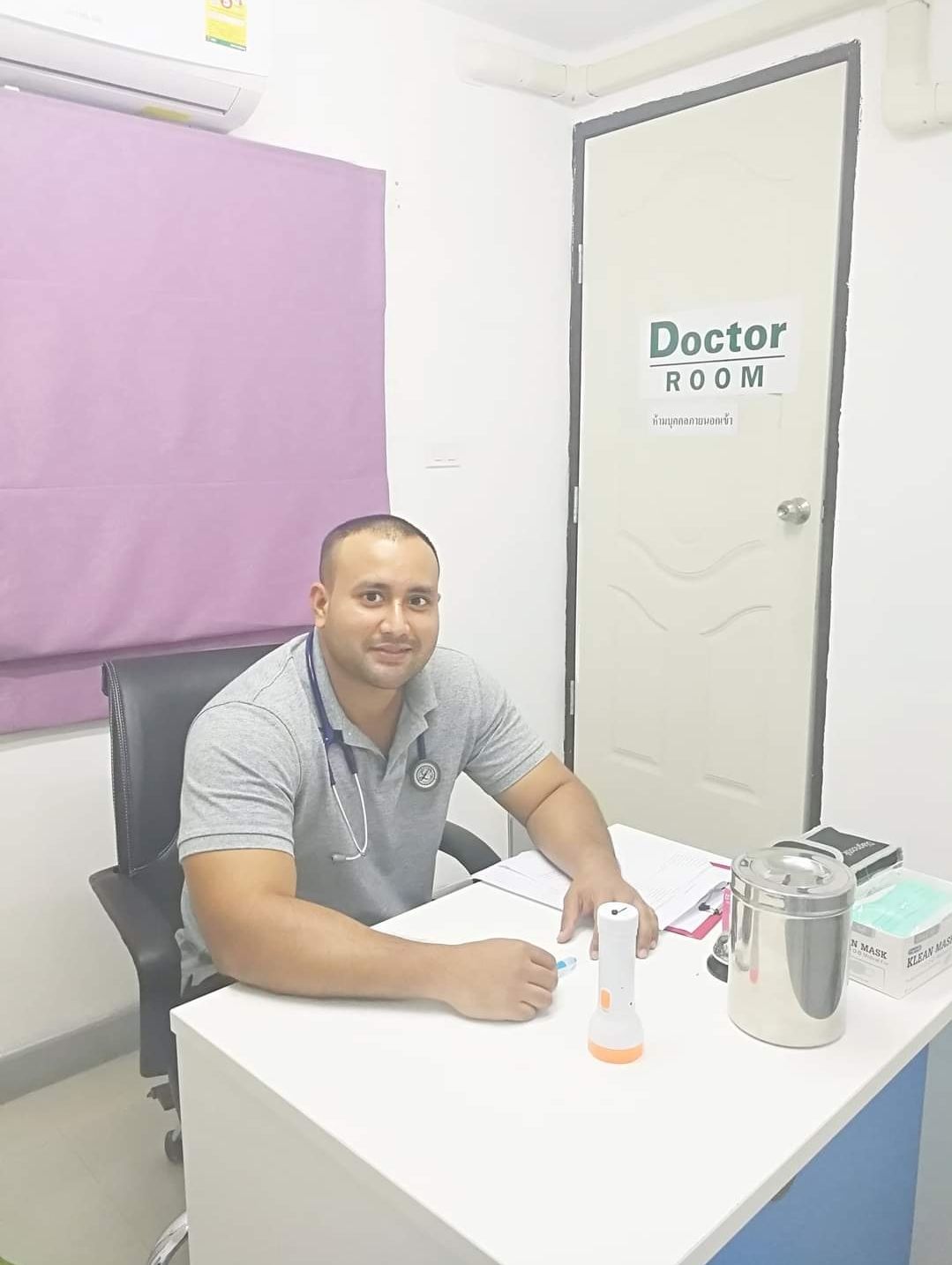
Dr. Ponlawat Pitsuwan is a physician at Doctor Bangkok, a private clinic in central Bangkok. He sees expats, residents, and medical tourists for general medicine, wellness consultations, and IV therapy. His focus is straightforward, evidence-based care delivered in plain language.