
Clinically reviewed by Dr. Ponlawat Pitsuwan, Physician, Doctor Bangkok. Last reviewed: August 2026
The syphilis incubation period is typically 10 to 90 days, with most people developing the first sign — a small painless sore — around three weeks after exposure. The blood test window period is separate: antibodies may not show up reliably until six weeks after exposure, with 90 days considered the definitive cutoff for a conclusive negative result.
If you had unprotected sex in Bangkok and you are wondering how long syphilis takes to show up, you are asking exactly the right question. Most people expect a rash or an obvious symptom. Syphilis does not usually work that way. The first sign is a painless sore that often hides somewhere you cannot see it. You can have it and feel completely fine.
The other thing that trips people up is the difference between symptoms appearing and a blood test turning positive. Those are two separate timelines. Mixing them up leads to testing too early and getting false reassurance. This article walks you through both, so you know exactly when to test and what to watch for.

The Core Answer: Syphilis Incubation Period
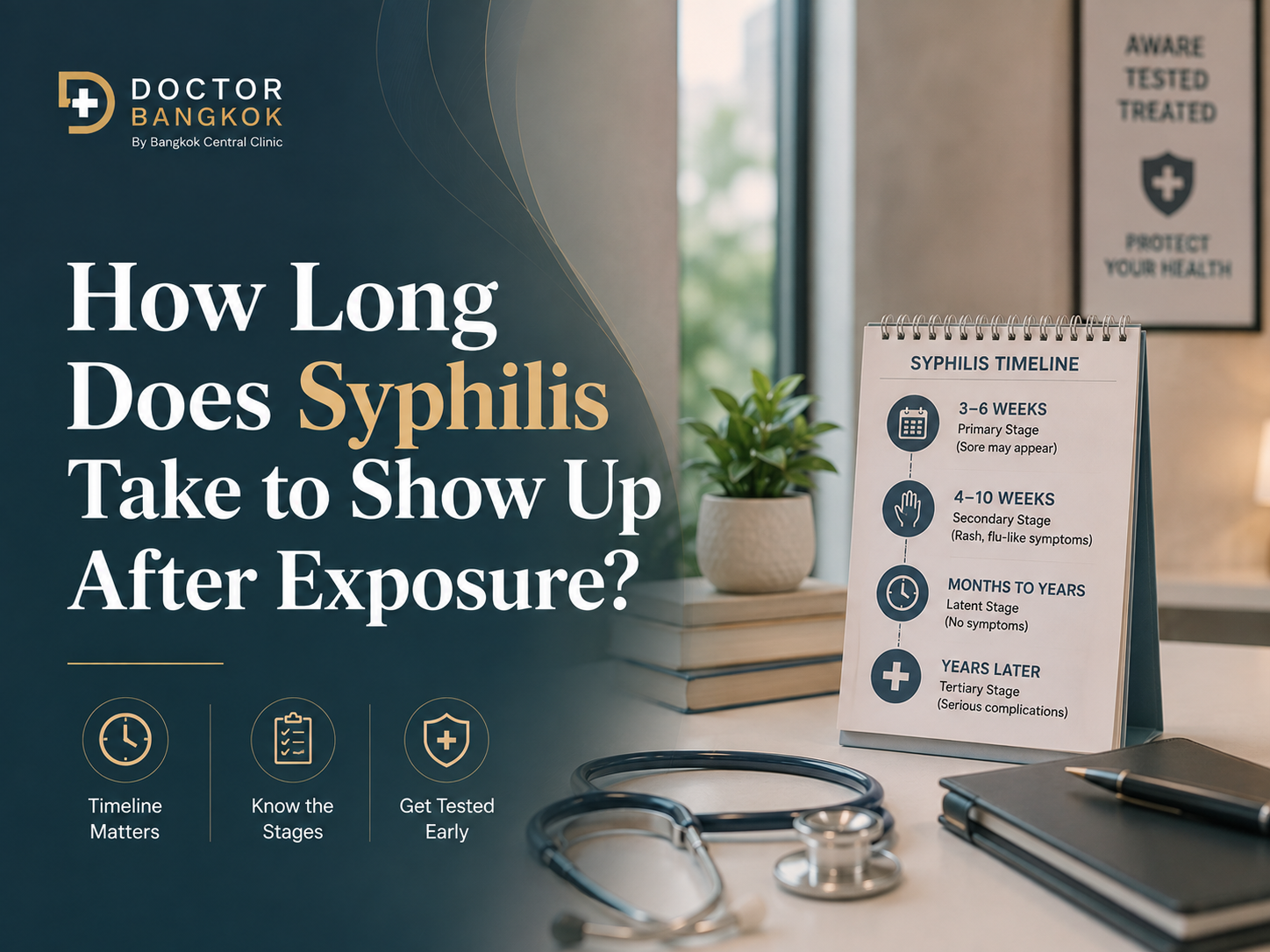
The incubation period for syphilis is 10 to 90 days, with an average of around three weeks. That is the gap between exposure and the moment the first symptom appears.
The range is wide because it depends partly on the amount of bacteria you were exposed to. A larger amount tends to shorten the timeline. A smaller amount can push it toward the 90-day end. Your immune system’s current state also plays a role.
The practical takeaway: do not assume you are in the clear at three weeks because nothing has appeared. You are not in the clear until 90 days have passed with no symptoms and a negative test result.
What Actually Happens After the Incubation Period Ends
Once the incubation period is over, syphilis moves through stages. Here is what each one looks like in practice.
Primary Syphilis
The first thing that appears is a chancre: a small, firm, painless sore at the site where the bacteria entered your body. It can be on the genitals, inside the anus, on the lips, or in the throat. Because it does not hurt, many people never notice it. It heals on its own within three to six weeks, which is when most people assume the problem has gone away. It has not.
Secondary Syphilis
If untreated, secondary syphilis typically develops six weeks to six months after the chancre first appeared. This stage often brings a rash — sometimes across the palms and soles — along with flu-like symptoms and sores in the mouth. This is when patients often first come in, not realising they were already infected weeks or months earlier.
Latent and Tertiary Syphilis
After secondary symptoms fade, syphilis enters a latent phase with no symptoms at all. This can last years. Without treatment, some patients eventually develop tertiary syphilis, which can affect the heart, brain, and other organs. The good news: syphilis is curable at every stage before tertiary damage sets in. Treatment with benzathine penicillin is effective, and the earlier it starts, the simpler it is.
| Stage | Timing After Exposure | Key Signs |
|---|---|---|
| Incubation | 10 to 90 days | No symptoms |
| Primary | 10 to 90 days | Painless sore (chancre) |
| Secondary | 6 weeks to 6 months after chancre | Rash, flu symptoms, mouth sores |
| Latent | Months to years after secondary | No symptoms |
| Tertiary | Years later if untreated | Organ damage (heart, brain) |

The Window Period: When Will a Blood Test Actually Turn Positive?
This is the part most patients get wrong, and it matters more than almost anything else.
The incubation period is about when symptoms appear. The window period is about when your blood test becomes reliable. They are not the same. After exposure, your body starts making antibodies against syphilis, but it takes time. A test done too early may come back negative even if you are infected.
Antibodies typically become detectable three to six weeks after exposure. Most guidelines treat 90 days as the point where a negative result is conclusive.
What this means practically: a negative test at two weeks does not rule out syphilis. A negative at six weeks is fairly reliable but not definitive. A negative at 90 days, with no symptoms, is the clearest reassurance you can get.
Factors That Affect the Timeline
Not everyone follows the same schedule. A few things can change how quickly syphilis develops and how accurately it shows up on a test.
HIV co-infection is the most clinically significant factor. If you are HIV-positive or have a weakened immune system, syphilis can progress faster and test interpretation can become more complex. If you are on PrEP, your HIV status is likely monitored, but flag your PrEP use when you come in. It often means higher overall exposure risk and a case for regular syphilis screening.
The amount of bacteria you were exposed to also matters. Higher exposure tends to shorten the incubation period and make the first sore appear sooner.
Why Syphilis Is So Easy to Miss
Syphilis is sometimes called "the great imitator" because its symptoms can look like many other conditions, or nothing at all. The chancre is painless. It often sits inside the vagina, inside the anus, or at the back of the throat where you simply cannot see it.
I see patients regularly who are in the secondary stage, with a rash and fatigue, and they had no idea they were infected. The chancre had already come and gone without them noticing. By the time symptoms are obvious, the infection has been present for months.
This is why testing is the only reliable way to know your status. Waiting for symptoms is not a safe strategy.
When to Get Tested in Bangkok: A Practical Schedule
If you had a possible syphilis exposure in Bangkok, here is what I tell patients to do.
Get a baseline blood test as soon as possible, even if you know it may be within the window period. This gives us a reference point. Then retest at six weeks. If that result is negative and you had a confirmed exposure, retest again at 90 days for a definitive result.
| Time After Exposure | What to Do |
|---|---|
| As soon as possible | Baseline blood test, note exposure date |
| 6 weeks | Repeat syphilis serology |
| 90 days | Definitive test — a negative here is conclusive |
| Any time | Come in immediately if a painless sore appears |
If a sore appears at any point during this window, come in immediately. Do not wait for your scheduled retest. The chancre changes what we do next.
Getting Tested at Doctor Bangkok
If you are in Bangkok and worried about a possible exposure, Doctor Bangkok offers confidential syphilis testing with English-speaking doctors and same-day results for most STD panels. No referral needed.
When you come in, we take a blood sample and choose the right test based on your exposure date. If you are within the window period, we will tell you clearly and give you a retesting schedule. If you have a visible sore, we assess that at the same visit.
Treatment for syphilis, when caught early, is straightforward. A single injection of benzathine penicillin is the standard for primary or secondary syphilis. You can find full details on what is covered and how the process works on our syphilis symptoms after exposure page.
The biggest mistake I see is patients waiting weeks to come in because they feel fine. Feeling fine during the incubation period is completely normal. It does not mean you are negative.
Worried about a syphilis exposure in Bangkok? Doctor Bangkok offers confidential, same-day STD testing with English-speaking physicians at our central Bangkok clinic, BTS accessible. Whether you need a baseline test, a 90-day confirmation, or treatment, we will give you a clear result and a plan. Visit doctorbangkok.co.th or walk in today.
Frequently Asked Questions
How long after unprotected sex should I get tested for syphilis?
The earliest a test may detect syphilis is around three weeks after exposure, but six weeks gives a more reliable result. For a definitive negative, the standard is 90 days. At Doctor Bangkok, we will test you at any stage and give you a clear retesting plan based on your exact exposure date.
Can I have syphilis with no symptoms during the incubation period?
Yes, completely. There are no symptoms at all during the incubation period, and the first sign, the chancre, is painless and often hidden inside the body where you cannot see or feel it. Testing is the only way to know your status with certainty.
My syphilis test came back negative. Does that mean I definitely do not have it?
Not necessarily, if the test was done within six weeks of exposure. Antibodies may not have developed yet. A negative result at 90 days, with no symptoms, is far more conclusive. If your result falls within the window period, we will advise on when to retest.
Does HIV infection or being on PrEP change anything about syphilis testing?
HIV co-infection can affect how syphilis progresses and how test results should be read, so it is always worth mentioning when you come in. If you are on PrEP, syphilis screening should be part of your routine check alongside HIV monitoring. Doctor Bangkok can manage both at the same visit.
I think I was exposed to syphilis in Bangkok. What should I do right now?
Note the exact date of exposure, then come in for a baseline blood test as soon as possible. Watch for any painless sore appearing over the next 10 to 90 days. Plan to retest at six weeks and again at 90 days. Doctor Bangkok offers same-day confidential testing and can advise on whether early treatment is appropriate for your situation.
Is syphilis curable if caught late?
Syphilis is curable with antibiotics at the primary, secondary, and early latent stages. Later stages require more intensive treatment, and any organ damage from tertiary syphilis cannot be reversed. This is why early testing matters.
Dr. Ponlawat Pitsuwan
Physician, Doctor Bangkok
a private medical clinic in central Bangkok. He sees expats, residents, and medical tourists for STD testing and sexual health consultations, including syphilis screening, HIV testing, PrEP, and general sexual health management. His focus is straightforward, evidence-based care delivered in plain language.
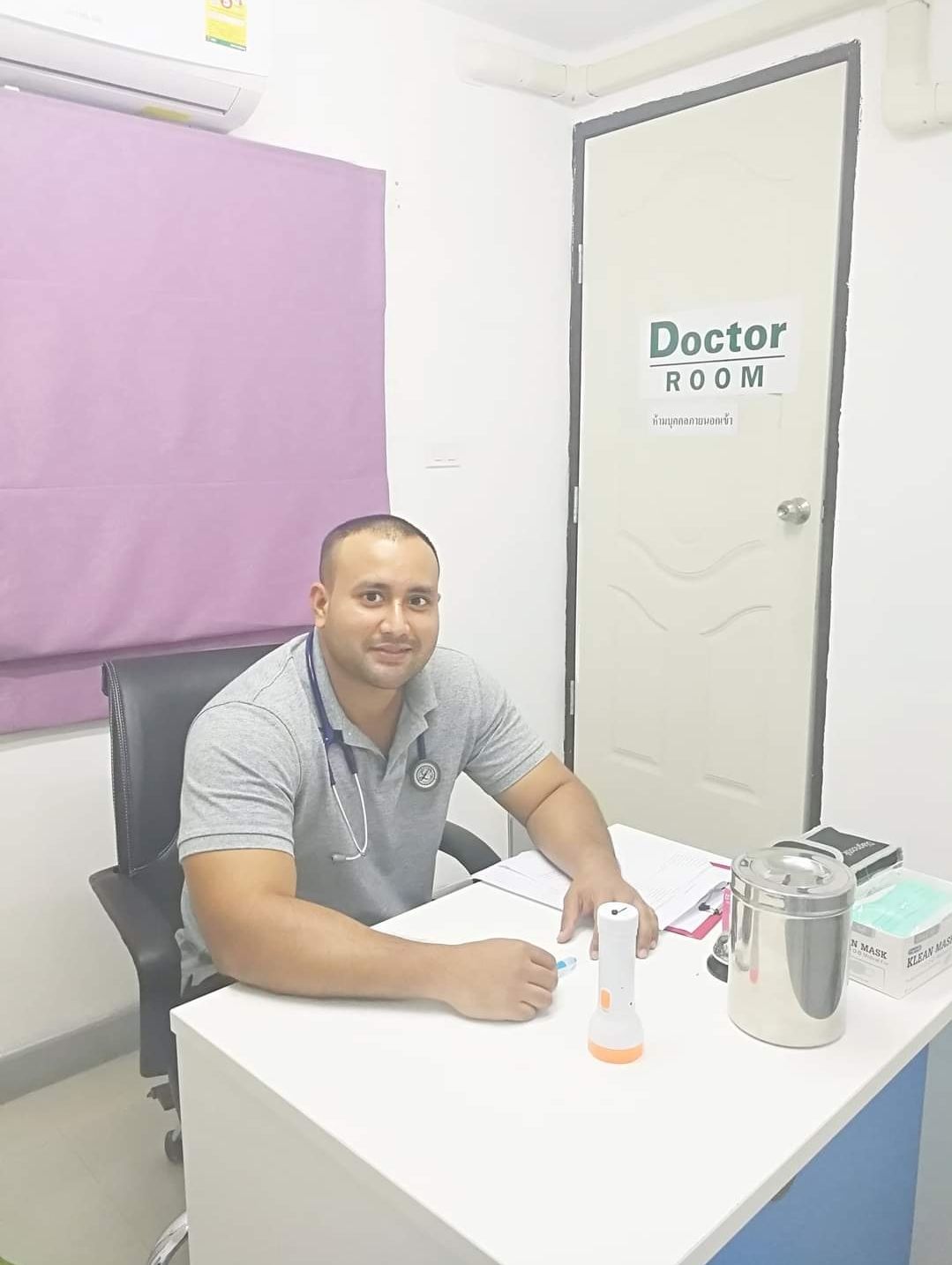
Dr. Ponlawat Pitsuwan is a physician at Doctor Bangkok, a private clinic in central Bangkok. He sees expats, residents, and medical tourists for general medicine, wellness consultations, and IV therapy. His focus is straightforward, evidence-based care delivered in plain language.