
Clinically reviewed by Dr. Ponlawat Pitsuwan, Physician, Doctor Bangkok. Last reviewed: August 2026
A PCR test for STIs detects the actual genetic material of an infection, not your body’s response to it. This means it can find infections days to weeks earlier than a standard blood test. At Doctor Bangkok, our PCR panels test for multiple infections from a single sample, with results typically available within 24 to 48 hours and a doctor to walk you through what they mean.
If you have had unprotected sex and you are wondering which test to get, you are not alone. Maybe someone told you PCR is better. Maybe you have seen clinics advertising panels that test for ten or fifteen pathogens at once. You are trying to figure out what that actually means for you.
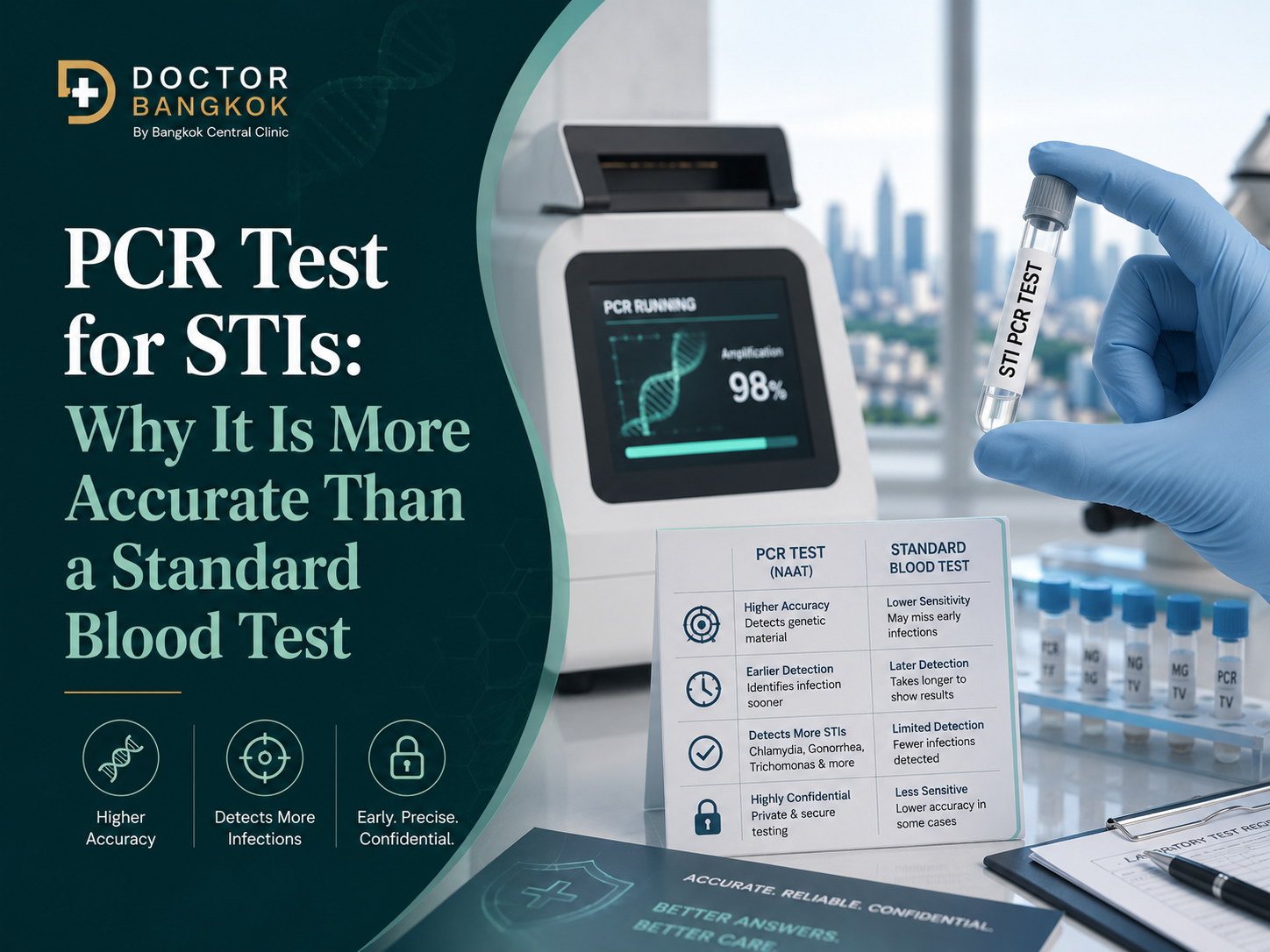
Here is the short version. A standard blood test looks for antibodies, which are proteins your immune system makes after an infection. Your body takes time to make them, sometimes weeks. A PCR test skips that wait. It looks for the pathogen’s own genetic material directly. That is why it can pick up infections earlier, and why I recommend it over a standard blood test for anyone with a recent exposure or anyone who wants a thorough sexual health check.

What Is a PCR Test for STIs?
PCR stands for polymerase chain reaction. You do not need to know the science. What matters is what it does: it finds tiny traces of a pathogen’s DNA in your sample, even when the infection is very new. You may also hear it called a NAAT, which stands for nucleic acid amplification test. Same technology, same idea.
The key point is that PCR does not rely on your immune system doing anything first. It detects the infection itself. That is what makes it faster and more accurate in the early stages, when you are most likely to be anxious and most likely to be contagious.
PCR vs Standard Blood Test: What Is the Real Difference?
A standard blood test works by detecting antibodies. The problem is that producing enough antibodies to show up on a test takes time, anywhere from two to twelve weeks depending on the infection. Test too early and you get a negative result even if you are infected. That is called a false negative.
PCR detects the pathogen’s DNA directly. For chlamydia and gonorrhea, it can often detect an infection within days of exposure. For HIV, an RNA-based PCR test can find the virus as early as five to ten days after exposure, compared to weeks for an antibody test.
This is not a small difference. If you had unprotected sex last week and you test today, a blood test may tell you nothing useful. A PCR test gives you a real answer. That is why PCR is considered the gold standard in sexual health diagnostics.
One more practical point: some PCR tests can detect whether a bacterial infection like gonorrhea carries resistance to certain antibiotics. Gonorrhea resistance is rising across Southeast Asia. If your test shows resistance markers, your doctor can prescribe the right antibiotic from the start.

What Can a PCR STI Test Detect?
A multiplex PCR panel tests for several pathogens from a single sample at the same time. Depending on the panel, one urine sample or swab can screen for chlamydia, gonorrhea, Mycoplasma genitalium, Trichomonas vaginalis, and herpes simplex virus types 1 and 2, among others.
Co-infections are more common than most people expect. Chlamydia and gonorrhea frequently occur together. Mycoplasma genitalium causes symptoms very similar to chlamydia but can only be reliably found by PCR. Older culture tests miss it routinely. If you are treated for chlamydia but actually have Mycoplasma genitalium, you will not get better.
The right panel depends on your specific exposure and risk profile. This is one reason a doctor-led consultation matters. You should not be choosing your own panel from a menu.
What Sample Types Does a PCR STI Test Use?
Most people expect a blood draw. That is often not needed. For most common STIs, a urine sample is enough. No needles, nothing invasive.
For people who have had oral or anal sex, a urine sample alone will miss infections at those sites. A throat swab catches infections in the throat. A rectal swab catches infections in the rectum. This applies to anyone who has had oral or anal sex, regardless of gender or identity. If you only test urine, you can walk away with a clean result and an active infection.
At Doctor Bangkok, the doctor asks about your sexual practices before deciding which samples to collect. Nothing is assumed. The goal is to test every site that may have been exposed.
Why PCR Matters for Asymptomatic Infections
Most people with chlamydia have no symptoms. The same is true for gonorrhea in many cases, and for Mycoplasma genitalium almost always. I see patients at Doctor Bangkok regularly who feel completely fine but test positive. They had no idea.
This is especially relevant for expats and long-term travellers who have not had a routine sexual health check in months or years. You do not need symptoms to have an infection, and you do not need to feel unwell to be passing something on.
If you are sexually active and have not been tested recently, that is reason enough to come in. PCR gives you an accurate result even when your body has shown no visible signs of infection.
Understanding Your PCR STI Test Results
A positive result means the test found the pathogen’s genetic material in your sample. PCR has very high specificity, which means a positive result is almost certainly real. Your doctor will explain what it means, discuss treatment, and advise you on notifying recent partners.
A negative result means the pathogen was not detected. If you tested within the window period for a specific infection, your doctor may recommend re-testing in two to four weeks. A single negative after a very recent exposure is not always the final answer.
An indeterminate result, where the test cannot give a clear reading, is uncommon. If it happens, the test is repeated.
After a positive result, treatment is usually straightforward. Chlamydia and gonorrhea are treated with antibiotics. Mycoplasma genitalium requires a specific antibiotic course, and the resistance information from your PCR guides which one. Your doctor will also advise on when to re-test to confirm clearance.
Getting a PCR STI Test at Doctor Bangkok
Doctor Bangkok runs PCR-based sexual health screening as a standard part of our STI testing service. You see a doctor, not just a lab technician. The doctor asks about your exposure, any symptoms, and your sexual practices, then recommends the right panel and sample sites for your situation.
Results typically come back within 24 to 48 hours. Your doctor reviews them with you and explains clearly what each result means and what needs to happen next. If treatment is needed, it can usually be started the same day.
A concern I hear regularly is about privacy. Testing at a private clinic in Bangkok is entirely separate from home-country health records. Your results are not shared with foreign governments, insurance companies, or health systems abroad. For expats and medical tourists, this is often a genuine relief.
The clinic is in central Bangkok and is accessible by BTS. English-speaking doctors are available throughout the day. No referral is needed. You can walk in or book ahead. Full details about what our STD testing in Bangkok covers are on our testing page.
Concerned about a recent exposure or overdue for a sexual health check? Doctor Bangkok offers PCR-based STI testing in central Bangkok, with English-speaking doctors, same-day consultations, and results within 24 to 48 hours. Your results are fully confidential and do not appear on home-country records. Visit doctorbangkok.co.th or walk in to get tested today.
Frequently Asked Questions
How soon after exposure can a PCR test detect an STI?
It depends on the specific infection. For chlamydia and gonorrhea, PCR can often detect the pathogen within days of exposure. For HIV, an RNA PCR test can find the virus as early as five to ten days after exposure. Your doctor at Doctor Bangkok will advise on the right time to test based on what you were exposed to and when.
Does a PCR STI test hurt? What samples are collected?
Most PCR STI tests use a urine sample, which is completely non-invasive. Depending on your sexual practices, a throat or rectal swab may also be recommended. Swabs are quick and cause minimal discomfort. At Doctor Bangkok, the doctor decides which samples are needed based on your specific situation.
What is the difference between a PCR STI test and a standard blood test?
A blood test detects antibodies, which your body can take two to twelve weeks to produce after infection. PCR detects the pathogen’s DNA directly, giving accurate results much earlier. If you have had a recent exposure, a blood test may give a false negative where PCR would not. More details are on our STD testing page.
Will my STI test results in Bangkok show up on my home-country medical records?
No. Testing at a private clinic in Bangkok is entirely independent of your home-country health records. Results are not shared with foreign governments, insurers, or health systems abroad. This is a common concern among expats and travellers, and a completely understandable one.
Can one PCR test check for multiple STIs at the same time?
Yes. A multiplex PCR panel tests for several pathogens from a single sample in one go. This includes chlamydia, gonorrhea, Mycoplasma genitalium, Trichomonas vaginalis, and herpes simplex virus. Co-infections are common and are often missed by tests that only look for one pathogen at a time.
What happens after a positive PCR result?
Your doctor will explain the result, recommend treatment, and advise on partner notification and re-testing. For bacterial infections like chlamydia and gonorrhea, antibiotics are usually prescribed the same day. A follow-up test a few weeks later confirms the infection has cleared.
Dr. Ponlawat Pitsuwan
Physician, Doctor Bangkok
a private medical clinic in central Bangkok. He sees expats, residents, and medical tourists for sexual health consultations, STI testing, and general medicine. His focus is straightforward, evidence-based care delivered in plain language.
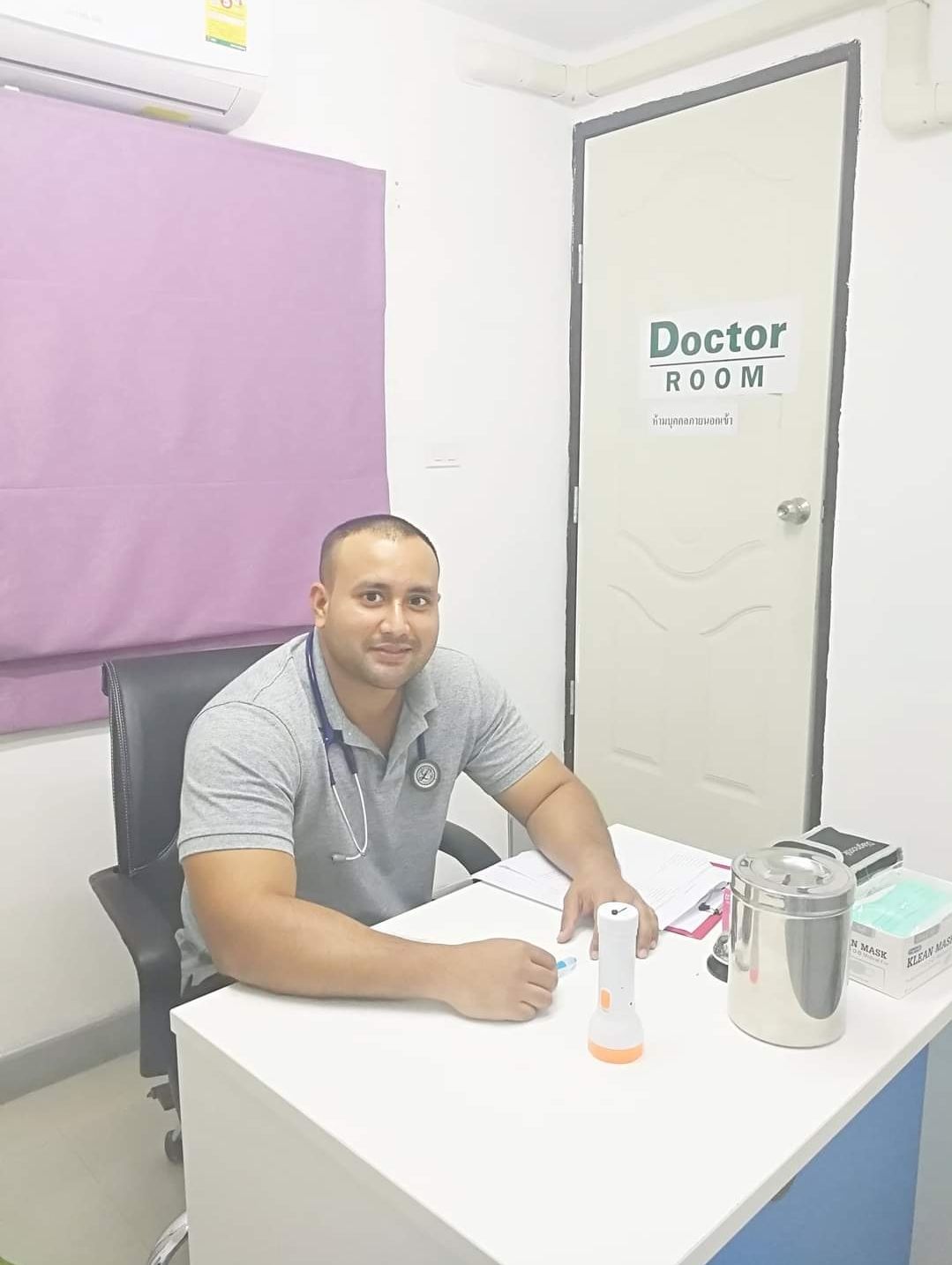
Dr. Ponlawat Pitsuwan is a physician at Doctor Bangkok, a private clinic in central Bangkok. He sees expats, residents, and medical tourists for general medicine, wellness consultations, and IV therapy. His focus is straightforward, evidence-based care delivered in plain language.