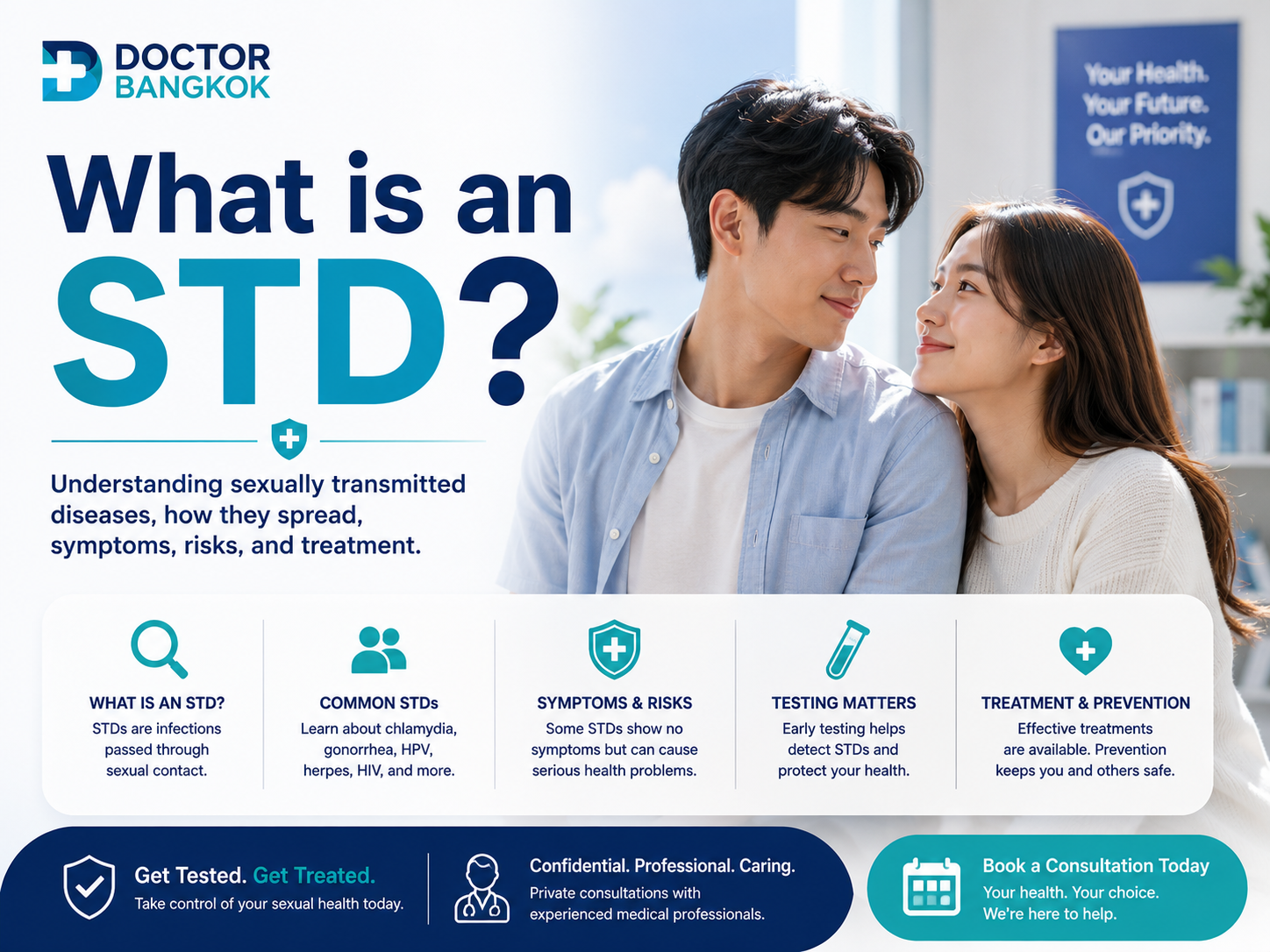

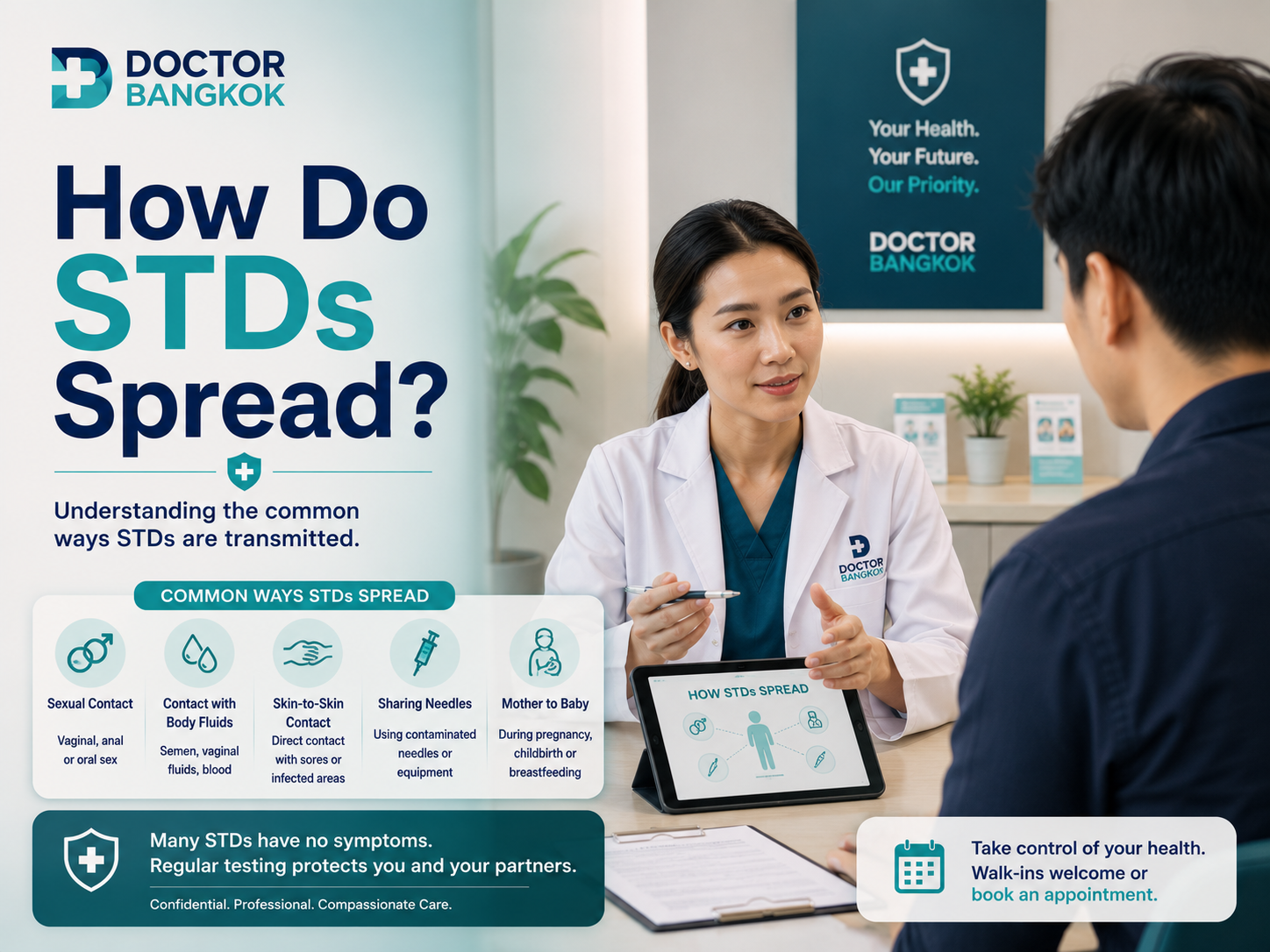
STDs spread through direct contact with infected body fluids, mucosal membranes, or skin. Bacterial infections including chlamydia, gonorrhea, and syphilis transmit through contact with infected secretions or lesions. Viral infections including herpes and HPV spread through skin-to-skin contact, often without visible sores or symptoms. HIV requires exposure to specific fluids such as blood, semen, or vaginal secretions via mucosal membranes or broken skin. The risk level differs substantially by activity, by pathogen, and by whether either partner has other infections that compromise tissue integrity.
The question arrives in clinic almost daily, usually prefaced with “I did something stupid last weekend” or “My friend told me you can’t catch anything from…” In practice in Bangkok, these questions come from genuinely anxious people working through real misinformation. The honest answer is that transmission risk depends on which pathogen, which body fluids, which tissues were involved, and specific circumstances that are worth examining one by one.
What makes these conversations clinically useful is that specificity matters. A handjob carries different risks than oral sex, which carries different risks than anal intercourse, which is the highest-risk activity for HIV transmission. Understanding where the actual risk sits, rather than applying blanket caution to everything or blanket dismissal to activities people consider low-risk, allows for sensible decisions about testing and prevention.
Bangkok’s international community navigates this with a specific set of challenges. Many residents come from countries where STD education was inconsistent, and cultural settings that discouraged open clinical discussion. At Doctor Bangkok, these conversations are routine medical consultations. There is no judgment attached to the question. The only relevant variables are clinical ones.

Can You Get an STD from Oral Sex?
Yes. Several infections transmit reliably through oral sex, and several more transmit with lower but meaningful probability. The relevant infections are chlamydia, gonorrhea, syphilis, herpes, HPV, and, at low probability, HIV. This covers both giving and receiving oral sex, with the specific risks varying by role and by which tissues are in contact.
Can you get an STD from a blowjob?
The person performing oral sex on a penis risks acquiring chlamydia, gonorrhea, syphilis, herpes, and HPV through oral contact with infected genital secretions or skin. Chlamydia and gonorrhea establish pharyngeal infections readily, often without producing symptoms. At this clinic, throat infections from both are found regularly in patients who considered oral sex risk-free. The throat environment suits both bacteria well, and untreated pharyngeal gonorrhea is a common source of ongoing transmission because it goes undetected without specific throat swabbing.
The receiving partner is at risk primarily from the giving partner’s oral herpes, oral syphilis lesions, or other active oral infections. Oral herpes (HSV-1) transmits to genital tissue with meaningful frequency during oral sex, producing genital herpes infections that are clinically identical to those caused by HSV-2. The distinction between the two types matters less to the patient than the fact that the infection is present and requires management.
Can you get an STD from receiving oral sex?
The receiving partner faces transmission risk primarily from the giving partner’s oral infections. Oral herpes represents the most common pathway, passing from the mouth to genital tissue through direct mucosal contact. If the giving partner has active or subclinically shedding oral herpes, the receiving partner faces meaningful transmission risk even without visible lesions on either side.
Bacterial transmission is possible but less common in this direction. A giving partner with untreated pharyngeal gonorrhea or chlamydia could transmit to the receiving partner’s genitals through contact with infected saliva, though this is not the dominant transmission route for these infections. Syphilis chancres in the mouth transmit through direct lesion contact with genital tissue.
Can you get an STD from cunnilingus?
Oral contact with the vulva and vagina creates bidirectional transmission risk. The giving partner faces exposure to vaginal secretions containing bacteria or viruses. Chlamydia, gonorrhea, herpes, HPV, and HIV at low probability are all relevant here. For the giving partner, HPV transmission through oral contact with infected genital tissue is the route associated with oropharyngeal HPV, which is in turn associated with throat cancers. Vaccination against HPV reduces this risk.
The receiving partner faces risk from the giving partner’s oral infections, following the same pattern described for blowjobs. Dental dams, a thin barrier placed over the vulva during oral sex, reduce transmission risk for both partners and are underused relative to their protective value. They are not widely stocked in Bangkok pharmacies but can be improvised from a cut condom.
Can you get an STD from kissing?
Oral herpes is the primary infection that transmits through kissing, spreading when active lesions or viral shedding is present. Many people who carry HSV-1 acquired it through childhood kissing rather than sexual contact, and are unaware they carry it because they never had a symptomatic outbreak. Syphilis can transmit through kissing when oral chancres or secondary lesions are present, though this is an uncommon route in practice.
Most bacterial STDs including chlamydia and gonorrhea do not transmit through kissing alone. HIV does not transmit through saliva. The antiviral properties of saliva and the very low viral concentration in it make salivary HIV transmission negligible. This holds for casual kissing and deep kissing alike.
Can you get an STD from a handjob?
Hand-to-genital contact carries minimal transmission risk for most STDs. Intact skin is an effective barrier. The scenarios that introduce meaningful risk are those where the hands have cuts, abrasions, or skin conditions that compromise the barrier, and where fresh genital secretions or blood contacts that broken skin. Under those circumstances, transmission of blood-borne infections including HIV, hepatitis B, and syphilis becomes possible, though still uncommon.
Herpes and HPV transmit through skin-to-skin contact rather than fluid exchange, so direct contact between infected skin and susceptible tissue on hands or genitals does create a theoretical transmission pathway. This is uncommon in practice but not impossible when active viral lesions are involved.
Can you get an STD from a massage with a happy ending?
Transmission risk depends entirely on what contact actually occurs, which is often more than the framing of the encounter suggests. If contact is limited to hand-to-genital touch with intact skin, risk is minimal for most infections. When oral contact occurs, risk profiles match those of any oral sex encounter, covering chlamydia, gonorrhea, herpes, HPV, syphilis, and low-probability HIV transmission.
At this clinic, patients frequently underestimate or mischaracterize these encounters when giving their sexual history, often because they do not mentally categorize them in the same way as other sexual activities. For accurate risk assessment and appropriate testing, what matters clinically is the specific contact that occurred, not the label applied to the encounter.
Anal Sex and STD Transmission
Anal intercourse carries the highest transmission risk for HIV of any sexual activity, for both receptive and insertive partners, with the receptive partner facing significantly greater risk. Rectal tissue is more vulnerable to microscopic tears than vaginal tissue, and its mucosal lining provides easier access for HIV and other pathogens. This biological difference is the reason anal sex occupies a different risk category for HIV specifically.
Chlamydia and gonorrhea infect rectal tissue readily and are frequently asymptomatic when they do. At this clinic, rectal gonorrhea and chlamydia are among the most commonly detected infections in MSM patients who have had no symptoms and assumed they were uninfected. Testing that includes rectal swabs, not only urine samples, is the only way to detect these infections.
Hepatitis B also transmits efficiently through anal intercourse. Vaccination against hepatitis B is available and effective, and immunity status should be confirmed for anyone engaging in anal sex without consistent condom use. If you have not been vaccinated or do not know your immunity status, this is worth addressing at a routine appointment.

Does Washing After Sex Prevent STDs?
No. Post-sexual washing provides no meaningful protection against STD transmission. Pathogens access mucosal tissue within minutes of exposure. By the time washing occurs, the clinically relevant contact has already been completed. Urinating after sex may reduce urinary tract infection risk by flushing bacteria from the urethra, but this mechanism does not apply to STD prevention.
Douching specifically carries a net negative effect. It disrupts the natural vaginal flora that provides a degree of protection against bacterial infections, and it can cause tissue irritation that increases susceptibility to STIs. Patients who douche regularly are not reducing their STD risk. The opposite is more likely to be true.
STD Transmission Risk by Activity
The table below summarises relative transmission risk by infection and sexual activity. These are qualitative assessments reflecting relative probability rather than precise per-act statistics, which vary substantially by viral load, presence of other infections, and tissue integrity.
| Infection | Vaginal/Anal | Oral (giving) | Oral (receiving) | Skin/other contact |
| Chlamydia | High risk | Moderate risk | Low-moderate | Minimal |
| Gonorrhea | High risk | Moderate risk | Low-moderate | Minimal |
| Syphilis | High risk | Moderate risk | Moderate risk | Possible (lesion contact) |
| HIV | High (anal highest) | Very low | Very low | Negligible |
| Herpes HSV | High risk | Moderate risk | Moderate risk | Yes (skin-to-skin) |
| HPV | High risk | Moderate risk | Moderate risk | Yes (skin-to-skin) |
| Hepatitis B | High risk | Low-moderate | Low-moderate | Blood contact |
| Hepatitis C | Low-moderate | Very low | Very low | Blood contact |
| Trichomoniasis | High risk | Very low | Very low | Negligible |
Window Periods: When Testing Becomes Reliable
A window period is the interval between exposure and reliable test detection. Testing before the relevant window has closed can produce a false negative even when infection has occurred. This is the most common reason patients receive inaccurate reassurance from early testing.
Chlamydia and gonorrhea are detectable by nucleic acid amplification testing (NAAT) within one to two weeks of exposure, with optimal accuracy at two to three weeks. HIV testing with a fourth-generation combination antigen/antibody test reaches reliable accuracy at around 45 days from exposure, with most infections detectable by four weeks. Older antibody-only rapid tests require a longer window, up to 12 weeks, which is why test generation matters when interpreting timing.
Syphilis antibody testing requires three to six weeks after exposure for reliable results. Herpes IgG antibody testing can take up to 16 weeks for full seroconversion, though many patients seroconvert by 12 weeks. If an active lesion is present, PCR swabbing of that lesion is faster and more accurate than waiting for antibody development. IgM herpes testing is not recommended due to poor specificity.
Prevention: Condoms, Vaccination, PrEP, and PEP
Condoms provide strong protection against fluid-transmitted infections including HIV, chlamydia, and gonorrhea when used consistently and correctly. Their protection against skin-to-skin transmitted infections such as herpes and HPV is partial, since these infections can affect areas of skin not covered by a condom. Consistent condom use substantially reduces overall STD risk but does not eliminate it.
Vaccination against HPV and hepatitis B is available and effective. HPV vaccination reduces the risk of cervical, anal, and oropharyngeal cancers associated with high-risk HPV types, and is most effective before exposure, though it retains benefit in adults who have not yet been infected with all vaccine-covered types. Hepatitis B vaccination establishes lasting immunity. Both vaccines are available at Doctor Bangkok.
PrEP, pre-exposure prophylaxis, is a daily oral medication that reduces HIV acquisition risk by over 99 percent when taken consistently. It is appropriate for people with multiple partners, partners of unknown HIV status, or those in serodiscordant relationships. PrEP is available in Bangkok through both public and private providers, including Doctor Bangkok, and requires HIV testing every three months as part of the ongoing monitoring protocol.
PEP, post-exposure prophylaxis, is a 28-day antiretroviral course that prevents HIV infection when started within 72 hours of a potential exposure. Every hour after exposure reduces its effectiveness. If you have had unprotected sex with someone who is HIV-positive or of unknown status in the last 72 hours, PEP assessment is an urgent same-day matter, not a routine appointment to book for next week.
U=U: What HIV-Positive Patients and Their Partners Need to Know
Undetectable equals untransmittable. People living with HIV who are on effective antiretroviral therapy and who maintain a consistently undetectable viral load cannot sexually transmit HIV to partners. This is the conclusion of large-scale clinical research including the PARTNER and HPTN 052 studies, which together enrolled thousands of serodiscordant couples and found zero linked HIV transmissions when viral load was suppressed.
U=U applies when undetectable status has been maintained for at least six months with confirmed viral load testing. For Bangkok patients who are HIV-positive and engaged with treatment, understanding U=U changes the conversation around disclosure, partnership, and quality of life. For patients newly diagnosed, the most important clinical step is starting treatment. Suppression of viral load is achievable and realistic, and it transforms HIV from an acute risk into a managed chronic condition.
Symptoms That Require Urgent Assessment
Most STI symptoms do not constitute a medical emergency. Discharge, mild discomfort, and early genital lesions warrant a clinic appointment within a few days rather than urgent care. Some presentations are different.
Severe pelvic pain, particularly when accompanied by fever, may indicate pelvic inflammatory disease. This requires prompt antibiotic treatment to prevent long-term damage to reproductive structures. Fever, rash, swollen lymph nodes, or a flu-like illness appearing two to four weeks after a high-risk sexual encounter warrants same-day testing for acute HIV seroconversion. These symptoms during this timeframe can represent primary HIV infection, the period of highest infectiousness, and confirming or excluding this diagnosis matters clinically.
Any potential HIV exposure within the last 72 hours is time-critical. PEP must be started within that window. After 72 hours it is no longer indicated. If you are within that window after a high-risk exposure, do not wait.
Concerned about a recent exposure or due for STD screening? Doctor Bangkok provides confidential STD testing with English-language consultation, same-day appointments, and results discussion in a private clinical setting. Our physicians advise on the correct window periods for your situation and cover the full range of testing, treatment, PrEP, and vaccination. Book directly at doctorbangkok.co.th/std-test-bangkok.
Frequently Asked Questions
How long should I wait to get tested after unprotected sex?
The correct waiting time depends on which infections you are testing for. Chlamydia and gonorrhea produce reliable results two to three weeks after exposure by NAAT. HIV is reliably detected at around 45 days using a fourth-generation combination test, with most infections detectable by four weeks. Syphilis antibody testing requires three to six weeks. Herpes IgG testing can take up to 16 weeks for full seroconversion. Testing immediately after exposure only establishes your baseline status and will not detect any infection acquired during that encounter. A follow-up test at the appropriate window is the clinically meaningful result.
Can you get STDs from toilet seats or shared towels?
STIs do not survive on inanimate surfaces long enough to establish infection. The bacteria and viruses responsible for sexually transmitted infections require the warm, moist environment of human tissue to remain viable. Outside the body, most STI pathogens die within minutes to a few hours at most, and the infectious dose required to establish infection cannot be maintained on a dry surface. Toilet seats, towels, and shared equipment are not meaningful transmission vectors for any of the standard STIs. This includes HIV, gonorrhea, chlamydia, syphilis, and herpes.
Do condoms prevent all STD transmission?
Condoms provide strong protection against infections that spread through body fluids, including HIV, chlamydia, gonorrhea, and hepatitis B, when used consistently and correctly. They provide partial but incomplete protection against herpes and HPV because both viruses can be present on skin not covered by the condom, including the scrotum, inner thighs, and perineum. The protection is still meaningful and worth maintaining. Consistent condom use combined with vaccination for HPV and hepatitis B, and PrEP for HIV where appropriate, provides substantially better protection than any single measure alone.
Should my partner get tested if I test positive?
Yes. Partner testing and treatment are an essential part of STI management for bacterial infections. Without them, successful treatment of one partner is followed by reinfection from the untreated other. Most bacterial STDs are asymptomatic in a significant proportion of those infected, so partners cannot assume they are uninfected because they feel well. At Doctor Bangkok, we discuss partner notification with patients and can assist with how to approach that conversation, including providing written information that patients can share with partners who need to present at their own clinic.
Can you have multiple STDs at the same time?
Yes, and this is more common than most patients expect. Coinfection with chlamydia and gonorrhea is a routine finding at this clinic. The presence of one STI also increases susceptibility to others, partly because inflammation and tissue damage from one infection create more accessible entry points for additional pathogens. HIV acquisition risk is significantly elevated in the presence of other STIs for this reason. A standard STI screen tests for multiple infections simultaneously, and finding one infection should prompt testing for all others rather than assuming that is the only issue.
Where can I get confidential STD testing in Bangkok?
Doctor Bangkok provides confidential STD testing with English-speaking physicians in central Bangkok, accessible by BTS. Testing appointments are available same-day for urgent concerns. Results are handled within the clinical record only, with no connection to insurance, employers, or any third party. This confidentiality is one of the primary reasons expats and medical tourists use private clinics for sexual health care rather than navigating the public hospital system, where English support and privacy controls are less consistent. Visit doctorbangkok.co.th/std-test-bangkok to book.
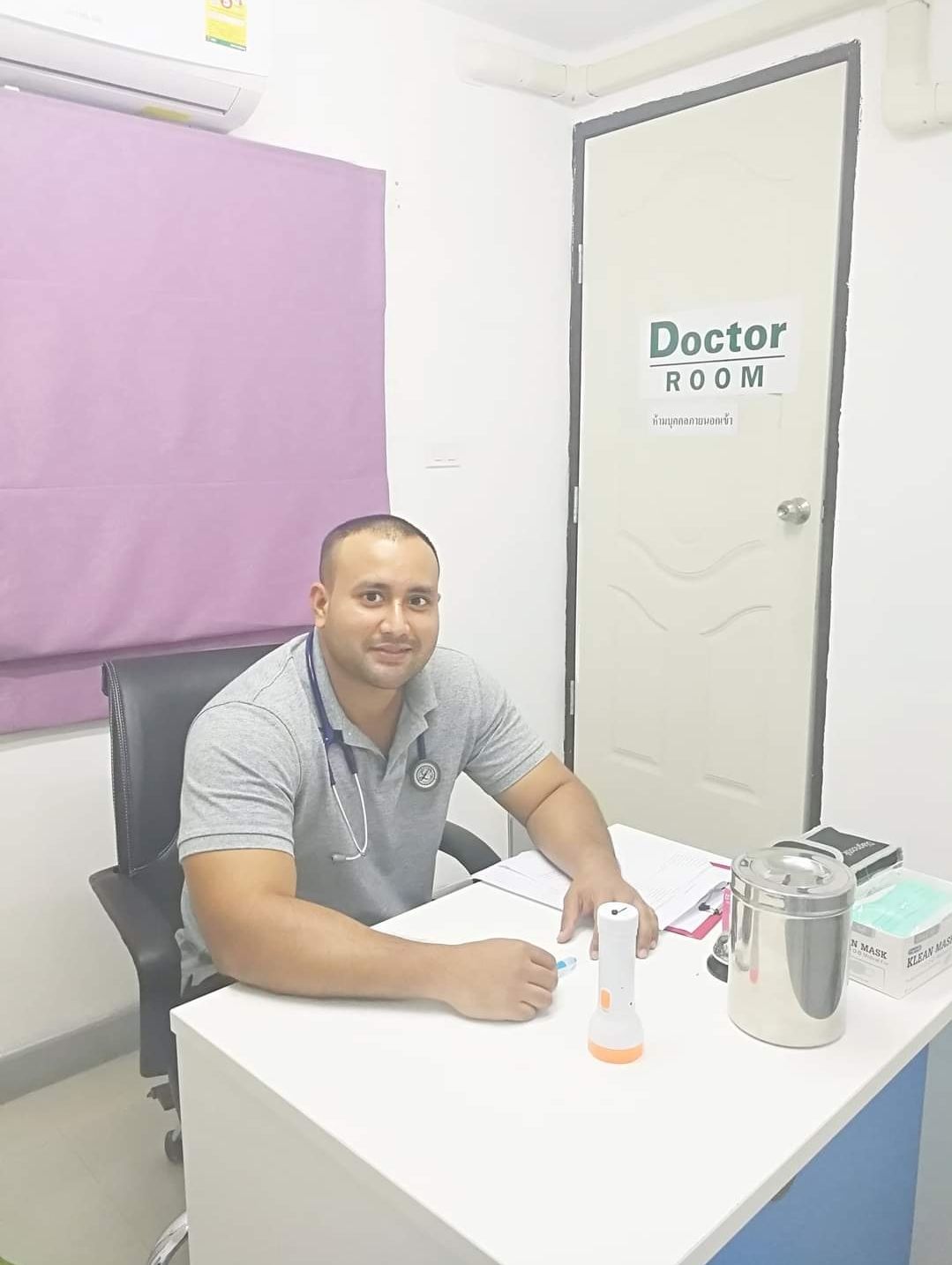
Dr. Ponlawat Pitsuwan is a physician at Doctor Bangkok, a private clinic in central Bangkok. He sees expats, residents, and medical tourists for general medicine, wellness consultations, and IV therapy. His focus is straightforward, evidence-based care delivered in plain language.