
Clinically reviewed by Dr. Ponlawat Pitsuwan, Physician, Doctor Bangkok.
Last reviewed: November 2026
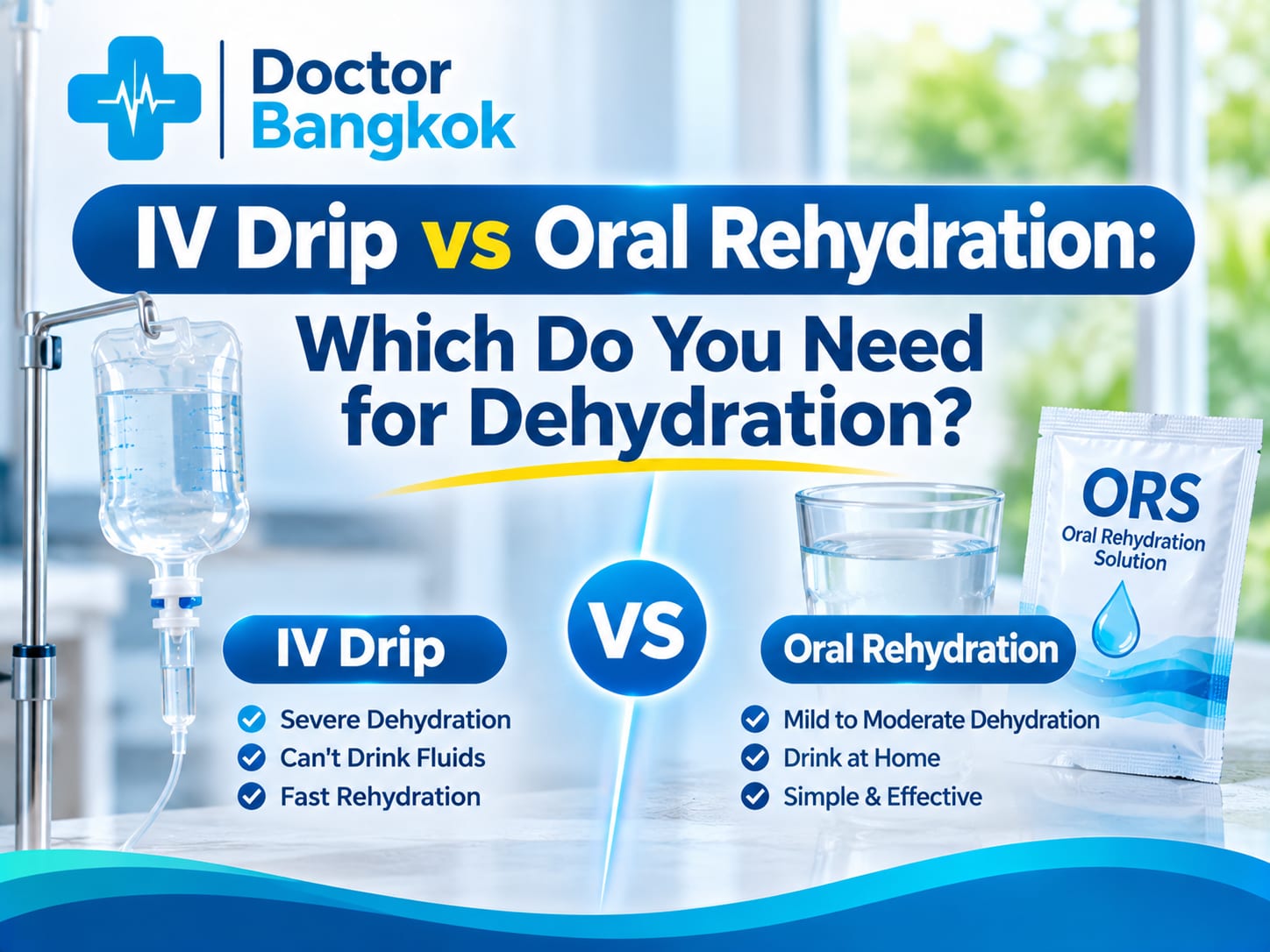
For mild dehydration, oral rehydration solution (ORS) is the clinically recommended first step and works well when you can keep fluids down. An IV drip is the right call when you are vomiting repeatedly, cannot absorb fluids through your gut, or showing signs of moderate to severe dehydration. The difference is not about speed alone. It is about whether your body can actually use what you are drinking.
You are dizzy, your mouth is dry, and you are trying to decide between a rehydration sachet from the pharmacy downstairs and calling a doctor. That decision turns on one thing: can your gut absorb fluids right now?
If you can sip and keep it down, oral rehydration solution is where you start. It is effective, cheap, and available at every pharmacy in Bangkok. If you are vomiting every time you try to drink, or you have not passed urine in hours and feel faint when you stand, oral fluids are not going to cut it. The sections below help you work out which situation you are actually in.

How Oral Rehydration and IV Drip Therapy Work
ORS works because glucose and sodium are absorbed together in your gut, pulling water into your bloodstream at the same time. That is why a properly formulated ORS outperforms plain water or a sports drink. Plain water does not carry the sodium signal your gut needs. Sports drinks are usually too high in sugar and too low in sodium for genuine illness.
The WHO low-osmolarity ORS formula is what pharmacies stock in sachets. You can find it at Boots, Watsons, or most local Thai pharmacies. Mix it with clean water, follow the packet instructions, and drink it slowly and regularly.
An IV drip delivers fluid directly into your bloodstream through a vein. Usually this is an isotonic saline solution, sometimes with added electrolytes or dextrose. Because it bypasses your gut entirely, it works regardless of whether you are vomiting or whether your digestive system has slowed down. The tradeoff is that it requires a physician to assess you first, place the line correctly, and monitor you during the infusion. Without that oversight, IV therapy carries real risks including phlebitis (vein inflammation), infection, and fluid overload.
When Oral Fluids Are Enough
Mild dehydration responds well to ORS. The signs are dry mouth, thirst, fatigue, and slightly darker urine. You are alert, you can stand without feeling faint, and you can keep fluids down.
Start with WHO-formula ORS sachets. Drink small amounts frequently rather than large volumes at once. If you have diarrhea from traveler’s gastroenteritis, ORS is the evidence-based first treatment. Rest, avoid alcohol and caffeine, and monitor yourself over the next few hours.
One situation where oral rehydration stops working even with mild symptoms is if your gut has slowed significantly. If you are bloated, not passing gas, and your abdomen feels tense, those symptoms warrant a clinical assessment rather than waiting it out at the hotel.

When an IV Drip Is the Better Option
If you are vomiting within 15 to 20 minutes of trying to drink, oral therapy is not going to work. Your body is ejecting the fluid before it can be absorbed. That is the clearest signal you need a different route.
Other situations where IV rehydration makes clinical sense: you have not urinated for eight hours or more, you feel dizzy or faint when you stand, your pulse feels fast or weak, or you are confused and unusually drowsy. These point to moderate or severe dehydration where the body is struggling to maintain normal blood pressure. At that stage, waiting to see if oral fluids eventually work is the wrong move.
Food poisoning can escalate quickly in Bangkok’s heat and humidity. If you have been losing fluids through vomiting and diarrhea for several hours and cannot replace them fast enough orally, getting a physician involved before things worsen is the right call. You can book same-day IV drip therapy in Bangkok through Doctor Bangkok’s clinic or doctor-on-call service.
Doctor Bangkok’s doctor-on-call service means a physician can be at your hotel or condo within one hour, day or night. The doctor assesses you in person before any IV is placed, selects the right fluid formula, and stays with you during the infusion. That clinical assessment step is not optional. It is what separates safe IV therapy from a risky shortcut. Find out more about the doctor hotel visit service and what to expect when a physician comes to you.
Children and Older Adults: Lower Threshold, Earlier Action
Both groups dehydrate faster and have less reserve than a healthy adult. The same signs that would prompt you to watch and wait in a fit adult should prompt earlier action here.
Children lose fluid faster relative to their body size. If a child is not producing tears when crying, has sunken eyes, or is unusually lethargic, do not wait. WHO-formula ORS is the right first step in children with mild gastroenteritis, but escalate to medical assessment quickly if there is no clear improvement within a few hours.
Older adults often do not feel thirsty even when significantly dehydrated. Their kidneys are less efficient at conserving fluid, and they may be on medications that affect fluid balance. If an older adult is becoming confused, unusually weak, or has stopped urinating, treat that as urgent and get a physician involved.
For either group, the threshold for IV rehydration is lower than it is for a healthy adult. If you need same-day assessment without the wait, the walk-in clinic in Bangkok on Sukhumvit is open around the clock.
Diarrhea, Food Poisoning, and IV Drip vs Oral Rehydration in Bangkok
Bangkok’s food scene is one of the best in the world. It also means traveler’s diarrhea is genuinely common, and most cases resolve with ORS, rest, and time. The question of IV drip vs oral rehydration in Bangkok usually comes down to whether you can keep anything down and how long this has been going on.
If diarrhea is mild and you are keeping ORS down, you do not need an IV. If you have been unwell for more than 24 hours without improvement, or symptoms are getting worse rather than better, a physician should assess you. Some infections require antibiotics, and some do not. Getting that right matters.
Doctor Bangkok’s clinic on Sukhumvit Soi 13 handles diarrhea treatment in Bangkok around the clock. If you would rather not travel, the doctor-on-call service brings the consultation and IV setup to you. For the full detail on what IV drip therapy covers at the clinic, visit the IV drip Bangkok page.
Not keeping fluids down? Feel faint when you stand? Have not urinated in hours? Oral rehydration alone is not enough. Doctor Bangkok can send a licensed physician to your hotel or condo anywhere in Bangkok within one hour, day or night. The doctor assesses you in person, selects the right IV fluid formula, and monitors you throughout. If you would rather come in, the clinic on Sukhumvit Soi 13 is open 24 hours with no appointment needed. Visit doctorbangkok.co.th/iv-drip-bangkok or contact the clinic directly.
FAQ
Dr. Ponlawat Pitsuwan
Physician, Doctor Bangkok
a private medical clinic in central Bangkok open 24 hours, with a doctor-on-call service that comes to your hotel or condo within one hour. He sees expats, residents, and medical tourists for dehydration, traveler’s diarrhea, IV drip therapy, and acute illness. His focus is straightforward, evidence-based care delivered in plain language.
References
- Hartling L, Bellemare S, Wiebe N, Russell K, Klassen TP, Craig W. Oral versus intravenous rehydration for treating dehydration due to gastroenteritis in children. Cochrane Database Syst Rev. 2006;(3):CD004390.
- World Health Organization. Oral Rehydration Salts: Production of the New ORS. WHO; 2006.
- Centers for Disease Control and Prevention. Travelers’ Diarrhea. CDC Yellow Book; 2024.
- NewYork-Presbyterian Hospital. Dehydration Severity: Adult or Older Child. Health Library.
- Columbia Doctors. Dehydration Severity: Adult or Older Child. Health Library; 2026.
The information in this article is for educational purposes only and does not constitute medical advice. It should not be used to self-diagnose or replace a consultation with a qualified physician. If you have concerns about your health, contact a licensed medical professional. For appointments at Doctor Bangkok, visit doctorbangkok.co.th.
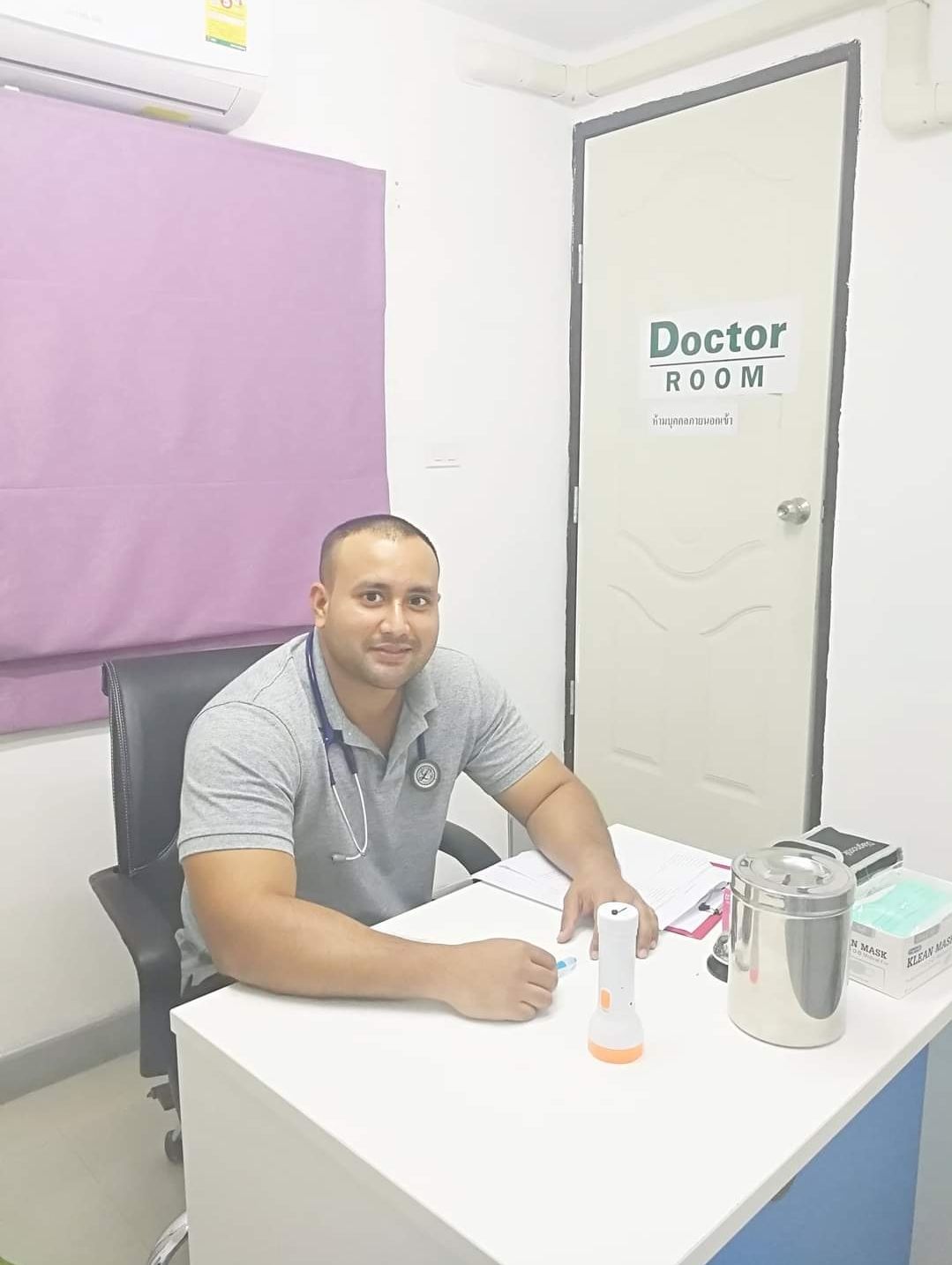
Dr. Ponlawat Pitsuwan is a physician at Doctor Bangkok, a private clinic in central Bangkok. He sees expats, residents, and medical tourists for general medicine, wellness consultations, and IV therapy. His focus is straightforward, evidence-based care delivered in plain language.