
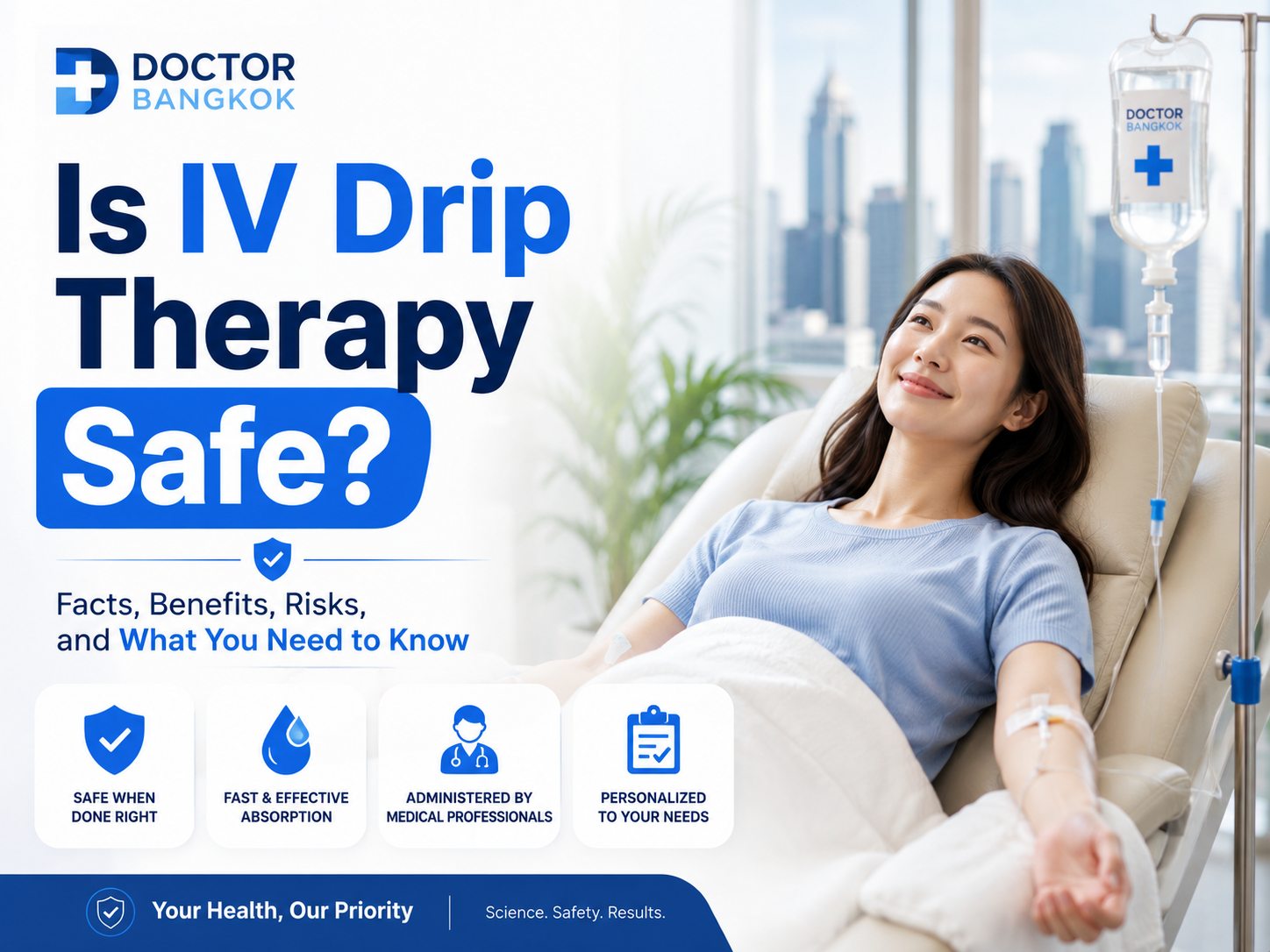
IV drip therapy is safe when administered by a licensed physician in a properly equipped clinic, using pharmaceutical-grade ingredients and single-use sterile equipment. The risks, including allergic reaction, vein irritation, and infection, are real but uncommon in a well-run clinical setting. Safety depends on who administers your treatment, where it takes place, and whether a proper consultation happens before the drip begins.1
Bangkok has a large and growing number of IV therapy clinics, ranging from hospital-affiliated outpatient infusion centres to wellness lounges with minimal clinical infrastructure. The quality gap between them is significant. A first-time patient sitting in a reclining chair watching a bag drip has no obvious way to tell them apart. Understanding what a safe IV session actually requires makes that distinction straightforward.
This article covers how IV therapy works, the risks you should understand before booking, who should avoid treatment, and what a safe clinic looks like in practice. If you are ready to book, Doctor Bangkok’s IV drip clinic in Bangkok offers physician-supervised sessions in central Bangkok with same-day availability.

How IV Drip Therapy Works
A thin, flexible catheter is inserted into a peripheral vein, usually in the forearm or the back of the hand, through a process called venepuncture. The catheter connects to tubing leading to a sealed IV bag containing your prescribed solution, which hangs on a pole above the treatment chair. A flow regulator controls the rate at which the solution enters your bloodstream. Most outpatient infusion sessions run 30 to 60 minutes depending on the formulation and total volume.
Because the solution bypasses the digestive system entirely, nutrients reach systemic circulation immediately. Oral supplements pass through the gut and liver before reaching the bloodstream, losing a variable proportion along the way depending on the nutrient and the individual. IV delivery achieves near-complete bioavailability, which matters when you need a predictable clinical effect quickly, for example during acute dehydration, a severe migraine, or significant electrolyte depletion.
The solution itself is isotonic or near-isotonic, meaning its osmolarity is matched to blood plasma to avoid damaging red blood cells during infusion. This is a basic pharmacological requirement that reputable clinics meet as standard. It is also why formulations need to be prepared correctly: compounding errors that alter osmolarity or introduce contamination produce effects that manifest immediately once the solution enters the bloodstream.
The practical implication is that IV therapy works faster and more reliably than oral alternatives in specific situations, but it also carries a narrower margin for error. What enters a vein acts immediately and cannot easily be removed if something goes wrong. This is why physician oversight, proper screening, and sterile technique are not optional extras. They are the foundation of a safe session.
What Is Actually in an IV Drip Bag
Saline, either normal saline at 0.9 percent sodium chloride or lactated Ringer’s solution with additional electrolytes including potassium and calcium, forms the base of most IV formulations. B-complex vitamins, covering B1 through B12, support cellular energy metabolism and are among the most commonly added nutrients. Vitamin C at high doses acts as an antioxidant and immune modulator, reaching plasma concentrations that oral dosing cannot achieve. Magnesium supports muscle function and neurotransmission, and has a strong evidence base for acute migraine management. Glutathione is the body’s primary intracellular antioxidant and is used in skin-focused and immune-support drips. Amino acids support protein synthesis and muscle repair in athletic recovery formulations.
All ingredients administered intravenously at Doctor Bangkok are pharmaceutical-grade and registered with the Thai FDA, known as อย. (Or Yor). The formulation follows from the physician consultation. A reputable clinic does not let you choose a drip from a menu without clinical assessment. The ingredients should follow your health profile, not the other way around.
Risks and Side Effects: What to Know Before You Book
IV therapy carries procedural and medical risks that are manageable with proper clinical oversight but should not be minimised. Most complications are minor and resolve quickly. Serious adverse events are rare in well-run settings but can escalate rapidly if a clinic lacks emergency equipment, qualified staff, or a clear protocol for responding to reactions.
| Risk | How It Presents | How It Is Prevented |
| Allergic reaction | Rash, flushing, breathing difficulty | Full allergy history taken before treatment |
| Infection at insertion site | Redness, swelling, fever, pus | Single-use sterile equipment, aseptic technique |
| Phlebitis (vein irritation) | Pain, warmth, cord-like feeling along vein | Correct catheter gauge, controlled infusion rate |
| Electrolyte imbalance | Weakness, nausea, irregular heartbeat | Pre-treatment assessment, correct dosing |
| Fluid overload | Breathlessness, swelling, raised blood pressure | Screening for cardiac and renal conditions |
| Infiltration | Swelling, tightness, burning at IV site | Correct venepuncture technique, site monitoring |
Allergic Reactions
Allergic reactions can occur in response to any ingredient in the IV solution, including vitamins, minerals, preservatives, or carrier fluids. Mild reactions produce itching, skin flushing, or hives during or shortly after the infusion. Severe reactions, including anaphylaxis, cause breathing difficulty, facial swelling, rapid heartbeat, and a dangerous drop in blood pressure. Anaphylaxis requires immediate treatment with intramuscular epinephrine and must be manageable on-site within seconds, not minutes.
This is why pre-treatment allergy screening is not a formality but a clinical requirement. A physician reviewing your full allergy history, including reactions to injectable treatments, medications, and supplements, before treatment can identify ingredients to avoid and confirm the emergency kit contains what is needed. Informed consent, meaning you understand what is going into your bloodstream and have agreed to it in writing, should be obtained before the catheter is inserted. Any clinic that skips screening or consent presents an unacceptable clinical risk.
Infection and Phlebitis
Infection develops when bacteria enter the bloodstream through the venepuncture site. Signs include progressive redness, warmth, swelling, and pus at the site, sometimes accompanied by fever and chills. Left untreated, a localised site infection can develop into bacteraemia. Phlebitis, an inflammation of the vein wall, can occur even without bacterial infection and presents as pain, warmth, and a hard cord-like feeling along the course of the vein.
Both risks are minimised by strict aseptic technique throughout. Equipment should be opened from sealed single-use packaging in front of you. The nurse or physician should perform hand hygiene immediately before venepuncture, wear gloves throughout, and prepare the skin at the insertion site with an alcohol-based antiseptic. If you cannot observe these steps being followed, raise the concern before the catheter goes in.
Electrolyte Imbalance and Fluid Overload
Administering too much of a specific electrolyte can disrupt the body’s chemical balance in ways that present quickly. Excess potassium can produce dangerous cardiac arrhythmias. Excess sodium causes fluid retention and raised blood pressure. Magnesium overload presents as muscle weakness, hypotension, and nausea. These risks are most significant in patients with kidney disease, because the kidneys are responsible for clearing excess electrolytes and impaired renal clearance slows that process considerably.
Fluid overload occurs when the volume of fluid administered exceeds what the cardiovascular system can manage. Symptoms include breathlessness, peripheral oedema, and raised blood pressure. This is a concern primarily for patients with heart failure or severe renal impairment. Vital signs monitoring before and during the infusion, combined with a physician assessment that screens for these conditions, identifies the risk before treatment begins and allows the formulation and infusion rate to be adjusted accordingly.
Infiltration
Infiltration happens when the catheter tip dislodges from the vein and fluid begins leaking into surrounding tissue instead of entering the bloodstream. The area around the insertion site becomes swollen, tight, and uncomfortable. In most cases this is not dangerous, but it means the treatment is not reaching circulation and needs to be stopped and restarted at a different site. High concentrations of certain vitamins or medications leaking into tissue can cause localised irritation. Correct venepuncture technique and regular site monitoring during the infusion prevent and catch infiltration early.

Who Should Not Have IV Drip Therapy
IV therapy is not appropriate for everyone. Some conditions require careful physician assessment before treatment, and in certain cases make IV therapy inadvisable entirely. Being upfront about your health history at the consultation is the most important thing a patient can do.
Significant kidney disease affects the body’s ability to clear excess fluid and electrolytes. Even a well-formulated drip can produce dangerous imbalances when renal clearance is reduced. Heart failure carries a similar concern: additional fluid volume can overwhelm a compromised cardiovascular system. Both conditions require a physician to review current function, recent blood results, and current medications before any IV treatment is considered.
Bleeding disorders and anticoagulant medications including warfarin, rivaroxaban, and aspirin at therapeutic doses increase the risk of bruising and haematoma at the venepuncture site. This is manageable with appropriate technique and sustained pressure after removal, but the clinical team needs to know before they insert the catheter. Pregnancy requires individual assessment for each drip component, as certain vitamins and medications at high intravenous doses have not been established as safe in pregnancy. Known allergies to any IV component are an absolute contraindication to formulations containing that ingredient.
Older adults warrant particular attention because kidney and cardiac function often decline gradually without producing obvious symptoms or a formal diagnosis. Anyone over 65 presenting for IV therapy at Doctor Bangkok receives a more detailed clinical assessment as standard, including a review of current medications for potential drug-nutrient interactions.
What a Safe IV Drip Clinic in Bangkok Looks Like
Bangkok’s IV therapy market spans from physician-led private clinics with full emergency capability to minimally supervised wellness services operating in hotel suites and spa settings. The difference matters because the margin for error in IV therapy is small. A safe clinic consistently meets the following four standards.
1. Physician On-Site Throughout
Under Thai medical law, intravenous therapy must be supervised by a licensed physician. In practice, this means a doctor should be available on-site throughout your session, not just reachable by phone from a separate location. The physician should review your medical history, approve the formulation, and be present or within immediate reach if a reaction occurs during the infusion.
Ask directly before booking: is a doctor on-site during my session? Who performs the venepuncture, and what is their licence number? What is the protocol if I have a reaction? A clinic that answers these questions confidently and specifically is operating to the standard. One that hesitates or deflects is not.
2. Full Ingredient Disclosure
You should receive the complete ingredient list with milligram concentrations before agreeing to treatment. This is a requirement of informed consent, not a courtesy. You cannot screen for allergens or make a genuine decision about treatment without knowing exactly what is going into your bloodstream. Clinics that describe their drips by trade names only, without disclosing components and doses, make informed consent impossible.
Ask whether ingredients are pharmaceutical-grade and registered with the Thai FDA for injectable use. Ask whether compounded blends are prepared under aseptic conditions in a designated clean area, not on a shared treatment trolley. Ask whether single-dose or multi-dose vials are used. Multi-dose vials carry a higher contamination risk and require strict documented access controls.
3. Emergency Equipment and Trained Staff
Every IV clinic should have an anaphylaxis kit on-site containing intramuscular epinephrine, antihistamines, and IV epinephrine with a dosing reference. An oxygen cylinder, bag-valve mask, pulse oximeter, and automated external defibrillator should be accessible in the treatment area. Expiry dates on emergency medications should be current and visible. A clinic that cannot show you its emergency kit on request is not prepared for the rare but real event that requires it.
Staff should hold current Basic Life Support certification and have run through the anaphylaxis protocol within the past twelve months. Ask when the last emergency drill was conducted and what scenarios were covered. This is not an unreasonable question. Any credible clinical team will be able to answer it.
4. Proper Pre-Treatment Consultation
No reputable clinic proceeds to venepuncture without a clinical assessment. The consultation should cover your medical history, current medications including supplements and herbal preparations, known allergies, relevant conditions such as kidney or heart disease, pregnancy status, and your specific goals for the session. Vital signs including blood pressure and heart rate should be checked before the drip begins.
At Doctor Bangkok, every IV drip session begins with a physician-led consultation and vital signs check before the drip starts. Formulations are confirmed by a licensed doctor. Emergency equipment is maintained on-site and all clinical staff hold current BLS certification.
If you are comparing IV clinics in Bangkok, ask each one four questions: Is a physician on-site during my infusion? Can I see the full ingredient list with concentrations? Do you have an epinephrine kit and oxygen on-site? Will a doctor review my history and check my vital signs before the drip starts? A clinic that hesitates on any of these is not meeting basic clinical safety standards. Doctor Bangkok’s IV drip service meets all four as a baseline.
What to Expect During Your Session at Doctor Bangkok
You arrive and complete a short intake form covering your medical history, current medications, and allergies. A physician reviews this, checks your vital signs, and conducts a brief consultation to confirm the appropriate formulation, infusion rate, and volume for your situation. If you have specific goals, whether rehydration, recovery, immune support, or skin health, these are discussed and the drip is tailored accordingly. Informed consent is obtained before the catheter is inserted.
The nurse prepares your treatment area, opens all equipment from sealed single-use packaging in front of you, performs hand hygiene, and inserts the catheter using aseptic technique. You will feel a brief sharp sensation during venepuncture. Once the catheter is in place and the infusion begins, most patients report no discomfort.
The infusion runs at a controlled rate over 30 to 60 minutes. You sit in a reclining chair in a private treatment room. A physician or nurse monitors you throughout, checks your comfort at regular intervals, and is immediately available if you notice any unusual sensation. Most patients feel noticeably better before the session ends.
When the bag empties, the catheter is removed, pressure is applied to the site, and you receive written aftercare instructions before leaving. You are free to go once the physician confirms you are comfortable. Adverse event documentation is completed for every session as standard. Same-day appointments are available subject to clinic capacity.
Recognising and Responding to Adverse Reactions
Most reactions occur within the first 15 to 30 minutes of infusion. Alert the treating nurse or physician immediately if you notice any of the following.
At the insertion site: swelling, burning, tightness, or pain spreading beyond the immediate needle area. These may indicate infiltration, where fluid is leaking into surrounding tissue. The infusion should be stopped and the catheter resited.
Systemic symptoms: sudden chills, flushing, dizziness, shortness of breath, nausea, chest tightness, or a metallic taste in the mouth. A metallic taste is common with certain B vitamins and minerals and is usually harmless. The others warrant immediate clinical assessment.
Anaphylaxis signs: difficulty breathing, throat tightness, facial swelling, or a rapid drop in blood pressure combined with skin flushing. This is a medical emergency. Do not wait to see whether symptoms resolve. Epinephrine must be administered immediately.
After your session, watch the insertion site over the following 24 to 48 hours. Minor bruising is normal. Progressive redness, warmth, swelling, or red streaking extending from the site are signs of possible infection and require clinical review. Contact Doctor Bangkok directly or present to a hospital emergency department, and bring your infusion record with you.
Is IV Drip Therapy Safe During Pregnancy?
This is one of the more common questions at Doctor Bangkok’s clinic, particularly from expats in their first or second trimester who are experiencing severe nausea and dehydration, a condition called hyperemesis gravidarum. IV hydration with normal saline or lactated Ringer’s is established as safe in pregnancy and is the standard clinical treatment for dehydration caused by severe morning sickness.
The situation is more nuanced for vitamin and nutrient drips. Folate and B12 at standard IV doses are generally considered safe in pregnancy. High-dose vitamin C, magnesium beyond specific therapeutic indications, and amino acid blends have not been fully evaluated in pregnant populations. Glutathione IV drips are not recommended during pregnancy due to insufficient safety data.
Any pregnant patient presenting for IV therapy at Doctor Bangkok is assessed individually by a physician before treatment, and the formulation is limited to components with an established safety profile in pregnancy. If you are pregnant and considering IV therapy, bring your antenatal records to the consultation so the physician has your full clinical picture.
IV Drip Therapy Costs in Bangkok
Bangkok is substantially cheaper than Western markets for IV therapy. Sessions that cost 300 to 500 USD in the United States or United Kingdom typically run between 1,000 and 15,000 THB here depending on the formulation, with most standard wellness drips falling in the 2,000 to 6,000 THB range.
| Formulation | Bangkok Range (THB) | Session Length |
| Basic hydration (saline / electrolytes) | 1,000 – 2,500 | 30 – 45 min |
| Myers’ Cocktail | 2,500 – 6,000 | 45 – 60 min |
| Vitamin C / immune drip | 2,000 – 5,000 | 45 – 60 min |
| Glutathione / beauty drip | 2,500 – 8,000 | 30 – 60 min |
| NAD+ therapy | 8,000 – 20,000+ | 60 – 180 min |
| Custom / premium blend | 5,000 – 15,000 | 45 – 90 min |
Price variation within Bangkok reflects ingredient quality, physician involvement, and facility standards. Prices below 800 THB for a claimed vitamin drip usually indicate minimal active ingredient content, reduced clinical oversight, or both. Pharmaceutical-grade injectable nutrients have a real cost floor that very low-priced sessions cannot meet honestly.
Most wellness IV drips are paid out of pocket. Medically indicated infusions such as IV magnesium for a diagnosed migraine, IV hydration for gastroenteritis, or nutritional support for a documented deficiency may be partially reimbursable under international health insurance policies if the clinic provides an itemised invoice with clinical context. Confirm with your insurer before treatment if reimbursement matters to your decision.
Aftercare: What to Do After Your IV Session
Hydration and Activity
Drink an additional 500 to 1,000 ml of water over the 24 hours following your session. Your kidneys will be processing the infused vitamins and electrolytes, and adequate fluid intake supports renal clearance. Avoid strenuous exercise for the rest of the day. Light activity such as walking is fine and may improve nutrient distribution to peripheral tissues.
What to Avoid
Skip alcohol for at least 24 hours. Alcohol is dehydrating and counteracts the hydration benefit of your drip. Avoid heavy caffeine intake for the same reason. Do not touch or scratch the insertion site for several hours after the session. If a dressing was applied, leave it in place until the following morning.
When to Contact a Doctor
Contact Doctor Bangkok or your nearest clinic if you develop progressive redness, warmth, or swelling at the insertion site over the 24 to 48 hours following treatment. Red streaking extending from the site, a growing firm lump, or a fever developing after your session all require prompt clinical assessment. For chest pain, breathing difficulty, or any symptom that feels urgent, go directly to a hospital emergency department and take your infusion record with you.
Frequently Asked Questions
Is IV drip therapy safe for first-time patients in Bangkok?
Yes, when administered by a licensed physician in a properly equipped clinic that follows correct protocols. The most important safety factor is not the formulation itself but the quality of the pre-treatment assessment, vital signs monitoring, and clinical oversight during the session. First-time patients at Doctor Bangkok receive a full physician consultation, vital signs check, and informed consent process before any drip begins.
What should I tell the doctor before my IV session?
Disclose your full medical history, including any kidney or heart conditions, current medications and supplements, known allergies including reactions to injectable treatments, and whether you are pregnant or breastfeeding. Mention any previous IV therapy and whether you experienced any reactions. This information determines which formulation is clinically appropriate and what monitoring is needed during your session.
How do I know if an IV drip clinic in Bangkok is safe?
Ask four questions before booking: Is a licensed physician on-site during infusions? Can I see the full ingredient list with milligram concentrations before treatment? Is there an epinephrine kit and oxygen on-site? Will a doctor check my vital signs and review my medical history before the drip starts? A clinic that cannot answer all four confidently is not meeting the clinical safety standard.
Is IV drip therapy safe during pregnancy?
IV hydration with saline or lactated Ringer’s is established as safe in pregnancy and is the standard treatment for severe morning sickness dehydration. Vitamin and nutrient drips require individual physician assessment. Glutathione and high-dose vitamin C are not recommended during pregnancy. Any pregnant patient at Doctor Bangkok is assessed individually and the formulation is limited to components with a documented pregnancy safety profile.
Can I have IV therapy if I have kidney disease?
Kidney disease is a significant consideration because the kidneys regulate fluid and electrolyte clearance. Whether treatment is appropriate depends on the severity of your condition, current renal function, and the specific formulation proposed. A physician assessment is essential before proceeding. Some formulations can be adjusted to be safer for patients with mild kidney impairment. Others are contraindicated.
How much does IV therapy cost at Doctor Bangkok?
Basic hydration drips start from around 1,000 THB. Mid-range wellness formulations such as Myers’ Cocktail and vitamin C drips typically fall between 2,500 and 6,000 THB. All sessions include a physician consultation and vital signs check. See the full range on the Doctor Bangkok IV drip page.
How soon will I feel the effects of an IV drip?
Rehydration and electrolyte correction begin during the infusion and are largely complete by the time it ends. Most patients notice improved energy and clarity within 30 to 60 minutes of the session starting. B vitamin and antioxidant effects develop over the following few hours. Skin-focused benefits from glutathione develop over multiple sessions rather than after a single treatment.
Can I have an IV drip the same day I enquire?
Same-day appointments are available at Doctor Bangkok subject to clinic capacity. A physician consultation is conducted before every session regardless of how quickly you book. Calling ahead is the most reliable way to confirm availability for a specific time.
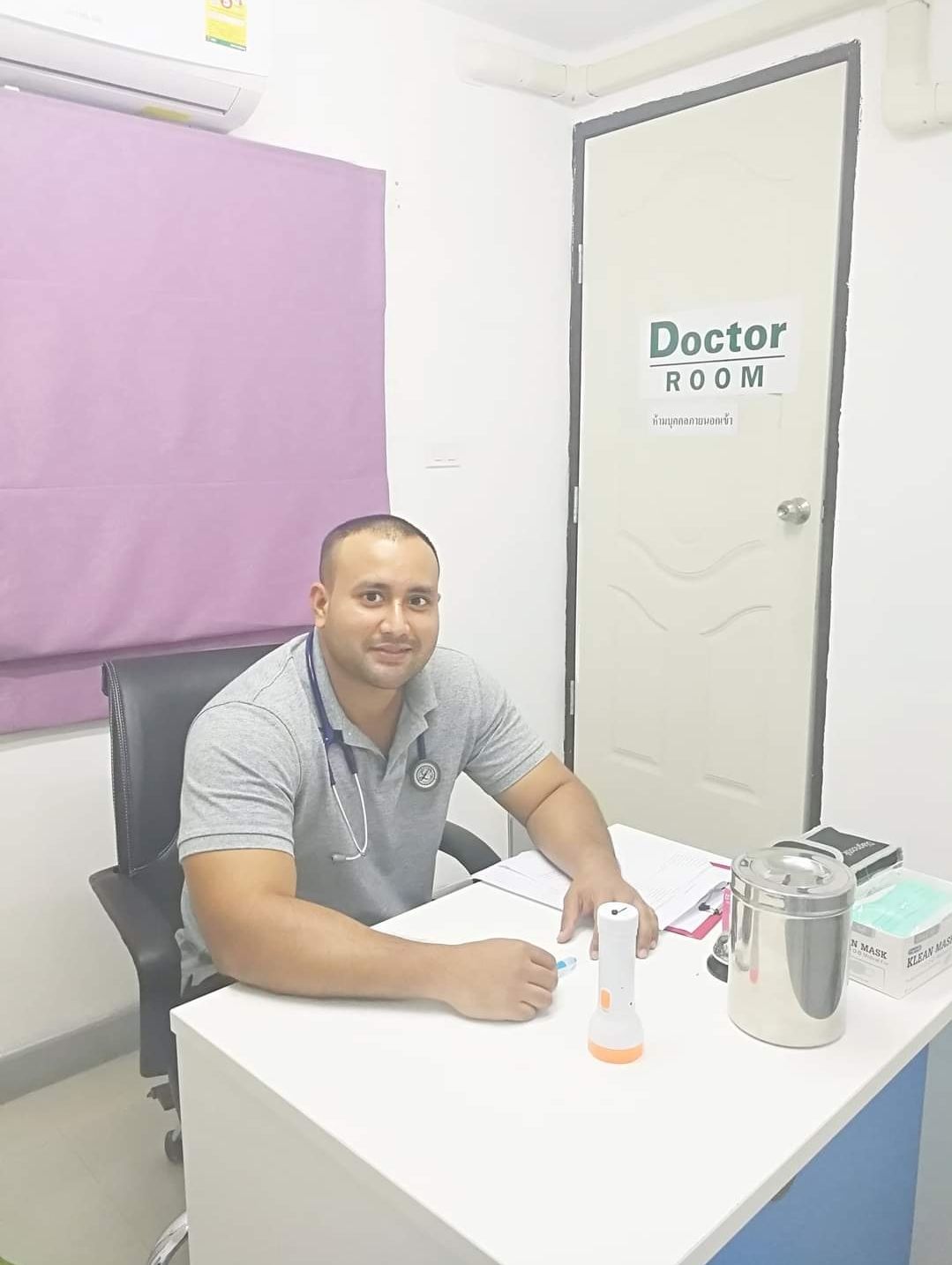
Dr. Ponlawat Pitsuwan is a physician at Doctor Bangkok, a private clinic in central Bangkok. He sees expats, residents, and medical tourists for general medicine, wellness consultations, and IV therapy. His focus is straightforward, evidence-based care delivered in plain language.