
Clinically reviewed by Dr. Ponlawat Pitsuwan, Physician, Doctor Bangkok.
Last reviewed: October 2026
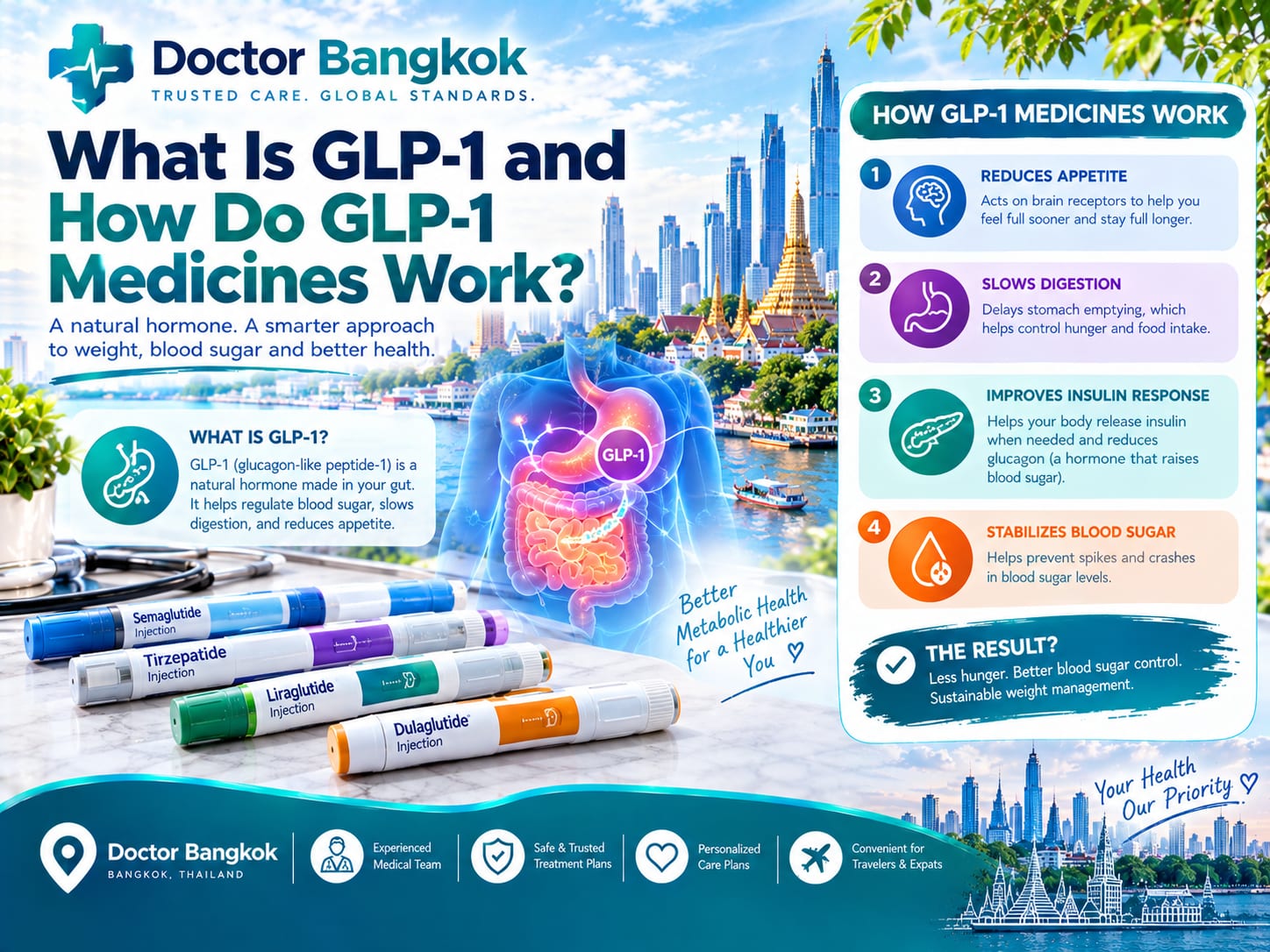
GLP-1, or glucagon-like peptide-1, is a hormone your gut releases after you eat. It tells your pancreas to release insulin, slows digestion, and signals your brain that you are full. GLP-1 medicines are synthetic versions designed to last far longer than the natural hormone, which breaks down within minutes. They are used to treat type 2 diabetes and, increasingly, obesity.
You have probably heard of Ozempic or Mounjaro. You may be wondering whether one of them is right for you, or you are already on one and want to understand what it is actually doing. Either way, the question usually starts the same: what exactly is GLP-1, and why does it matter?
The short version: GLP-1 is a hormone your own body already makes. The medicines borrow its mechanism and extend it. Understanding the difference tells you most of what you need to know about why these treatments work, how they are used, and what to expect from medically supervised care in Bangkok.
GLP-1 as a Natural Gut Hormone
Your gut releases GLP-1 within minutes of eating. It enters your bloodstream and works on several targets at once. It prompts your pancreas to release insulin, reduces glucagon (the hormone that raises blood sugar), slows how quickly your stomach empties, and sends a fullness signal to your brain. The result is a gentler rise in blood sugar after a meal.
The catch is that natural GLP-1 breaks down almost immediately. An enzyme called DPP-4 inactivates it within one to two minutes of entering the blood. That short window is why drug developers had to engineer something more durable.
The GLP-1 Receptor and Where It Acts
GLP-1 does not only work in the pancreas. It works anywhere GLP-1 receptors are found, and those receptors sit in several organs.
In the pancreas, GLP-1 triggers insulin release only when blood sugar is already elevated. That matters because it limits the risk of hypoglycaemia, or dangerously low blood sugar. In the stomach, it slows gastric emptying so food moves through more slowly and you feel full longer. In the brain, GLP-1 receptors in the hypothalamus reduce appetite directly. This central effect is one reason GLP-1 medicines reduce hunger independently of what is happening in your stomach.
Several large trials have also shown cardiovascular risk reduction with certain GLP-1 medicines in people with type 2 diabetes and existing heart disease. The SUSTAIN-6 trial with semaglutide and the LEADER trial with liraglutide are the key references here.

What GLP-1 Receptor Agonists Are
A GLP-1 receptor agonist is a medicine that binds to GLP-1 receptors and activates them, just as the natural hormone does, but for much longer. The medicines currently in clinical use include semaglutide, liraglutide, and tirzepatide.
Semaglutide is available as a once-weekly injection or a daily oral tablet. Liraglutide is a daily injection. Both are approved for type 2 diabetes, and higher-dose formulations of each are approved for weight management in several countries.
Tirzepatide is different. It activates both the GLP-1 receptor and a second receptor called GIP, or glucose-dependent insulinotropic polypeptide. In head-to-head clinical trials, tirzepatide has shown greater reductions in HbA1c and body weight than semaglutide 1 mg, though all three medicines are effective. Which one is appropriate for you depends on your starting weight, blood sugar, and medical history. That is a conversation for your doctor, not a pharmacy counter.
Why These Medicines Last Longer Than Natural GLP-1
Natural GLP-1 disappears from your blood within minutes. Drug versions are engineered to resist that breakdown. That is how they became daily or weekly treatments rather than continuous infusions.
How Drug Design Solves the Breakdown Problem
The DPP-4 enzyme attacks natural GLP-1 at a specific point near the start of the molecule. Once cleaved there, the hormone becomes inactive. Drug developers modified the GLP-1 molecule to protect that site.
Semaglutide, for example, is attached to a fatty acid chain that binds to albumin, a protein in your blood. This slows breakdown and prevents the kidneys from filtering it out quickly. The result is a half-life long enough for once-weekly dosing. Liraglutide uses a similar strategy for once-daily dosing. These are not natural hormones. They are engineered peptides that mimic the hormone’s action while resisting the body’s normal degradation process.
There is also a separate drug class called DPP-4 inhibitors, for example sitagliptin, which work differently. Rather than replacing GLP-1, they block the enzyme that destroys it, allowing your body’s own natural GLP-1 to stay active a little longer. The effect is more modest than a receptor agonist. These two classes are often confused, but they are not interchangeable.
Approved Uses in Diabetes and Weight Management
GLP-1 receptor agonists are approved for two main conditions: type 2 diabetes and obesity. In type 2 diabetes, they lower HbA1c, the measure of average blood sugar over roughly three months. Several medicines in this class also have trial evidence for cardiovascular risk reduction in people with existing heart disease, and some have shown benefit in early-stage kidney disease.
For weight management, higher-dose formulations of semaglutide and tirzepatide are approved in several countries for people with obesity, with or without diabetes. Response varies between patients. Not everyone achieves the same degree of weight loss, and a proportion of patients see limited results. This is why these medicines work best within a supervised programme that includes regular weight monitoring, dose adjustment, and dietary support.
These are not appetite suppressants in the old sense. They are metabolic medicines that change how your body responds to food, how quickly it digests, and how your brain processes hunger. Setting the right expectations before you start matters.
Who Should Not Use GLP-1 Medicines
Before starting, there are contraindications your doctor needs to screen for. GLP-1 receptor agonists are not appropriate for people with a personal or family history of medullary thyroid carcinoma, or for those with a condition called multiple endocrine neoplasia type 2. They are also not used during pregnancy.
Pancreatitis is a known risk. If you develop severe abdominal pain that radiates to your back after starting a GLP-1 medicine, stop the medicine and get assessed the same day. Serious allergic reactions are rare but possible. Rapid heart rate and persistent vomiting that prevents eating are also reasons to contact your doctor before the next scheduled dose.
If you are on insulin or a sulphonylurea alongside a GLP-1 medicine, hypoglycaemia risk increases. Your prescribing doctor should review those doses before you start.
How This Relates to Care in Bangkok
If you are in Bangkok and considering a GLP-1 medicine, or already on one and need continuity of care, the regulatory picture here is practical to know.
All GLP-1 receptor agonists, including semaglutide, liraglutide, and tirzepatide, are prescription-only medicines in Thailand. Obtaining them through unlicensed channels carries real risk. Counterfeit products have been identified in Southeast Asia, and unmonitored use without baseline screening can cause harm. A proper consultation before starting includes blood sugar testing, a review of your weight history, and screening for contraindications.
Doctor Bangkok offers GLP-1 consultations at the clinic on Sukhumvit Soi 13 and through a doctor-on-call service that brings a physician to your hotel or condo within one hour. If you are moving between countries and need to maintain a GLP-1 programme without interruption, we can assess you, review your current prescription, and manage ongoing monitoring. You can check your BMI before your consultation using the BMI calculator, and for a broader picture of your metabolic risk, the cardiovascular risk calculator is a useful starting point.
For patients already on GLP-1 medicines elsewhere who are visiting or relocating to Bangkok, the practical question is usually the same: how do I keep this going legally and safely? The answer is a supervised prescription from a licensed physician, not a pharmacy workaround. Doctor Bangkok’s weight-loss injection service covers assessment, prescribing, and follow-up for patients on semaglutide and tirzepatide.
Start or continue your GLP-1 programme in Bangkok
>
If you are considering a GLP-1 medicine or need to continue treatment you started elsewhere, Doctor Bangkok can help. Same-day GLP-1 consultations are available at the clinic on Sukhumvit Soi 13, open 24 hours, seven days a week. The doctor-on-call service can also come to your hotel or condo anywhere in Bangkok within one hour. Consultations include baseline screening, prescribing where appropriate, and a plan for ongoing monitoring. Walk in anytime or contact Doctor Bangkok to book.
Frequently Asked Questions
Dr. Ponlawat Pitsuwan
Physician, Doctor Bangkok
a private medical clinic in central Bangkok, open 24 hours a day, seven days a week, with a doctor-on-call service that reaches your hotel or condo within one hour. He sees expats, residents, and medical tourists for metabolic health, weight management, diabetes-related care, and general medicine. His focus is straightforward, evidence-based care delivered in plain language.
References
- Marso SP, Bain SC, et al. Semaglutide and Cardiovascular Outcomes in Patients with Type 2 Diabetes. N Engl J Med. 2016;375(19):1834-1844.
- Drucker DJ. Mechanisms of Action and Therapeutic Application of Glucagon-like Peptide-1. Cell Metabolism. 2018;27(4):740-756.
- Frias JP, Davies MJ, Rosenstock J, et al. Tirzepatide versus Semaglutide Once Weekly in Patients with Type 2 Diabetes. N Engl J Med. 2021;385(6):503-515. (SURPASS-2 trial)
- Lau J, Bloch P, Schaffer L, et al. Discovery of the Once-Weekly Glucagon-Like Peptide-1 (GLP-1) Analogue Semaglutide. J Med Chem. 2015;58(18):7370-7380.
- Nauck MA, Meier JJ. Incretin hormones: Their role in health and disease. Diabetes Obes Metab. 2018;20 Suppl 1:5-21.
The information in this article is for educational purposes only and does not constitute medical advice. It should not be used to self-diagnose or replace a consultation with a qualified physician. If you have concerns about your health, contact a licensed medical professional. For appointments at Doctor Bangkok, visit doctorbangkok.co.th.
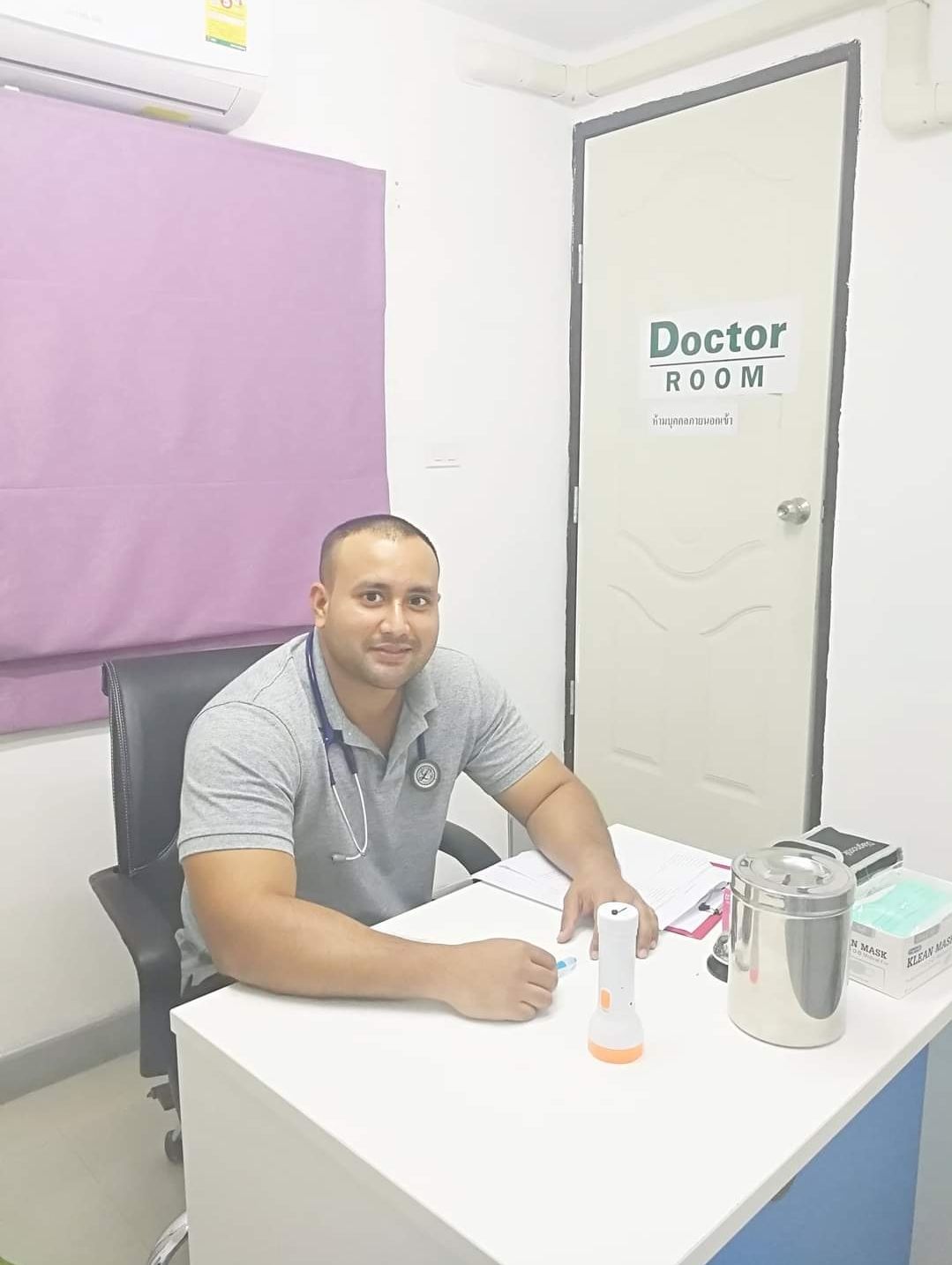
Dr. Ponlawat Pitsuwan is a physician at Doctor Bangkok, a private clinic in central Bangkok. He sees expats, residents, and medical tourists for general medicine, wellness consultations, and IV therapy. His focus is straightforward, evidence-based care delivered in plain language.