
Clinically reviewed by Dr. Ponlawat Pitsuwan, Physician, Doctor Bangkok.
Last reviewed: October 2026
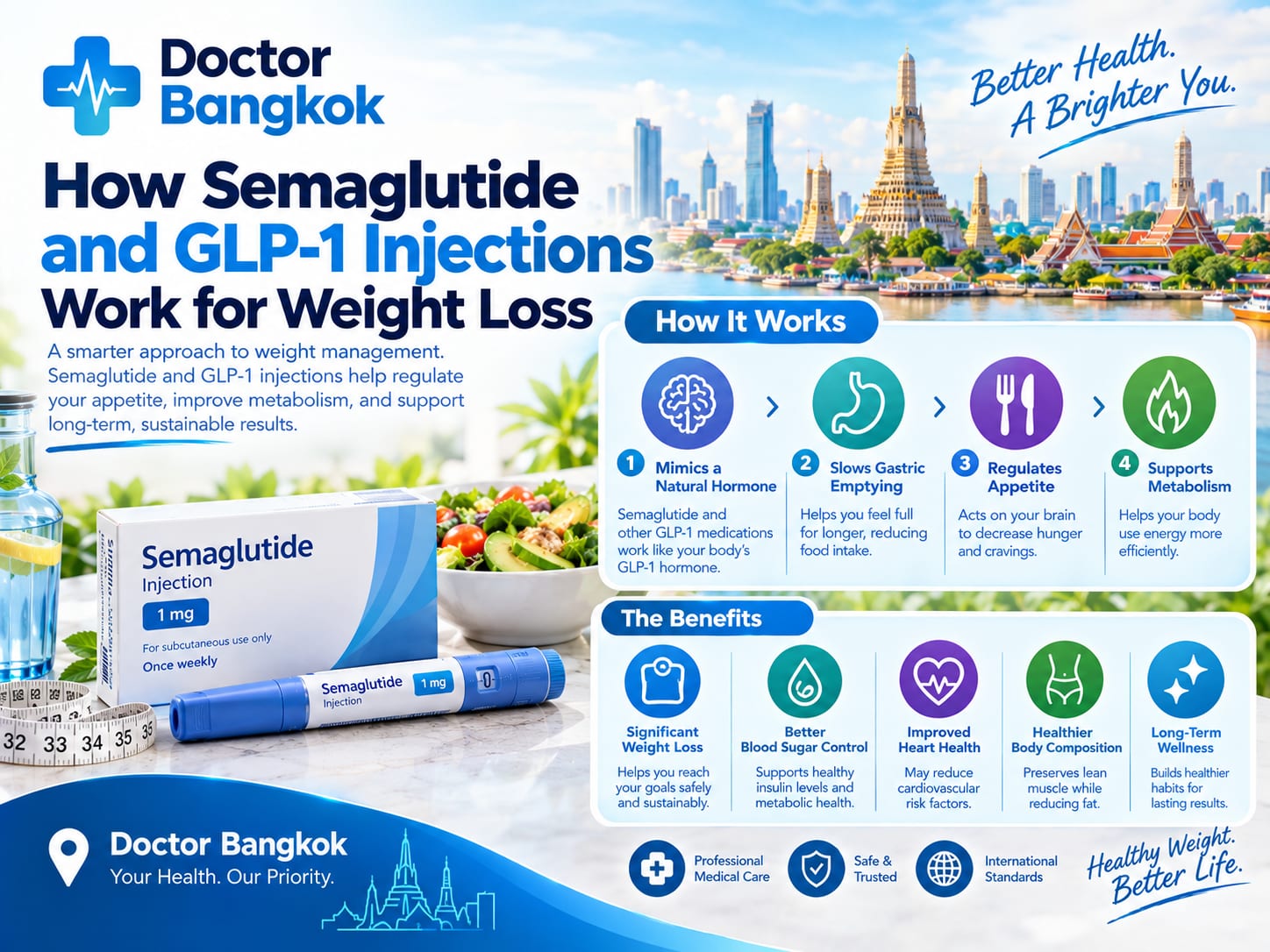
GLP-1 receptor agonists like semaglutide work by mimicking a gut hormone that signals fullness to your brain, slows digestion, and helps regulate blood sugar. Your body makes this hormone naturally, but it breaks down within minutes. The synthetic version stays active for roughly a week, which is why a single weekly injection produces sustained appetite suppression and measurable weight loss.
You have heard about Ozempic or Mounjaro from a colleague in Asoke, or you have been looking it up between meetings. The question most people land on is not whether it works. The question is how, because understanding the mechanism helps you know what to expect, what it will not do, and why your doctor recommends a slow dose increase rather than starting at the full amount.
GLP-1, glucagon-like peptide-1, is a hormone your gut releases after you eat. The injected versions are engineered to behave like that hormone but last far longer. That difference in duration changes everything about how the drug produces weight loss. Here is each part of that mechanism in plain terms.

How GLP-1 Reaches Your Brain and Reduces Appetite
Your gut releases GLP-1 from cells in the small intestine after a meal. It travels through the bloodstream and via the vagus nerve to areas in the brainstem and hypothalamus that regulate hunger.
When GLP-1 binds to receptors in the hypothalamus, it turns down hunger signals and turns up fullness signals. You feel satisfied on less food. You also stop thinking about food as often.
That last point matters. GLP-1 also acts on the brain’s reward pathways, the same circuits involved in craving and motivation. When those circuits are dampened, the constant background pull toward food gets quieter. This is a central nervous system effect, not just a stomach effect.
Slower Gastric Emptying and What It Causes
GLP-1 receptors sit in the stomach wall and in the vagus nerve fibres that control how fast your stomach empties into the small intestine. When the drug activates these receptors, food moves through your stomach more slowly.
This produces two effects. You feel full for longer after eating because food is still physically present in your stomach. Glucose from your meal also enters the bloodstream more gradually, which helps avoid blood sugar spikes.
The same mechanism explains why nausea is one of the most common early side effects. Starting low and increasing the dose slowly over several weeks reduces this significantly. Jumping to a full dose immediately is what causes most of the early discomfort.

Blood Sugar and Insulin Effects
GLP-1 was first studied as a diabetes treatment, and its blood sugar effects are part of why it produces weight loss too. After a meal, when blood glucose rises, GLP-1 signals the pancreas to release insulin. This gut-to-pancreas signal is called the incretin effect.
Crucially, this insulin release only happens when blood sugar is actually elevated. That is why GLP-1 drugs carry a low risk of hypoglycaemia, or low blood sugar, when used on their own.
GLP-1 also suppresses glucagon, a hormone that raises blood glucose. Less glucagon means less glucose being released by the liver between meals. Together, these effects keep blood sugar steadier throughout the day, which reduces the energy crashes and hunger spikes that often drive overeating.
Why Dual Agonists Like Tirzepatide Differ
Tirzepatide, sold as Mounjaro, activates two receptors rather than one. It acts on both the GLP-1 receptor and the GIP receptor. GIP stands for glucose-dependent insulinotropic polypeptide, another gut hormone with overlapping but distinct effects.
GIP alone does not suppress appetite the way GLP-1 does. But when both receptors are activated together, the combination produced greater weight loss than GLP-1 alone in the SURMOUNT-5 head-to-head trial, published in 2025. One proposed reason is that GIP co-agonism may reduce the nausea that GLP-1 receptor activation can cause, meaning patients may tolerate higher effective doses without stopping treatment.
This does not mean tirzepatide is automatically the right choice for every patient. Individual response varies, and the decision should be made with a prescribing doctor who knows your full medical picture. Both drugs are prescription-only in Thailand.
What the Mechanism Does Not Guarantee
GLP-1 drugs do not raise your resting metabolic rate in any meaningful way. They do not directly burn fat. Weight loss happens because you eat less, not because your body is burning more calories at rest. That distinction matters for managing expectations.
Weight regain after stopping is well-documented. When you stop the medication, appetite signals return. This reflects the chronic nature of obesity as a condition, not a failure of the drug or the person taking it. Ongoing medical supervision matters, particularly for deciding when to continue, pause, or switch.
In Bangkok, there is a practical safety layer here. Since September 2026, the Thai FDA has classified GLP-1 weight-loss injections as special controlled drugs requiring a valid prescription. Counterfeit products sourced online or from unregulated sellers are a genuine risk: they may contain no active ingredient, the wrong dose, or unknown contaminants. Getting medication through a licensed clinic with proper cold-chain storage and a supervised titration programme is a safety issue, not just a formality.
Before starting, it is worth checking your baseline with the BMI Calculator Bangkok and the Cardiovascular Risk Calculator Bangkok. A consultation first confirms you are a suitable candidate, identifies any contraindications, and sets a titration schedule that keeps side effects manageable. Full details on what that looks like at Doctor Bangkok are on the weight-loss injections in Bangkok page.
Who should not use GLP-1 drugs without specialist input includes anyone with a personal or family history of medullary thyroid carcinoma, multiple endocrine neoplasia type 2, pancreatitis, or severe gastrointestinal disease. A prescribing doctor will screen for all of these before starting treatment. If you develop severe abdominal pain, persistent vomiting, or signs of an allergic reaction while on these medications, stop and see a doctor the same day.
Considering GLP-1 injections in Bangkok? Doctor Bangkok prescribes and supervises semaglutide and tirzepatide programmes for expats and residents from our clinic on Sukhumvit Soi 13, open 24 hours. A doctor can see you the same day for an initial consultation, or come to your hotel or condo if you prefer. Contact us to get started.
Frequently Asked Questions
Dr. Ponlawat Pitsuwan
Physician, Doctor Bangkok
a private medical clinic in central Bangkok open 24 hours a day, with a doctor-on-call service that reaches your hotel or condo. He sees expats, residents, and medical tourists for GLP-1 weight management programmes, metabolic health assessments, and general medical care. His focus is evidence-based care delivered in plain language.
References
- Drucker DJ. Mechanisms of Action and Therapeutic Application of Glucagon-like Peptide-1. Cell Metabolism. 2018 Apr 3;27(4):740-756.
- Wilding JPH et al. Once-Weekly Semaglutide in Adults with Overweight or Obesity (STEP 1). New England Journal of Medicine. 2021;384:989-1002.
- Jastreboff AM et al. Tirzepatide Once Weekly for the Treatment of Obesity (SURMOUNT-1). New England Journal of Medicine. 2022;387:205-216.
- Nation Thailand. Thailand makes GLP-1 injections prescription-only from September 15. Nation Thailand, 2026.
- Jastreboff AM et al. Tirzepatide versus Semaglutide for Obesity (SURMOUNT-5). New England Journal of Medicine. 2025.
The information in this article is for educational purposes only and does not constitute medical advice. It should not be used to self-diagnose or replace a consultation with a qualified physician. If you have concerns about your health, contact a licensed medical professional. For appointments at Doctor Bangkok, visit doctorbangkok.co.th.
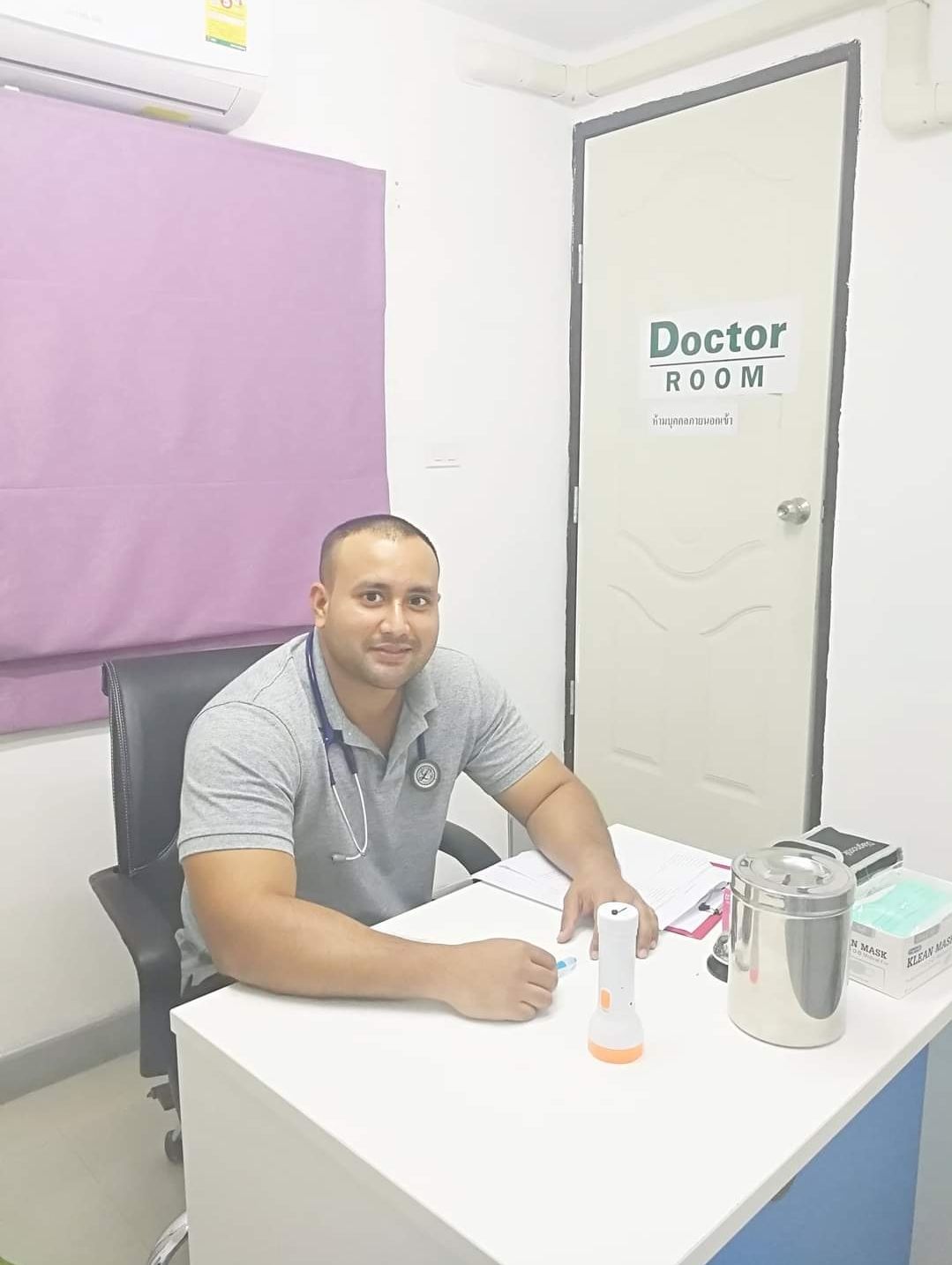
Dr. Ponlawat Pitsuwan is a physician at Doctor Bangkok, a private clinic in central Bangkok. He sees expats, residents, and medical tourists for general medicine, wellness consultations, and IV therapy. His focus is straightforward, evidence-based care delivered in plain language.