
Clinically reviewed by Dr. Ponlawat Pitsuwan, Physician, Doctor Bangkok.
Last reviewed: November 2026
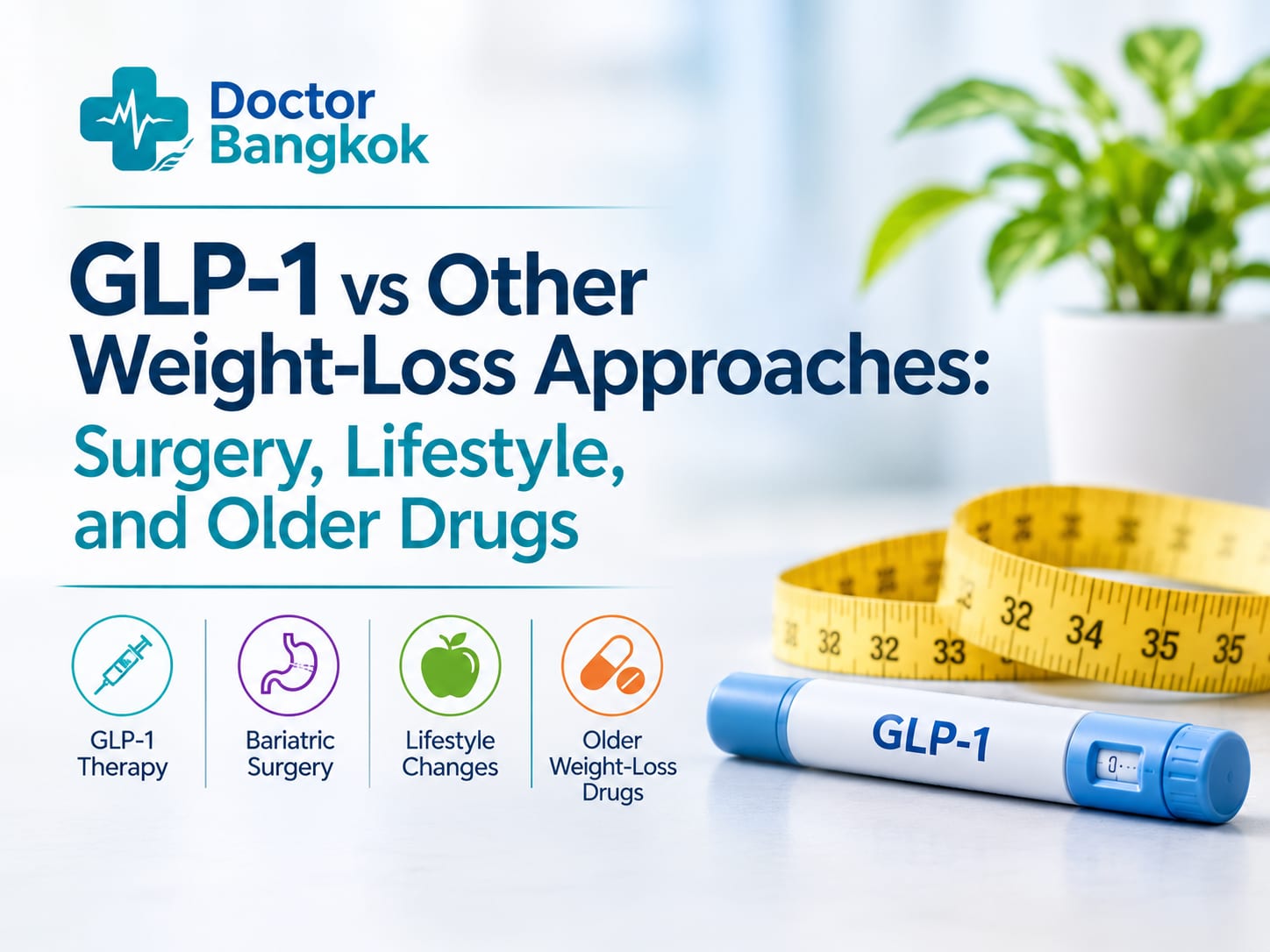
GLP-1 receptor agonists like semaglutide and tirzepatide produce meaningful weight loss but less than bariatric surgery in clinical trials. Real-world results are lower than trial figures for both approaches. Surgery remains the most effective single intervention for people with a BMI over 40 or severe obesity-related disease. The right choice depends on your BMI, health history, and how honestly you assess your own capacity for long-term commitment.
You are not the only person sitting in Bangkok trying to cut through the noise on this. GLP-1 advertising has been loud, the surgery numbers sound dramatic, and most of what you find online was not written with your actual situation in mind.
GLP-1 receptor agonists are a genuine step forward in obesity treatment. They are not a replacement for surgery in every case, and they do not work well when adherence is poor. Since September 2026, Thailand’s FDA classifies GLP-1 injectables as prescription-only medicines, which changes how you access them in Bangkok. Here is what that means for you.

Lifestyle Change as the Starting Point for Any Weight Treatment
Every clinical guideline on obesity starts here. Structured dietary change and regular physical activity reduce visceral fat and improve metabolic markers, even when total weight loss is modest. The difficulty is not that lifestyle change does not work. It is that most people cannot sustain the caloric deficit long enough to see durable results.
That is not a willpower problem. Hunger is regulated by hormones, and those hormones actively resist a prolonged deficit. This is the biological reason medication and surgery exist. They change the hormonal environment, not just the behaviour.
Lifestyle change is still the foundation for any treatment. It also predicts how well you respond to GLP-1 therapy. Patients who adjust their diet alongside their injections lose more weight than those who rely on the medication alone.
How GLP-1 Injections Compare With Older Weight-Loss Drugs
Orlistat blocks dietary fat absorption and typically produces around 3 to 5 percent more total body weight loss than diet alone in clinical trials. Phentermine suppresses appetite but is approved only for short-term use and carries cardiovascular risks that rule it out for many patients with obesity-related conditions. Neither drug changes long-term hunger regulation.
GLP-1 receptor agonists work differently. They slow gastric emptying, reduce appetite centrally, and improve insulin sensitivity. They should not be used by people with a personal or family history of medullary thyroid carcinoma or multiple endocrine neoplasia syndrome type 2, and a history of pancreatitis is also a contraindication. In controlled trials, semaglutide produced around 15 percent total body weight loss and tirzepatide produced up to 20 to 21 percent. Those are supervised trial numbers with strong adherence support.
Real-world data tells a different story. Large observational studies show average weight loss closer to 5 to 7 percent at one year, largely because a substantial proportion of patients discontinue within 12 months. Cost and gastrointestinal side effects are the most common reasons. A medication you stop after three months produces results closer to orlistat than to the trial headline. Adherence matters as much as the drug itself.
Since September 2026, a licensed physician must assess you before any pharmacy in Thailand can dispense a GLP-1 injectable. Buying online without a local prescription or arriving with a large personal supply from abroad carries regulatory risk. Doctor Bangkok can provide that assessment at the clinic on Sukhumvit Soi 13 or at your hotel within the hour.

Where Bariatric Surgery Still Fits in the GLP-1 Era
Surgery remains the most effective weight loss intervention available. Sleeve gastrectomy and gastric bypass consistently produce total body weight loss in the range of 25 to 30 percent at one year in clinical studies, with more durable results than medication when surgical aftercare is followed. For patients with type 2 diabetes, gastric bypass produces remission rates no current medication matches.
Standard international guidelines support bariatric surgery at a BMI of 40 or above, or a BMI of 35 or above with at least one serious obesity-related condition such as type 2 diabetes, hypertension, or obstructive sleep apnoea. GLP-1 medications are considered from BMI 30 with a comorbidity, or BMI 27 with specific metabolic conditions. You can check where you sit using the BMI Calculator at Doctor Bangkok before your consultation.
Surgery is not appropriate for everyone. Contraindications include certain cardiac conditions, untreated severe psychiatric illness, and active substance use disorders. Nutritional deficiency after surgery, particularly in iron, B12, and calcium, is a genuine long-term risk requiring ongoing supplementation and monitoring. Plan for it from the start.
Post-surgical weight regain is also more common than most patients expect. A significant proportion regain a portion of lost weight by year five. This is where combination approaches have become established: GLP-1 receptor agonists used after bariatric surgery to manage regain and support continued appetite regulation. If you had surgery before moving to Bangkok and you are now gaining weight again, this is an established clinical option worth discussing, not an experimental one.
Making the Decision With a Clinician, Not With Ads
The decision between GLP-1 medication, surgery, older drugs, and lifestyle alone is not one to make from a comparison article. It requires your BMI, your comorbidity profile, your cardiac history, a cardiovascular risk assessment, and a frank conversation about what you can sustain over the long term.
Medically supervised weight management at Doctor Bangkok starts with a baseline consultation reviewing your health history and current medications, relevant blood work, and a treatment plan built around the approach most likely to work for you specifically. If GLP-1 therapy is appropriate, the prescription and follow-up plan come from that first consultation. Not from an online order form.
Expats managing chronic conditions including obesity can access this clinical structure at the clinic, at home, or at their office, at any hour. The full details on GLP-1 weight-loss injections available in Bangkok, including what to expect from a first consultation, are on the Doctor Bangkok weight-loss injections page. If you are uncertain which direction makes sense, that is exactly the kind of question our doctor-on-call service is built to answer quickly and clearly.
Considering GLP-1 therapy or trying to work out whether surgery is the right direction? Doctor Bangkok is open 24/7 on Sukhumvit Soi 13, and a doctor can come to your hotel or condo anywhere in Bangkok within one hour. We can review your health history, check your BMI and cardiovascular risk, and give you a clear, honest recommendation. No waitlist. Book a consultation at doctorbangkok.co.th or use the contact button below.
FAQ
Dr. Ponlawat Pitsuwan
Physician, Doctor Bangkok
a private medical clinic in central Bangkok open 24/7, with a doctor-on-call service that reaches your hotel or condo within one hour. He sees expats, residents, and medical tourists for weight management consultations, GLP-1 therapy assessment, and general medical care. His focus is evidence-based care delivered in plain language.
References
- Wilding JPH et al. Once-Weekly Semaglutide in Adults with Overweight or Obesity. New England Journal of Medicine, 2021;384:989-1002.
- Jastreboff AM et al. Tirzepatide Once Weekly for the Treatment of Obesity. New England Journal of Medicine, 2022;387:205-216.
- American Society for Metabolic and Bariatric Surgery. Bariatric Surgery More Effective and Durable Than New Obesity Drugs and Lifestyle Intervention. ASMBS Press Release, 2024.
- Peterli R et al. Effect of Laparoscopic Sleeve Gastrectomy vs Laparoscopic Roux-en-Y Gastric Bypass on Weight Loss in Patients With Morbid Obesity: The SM-BOSS Randomized Clinical Trial. JAMA, 2018;319(3):255-265.
- Patientcareonline. Real-World Data Highlights Impact of Treatment Discontinuation on Obesity Pharmacotherapy Outcomes. 2025.
The information in this article is for educational purposes only and does not constitute medical advice. It should not be used to self-diagnose or replace a consultation with a qualified physician. If you have concerns about your health, contact a licensed medical professional. For appointments at Doctor Bangkok, visit doctorbangkok.co.th.

Dr. Ponlawat Pitsuwan is a physician at Doctor Bangkok, a private clinic in central Bangkok. He sees expats, residents, and medical tourists for general medicine, wellness consultations, and IV therapy. His focus is straightforward, evidence-based care delivered in plain language.