
Clinically reviewed by Dr. Ponlawat Pitsuwan, Physician, Doctor Bangkok.
Last reviewed: October 2026
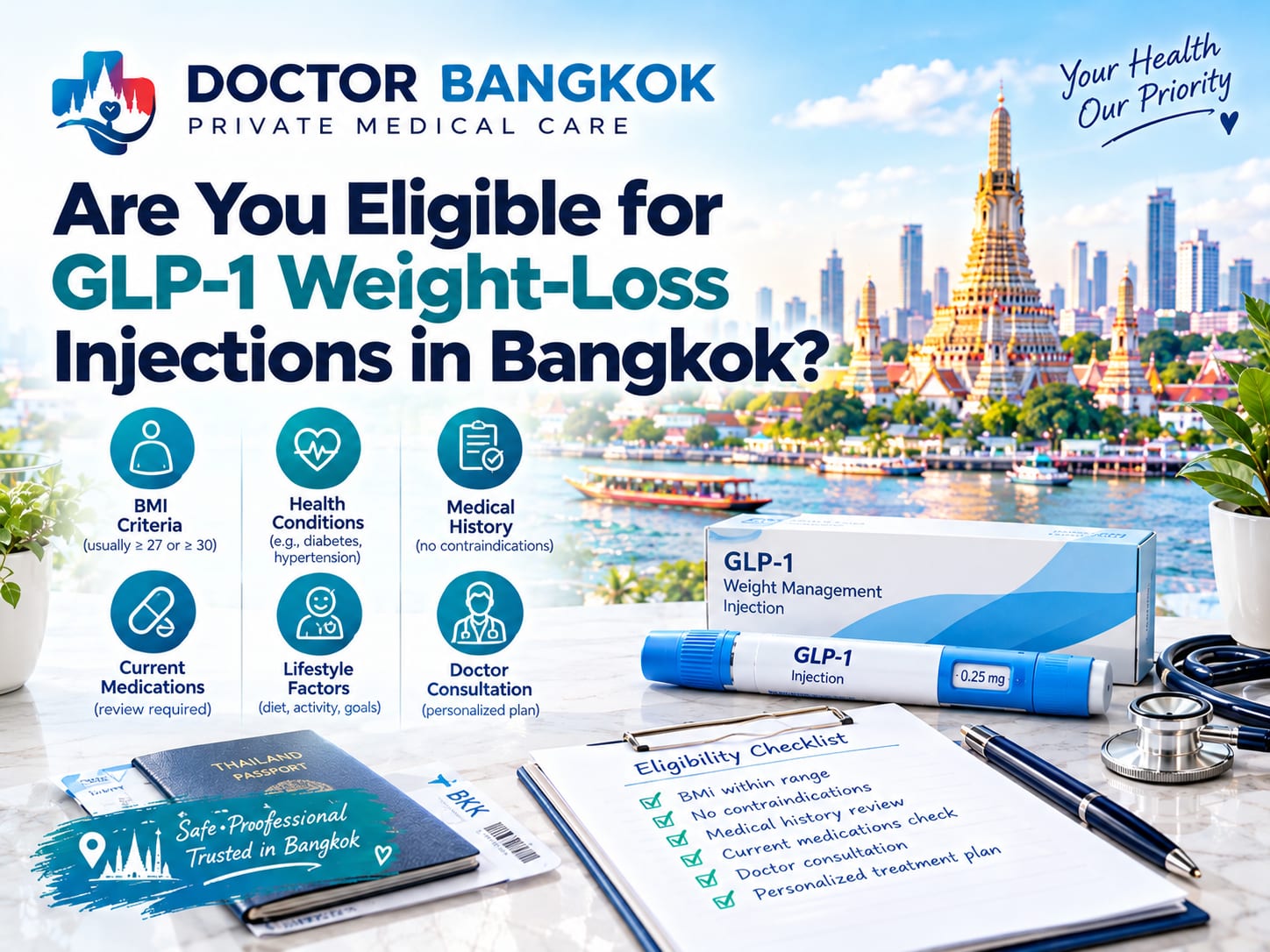
GLP-1 eligibility depends on your BMI, your medical history, and a blood test panel. The standard threshold is a BMI of 30 or above, or a BMI of 27 or above if you have a weight-related health condition. Asian patients may qualify at a lower BMI due to ethnicity-adjusted clinical thresholds. A physician must confirm eligibility before any prescription can be issued in Thailand.
You have read about Ozempic or Mounjaro and want to know if you actually qualify. The criteria are more specific than most online summaries suggest. Thailand classified GLP-1 weight-loss pens as prescription-only controlled medicines as of September 2026. You cannot buy them at a pharmacy counter without a valid prescription from a Thai-licensed doctor.
An eligibility check is straightforward. It takes one appointment, a blood test, and an honest medical history. If you qualify, a prescription can be issued the same day. If you do not, there are real alternatives worth knowing about.

Medical Criteria Clinicians Review for GLP-1 Eligibility
GLP-1 medicines for weight loss are approved for adults who meet specific clinical thresholds. These reflect where the evidence for benefit is strongest and where the risk-benefit balance is favourable.
Prescribers also consider insulin resistance and signs of metabolic dysfunction, even in patients who are not yet diabetic. Off-label prescribing is possible in some cases, but it requires documented clinical reasoning and physician discretion.
BMI, Weight-Related Conditions, and Weight History
The standard thresholds used by most clinicians are a BMI of 30 or above, or a BMI of 27 or above combined with at least one weight-related condition. Qualifying conditions include type 2 diabetes, high blood pressure, high cholesterol, obstructive sleep apnoea, and polycystic ovary syndrome (PCOS).
For patients of Asian, East Asian, or South Asian background, many clinicians apply an ethnicity-adjusted BMI threshold, typically around 2.5 BMI points lower than the standard figures. Metabolic risk tends to occur at a lower body weight in these populations. If you are Thai or of Asian heritage and your BMI sits just below 30, this adjustment may still make you eligible. You can check your figure using our BMI calculator before your appointment.
Your weight history also matters. A clinician will ask how long excess weight has been present, what you have already tried, and whether previous attempts at diet or exercise produced sustained results. This forms part of the medical justification for treatment.
Situations Where GLP-1 Medicines Are Usually Avoided
Some medical histories make GLP-1 medicines unsuitable. Some of these are absolute contraindications listed on the medicine’s label. Others are strong clinical cautions that lead most prescribers to choose a different approach.
A personal or family history of medullary thyroid carcinoma rules out this class of medicine based on current prescribing guidelines. The same applies to Multiple Endocrine Neoplasia type 2, known as MEN2. A history of pancreatitis, particularly recurrent pancreatitis, is a clinical caution that leads most clinicians to avoid these medicines, since the drug class has not been adequately studied in this group.
Pregnancy and plans to become pregnant in the near term are clear exclusions. Severe kidney impairment is generally considered a contraindication, and moderate impairment warrants careful review. If you are currently taking insulin or certain other diabetes medicines, your prescriber will need to review your full medication list before proceeding.

Why Blood Tests Matter Before You Start
A blood panel before starting is not a formality. It identifies risks that a consultation alone cannot catch.
Key tests include fasting glucose and HbA1c (your average blood sugar over the past few months), kidney function, liver enzymes, and a lipid panel. Thyroid-stimulating hormone is often added to screen for undiagnosed thyroid disease. These results tell the prescribing doctor whether your organs can handle the medicine safely and what baseline values to compare against during follow-up.
At Doctor Bangkok, blood samples can be collected during the same appointment as your consultation, whether you come to the clinic on Sukhumvit Soi 13 or we send a doctor to you. Results are typically back within 24 hours. If everything looks clear, your prescription does not have to wait for a second visit.
What Happens if Injections Are Not the Right Fit
Being found ineligible is not the end of the conversation. There are other evidence-based options.
For patients who do not meet the criteria for semaglutide or tirzepatide, a physician may consider alternative approaches or a structured weight management programme with dietary and lifestyle support. Your cardiovascular risk profile is part of this conversation too. You can review your broader heart and metabolic risk with our cardiovascular risk calculator as a starting point.
If the issue is a reversible one, such as a borderline blood result or an active condition that needs stabilising first, the plan may be to treat that condition, recheck bloods in a few months, and reassess eligibility then. Ineligible now does not always mean ineligible permanently.
Book a GLP-1 Eligibility Assessment in Bangkok
If you are ready to find out where you stand, the process is one appointment. Doctor Bangkok’s GLP-1 eligibility assessment covers your medical history, a physical review, and a blood test request, all in a single visit.
You do not have to come to the clinic. Our doctor-on-call service sends a physician to your hotel or condo anywhere in Bangkok, day or night, within one hour. Blood samples collected during the visit go directly to the lab.
Because GLP-1 weight-loss pens require a Thai FDA-registered prescription, purchasing them without this step is not legal and carries real risk. Using a medicine without a proper eligibility check means no monitoring, no dose guidance, and no safety net if something goes wrong. The right way to start is with a licensed physician who can issue the prescription and follow your progress.
Wondering if you qualify for GLP-1 weight-loss injections in Bangkok? Doctor Bangkok offers same-day eligibility assessments, including blood tests, at our 24/7 clinic on Sukhumvit Soi 13 or at your hotel via our doctor-on-call service. A physician-issued prescription is required under Thai law, and we can complete the full assessment in a single visit. Walk in anytime or book a doctor to come to you.
Frequently Asked Questions
Dr. Ponlawat Pitsuwan
Physician, Doctor Bangkok
a private medical clinic in central Bangkok, open 24/7, with a doctor-on-call service that comes to your hotel or condo within one hour. He sees expats, residents, and medical tourists for weight management consultations, GLP-1 eligibility assessments, metabolic health reviews, and general medical care. His focus is straightforward, evidence-based care delivered in plain language.
References
- Davies M, et al. Semaglutide 2.4 mg once a week in adults with overweight or obesity, and type 2 diabetes (STEP 2): a randomised, double-blind, placebo-controlled, phase 3 trial. Lancet. 2021;397(10278):971-984.
- Jastreboff AM, et al. Tirzepatide Once Weekly for the Treatment of Obesity. N Engl J Med. 2022;387(3):205-216.
- World Health Organization. Appropriate body-mass index for Asian populations and its implications for policy and intervention strategies. Lancet. 2004;363(9403):157-163.
- US FDA. Highlights of Prescribing Information: Wegovy (semaglutide) injection, 2025 label (NDA 215256, supplement 026).
- National Institute for Health and Care Excellence. A guide for prescribing medicines to manage overweight and obesity (NG246). NICE, 2025.
- The Nation Thailand. Thailand makes GLP-1 injections prescription-only from September 15. The Nation Thailand, 2026.
The information in this article is for educational purposes only and does not constitute medical advice. It should not be used to self-diagnose or replace a consultation with a qualified physician. If you have concerns about your health, contact a licensed medical professional. For appointments at Doctor Bangkok, visit doctorbangkok.co.th.
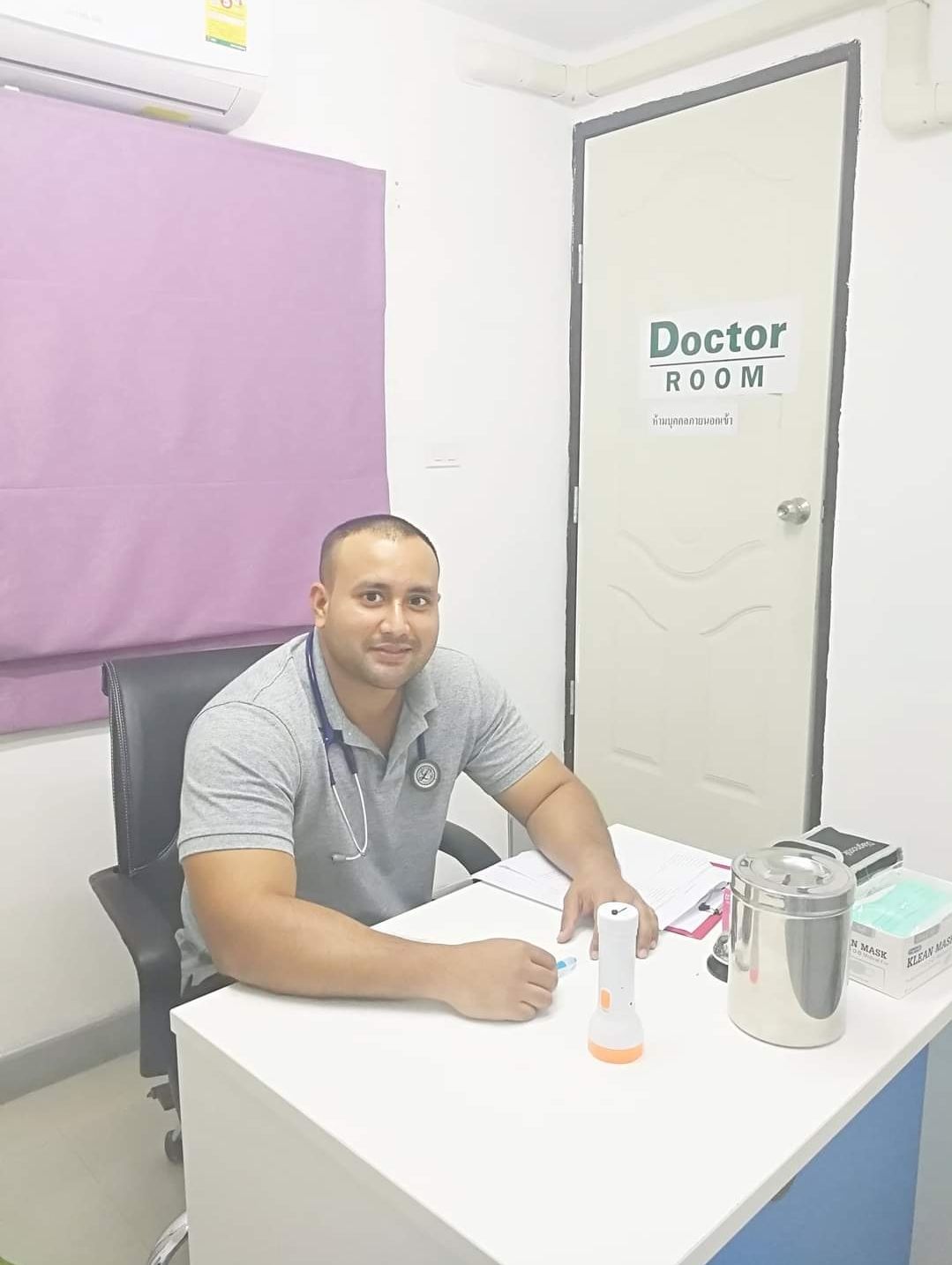
Dr. Ponlawat Pitsuwan is a physician at Doctor Bangkok, a private clinic in central Bangkok. He sees expats, residents, and medical tourists for general medicine, wellness consultations, and IV therapy. His focus is straightforward, evidence-based care delivered in plain language.