

Clinically reviewed by Dr. Ponlawat Pitsuwan, Physician, Doctor Bangkok. Last reviewed: August 2026
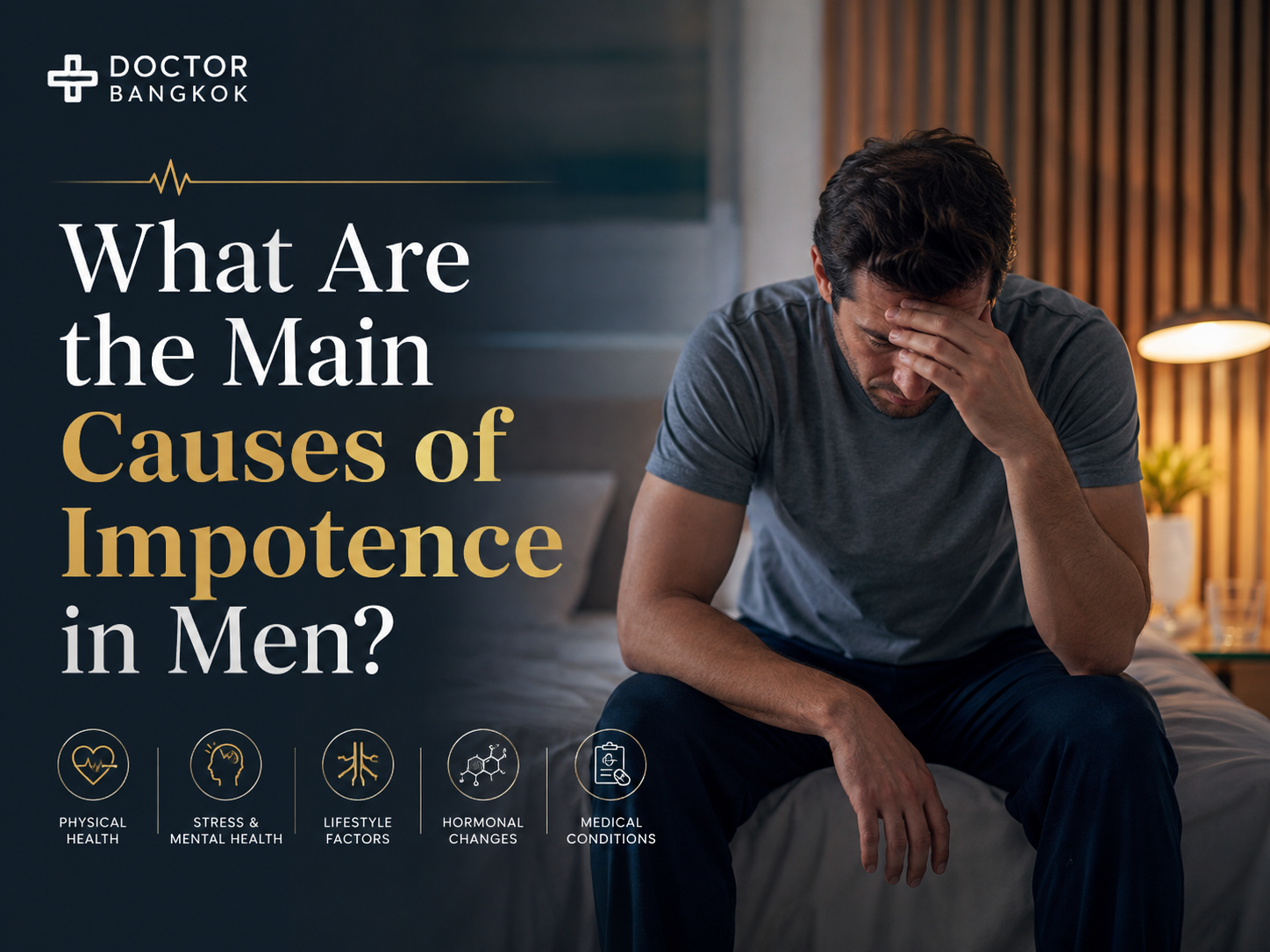
Impotence, also called erectile dysfunction, has physical causes in most cases, with poor blood flow being the most common. Psychological causes like stress and anxiety are also real and treatable. Because ED can be an early sign of heart disease, getting assessed matters for more than your sex life. Most men in Bangkok can get a confidential diagnosis and treatment plan at a private clinic without a referral.
If you have been dealing with this for a while and wondering whether it is something to worry about, the short answer is: do not wait. Impotence is common, it has identifiable causes, and in most cases it responds well to treatment once we know what is driving it.
What most men do not realise is that erectile dysfunction is often the body’s first warning sign of something happening elsewhere, particularly in the heart and blood vessels. That is not meant to alarm you. It means getting assessed now is the smart move, not just for your sex life but for your overall health.

Physical Causes of Impotence: Where Most Cases Start
The majority of cases have a physical root. The body needs three things working together for an erection: good blood flow, healthy nerves, and the right hormones. When any one of these fails, the result is usually the same.
Vascular Causes: The Most Common Reason
Poor blood flow is behind most cases of physical impotence. The arteries that supply the penis are small and are often the first to show early damage from high blood pressure, high cholesterol, or diabetes.
This matters beyond the obvious. Because penile arteries are smaller than coronary arteries, they show damage earlier. Men with erectile dysfunction have a meaningfully higher risk of a heart attack or stroke in the years ahead. ED is not just a bedroom issue. It is a cardiovascular signal worth taking seriously.
Some men also have a condition where the veins fail to trap blood inside the penis long enough to maintain an erection. The result is erections that do not last, even when they start normally.
Hormonal Causes: Testosterone, Prolactin, and the Thyroid
Low testosterone is the hormone most men think of first, and it is a real cause. As men age, testosterone levels drop gradually. When levels fall enough, libido falls with them and erections become less reliable.
Testosterone is not the only hormone involved. High prolactin levels can suppress sexual function even when testosterone looks normal. Thyroid problems, both overactive and underactive, also affect erection quality. A full hormone panel catches all of these. A simple testosterone number on its own often misses the full picture.
Neurological Causes: When the Signal Does Not Get Through
Erections depend on nerve signals from the brain and spinal cord. Diabetes is one of the most common causes of nerve damage affecting sexual function, and I see this regularly in men who have had poorly controlled blood sugar for years. Spinal cord injuries, multiple sclerosis, and complications from pelvic or prostate surgery can also interrupt these signals. In these cases, blood flow and hormones may be completely normal, but the message simply does not arrive.
Medication-Induced Impotence: The Cause Nobody Mentions
A surprising number of men arrive at the clinic on medications that cause or worsen impotence, and nobody told them. The main offenders are beta-blockers and thiazide diuretics used for blood pressure, SSRIs used for depression, antipsychotic medications, and finasteride used for hair loss or prostate conditions. These effects are well documented and often reversible once an alternative is found. Do not stop any of these medications on your own. Bring your medication list to your consultation and we will review it together.
Psychological Causes of Impotence
Psychological impotence is more common than men admit. Performance anxiety is the classic example: one bad experience leads to worry about the next, which makes the next one worse. It becomes a cycle.
For expats in Bangkok, I see a specific pattern. Relocation stress, long working hours, distance from family, and the social isolation that often comes in the first year here all feed into anxiety and depression, which directly suppress sexual function. This is not weakness. It is biology.
Depression reduces libido at a chemical level. Chronic stress raises cortisol, which suppresses testosterone. Add alcohol, which is easy to overdo in Bangkok’s social scene, and the picture gets complicated quickly.

How to Tell If Your Impotence Is Physical or Psychological
There is a useful starting point: do you still get morning erections or erections during sleep?
If yes, your vascular and nerve supply are likely intact. That points more toward a psychological cause. If erections have stopped in all situations, including on waking, a physical cause is more likely.
This is not a diagnosis. It is a clue. Many men have both physical and psychological components at the same time. A proper clinical assessment is the only way to be certain, but this question helps us start in the right direction.
Lifestyle Factors That Make Impotence Worse
These do not usually cause impotence on their own, but they accelerate whatever underlying cause is already there.
Smoking damages blood vessels directly. Heavy alcohol use blunts the nervous system’s ability to trigger erections even when everything else is working. Obesity contributes to metabolic syndrome, a cluster of conditions including high blood pressure, high blood sugar, and abnormal cholesterol that together raise vascular risk significantly.
Poor sleep is underrated. Bangkok’s late-night culture makes consistent sleep hard for a lot of men I see. Sleep is when testosterone is produced, and chronically poor sleep pulls levels down over time.
When Impotence Is a Warning Sign for Your Heart
The blood vessels supplying the penis are smaller than those supplying the heart. They show the early damage from high blood pressure, high cholesterol, and diabetes before the heart does.
Evidence reviewed by the American Heart Association suggests that ED can precede a cardiac event by several years in some men. This does not mean every man with impotence has heart disease. It means that impotence in a man over 40, especially alongside other risk factors, deserves a cardiovascular check as part of the workup.
How Impotence Is Diagnosed: What to Expect at the Clinic
The first appointment is straightforward. We start with your history: when it started, whether it is situational or constant, your medications, your general health, and relevant lifestyle factors.
From there, I typically request a blood testosterone panel, fasting blood glucose, full lipid profile, and thyroid function. A blood pressure check is standard. In some cases, a more detailed vascular assessment may follow.
At Doctor Bangkok, consultations are in English, fully confidential, and no referral is needed. Most men leave the first appointment with a clearer picture than they have had in months.
Treatment Matched to the Cause
Treatment depends entirely on what we find. That is why diagnosis comes first.
For vascular causes, medications like sildenafil or tadalafil are effective in a large proportion of men and have strong evidence behind them. For confirmed low testosterone, replacement therapy may be appropriate. Medication-induced impotence often improves once the offending drug is changed. Psychological impotence responds well to short-term medication to break the anxiety cycle alongside, where needed, structured psychological support.
Lifestyle changes, particularly reducing alcohol, improving sleep, and treating metabolic syndrome, make a meaningful difference regardless of the cause. They are not a cure on their own, but they make every other treatment work better.
If you have been putting this off, now is the right time to come in. Doctor Bangkok offers confidential men’s health consultations in English, including hormone testing, metabolic blood panels, and a full clinical assessment for erectile dysfunction. No referral is needed. We are centrally located in Bangkok and accessible by BTS. Whether you are an expat, a long-term resident, or visiting for medical care, getting a clear answer is straightforward. Contact us to book your consultation.
Can impotence be a sign of heart disease?
Yes, and this is one of the main reasons not to ignore it. The penile arteries show the early effects of vascular damage before the larger coronary arteries do. Getting assessed for ED is also a practical reason to check your cardiovascular risk at the same time.
How do I know if my impotence is physical or psychological?
A useful starting clue is whether you still get morning or sleep erections. If you do, the physical pathways are likely working and a psychological cause is more probable. A clinical assessment will confirm which it is, since many men have elements of both.
Can blood pressure or depression medication cause impotence?
Yes. Beta-blockers, thiazide diuretics, SSRIs, antipsychotics, and finasteride are all associated with erectile dysfunction. In many cases this is reversible once an alternative medication is found. Do not stop any prescribed medication without speaking to a doctor first.
At what age does impotence typically start?
It can happen at any age, but it becomes more common after 40. Age itself is not the cause. What accumulates with age, such as vascular changes, declining testosterone, and conditions like diabetes, are the real drivers, and many of these are modifiable.
Can I get a confidential ED assessment in Bangkok without a referral?
Yes. Doctor Bangkok offers private English-language consultations with no referral needed. Your first appointment covers your medical history, a relevant physical assessment, and blood tests including a hormone panel. Everything is handled confidentially.
Does low testosterone always cause impotence?
Not always, but it is a significant contributing factor when levels fall low enough. Low testosterone reduces libido first, then erection quality. Other hormones like prolactin and thyroid hormones also play a role, which is why a full panel gives a more useful picture than testosterone alone.
Dr. Ponlawat Pitsuwan
Physician, Doctor Bangkok
a private medical clinic in central Bangkok. He sees expats, residents, and medical tourists for men’s health concerns including erectile dysfunction, hormone assessment, and general health checks. His focus is straightforward, evidence-based care delivered in plain language.

Dr. Ponlawat Pitsuwan is a physician at Doctor Bangkok, a private clinic in central Bangkok. He sees expats, residents, and medical tourists for general medicine, wellness consultations, and IV therapy. His focus is straightforward, evidence-based care delivered in plain language.