

Clinically reviewed by Dr. Ponlawat Pitsuwan, Physician, Doctor Bangkok. Last reviewed: August 2026
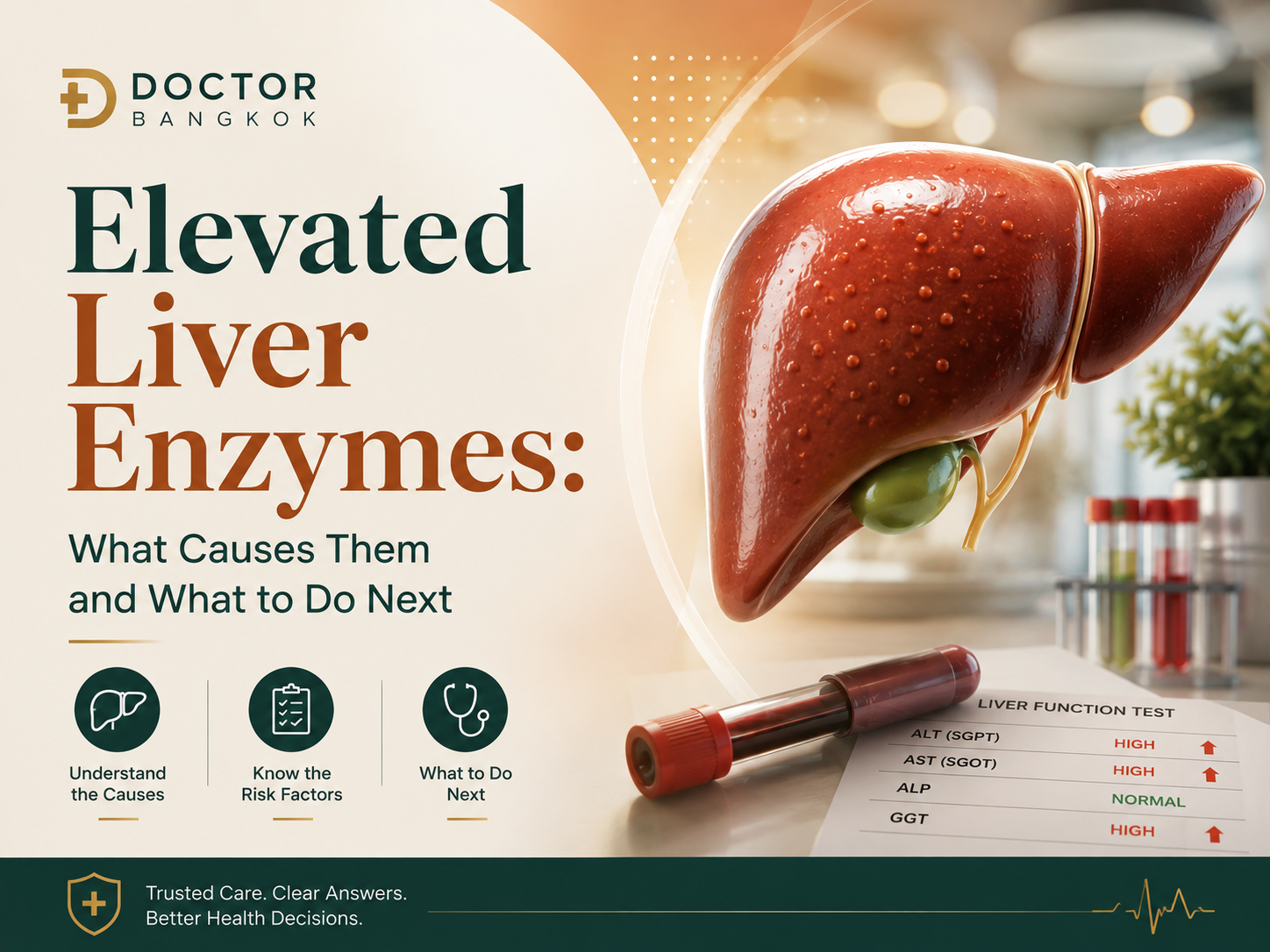
Elevated liver enzymes on a blood test usually point to inflammation or stress on the liver. The most common reasons are fatty liver disease, alcohol, medications, and viral hepatitis. A single mildly elevated result is not always an emergency, but persistent elevation or symptoms like yellowing skin, dark urine, or right-sided abdominal pain need prompt assessment.
You just got your blood results back and ALT or AST is flagged high. Now you want to know how worried to be. I get this question almost daily, usually from expats who had a routine health check and were not expecting anything abnormal. Most of the time, the cause is straightforward. But elevated liver enzymes are your body signalling that something is worth investigating, and the most common mistake I see is ignoring a persistent result.
A mildly elevated result in isolation is rarely an emergency. The cause, though, matters a lot. Some causes, left undetected, do real damage over years. Here is what your numbers actually mean, what makes them rise, and what a proper workup looks like.

What Do Elevated Liver Enzymes Actually Mean?
When liver cells are damaged or inflamed, enzymes leak into your bloodstream and a blood test picks them up. How far above normal your result sits is the key question.
A mild elevation, roughly one to three times the upper limit of normal, is common and often resolves on its own. Three to ten times the upper limit warrants proper follow-up. Anything above ten times needs urgent evaluation.
One raised result is not a diagnosis. A single mildly elevated reading in an otherwise healthy person often reflects something temporary, a heavy weekend, a new supplement, or intense exercise the day before. Persistent elevation across two separate tests is what tells us there is something real going on.
How to Read Your Liver Enzyme Results: ALT, AST, ALP, and GGT
Most patients arrive holding a printout with several numbers flagged and no idea what any of them mean. Here is the practical version.
ALT (alanine aminotransferase) is the most specific marker for liver cell injury. When ALT is high, the liver is the first place we look. AST (aspartate aminotransferase) also rises with liver damage, but it comes from muscles and the heart too, so it is less specific on its own.
The ratio between the two matters. When AST is more than twice as high as ALT, that pattern points toward alcohol-related liver disease. When ALT is higher than AST, fatty liver or viral hepatitis is more likely.
ALP (alkaline phosphatase) and GGT (gamma-glutamyl transferase) tend to rise with bile duct problems, gallstones, or heavy alcohol use. If bilirubin is also elevated and your skin or eyes look yellow, that signals a more serious issue that needs same-day attention.

The Most Common Reasons for Elevated Liver Enzymes
Fatty Liver Disease
This is the single most common cause I see in clinic, and it is becoming more common every year. Fatty liver, now officially called MASLD (metabolic dysfunction-associated steatotic liver disease), happens when fat builds up inside liver cells. It is closely linked to being overweight, having high blood sugar, and eating a diet heavy in refined carbohydrates.
In Bangkok, the combination of street food high in refined carbs and the expat habit of eating out for every meal plays into this more than most people realise. The condition is usually silent. Most people have no symptoms at all. Their liver enzymes come back mildly elevated on a routine test, and that is the first clue. It shows up clearly on an abdominal ultrasound.
Alcohol
Alcohol is a liver toxin, and even moderate drinking in the 24 to 72 hours before a blood test can push your enzymes up. Chronic heavy use causes a sustained pattern of elevation, and an AST to ALT ratio above 2:1 is a classic sign that alcohol is involved.
I always ask about alcohol intake during the consultation. Be straight with me about it. It changes how I interpret your results and the advice I give you.
Viral Hepatitis
Hepatitis B and hepatitis C both cause liver inflammation that shows up as elevated ALT. Hepatitis B is particularly relevant in Bangkok. Southeast Asia has significantly higher prevalence than most Western countries, and many people carry it without knowing. I see expats who have lived here for years and never been screened.
If you have not been tested and you are living in Thailand, add it to your next health check. A full hepatitis panel covers surface antigen, surface antibody, and core antibody for hepatitis B, alongside hepatitis C antibody testing.
Medications and Supplements That Raise Liver Enzymes
This is one of the most practically important areas for expats, and most health websites gloss over it.
Statins, paracetamol at high or repeated doses, NSAIDs like ibuprofen and diclofenac, antifungal medications, and some antibiotics can all raise liver enzymes. Anti-tuberculosis drugs are a particularly strong cause of medication-induced liver injury. If you have started any new medication in the past few months and your enzymes have gone up, bring the full list to your appointment.
The less obvious issue in Bangkok is herbal and traditional supplements. Kratom, high-dose traditional Thai herb combinations, and many unregulated supplements sold in health stores or online are documented causes of liver injury. I see this more often than most patients expect. Bring everything you are taking, including supplements and traditional remedies, to the consultation.
Less Common but Important Causes
Autoimmune hepatitis is one I do not want to miss. The immune system attacks the liver itself, often in younger women, and it needs specific antibody testing to diagnose.
Wilson’s disease involves copper build-up in the liver and brain. Haemochromatosis involves iron overload. Celiac disease can cause mildly elevated liver enzymes with no gut symptoms whatsoever. Thyroid dysfunction, both overactive and underactive, is another non-liver cause that raises enzymes. These are less common, but they are exactly why a proper workup matters rather than simply watching a number.
Why Living in Bangkok Can Affect Your Liver Enzymes
This is something I do not see addressed elsewhere, and it is clinically relevant for anyone living here.
Dengue fever is endemic in Bangkok and causes liver involvement in a significant proportion of cases. Elevated ALT and AST during a dengue infection are common and usually resolve after recovery. If you have had a recent fever and your liver enzymes are now flagged, dengue liver involvement is worth considering. It is one of the first things I ask about.
Beyond dengue, the combination of heat, the social drinking that often comes with expat life, dietary changes, and the wide availability of unregulated supplements creates a specific pattern of liver stress. A routine annual health check including full liver function testing is something I recommend to every long-term expat in Bangkok.
What Tests Come Next After an Elevated Result
Getting an elevated result is the start of a workup, not the end.
First, we confirm the result. A repeat liver function test after four to six weeks tells us whether the elevation is persistent or was a one-off. At the same time, we run hepatitis B and C serology, fasting lipid panel, HbA1c to check blood sugar, full blood count, and thyroid function.
Next is imaging. An abdominal ultrasound is usually the first step and shows fatty change, gallstones, or structural liver problems. In selected cases, a FibroScan uses sound waves to assess liver scarring without a needle. In patients with known hepatitis B or other risk factors for liver cancer, we check AFP (alpha-fetoprotein), a marker associated with hepatocellular carcinoma. Blood results at Doctor Bangkok are available the same day, and we can coordinate the full workup in one visit.
When to See a Doctor About Elevated Liver Enzymes
If your result is mildly elevated and you feel well, book a follow-up appointment rather than going to an emergency room. Do not simply ignore the result and hope it normalises.
Come in promptly if you have yellowing of the skin or eyes, dark urine, pale stools, right-sided upper abdominal pain, or significant fatigue alongside an elevated result. That combination needs same-day assessment. Do not wait on it.
For everyone else: book a consultation, bring your result, and bring a complete list of everything you are taking. That appointment takes less than an hour and gives you a clear picture of what is actually going on.
Concerned about elevated liver enzymes on a recent blood test? Doctor Bangkok offers liver function testing, hepatitis screening, and full health checks in central Bangkok, with same-day blood results and English-speaking doctors. Whether you need a follow-up test after an abnormal result or a full liver workup from scratch, we can see you the same week. BTS accessible. No referral needed.
What level of elevated liver enzymes should I be worried about?
A result one to three times the upper limit of normal is considered mild and often resolves on its own, but it still warrants a follow-up test. Three to ten times the upper limit needs proper investigation, and anything above ten times is urgent. A mildly elevated number with no symptoms is not an emergency, but it should not be ignored.
Can drinking alcohol raise my liver enzymes before a blood test?
Yes, even moderate drinking in the 24 to 72 hours before a test can temporarily push up AST and GGT. If alcohol is a factor, I look at the AST to ALT ratio and often recommend abstaining for four to six weeks before retesting. Be honest about your intake in the consultation, because it changes how I interpret your results.
Can Thai herbal supplements or traditional medicine affect my liver enzymes?
Yes, and this is more common than most people realise. Kratom, high-dose traditional herb formulations, and many unregulated supplements available in Bangkok are documented causes of liver injury. Bring everything you are taking, including supplements and traditional remedies, to your appointment so we can assess whether they are contributing.
Is a high liver enzyme result a sign of hepatitis B?
It can be. Hepatitis B is significantly more prevalent in Southeast Asia than in most Western countries, and many people carry it without symptoms for years. Elevated ALT is one of the signs of chronic hepatitis B activity. If you have not been screened and you are living in Bangkok, hepatitis B testing should be part of your next blood panel.
What will the doctor do if my liver enzymes are high?
First, we confirm the result with a repeat test. Then we run hepatitis serology, blood sugar, cholesterol, thyroid function, and full blood count. Depending on what that shows, we may add an abdominal ultrasound or a FibroScan to look at the liver structure. Doctor Bangkok can run the full workup in one visit with same-day blood results.
Can stress or exercise cause elevated liver enzymes?
Heavy exercise, particularly intense weightlifting or endurance training, can raise AST because it also comes from muscle tissue. This usually settles within a day or two. Emotional stress alone does not directly raise liver enzymes, though the lifestyle patterns that come with chronic stress, such as poor sleep, alcohol, and irregular eating, can contribute indirectly.
Dr. Ponlawat Pitsuwan
Physician, Doctor Bangkok
a private medical clinic in central Bangkok. He sees expats, residents, and medical tourists for general health checks, liver function assessment, viral hepatitis screening, and follow-up of abnormal blood results. His focus is straightforward, evidence-based care delivered in plain language.
Dr. Ponlawat Pitsuwan is a physician at Doctor Bangkok, a private clinic in central Bangkok. He sees expats, residents, and medical tourists for general medicine, wellness consultations, and IV therapy. His focus is straightforward, evidence-based care delivered in plain language.