
Clinically reviewed by Dr. Ponlawat Pitsuwan, Physician, Doctor Bangkok.
Last reviewed: November 2026
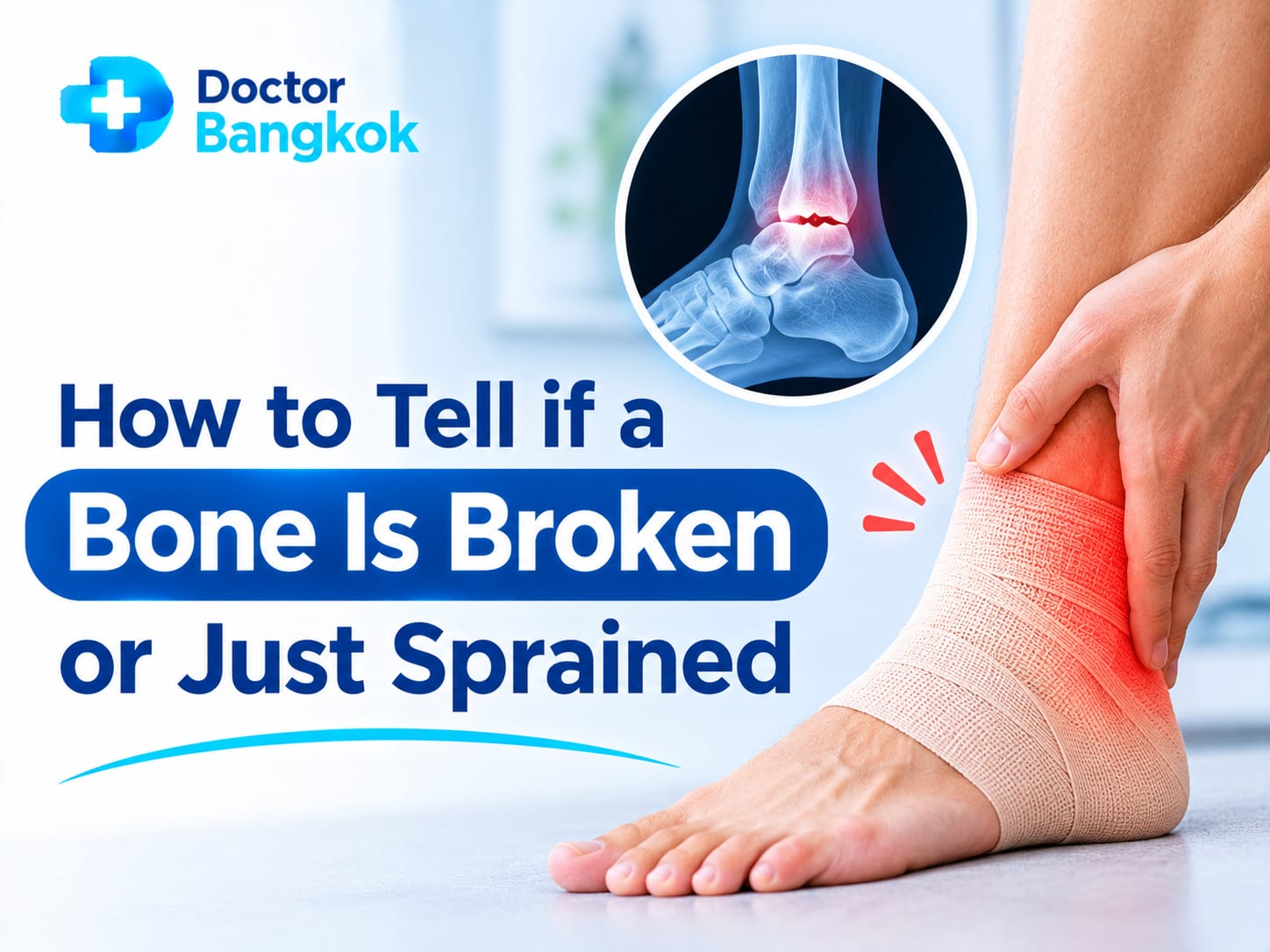
You cannot tell for certain if a bone is broken without an X-ray. But certain signs make a fracture much more likely: sharp point tenderness directly over bone, a cracking sound at the moment of injury, visible deformity, or inability to bear any weight at all. If those signs are present, get assessed today. Do not wait to see if it settles.
You twisted your ankle stepping off the BTS, came down hard on your wrist during a morning run, or caught your foot on a kerb in Sukhumvit. Something hurts, it is swelling fast, and you are not sure whether to walk it off or get it seen. That is the question this article answers.
Swelling and pain alone do not separate a fracture from a sprain. Both cause bruising. Both can make walking painful. What matters is knowing which specific signs point toward bone injury, and which combination means you need an X-ray today.

Signs That Suggest a Broken Bone
The most useful sign you can assess yourself is point tenderness. That means sharp pain when you press precisely on the bone itself, not the surrounding muscle. If pressing one finger directly on the bone produces intense, focused pain, that matters more than general swelling.
A crack, crunch, or snap at the moment of injury is significant. Ligaments can produce a pop when they tear, but a grinding crack is more suggestive of bone. If you heard something, tell the doctor.
Visible deformity, an angle that looks wrong or a limb that sits differently from usual, is a strong indicator. Numbness, tingling, or pale or bluish skin below the injury site are more urgent signs. They suggest pressure on a nerve or blood vessel and need assessment now, not in a few hours.
Stress fractures develop gradually from repeated impact. They are common in runners and in people spending long days walking Bangkok’s footpaths and markets. There is often no acute event, no pop, no dramatic swelling. The bone just starts aching after repeated load and gets worse with activity. A bone bruise sits in a similar space: real pain and swelling from micro-level damage within the bone, without a complete break, and usually normal on a plain X-ray. Both need clinical assessment to manage correctly.
An open fracture, where bone breaks through the skin, is an emergency. Go to an emergency department immediately.
Signs More Typical of a Sprain
A sprain is an injury to one or more ligaments, the fibrous tissue connecting bones at a joint. Severe sprains can be as painful and swollen as fractures.
Signs that lean toward a sprain: pain is diffuse and around the joint rather than pinpointed over a specific bone, you can bear some weight even if it is uncomfortable, and the injury happened with a twisting or rolling motion without direct impact. Swelling that builds over hours rather than appearing immediately also points toward soft tissue.
That said, sprains and fractures frequently occur together, particularly in ankle injuries. A picture that looks like a sprain does not rule out bone involvement. When in doubt, get it checked.
Broken Toes and Fingers
Small bones fracture easily and are commonly dismissed. The signs are the same as larger bones: point tenderness directly on the bone, swelling that starts quickly, bruising that tracks along the digit, and an audible crack.
Buddy taping, taping the injured digit to the one next to it for support, is a reasonable first step if the injury is minor and the digit is not deformed. But if the toe or finger is visibly crooked, if you cannot straighten it, or if there is a large bruise under the nail, you need a clinical assessment. A digit that heals in the wrong position causes long-term problems.
Broken little toes are especially common and especially underestimated. Stubbing a toe hard enough to hear a crack probably warrants an X-ray.
First Aid While You Decide
Whether this is a fracture or a sprain, rest the limb, apply ice wrapped in cloth for up to 20 minutes at a time, use a compression bandage if one is available, and elevate the limb above heart level to reduce swelling.
One practical note: Bangkok’s heat and humidity accelerate swelling. If you are outside or in a warm room, get the injured limb elevated and cooled quickly. Swelling that builds unchecked makes clinical assessment harder and can delay imaging.
Do not apply ice directly to skin. Do not try to push a deformed bone back into place. Do not put full weight on a limb you suspect is fractured to test whether it holds. If you need to move and the injury is to a limb, stabilise it in the position it is in and get help.
If the skin is broken near the injury site, that needs attention too. Contaminated wounds in Bangkok’s urban environment carry a real infection risk. At Doctor Bangkok, wound care can be managed at the same visit as a fracture evaluation, including cleaning, dressing, and wound care in Bangkok if stitching is needed.
When You Need an X-Ray After an Injury
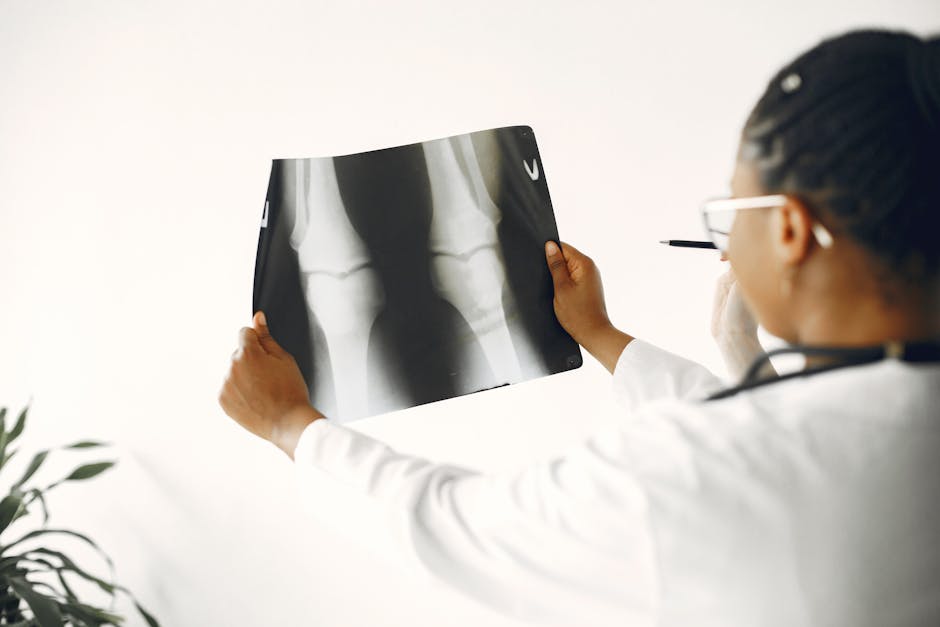
X-ray is the only way to confirm a fracture. Clinical assessment narrows the probability; imaging confirms it.
Doctors use a validated tool called the Ottawa ankle and foot rules to decide when imaging is actually needed. The rules are based on whether there is bony tenderness at specific points on the ankle or foot, and whether the patient can bear weight, meaning take four steps, even if it is painful. If either criterion is met, an X-ray is indicated. These rules have strong evidence behind them and are widely used to avoid unnecessary imaging without missing real fractures.
The critical point is that the Ottawa rules require hands-on palpation at specific anatomical landmarks. You cannot apply them accurately to yourself. A doctor can. If you are in your hotel and not sure whether to go out for imaging, Doctor Bangkok’s doctor-on-call service can send a physician to your location, apply the clinical assessment, and advise whether you need an X-ray and where to get one, without queueing at a large hospital.
Walk-in imaging is available at private hospitals across Bangkok, including along the Sukhumvit corridor. Do not delay by waiting until morning if your clinical picture warrants it. Some fractures, particularly scaphoid fractures in the wrist, can appear normal on an initial X-ray and may remain invisible for up to ten to fourteen days after injury. A clinician may recommend immobilisation and a follow-up X-ray at around ten to fourteen days, or an MRI if earlier confirmation is needed and clinical suspicion remains high.
If you have travel insurance, Doctor Bangkok works directly with insurers. A physician assessment creates a clear clinical record that supports any imaging referral and insurance claim. More detail on how that works is on the travel insurance clinic page.
For injuries that also involve the skin, the clinic handles minor surgical procedures and wound care at the same visit as fracture assessment.
Not sure if your injury is a fracture or a sprain? Doctor Bangkok is open 24 hours, seven days a week. Walk in to our clinic on Soi Sukhumvit 13, close to BTS Nana and Asok, or book a doctor on call to come to your hotel or condo anywhere in Bangkok within one hour. We assess the injury, advise on X-ray if needed, and manage wound care or immobilisation at the same visit. English-speaking physicians, day or night.
FAQ
Dr. Ponlawat Pitsuwan
Physician, Doctor Bangkok
a private medical clinic in central Bangkok, open 24 hours a day, seven days a week, with a doctor-on-call service that comes to your hotel or condo within one hour. He sees expats, residents, and medical tourists for injury assessment, wound care, fracture evaluation, and general medical consultations. His focus is straightforward, evidence-based care delivered in plain language.
References
- Stiell IG, Greenberg GH, McKnight RD, et al. A study to develop clinical decision rules for the use of radiography in acute ankle injuries. Annals of Emergency Medicine, 1992.
- Bachmann LM, Kolb E, Koller MT, et al. Accuracy of Ottawa ankle rules to exclude fractures of the ankle and mid-foot: systematic review. BMJ, 2003.
- American Academy of Family Physicians. Diagnosis and Management of Scaphoid Fractures. American Family Physician, 2004.
- NHS. Sprains and strains. NHS UK.
- Cleveland Clinic. How Long Should You Ice an Injury? Cleveland Clinic Health Essentials.
The information in this article is for educational purposes only and does not constitute medical advice. It should not be used to self-diagnose or replace a consultation with a qualified physician. If you have concerns about your health, contact a licensed medical professional. For appointments at Doctor Bangkok, visit doctorbangkok.co.th.
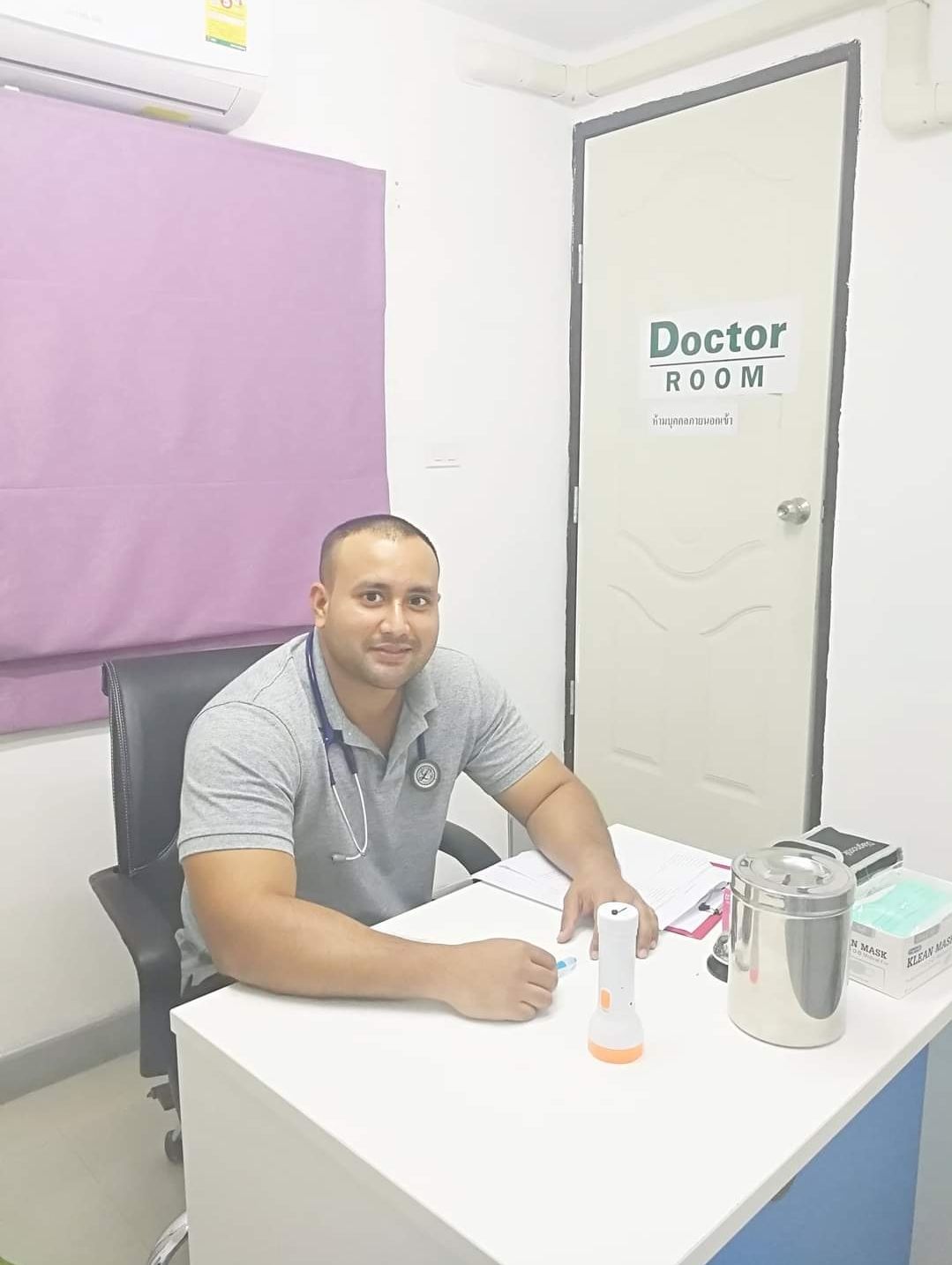
Dr. Ponlawat Pitsuwan is a physician at Doctor Bangkok, a private clinic in central Bangkok. He sees expats, residents, and medical tourists for general medicine, wellness consultations, and IV therapy. His focus is straightforward, evidence-based care delivered in plain language.