
Clinically reviewed by Dr. Ponlawat Pitsuwan, Physician, Doctor Bangkok.
Last reviewed: November 2026
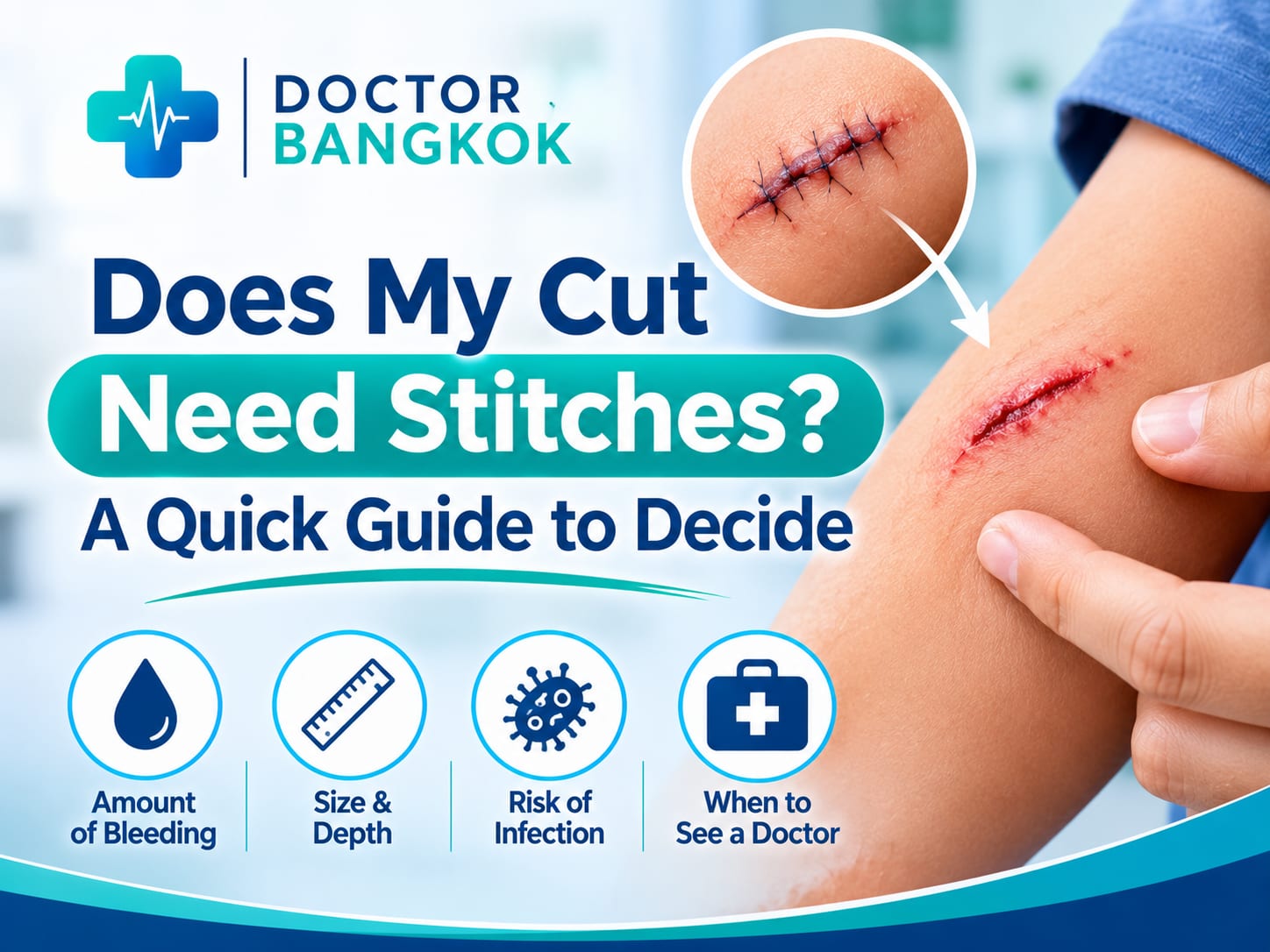
A cut likely needs stitches if it is deeper than about half a centimetre, the edges gap open and do not stay together, bleeding does not slow after ten minutes of firm pressure, or it is on your face, hand, or over a joint. If any of these apply, get it assessed today. Waiting makes closure harder and raises your infection risk.
You are holding a cloth to your hand and wondering whether this needs a doctor or just a plaster. The answer is usually clear once you know what to check. Run through this guide now and you will know.
Bangkok’s heat and humidity are worth factoring in. An open wound here can show early signs of infection within a day or two, faster than you might expect from experience in a cooler climate. Getting the wound assessed and dressed correctly from the start saves you a bigger problem later.

Signs a Cut Needs Closing
The clearest sign is gaping. Hold the wound edges gently together. If they fall open the moment you let go, the wound cannot heal by itself. Skin over joints or on the hands will not stay closed without help.
Depth matters as much as length. If you can see pale yellow fat or anything white beneath the skin surface, the cut has gone through the full thickness of skin. That level of depth needs formal closure to protect against infection and heal properly.
Bleeding that does not slow is another signal. Apply firm pressure for ten minutes without peeking. If bleeding is still heavy at that point, you need a doctor. Scalp wounds can bleed dramatically even when shallow, so do not let the volume alone panic you, but keep the pressure on.
A cut caused by something dirty, rusty, or an animal bite carries a higher infection and tetanus risk regardless of size. These warrant professional assessment even if the wound looks minor. If it has been more than five years since your last tetanus dose, now is the time to update it. You can check your options at our tetanus vaccine page.
Cuts You Can Manage at Home
Small, clean, shallow cuts that stay closed on their own usually heal fine without stitches. If the wound is less than about one centimetre long, the edges sit together without tension, and bleeding stops within ten minutes of pressure, home care is reasonable.
Rinse the wound thoroughly under clean running water. Remove visible debris. Apply an antimicrobial wound dressing and change it daily. Watch for redness spreading beyond the wound edge, warmth, swelling, or any discharge. Those signs mean you need a doctor.
Steri-strips, the thin adhesive closure strips available at pharmacies, can hold small clean cuts together while they heal. They work best on flat skin away from joints. Medical tissue adhesive is another option for shallow cuts on dry, flat skin. It is not suitable for deep wounds, areas under constant movement, or anywhere near the eyes.

Time Window for Stitching
The sooner a wound is closed, the better. For clean cuts on the face and body, earlier closure generally gives the best result. Current evidence does not support a strict cut-off, but most guidance suggests clean wounds can be closed up to around eighteen hours after injury, and head wounds up to around twenty-four hours. After that, bacteria begin to colonise the wound and the risk of sealing in infection rises.
Contaminated wounds, bites, or cuts from dirty objects may be left open intentionally. The doctor cleans and dresses the wound, watches it for a day or two, then closes it once the risk of trapping infection has passed. This is a deliberate clinical choice, not a workaround.
After roughly eighteen hours, most wounds on the body cannot be primarily stitched. The face is an exception: its strong blood supply often allows later closure with a good result. If you are past that window and unsure, still get the wound assessed. A doctor can clean it, dress it correctly, and reduce your scarring and infection risk even if formal closure is no longer the right call.
Special Areas: Face, Hands, and Joints
Face wounds need attention even when they look small. The face heals well because of its blood supply, but a gaping wound on your cheek, lip, or near the eye will scar more visibly without precise closure. Fine sutures placed early minimise cosmetic scarring. Do not leave a facial laceration to chance.
Hand injuries are more complex than they look. Tendons sit close to the skin surface, and a cut over the back of a finger or knuckle may have damaged an extensor tendon even if movement seems intact. Any cut on the hand over a joint, or one that reduces your grip or movement, needs a doctor to assess before the wound is closed.
Cuts directly over joints, the knee, elbow, or ankle for example, are under constant mechanical stress. They resist natural healing and tend to reopen. Steri-strips alone are rarely enough here.
Stopping the Bleeding First
Before you assess anything else, control the bleeding. Apply firm, direct pressure with a clean cloth. Keep it there for ten uninterrupted minutes. Lifting the cloth to check stops the clotting process and restarts the clock.
Elevate the injured area above the level of your heart if you can. This slows blood flow to the wound and helps bleeding settle. For scalp wounds, sitting upright helps.
If blood is spurting in pulses rather than flowing steadily, that suggests arterial involvement. Apply hard pressure, do not remove it, and get to emergency care immediately. This is the one situation where you do not stop to assess at home.
If you are alone in a hotel room and bleeding is not settling, Doctor Bangkok’s doctor-on-call service can reach most central Bangkok hotels within one hour. You do not need to navigate a large Thai hospital by yourself at two in the morning.
What Happens at the Clinic
When you come in with a cut, the doctor examines depth, checks for tendon or nerve involvement, and decides on the right closure method. Shallow wounds may be closed with tissue adhesive or Steri-strips. Deeper or gaping wounds are sutured under local anaesthetic. The whole process for a straightforward laceration is usually done within thirty to forty-five minutes.
If a wound was stitched elsewhere during your trip, suture removal in Bangkok can be done at any qualified clinic, including ours. Standard removal times vary by location: around four to five days for the face, seven to ten days for the scalp, and ten to fourteen days for limbs and the trunk.
For wounds showing early signs of infection, such as spreading redness, warmth, or discharge, the doctor may also assess whether antibiotics are needed. You can read more about infected skin presentations on our cellulitis treatment page.
Doctor Bangkok offers 24-hour wound care at our central Sukhumvit clinic, with walk-ins any time of day or night. If you would rather not travel, our doctor-on-call service sends a physician to your hotel or condo anywhere in Bangkok, usually within one hour. We assess, clean, close, and dress wounds on site, and we can arrange suture removal at a later visit. If your wound needs more than a clinic can safely handle, we will tell you clearly and direct you to the right facility. Contact us or walk in anytime.
Frequently Asked Questions
Dr. Ponlawat Pitsuwan
Physician, Doctor Bangkok
a private medical clinic in central Bangkok open 24 hours, seven days a week, with a doctor-on-call service that comes to your hotel or condo. He sees expats, residents, and medical tourists for wound assessment and closure, wound dressing, suture removal, and general urgent care. His approach is straightforward, evidence-based care delivered in plain language.
References
The information in this article is for educational purposes only and does not constitute medical advice. It should not be used to self-diagnose or replace a consultation with a qualified physician. If you have concerns about your health, contact a licensed medical professional. For appointments at Doctor Bangkok, visit doctorbangkok.co.th.
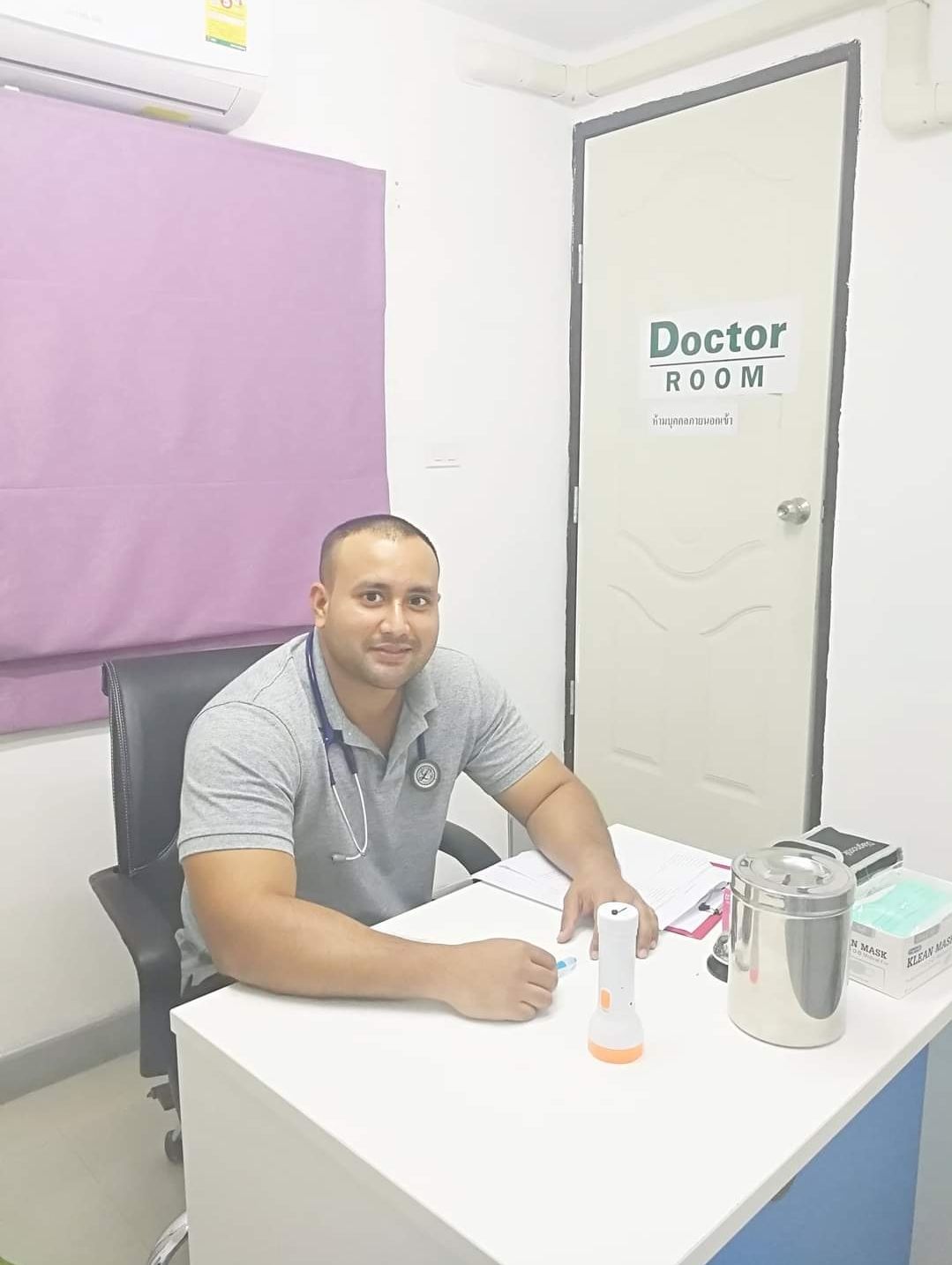
Dr. Ponlawat Pitsuwan is a physician at Doctor Bangkok, a private clinic in central Bangkok. He sees expats, residents, and medical tourists for general medicine, wellness consultations, and IV therapy. His focus is straightforward, evidence-based care delivered in plain language.