
Clinically reviewed by Dr. Ponlawat Pitsuwan, Physician, Doctor Bangkok.
Last reviewed: November 2026
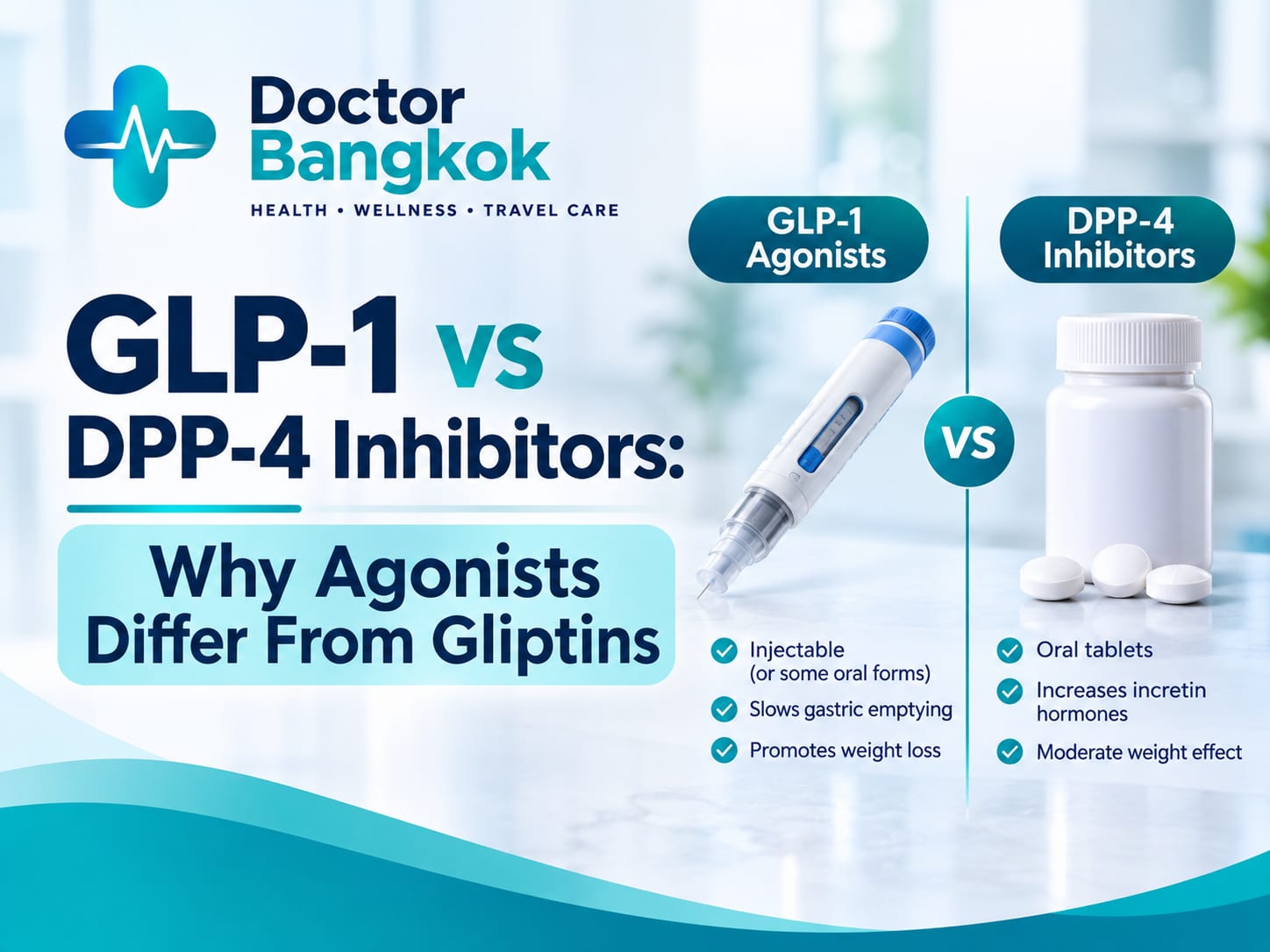
DPP-4 inhibitors (gliptins) like sitagliptin and GLP-1 receptor agonists like semaglutide both target the incretin pathway, but they are not interchangeable. Gliptins modestly raise your body’s own GLP-1 and are weight-neutral. GLP-1 receptor agonists deliver far higher drug concentrations, producing meaningful weight loss and documented cardiovascular benefit that gliptins do not. Combining them adds no clinical value and is not recommended in current guidelines.
You are on sitagliptin, your blood sugar is acceptable, but the weight is not shifting. Or your doctor abroad prescribed a gliptin and you are now in Bangkok wondering whether to switch. These are the situations where the difference between these two drug classes actually matters.
Both target a hormone called GLP-1, an incretin that tells your pancreas to release insulin after a meal. That shared target makes them sound similar. They are not. The difference comes down to how much GLP-1 activity each drug actually produces, and that gap explains why weight outcomes and heart protection data look so different between them.

How DPP-4 Inhibitors Work on Natural GLP-1
After you eat, your gut releases GLP-1. An enzyme called DPP-4 breaks it down within minutes. DPP-4 inhibitors, or gliptins, block that enzyme so your own GLP-1 stays active a little longer.
The key word is a little. Gliptins raise active GLP-1 modestly. That is enough to lower HbA1c and carry low hypoglycaemia risk, because insulin only rises when blood sugar is already up. It is not enough to suppress appetite or drive weight loss.
Common gliptins include sitagliptin (Januvia), saxagliptin, linagliptin, alogliptin, and vildagliptin. Note that vildagliptin is approved in the EU and Thailand but not by the FDA, so expats arriving from the US may not recognise it by name. All work through the same DPP-4 mechanism and are considered weight-neutral.
How GLP-1 Receptor Agonists Differ in Strength
GLP-1 receptor agonists like semaglutide (Ozempic, Wegovy) and liraglutide do not boost your body’s own GLP-1. They are synthetic molecules that bind directly to GLP-1 receptors and activate them at concentrations far above anything your body produces naturally. That distinction is why they work so differently.
At those concentrations, GLP-1 receptor activation does more than manage blood sugar. It slows gastric emptying, signals satiety to the brain, and significantly reduces appetite. These effects are not achievable by modestly raising endogenous GLP-1 through DPP-4 blockade.
The STEP-1 trial showed that semaglutide at the weight-management dose produced substantial average weight loss over 68 weeks compared to placebo in adults with obesity. Gliptins in head-to-head studies produce no meaningful weight change. If weight is part of your treatment goal, that gap matters clinically.

Why Guidelines Often Prefer GLP-1 Agonists for Weight and Heart Goals
Current diabetes guidelines, including the ADA Standards of Care 2025, recommend GLP-1 receptor agonists over DPP-4 inhibitors when a patient has established cardiovascular disease, high cardiovascular risk, obesity-related complications, or a meaningful weight target alongside blood sugar control.
The cardiovascular evidence is substantial. The LEADER trial with liraglutide, SUSTAIN-6 with semaglutide, and REWIND with dulaglutide all showed reductions in major adverse cardiovascular events in patients with type 2 diabetes and high cardiovascular risk. No equivalent benefit data exists for DPP-4 inhibitors.
You can use Doctor Bangkok’s cardiovascular risk calculator to get a quick sense of where your risk sits before your consultation. It helps frame the conversation about which drug class fits your situation. Weight-related conditions like sleep apnoea, joint disease, and fatty liver, all of which can improve with meaningful weight loss, are also part of why agonists are increasingly preferred for patients who qualify.
DPP-4 inhibitors still have a clear role. They suit patients who cannot tolerate injectable therapy, have contraindications to GLP-1 agonists, or whose primary goal is modest HbA1c reduction without weight change. They are not a lesser drug. They are a different drug for a different set of goals.
Why Combining Both Is Usually Not Useful
When a GLP-1 receptor agonist is already activating receptors at high concentrations, the modest rise from a gliptin blocking DPP-4 adds nothing clinically meaningful. The receptors are already well occupied. Adding a gliptin at that point increases your pill burden and cost, with no evidence-based benefit.
If you are already on both and wondering whether to stop one, that is worth reviewing with a doctor. The ADA Standards of Care 2025 do not recommend combining them. Doctor Bangkok can review this in a same-day consultation at the clinic on Sukhumvit Soi 13, or through the doctor-on-call service if you prefer not to travel.
Side Effects: What to Expect on Each Drug
Gliptins are generally well tolerated. The most commonly reported issues are upper respiratory tract infection and nasopharyngitis. Joint pain has been reported as a post-marketing safety signal across the DPP-4 inhibitor class. Hypoglycaemia is uncommon because the mechanism is glucose-dependent. They are broadly safe for most patients, including older adults.
GLP-1 receptor agonists carry a different profile. Nausea is the most common issue, particularly in the first weeks as the dose is titrated up. Vomiting and delayed gastric emptying can occur and are dose-related. These effects usually settle with time but can be significant early in treatment.
Both drug classes carry a theoretical signal for pancreatitis. GLP-1 receptor agonists are additionally contraindicated in patients with a personal or family history of medullary thyroid carcinoma or multiple endocrine neoplasia type 2. Patients with a history of pancreatitis should discuss both options with their doctor before starting either. This is not a decision to make from a comparison article alone.
Making the Switch From a Gliptin to a GLP-1 in Bangkok
Switching is straightforward but needs a proper plan. You do not usually take both during a transition. The gliptin is stopped, the GLP-1 agonist is introduced at the starting dose and titrated up, and your other diabetes medications are reviewed to ensure there is no gap in control.
In Bangkok, injectable GLP-1 medicines are classified as prescription-only drugs by the Thai FDA as of September 2026. A foreign prescription from the UK, US, or Australia is not valid at Thai pharmacies. You need a consultation with a licensed Thai physician. If you want to check your BMI before that appointment, the clinic’s BMI calculator is a useful starting point.
Doctor Bangkok’s GLP-1 service covers the initial consultation, prescription, and follow-up. If you are staying in a hotel or serviced apartment, the doctor-on-call service can come to you. Full details on switching from a gliptin to GLP-1 are on the clinic’s GLP-1 page.
Thinking about switching from a DPP-4 inhibitor to a GLP-1 receptor agonist, or need a local prescription for either? Doctor Bangkok is open 24 hours a day, 7 days a week, on Sukhumvit Soi 13. If you cannot get to the clinic, the doctor-on-call service comes to your hotel or condo anywhere in Bangkok, usually within one hour. Same-day consultations are available for GLP-1 assessment, prescription, and transition planning.
Frequently Asked Questions
Dr. Ponlawat Pitsuwan
Physician, Doctor Bangkok
a private medical clinic in central Bangkok, open 24 hours a day, 7 days a week, with a doctor-on-call service that reaches your hotel or condo within one hour. He sees expats, residents, and medical tourists for diabetes management, GLP-1 therapy, weight management consultations, and general internal medicine. His focus is straightforward, evidence-based care delivered in plain language.
References
- American Diabetes Association. Standards of Medical Care in Diabetes 2025. Diabetes Care, 2025;48(Suppl 1).
- Wilding JPH et al. Once-Weekly Semaglutide in Adults with Overweight or Obesity (STEP 1). New England Journal of Medicine, 2021;384:989-1002.
- Marso SP et al. Liraglutide and Cardiovascular Outcomes in Type 2 Diabetes (LEADER). New England Journal of Medicine, 2016;375:311-322.
- Marso SP et al. Semaglutide and Cardiovascular Outcomes in Patients with Type 2 Diabetes (SUSTAIN-6). New England Journal of Medicine, 2016;375:1834-1844.
- Gerstein HC et al. Dulaglutide and Cardiovascular Outcomes in Type 2 Diabetes (REWIND). The Lancet, 2019;394(10193):121-130.31149-3/fulltext)
- FDA. Sitagliptin (Januvia) Prescribing Information. Drugs.com label reproduction, revised September 2025.
The information in this article is for educational purposes only and does not constitute medical advice. It should not be used to self-diagnose or replace a consultation with a qualified physician. If you have concerns about your health, contact a licensed medical professional. For appointments at Doctor Bangkok, visit doctorbangkok.co.th.

Dr. Ponlawat Pitsuwan is a physician at Doctor Bangkok, a private clinic in central Bangkok. He sees expats, residents, and medical tourists for general medicine, wellness consultations, and IV therapy. His focus is straightforward, evidence-based care delivered in plain language.