
Clinically reviewed by Dr. Ponlawat Pitsuwan, Physician, Doctor Bangkok.
Last reviewed: November 2026
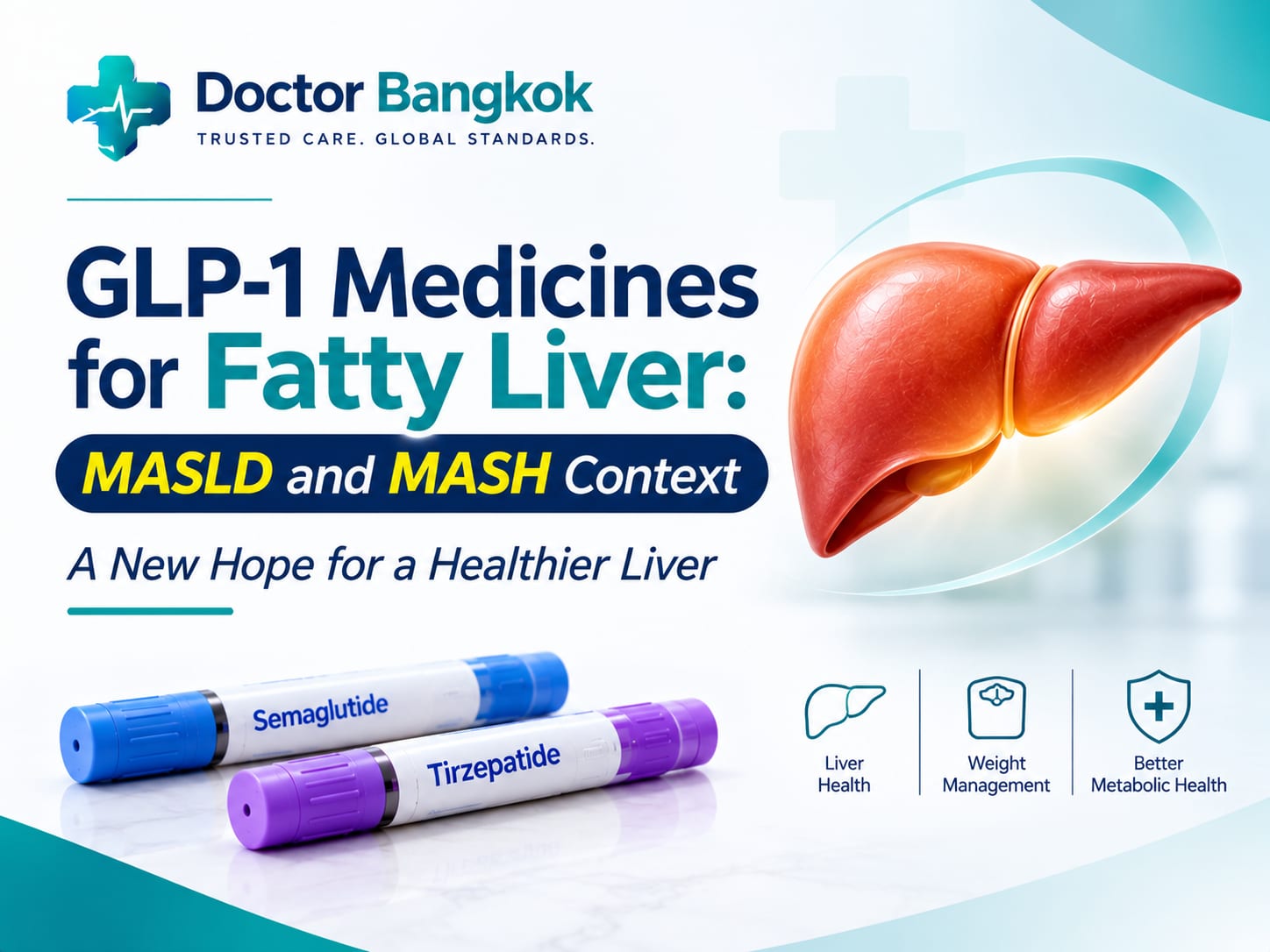
GLP-1 medicines, particularly semaglutide 2.4 mg weekly, received accelerated FDA approval on August 15, 2025 for MASH with moderate to advanced fibrosis (F2/F3 staging). The ESSENCE trial showed meaningful liver improvement in participants treated with semaglutide compared to placebo. This approval does not extend to early-stage fatty liver without fibrosis, or to cirrhosis. A baseline liver assessment before starting is standard practice.
Your routine ultrasound flagged fatty liver. Your doctor mentioned it, you searched on the BTS ride home, and now you are here. That is a reasonable path. The connection between GLP-1 medicines and liver fat is real, and the evidence moved fast in the past two years.
The short answer: GLP-1 medicines do reduce liver fat, and semaglutide now has conditional approval for the more advanced form of the condition. But eligibility matters. Not every stage of fatty liver responds the same way, and the baseline assessment before you start is not optional. This article covers what the evidence shows, who it applies to, and what a liver workup looks like if you want to act on this in Bangkok.

How Weight and Liver Fat Are Connected
When insulin resistance is present, your body pushes more fatty acids into the liver than it can process. Excess fat then builds up inside liver cells over time.
Visceral fat, the fat around your abdominal organs rather than under your skin, drives this process more than total body weight does. That matters because some people with a normal BMI still carry significant liver fat. Weight loss, even modest amounts, can produce large reductions in liver fat. A five to ten percent reduction in body weight is associated with meaningful decreases in liver fat in people with metabolic fatty liver disease, according to AASLD guidance.
GLP-1 medicines work partly through this route. They reduce appetite and slow gastric emptying, which leads to weight loss, which reduces visceral fat, which unloads the liver. But the effect on liver fat is not purely weight-driven, and that distinction matters for some patients. The BMI Calculator at Doctor Bangkok gives you a baseline before your consultation.
What MASLD and MASH Mean in Plain Language
If you were diagnosed a few years ago, you may have heard the terms NAFLD or NASH. Both have been renamed. NAFLD is now MASLD: metabolic dysfunction-associated steatotic liver disease. It describes fat in the liver linked to metabolic factors such as insulin resistance, raised blood pressure, or excess weight.
NASH is now MASH: metabolic dysfunction-associated steatohepatitis. The difference between MASLD and MASH is inflammation. MASLD is fat in the liver without significant inflammation. MASH is fat plus active inflammation plus a process where liver cells swell and begin to die.
MASH is the stage where scarring, known as fibrosis, starts to develop. Fibrosis is graded from F0 (no scarring) to F4 (cirrhosis). The conditional approval for semaglutide targets F2 and F3, the moderate stages, where reversal is still possible but the window is narrowing.

Where Semaglutide Fits in Current Liver Treatment
The ESSENCE trial is the pivotal study here. It tested semaglutide 2.4 mg weekly in participants with confirmed MASH and F2 or F3 fibrosis. At 72 weeks, a meaningfully higher proportion of participants in the semaglutide group showed improvement in liver inflammation compared to placebo. The FDA granted accelerated approval on August 15, 2025 based on this data. Full approval depends on part 2 of the ESSENCE trial, which will assess liver-related clinical outcomes, with results expected around 2029.
GLP-1 receptor activation reduces fat production directly in liver tissue, separate from any weight loss effect. It also suppresses the inflammatory process that drives progression from MASLD to MASH. For patients without significant obesity, this direct hepatic effect is clinically relevant.
The AASLD updated its practice guidance in late 2025 to reflect this approval. It supports semaglutide use in MASH with F2 or F3 fibrosis as part of a broader metabolic management plan. Resmetirom, a thyroid hormone receptor agonist that received accelerated FDA approval for MASH in March 2024, is an alternative for patients who cannot tolerate GLP-1 therapy. The GLP-1 service at Doctor Bangkok covers both the liver indication and broader weight management in a single consultation.
What Is Still Uncertain
The approval is conditional for a reason. The ESSENCE trial used liver biopsy to confirm diagnosis and assess outcomes. In practice, most patients do not have a biopsy, and non-invasive tests have real limitations when staging fibrosis precisely. Some patients staged as F2 or F3 on non-invasive testing may be graded differently on biopsy.
Tirzepatide, a dual GIP and GLP-1 agonist, has shown promising liver fat reduction data in its own trials, but as of this article’s review date it does not have a specific approved MASH indication. Its liver data remains supportive but has not reached the level of the ESSENCE trial for MASH histology. Resmetirom remains the only other currently approved option specifically for MASH.
The treatment picture is moving quickly. Guidance from a physician who is tracking these updates matters more than any single article.
What a Liver Assessment Looks Like Before Starting
Before starting a GLP-1 medicine for a liver indication, a baseline assessment is standard. This does not always mean a biopsy. The AASLD 2025 guidance supports non-invasive testing for patient selection in most cases.
The FIB-4 index is a blood test calculation using age, ALT, AST, and platelet count. It gives a rough estimate of fibrosis risk. FibroScan uses ultrasound-based elastography to measure liver stiffness and provides more precise fibrosis staging. MRI-based liver fat quantification is more accurate still for measuring fat fraction, though less routinely available. Together, these tools allow a clinician to stage most patients without biopsy.
Cirrhosis exclusion matters. Patients with F4 fibrosis were not included in the ESSENCE trial and are not covered by the current approval. Starting semaglutide in a patient with undiagnosed cirrhosis carries different risks, including concerns about the impact of rapid weight loss on liver function in this group. Semaglutide should not be used by people with a personal or family history of medullary thyroid carcinoma or multiple endocrine neoplasia syndrome type 2. It is also not recommended in pregnancy. Anyone who develops severe abdominal pain, persistent vomiting, or signs of jaundice while on treatment should see a doctor promptly. At Doctor Bangkok, a pre-treatment liver assessment covers ALT, AST, GGT, platelet count, and FIB-4 calculation, with referral for FibroScan imaging where results indicate it. If you have a previous liver diagnosis, bring any prior reports to your consultation. A same-day health check-up at Doctor Bangkok covers your baseline liver panel and metabolic screening before the GLP-1 conversation.
Ready to act on this? If you have been told you have fatty liver, or a recent blood test showed raised liver enzymes, a baseline assessment is the right next step. At Doctor Bangkok, you can walk in any time, day or night, for a liver panel and metabolic screening. If you would prefer to be seen at your hotel or condo, the doctor-on-call service covers all of Bangkok. GLP-1 consultations cover the liver indication, eligibility, and monitoring going forward. No referral needed.
Frequently Asked Questions
Dr. Ponlawat Pitsuwan
Physician, Doctor Bangkok
a private medical clinic in central Bangkok open 24 hours a day, seven days a week, with a doctor-on-call service that comes to your hotel or condo within one hour. He sees expats, residents, and medical tourists for metabolic health, GLP-1 therapy assessment, liver health screening, and general medical consultations. His focus is straightforward, evidence-based care in plain language.
References
- Sanyal AJ, Newsome PN, Kliers I, et al. Semaglutide in Metabolic Dysfunction-Associated Steatohepatitis with Liver Fibrosis. N Engl J Med. 2025;392(17). doi:10.1056/NEJMoa2413258
- Novo Nordisk. Wegovy (semaglutide 2.4 mg) receives FDA accelerated approval for noncirrhotic MASH with moderate to advanced liver fibrosis. SEC Form 6-K, August 15, 2025.
- Drug Topics. FDA Approves Semaglutide to Treat MASH with Moderate-to-Advanced Fibrosis. August 18, 2025.
- American Pharmaceutical Review. FDA Approves Wegovy for the Treatment of Noncirrhotic MASH with Moderate to Advanced Liver Fibrosis. 2025.
- Healio. ESSENCE: Semaglutide bests placebo in MASH resolution, fibrosis improvement at 72 weeks. November 2024.
The information in this article is for educational purposes only and does not constitute medical advice. It should not be used to self-diagnose or replace a consultation with a qualified physician. If you have concerns about your health, contact a licensed medical professional. For appointments at Doctor Bangkok, visit doctorbangkok.co.th.
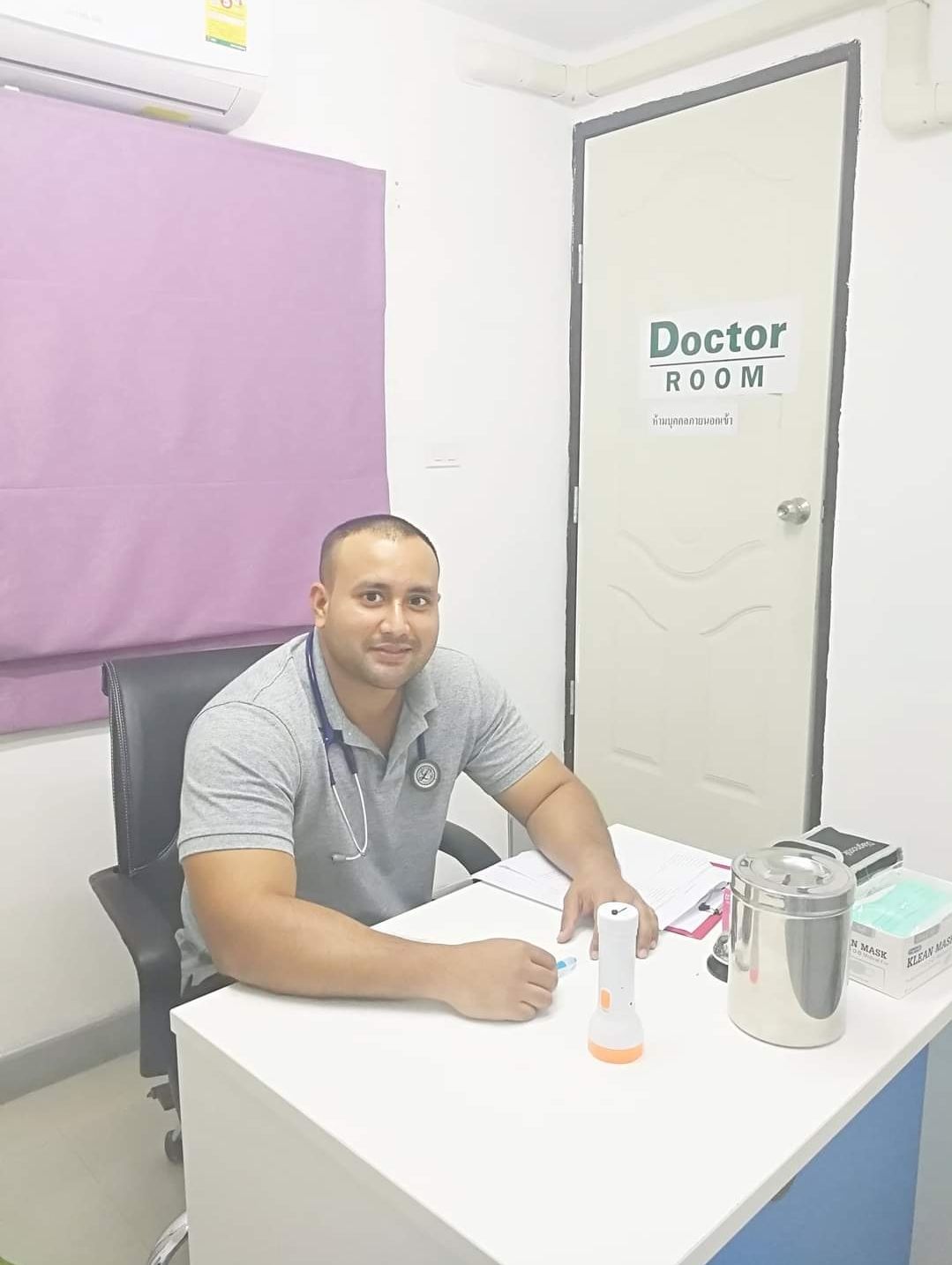
Dr. Ponlawat Pitsuwan is a physician at Doctor Bangkok, a private clinic in central Bangkok. He sees expats, residents, and medical tourists for general medicine, wellness consultations, and IV therapy. His focus is straightforward, evidence-based care delivered in plain language.