
Clinically reviewed by Dr. Ponlawat Pitsuwan, Physician, Doctor Bangkok.
Last reviewed: October 2026
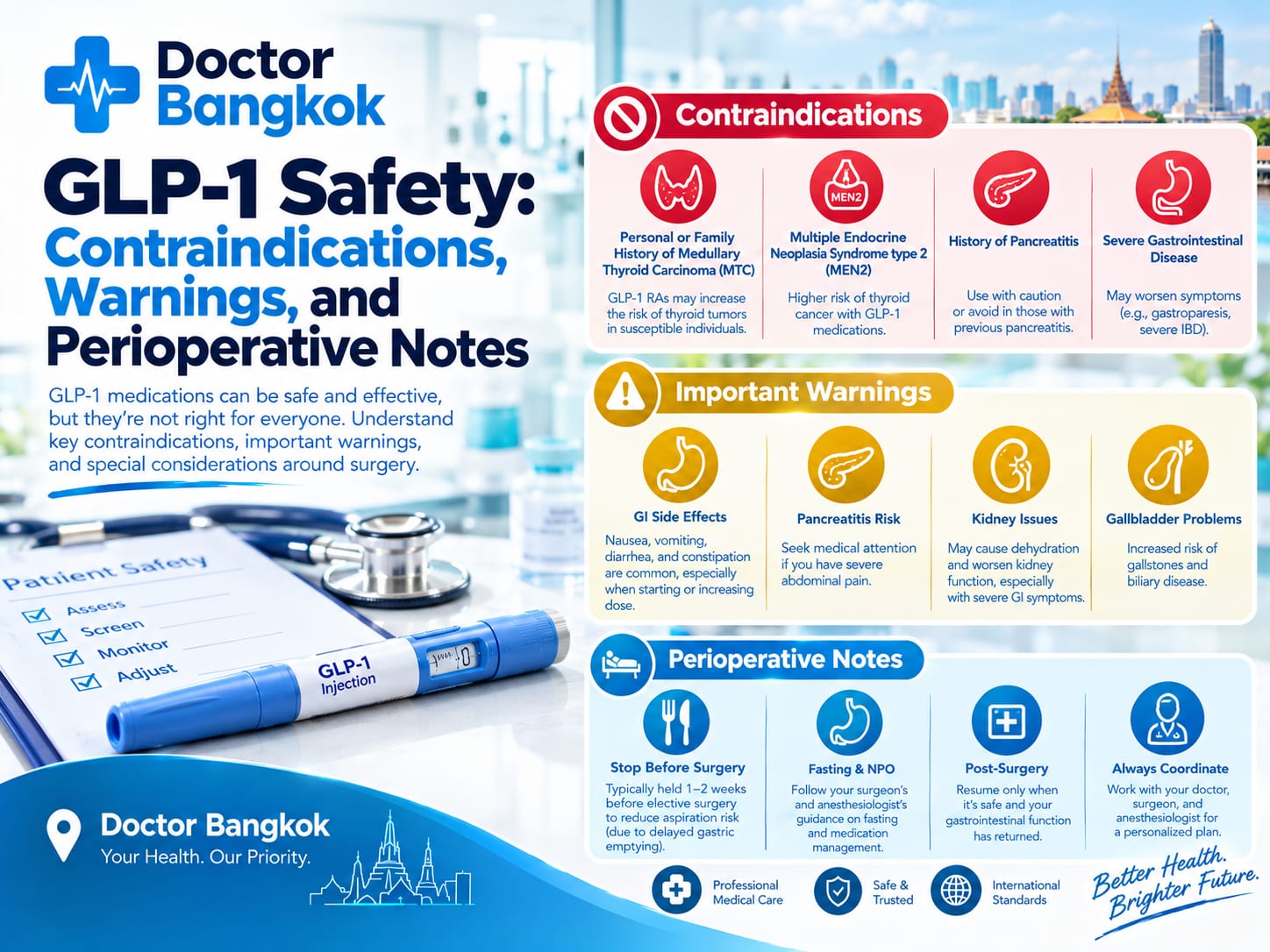
GLP-1 medicines like semaglutide and tirzepatide carry real contraindications, not just side-effect warnings. A personal or family history of medullary thyroid carcinoma or MEN2 syndrome rules them out entirely. Pancreatitis history, current insulin use, kidney impairment, and pre-existing diabetic eye disease all require careful assessment before starting. This is a prescription-only drug class in Thailand, and supervised prescribing is not optional.
You know what semaglutide is. You have done the reading. Now you want to know whether it is actually safe for you, and that is exactly the right question to ask before picking up a pen.
Most people can use GLP-1 medicines under proper supervision. A small group genuinely should not. A larger group needs specific precautions that no online seller will check. What follows is a plain-language breakdown of who should wait, who should not start at all, and what a proper pre-start screen actually covers.

Who Should Usually Avoid These GLP-1 Medicines
Some people should not take GLP-1 receptor agonists at all. Others can, but need closer monitoring and dose adjustments from day one.
The clear stop signs are a personal or family history of medullary thyroid carcinoma (a specific type of thyroid cancer) or Multiple Endocrine Neoplasia type 2 (MEN2), a rare hereditary condition affecting hormone-producing glands. A prior serious allergic reaction to a GLP-1 agent also rules out the class. Pregnancy is another clear contraindication: these drugs are not used during pregnancy, and women planning to conceive are advised to stop before attempting.
Tirzepatide, which targets both GLP-1 and GIP receptors, carries the same thyroid warning as semaglutide. The boxed warning applies to the class, not just one brand.
Hypersensitivity and Prior Reactions
If you had a serious allergic reaction to a previous GLP-1 injection, including hives, swelling of the face or throat, or breathing difficulty, the drug is stopped and the class is generally avoided. Anaphylaxis following a GLP-1 agent requires immediate emergency care and a full clinical review before any consideration of restarting.
Minor injection-site reactions are common and not the same thing. Redness or mild swelling at the site does not indicate anaphylaxis and does not usually mean you need to stop. If you carry an adrenaline auto-injector for other allergies, tell your prescribing doctor before you start.
Thyroid C-Cell Boxed Warning: What It Actually Says
This is the warning that gets the most attention. The FDA boxed warning on semaglutide and related drugs flags a risk of C-cell tumours, the cells that can become medullary thyroid carcinoma. The warning is based on animal studies at high doses. Human data have not confirmed the same risk, but it cannot be excluded, so the contraindication stands.
MTC and MEN2 History: What Clinicians Ask
Before prescribing, any doctor should ask about personal thyroid cancer history and family history of MTC or MEN2. If your parent or sibling had MTC, that history alone is enough to avoid this drug class. The same applies to anyone with a diagnosed MEN2 mutation.
If you have had a thyroid nodule investigated but no MTC diagnosis, that is a different situation. Do not assume it rules you out without a direct clinical review.

Pancreas, Gallbladder, and Kidney Concerns
Acute pancreatitis (sudden inflammation of the pancreas) is a labelled risk for GLP-1 agents. A prior episode is a relative precaution. If the cause was clearly identified and resolved, prescribing may be considered with close monitoring. If the cause was never found, most clinicians avoid the class entirely. Report severe upper abdominal pain immediately, especially if it radiates to your back or comes with vomiting.
Gallstone formation and gallbladder inflammation are also labelled risks, more common with faster weight loss. Known gallbladder disease needs to be disclosed before you start.
GLP-1 drugs are not directly toxic to the kidneys. However, they reduce appetite and can cause nausea and vomiting, which leads to dehydration. Dehydration strains the kidneys. Anyone with chronic kidney disease or borderline kidney function should have a baseline blood test before starting. If you have pre-existing diabetic retinopathy (diabetes-related eye disease), rapid blood sugar improvement with semaglutide has been associated with short-term worsening of that condition. This is a labelled precaution. It does not mean people with retinopathy cannot use semaglutide, but an ophthalmology review should come first.
Hypoglycaemia Risk With Insulin or Sulfonylureas
GLP-1 drugs on their own do not cause low blood sugar in people without diabetes. The risk comes when they are combined with insulin or a sulfonylurea, a type of diabetes tablet that also lowers blood sugar, including glibenclamide and glipizide.
The standard approach is to reduce the insulin or sulfonylurea dose before starting a GLP-1 agent. This is a planned adjustment, not a sign the GLP-1 is not working. Adjusting those doses on your own, without clinical guidance, is exactly the kind of decision that causes problems. Symptoms of low blood sugar to know: sweating, shaking, confusion, rapid heartbeat, or feeling faint. If these occur, take fast-acting glucose and contact your doctor.
Why Unsupervised Sources Raise Extra GLP-1 Safety Risks
Thailand’s regulatory environment matters here. The Thai FDA classifies GLP-1 injectables as prescription-only medicines, and enforcement has tightened. Purchasing through social media, chat apps, or unverified online sellers is not just legally questionable. It puts you in a position where no clinician has reviewed your history and no one is watching for early complications.
Compounded semaglutide pens, mixed by a compounding pharmacy rather than produced by the original manufacturer, add further risk. Concentration errors and contamination are documented concerns with compounded injectables. There is no regulatory oversight of the batches, no cold-chain verification, and no prescribing physician to catch the first sign of pancreatitis or dehydration.
If you are staying in a hotel and fitting this around a short visit to Bangkok, the doctor-at-your-hotel service means supervised prescribing does not require a clinic trip. A doctor comes to you, takes your history, and sets a plan that includes what to watch for and when to call.
How a Proper Pre-Start Screen Actually Works
A pre-start screen is not a long form you fill out yourself. It is a short clinical conversation. It covers your thyroid and family history, any previous pancreatitis or gallbladder disease, your current diabetes medications, kidney function via a blood test, retinopathy status if you have diabetes, and a full medication review for insulin or sulfonylureas.
At Doctor Bangkok, that consultation also covers dose titration protocol. Starting at a low dose and increasing slowly is what prevents most of the early nausea and vomiting that causes people to stop. The titration schedule is set by the prescribing doctor, not decided week to week by the patient.
The perioperative pause is a separate item many patients forget to ask about. GLP-1 agents slow gastric emptying, meaning food and liquid stay in the stomach longer than usual. Before any procedure requiring anaesthesia or sedation, this raises the risk of stomach contents entering the airway. Current multi-society guidance, updated in October 2024 by the ASA and four other specialty societies, moved away from a blanket pre-operative hold. Most patients are now advised to continue their GLP-1 medication before elective procedures. For patients with significant gastrointestinal symptoms suggesting delayed gastric emptying, the decision should be made on an individual basis with the anaesthesia and prescribing teams. Tell your anaesthetist you are on a GLP-1 drug. If you are planning elective surgery in Bangkok while on semaglutide or tirzepatide, review the full GLP-1 perioperative guidance before you confirm your procedure date.
Before starting weight management, checking your baseline risk is a practical first step. The cardiovascular risk calculator and BMI calculator on the Doctor Bangkok site take under two minutes each.
Ready to start or already on a GLP-1 in Bangkok? Doctor Bangkok’s physicians are available 24 hours a day, seven days a week, for walk-in consultations at our Sukhumvit 13 clinic or via our doctor-on-call service anywhere in the city. We cover the full pre-start GLP-1 safety checklist, dose titration, and perioperative planning in a single consultation. Walk in anytime or book a hotel visit at doctorbangkok.co.th.
FAQ
Dr. Ponlawat Pitsuwan
Physician, Doctor Bangkok
a private medical clinic in central Bangkok open 24 hours a day, seven days a week, with a doctor-on-call service that reaches your hotel or condo within one hour. He sees expats, residents, and medical tourists for GLP-1 safety assessments, weight management consultations, pre-start screening, and perioperative planning for patients on semaglutide or tirzepatide.
References
- U.S. Food and Drug Administration. Ozempic (semaglutide) prescribing information. FDA; revised 05/2026.
- U.S. Food and Drug Administration. Mounjaro (tirzepatide) prescribing information. FDA; revised 04/2026.
- American Society of Anesthesiologists et al. New Multi-society Clinical Practice Guidance on GLP-1 Receptor Agonists. ASA; October 2024.
- Marso SP, et al. Semaglutide and Cardiovascular Outcomes in Patients with Type 2 Diabetes. N Engl J Med. 2016;375:1834-1844.
- Vilsboll T, et al. Semaglutide, reduction in glycated haemoglobin and the risk of diabetic retinopathy. Diabetes Obes Metab. 2018;20(4):889-897.
- American Society of Anesthesiologists. Patients taking popular medications for diabetes and weight loss should stop before elective surgery. ASA; June 2023.
The information in this article is for educational purposes only and does not constitute medical advice. It should not be used to self-diagnose or replace a consultation with a qualified physician. If you have concerns about your health, contact a licensed medical professional. For appointments at Doctor Bangkok, visit doctorbangkok.co.th.
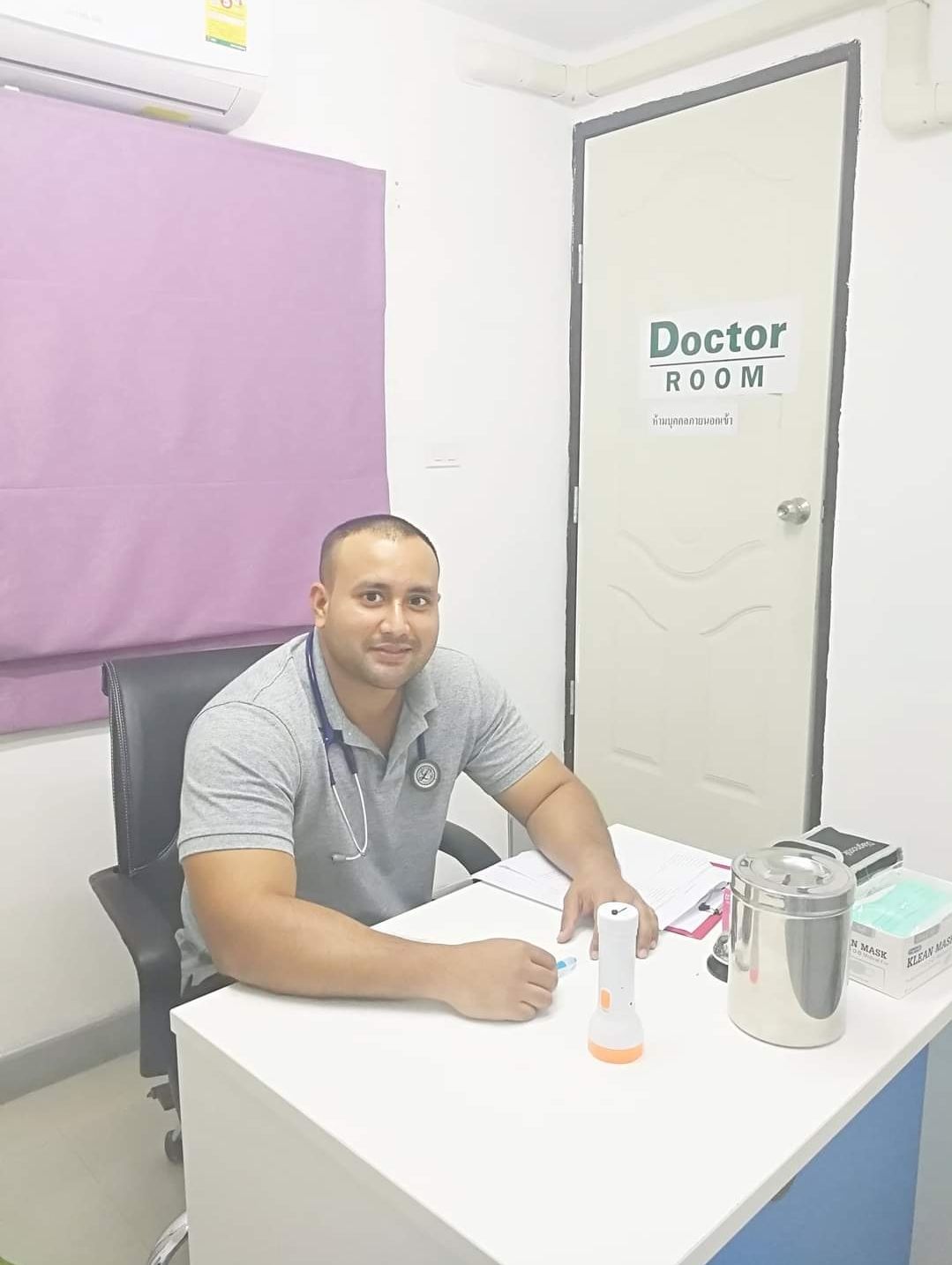
Dr. Ponlawat Pitsuwan is a physician at Doctor Bangkok, a private clinic in central Bangkok. He sees expats, residents, and medical tourists for general medicine, wellness consultations, and IV therapy. His focus is straightforward, evidence-based care delivered in plain language.