
Clinically reviewed by Dr. Ponlawat Pitsuwan, Physician, Doctor Bangkok.
Last reviewed: October 2026
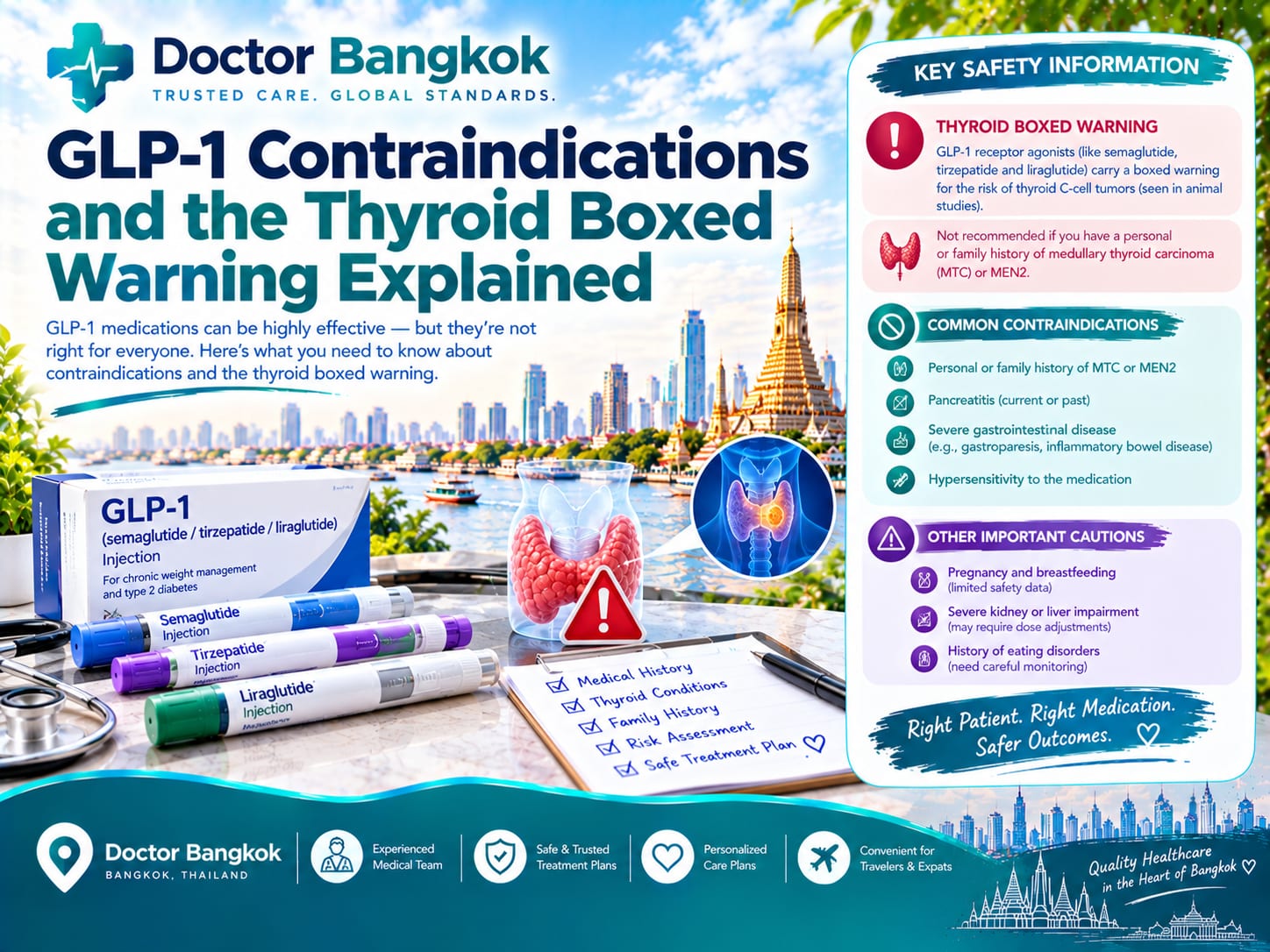
GLP-1 receptor agonists like semaglutide and tirzepatide have absolute contraindications that block treatment entirely: a personal or family history of medullary thyroid carcinoma, multiple endocrine neoplasia type 2 (MEN2), a serious hypersensitivity reaction to the drug, and pregnancy. The thyroid boxed warning applies specifically to medullary thyroid cancer, not to the more common papillary or follicular types. Any responsible prescriber checks these before writing a prescription.
You have done your research, you know these drugs work, and now you are trying to figure out whether anything in your medical history makes them off-limits. That is exactly the right question to ask before starting. A few specific situations are a firm no. Others are cautions that need a conversation, not a full stop.
This article covers every absolute contraindication for GLP-1 receptor agonists, explains what the thyroid boxed warning actually says, and tells you what a proper screening visit should include. If you are an expat or visitor in Bangkok sourcing one of these drugs, there is also a section you need to read about Thailand’s prescription rules and counterfeit risk.

Absolute GLP-1 Contraindications: What Actually Blocks Treatment
Not every concern on a package insert carries the same weight. There is a clear difference between an absolute contraindication and a relative one.
An absolute contraindication means the drug is not used. For GLP-1 receptor agonists, that list is short: a personal or family history of medullary thyroid carcinoma (MTC), a confirmed diagnosis of MEN2, a documented serious hypersensitivity reaction such as anaphylaxis or angioedema to the drug, and current pregnancy.
A relative contraindication means the risk needs to be weighed carefully. History of pancreatitis, severe gastroparesis, advanced chronic kidney disease, and type 1 diabetes all fall here. They require closer monitoring and shared decision-making, not automatic exclusion.
The absolute list is short. The relative list is longer and more nuanced.
Medullary Thyroid Cancer and MEN2 History
This is the contraindication that generates the most questions. Medullary thyroid carcinoma is a cancer of the C-cells in the thyroid gland. It is distinct from the far more common papillary and follicular thyroid cancers, which arise from different cells entirely. The boxed warning on semaglutide and liraglutide applies to MTC and MEN2 specifically, not to thyroid cancer as a broad category.
MEN2, or multiple endocrine neoplasia type 2, is a genetic syndrome caused by a mutation in the RET proto-oncogene. It carries a very high lifetime risk of medullary thyroid cancer. If you have a confirmed MEN2 diagnosis or a known RET mutation in your family, GLP-1 drugs are contraindicated regardless of whether you personally have developed cancer.
What is always required is a clear medical history: has there been MTC in you or a first-degree relative? Has MEN2 been diagnosed or genetically confirmed in your family? If either answer is yes, these drugs are not appropriate.
What the Boxed Warning Does and Does Not Mean
The boxed warning on semaglutide and liraglutide comes from studies in rodents, where high doses caused thyroid C-cell tumours. Current evidence does not establish a causal link between GLP-1 drugs and medullary thyroid cancer in humans, but the regulatory caution stands because the mechanism is biologically plausible in a susceptible population.
What the warning does not cover: papillary thyroid cancer, follicular thyroid cancer, or Hashimoto’s thyroiditis. These arise from thyroid follicular cells, not C-cells, and the boxed warning has no direct application to them. A history of treated papillary or follicular thyroid cancer is not, on its own, an absolute contraindication.
Clinical assessment of your specific history is still needed, but it is not the same situation as MTC or MEN2. If you are unsure whether your thyroid history falls under the warning, you can review your personal situation through Doctor Bangkok’s GLP-1 service before any prescription is issued.
Not all GLP-1 products carry identical boxed warning language. The warning as most patients encounter it applies to semaglutide, liraglutide, and extended-release exenatide products, all of which carry the thyroid C-cell tumor boxed warning based on rodent studies. Immediate-release exenatide (Byetta) was approved before the class-wide warning was established and its labelling differs.

Serious Hypersensitivity History
If you have had anaphylaxis or angioedema after a dose of a GLP-1 receptor agonist, that drug is contraindicated. This is not a dose adjustment situation.
Cross-reactivity between GLP-1 agents is a separate clinical question. A serious reaction to semaglutide does not automatically mean tirzepatide is also excluded, because tirzepatide is a dual GIP and GLP-1 receptor agonist with a different molecular structure. The decision to try a different agent after a prior serious reaction requires careful clinical review, not a self-switch.
The excipients in the formulation can also be relevant. Some reactions are to inactive ingredients rather than the active molecule. Bring the full details of any prior reaction, including the drug name, the timing, and what symptoms occurred, to your screening appointment.
Milder reactions such as injection site redness or nausea are not contraindications. If you carry an epinephrine auto-injector for any allergy, tell your doctor. It adds context that matters.
Pregnancy and Planning a Pregnancy
GLP-1 receptor agonists are not used during pregnancy. This applies to all approved agents. The Thai FDA, along with the FDA and EMA, contraindicates these drugs in pregnancy.
If you are planning a pregnancy, stop the medication before trying to conceive. Major obstetric bodies including ACOG advise stopping approximately one to two months before attempting conception. The rationale is precautionary: allowing the drug to clear your system before a potential early pregnancy, given that the first trimester carries the highest developmental sensitivity.
If you become pregnant unexpectedly while on a GLP-1 drug, stop the medication and contact your prescribing doctor the same day. Your broader management, especially if you are taking the drug for type 2 diabetes, will need immediate review.
Breastfeeding is a separate consideration. Transfer of GLP-1 agents into breast milk has not been adequately studied, and most guidelines recommend avoiding these drugs while breastfeeding on precautionary grounds. The practical outcome is the same as in pregnancy: these drugs are generally not used while nursing.
How GLP-1 Contraindication Screening Works in Bangkok
A proper screening for GLP-1 contraindications is not primarily a blood panel. It is a structured medical history. The key questions cover thyroid cancer history in you and your first-degree relatives, any MEN2 or RET mutation history in the family, prior hypersensitivity reactions to any injectable medication, current pregnancy or breastfeeding status, and current medications that may interact.
In Thailand, GLP-1 injectables are classified as special controlled drugs by the Thai FDA, legally requiring a doctor’s prescription. That regulation exists partly because of documented seizures of counterfeit and sub-standard GLP-1 pens circulating through informal channels in Bangkok. If you have sourced one of these pens without a prescription, the contraindication screening described in this article was never done.
Doctor Bangkok’s weight-loss injection service includes an in-person consultation before any prescription is issued. The screening covers all absolute contraindications, and if your history falls into a grey area, the consultation is the right place to work through it.
If you want a starting point before your visit, the BMI Calculator gives you a clear number to bring in. It does not replace the clinical intake, but it is useful context. A doctor is available at the Sukhumvit 13 clinic around the clock. If you cannot travel to the clinic, the doctor hotel visit service brings a physician to your location anywhere in Bangkok.
Considering GLP-1 treatment in Bangkok? Doctor Bangkok’s weight-loss injection service includes a full contraindication screening before any prescription is issued. Walk in any time at Trendy Office, Soi Sukhumvit 13, or book a doctor to come to your hotel or condo. Available 24/7.
FAQ: GLP-1 Contraindications
What Is MEN2 and Why Does It Matter for Ozempic?
MEN2, or multiple endocrine neoplasia type 2, is a genetic condition caused by a mutation in the RET proto-oncogene. It carries a very high lifetime risk of medullary thyroid cancer, the specific cancer type covered by Ozempic’s boxed warning. If you or a first-degree relative has a confirmed MEN2 diagnosis, semaglutide and most GLP-1 agents are contraindicated.
Does a Family History of Any Thyroid Cancer Block Treatment?
No, and this is one of the most important distinctions to understand. The contraindication applies to medullary thyroid carcinoma specifically, not to papillary or follicular thyroid cancer, which arise from completely different cells. A history of treated papillary thyroid cancer in a family member does not automatically disqualify you, but your individual history needs clinical assessment before a prescription is issued.
Can I Take GLP-1 Medicines While Trying to Conceive?
The guidance is to stop GLP-1 treatment approximately one to two months before planned conception, following the wash-out period recommended by major obstetric bodies including ACOG. If you become pregnant unexpectedly while on these drugs, stop and contact your doctor the same day. Doctor Bangkok can provide preconception counselling as part of a GLP-1 review.
Is a history of papillary or follicular thyroid cancer the same contraindication as medullary thyroid cancer?
No. Papillary and follicular thyroid cancers arise from thyroid follicular cells, not C-cells. The GLP-1 boxed warning is specific to C-cell tumours, meaning medullary thyroid carcinoma. Current evidence does not establish a causal link between GLP-1 drugs and differentiated thyroid cancers, but your specific history should still be reviewed at a consultation.
If I had a reaction to one GLP-1 drug, does that mean I cannot take any of them?
Not automatically. Anaphylaxis or angioedema to semaglutide contraindicates semaglutide, but cross-reactivity with tirzepatide is a separate question because it is a structurally different molecule. The nature of the reaction, which drug caused it, and whether the reaction involved the active drug or an excipient all matter. Bring the full reaction history to your screening appointment.
Can I buy a GLP-1 pen online in Thailand and take it safely without a prescription?
No. GLP-1 injectables are classified as special controlled drugs in Thailand as of late 2025, legally requiring a doctor’s prescription. The Thai FDA has issued public warnings about counterfeit and sub-standard pens sold through unofficial channels. Buying outside a licensed clinic means none of the contraindication checks in this article were ever carried out.
Does the GLP-1 boxed warning apply to all GLP-1 drugs equally?
No. The boxed warning as most patients encounter it applies to semaglutide and liraglutide products and stems from rodent studies at high doses. Older agents such as exenatide carry different labelling. A prescriber applying the warning correctly is doing so because of its specific relevance to MTC and MEN2, not as a blanket rule against anyone with any thyroid condition.
I was sold a GLP-1 pen through an informal source in Bangkok. Should I be worried?
Yes. This is exactly the counterfeit and informal supply situation the Thai FDA has warned about. Stop using it and come in for a review. Doctor Bangkok can assess what you may have taken and confirm whether a proper contraindication screening is needed before any further treatment.
Dr. Ponlawat Pitsuwan
Physician, Doctor Bangkok
a private medical clinic in central Bangkok, open 24/7, with a doctor-on-call service that comes to your hotel or condo. He sees expats, residents, and medical tourists for GLP-1 prescribing assessments, contraindication screening, and weight management consultations. His approach is straightforward, evidence-based care delivered in plain language.
References
- U.S. Food and Drug Administration. Ozempic (semaglutide) injection Prescribing Information, including Boxed Warning. FDA, 2026.
- U.S. Food and Drug Administration. Mounjaro (tirzepatide) injection Prescribing Information, including Boxed Warning. FDA, 2026.
- U.S. Food and Drug Administration. Bydureon BCise (exenatide extended-release) Prescribing Information, including Boxed Warning. FDA, 2025.
- The OBG Project. GLP-1 receptor agonists in pregnancy: counseling, management, and lactation considerations (covering ACOG October 2026 guidance). OBG Project, 2026.
- Nation Thailand. Thailand makes GLP-1 injections prescription-only from September 15. Nation Thailand, 2025.
- Healio. ACOG issues long-awaited guidance on GLP-1s during pregnancy, lactation. Healio, October 2026.
The information in this article is for educational purposes only and does not constitute medical advice. It should not be used to self-diagnose or replace a consultation with a qualified physician. If you have concerns about your health, contact a licensed medical professional. For appointments at Doctor Bangkok, visit doctorbangkok.co.th.
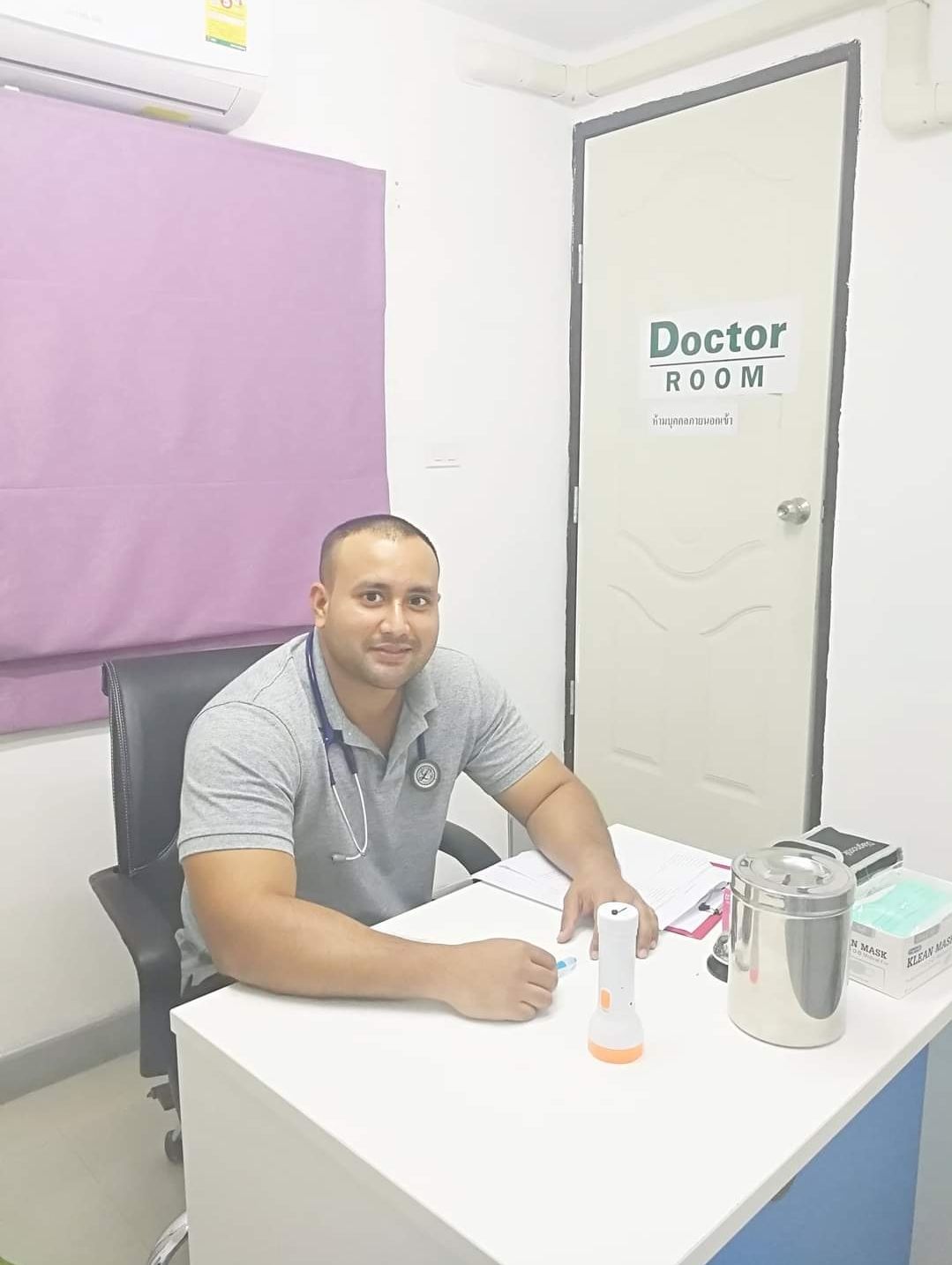
Dr. Ponlawat Pitsuwan is a physician at Doctor Bangkok, a private clinic in central Bangkok. He sees expats, residents, and medical tourists for general medicine, wellness consultations, and IV therapy. His focus is straightforward, evidence-based care delivered in plain language.