

Clinically reviewed by Dr. Ponlawat Pitsuwan, Physician, Doctor Bangkok.
Last reviewed: October 2026
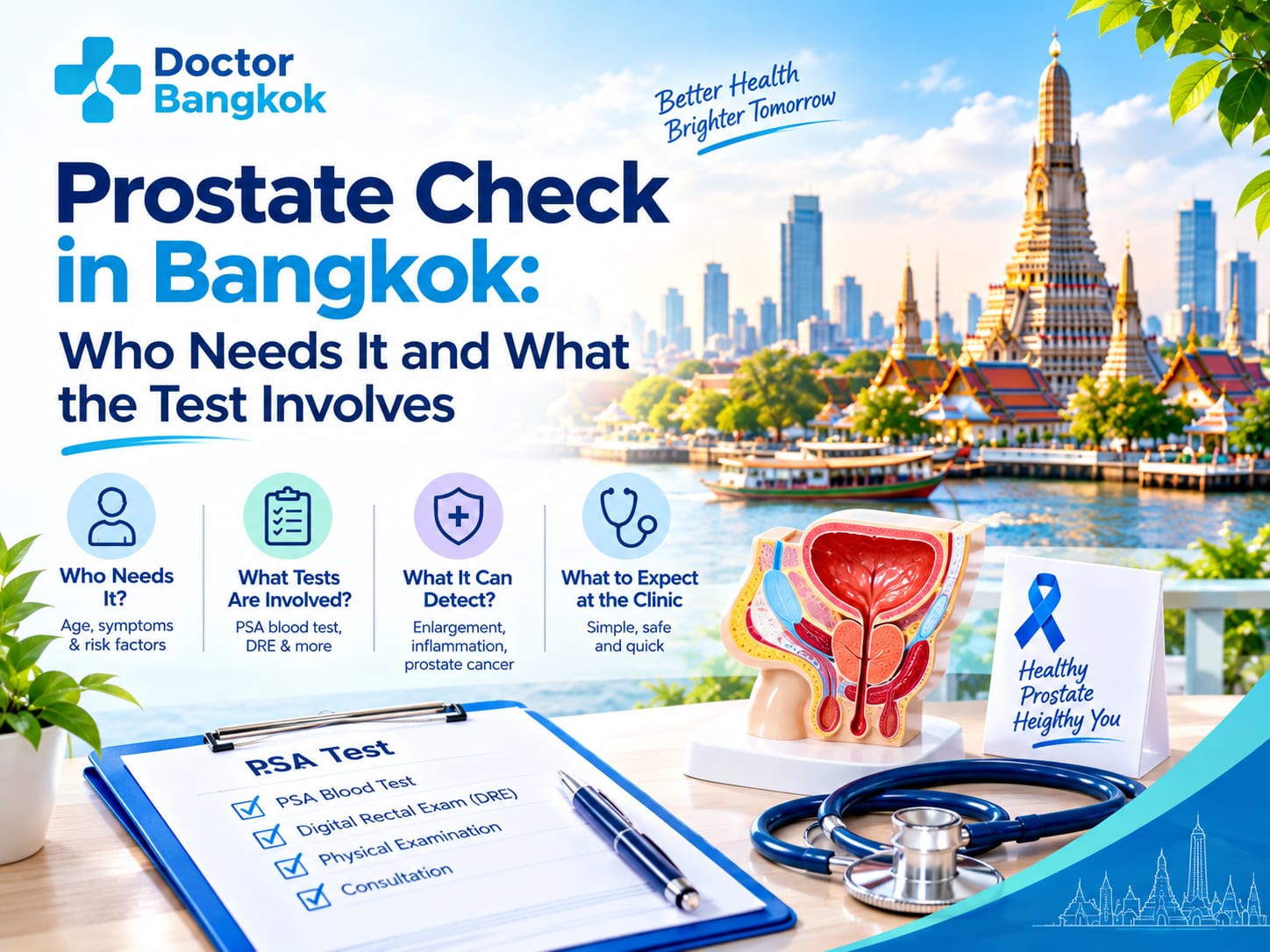
A prostate check in Bangkok involves two things: a PSA blood test and, in most cases, a brief physical exam. Most men over 50 should have it done. Men with a family history of prostate cancer, or men of African descent, should start at 40 to 45. If you are an expat who has not seen a doctor in a few years, this is one of the most straightforward health checks you can do.
If you are a man in your 40s or 50s in Bangkok and you have been putting this off, that is understandable. Prostate screening is easy to skip when you are busy, far from your usual GP, and feeling fine. The problem is that early prostate disease, including cancer at its most treatable stage, usually causes no symptoms at all.
The check itself is simpler than most men expect. It starts with a blood test and takes less than an hour at a private clinic. You do not need a referral, a hospital admission, or a full-day appointment. Book, come in, get tested, and have results explained to you in plain English, the same day.

Who Should Get a Prostate Check in Bangkok
Most guidelines, including those from the American Cancer Society, suggest men at average risk start the screening conversation at age 50. For men with a first-degree relative, a father or brother, diagnosed with prostate cancer before age 65, or for men of African descent, that conversation should start at 40 to 45.
A third group worth noting is expat men in their late 40s or 50s who have not had a routine GP visit in years. If you left your home country before screening was on your radar, or if you have been managing your health reactively, that gap matters.
Urinary symptoms are a separate reason to get checked at any age. A slow stream, a weak flow, or waking at night to urinate more often points to benign prostatic hyperplasia, a non-cancerous enlargement, than to cancer. But either way, those symptoms warrant a proper assessment, not just waiting to see if things settle.
What the Prostate Check Involves
The PSA Blood Test
PSA stands for prostate-specific antigen, a protein your prostate gland produces. A blood draw measures the level in your blood. The test takes about five minutes. Results at Doctor Bangkok are usually ready the same day.
A rising PSA, or a level that is high for your age, can point toward prostate cancer but does not confirm it. PSA also rises with benign prostate enlargement, prostatitis (inflammation of the prostate), and sometimes after vigorous cycling or sexual activity. Context matters, which is why a doctor needs to interpret the number with you, not just hand you a printout.
Some assessments also include a free PSA ratio. This compares the portion of PSA circulating freely in the blood to the total. A lower free PSA ratio is associated with a higher likelihood that an elevated result reflects cancer rather than a benign cause. Your doctor will advise whether this is relevant for your result.
The Digital Rectal Exam
The digital rectal exam, or DRE, is a brief physical check. The doctor feels the prostate through the rectal wall using a gloved finger. It takes under a minute. Most men describe it as uncomfortable rather than painful. It gives the doctor information a blood test alone cannot: the size, shape, and texture of the gland.
You can ask to have the PSA test first and decide about the DRE after speaking with the doctor. Consultations at Doctor Bangkok are private and conducted in English. There is no rush.

Understanding Your PSA Result
A PSA result under 4 ng/mL is generally within the normal range for most men, though this varies by age. Results between 4 and 10 ng/mL sit in what doctors call the grey zone: elevated enough to warrant attention, but not a diagnosis. A result above 10 ng/mL usually requires follow-up, though it is still not a confirmation of cancer on its own.
How quickly the number has risen over time can be as informative as a single reading. If you had a PSA test a few years ago, bring that result with you. Knowing your baseline changes how the current number is interpreted.
Your doctor will explain whether your result sits within a normal range for your age, whether a repeat test in a few months makes sense, or whether a further step such as a prostate MRI or a urology referral is the right move.
What Happens If Your Result Is Abnormal
An elevated PSA is a reason to investigate further. It is not a diagnosis. Most men with a raised PSA do not have prostate cancer.
The next steps depend on the level and your overall picture. A repeat PSA test a few weeks later is often the first move, since short-term fluctuations are common. From there, your doctor may request a prostate MRI or refer you to a urologist in Bangkok for specialist review. If a biopsy is ever needed, that takes place with a specialist, not at a general practice clinic.
Doctor Bangkok’s role is to be your first step: accurate testing, clear result interpretation, and a sensible referral pathway if you need one. For expats navigating Bangkok’s health system without a company GP, that direct access makes a real difference.
Screening Frequency and When to Come Back
How often you need screening depends on your baseline PSA result. A low result at age 50 to 55 does not mean you never need to come back. It means your next check can be spaced out further. A result in the grey zone typically calls for more frequent monitoring.
The US Preventive Services Task Force recommends that men aged 55 to 69 make an individual decision about PSA screening in conversation with their doctor, weighing personal risk factors and preferences. It advises against routine screening for men aged 70 and older. The American Cancer Society supports a shared decision-making approach from age 50 for average-risk men, and from 40 to 45 for higher-risk groups.
If you have risk factors or symptoms, do not wait for a round-number birthday. Come in, get tested, and know your baseline. A health check-up at Doctor Bangkok can include prostate screening alongside other relevant checks, so one appointment covers more ground.
Getting a Prostate Check at Doctor Bangkok
You do not need a referral. You do not need to speak Thai. Book, come in, the blood is drawn, and the doctor discusses the result with you, usually the same day. The clinic is BTS accessible on Sukhumvit Soi 13 in central Bangkok.
For men who manage their own healthcare in Thailand without an insurance navigator or company GP, this kind of direct access matters. No waiting for a referral through a Thai-language hospital system. No decoding an invoice weeks later. A clear result and a clear next step.
Prostate screening fits naturally alongside other men’s health concerns. If you have questions about testosterone levels and men’s health or want to understand more about who should consider prostate screening, both are worth reading before your appointment. If you would prefer a doctor to come to you, a hotel or home visit is also available for initial consultations.
If you have been putting off more than one check, a same-day consultation is the most efficient way to address all of it at once.
Book a prostate check at Doctor Bangkok. PSA blood tests and men’s health consultations are available at our private clinic on Sukhumvit Soi 13, BTS accessible in central Bangkok. Consultations are in English. Results are same-day. No referral needed. Walk in or book ahead at doctorbangkok.co.th.
Frequently Asked Questions
Dr. Ponlawat Pitsuwan
Physician, Doctor Bangkok
a private medical clinic in central Bangkok. He sees expats, residents, and medical tourists for men’s health assessments, prostate screening, general consultations, and preventive care. His focus is straightforward, evidence-based care delivered in plain language.
References
- American Cancer Society. Prostate Cancer Early Detection, Diagnosis, and Staging. cancer.org, 2026.
- US Preventive Services Task Force. Screening for Prostate Cancer: Recommendation Statement. JAMA, 2018 (reaffirmed as current). Via AAFP summary.
- National Cancer Institute. Prostate-Specific Antigen (PSA) Test. cancer.gov.
- Mejak SL, Bayliss J, Hanks SD. Long Distance Bicycle Riding Causes Prostate-Specific Antigen to Increase in Men Aged 50 Years and Over. PubMed, 2013.
- Mayo Clinic Laboratories. Prostate-Specific Antigen (PSA), Total and Free, Serum. Test Catalog.
- American Cancer Society. Prostate Cancer Awareness 2026. Pressroom, September 2026.
The information in this article is for educational purposes only and does not constitute medical advice. It should not be used to self-diagnose or replace a consultation with a qualified physician. If you have concerns about your health, contact a licensed medical professional. For appointments at Doctor Bangkok, visit doctorbangkok.co.th.
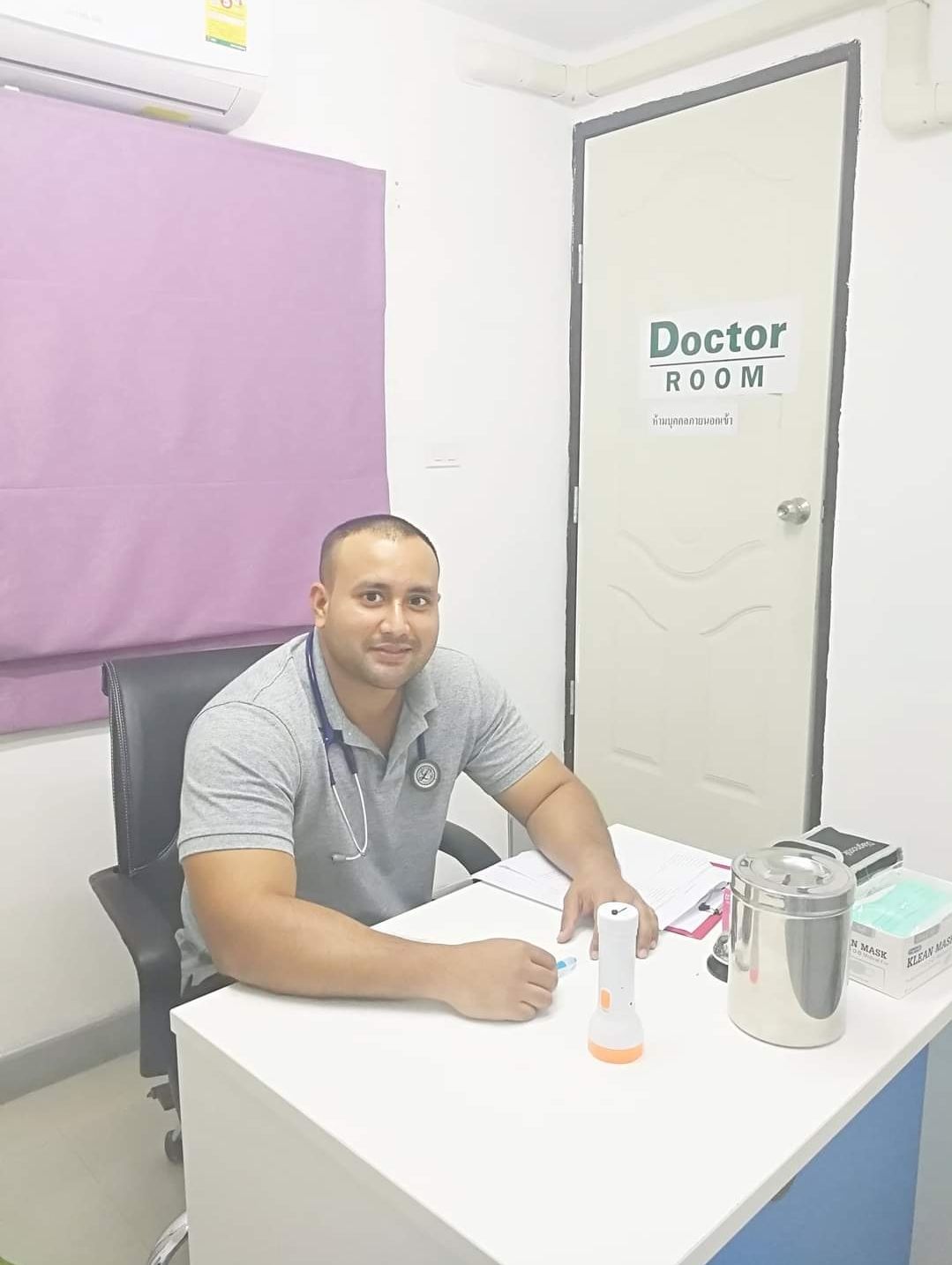
Dr. Ponlawat Pitsuwan is a physician at Doctor Bangkok, a private clinic in central Bangkok. He sees expats, residents, and medical tourists for general medicine, wellness consultations, and IV therapy. His focus is straightforward, evidence-based care delivered in plain language.