
Clinically reviewed by Dr. Ponlawat Pitsuwan, Physician, Doctor Bangkok.
Last reviewed: October 2026
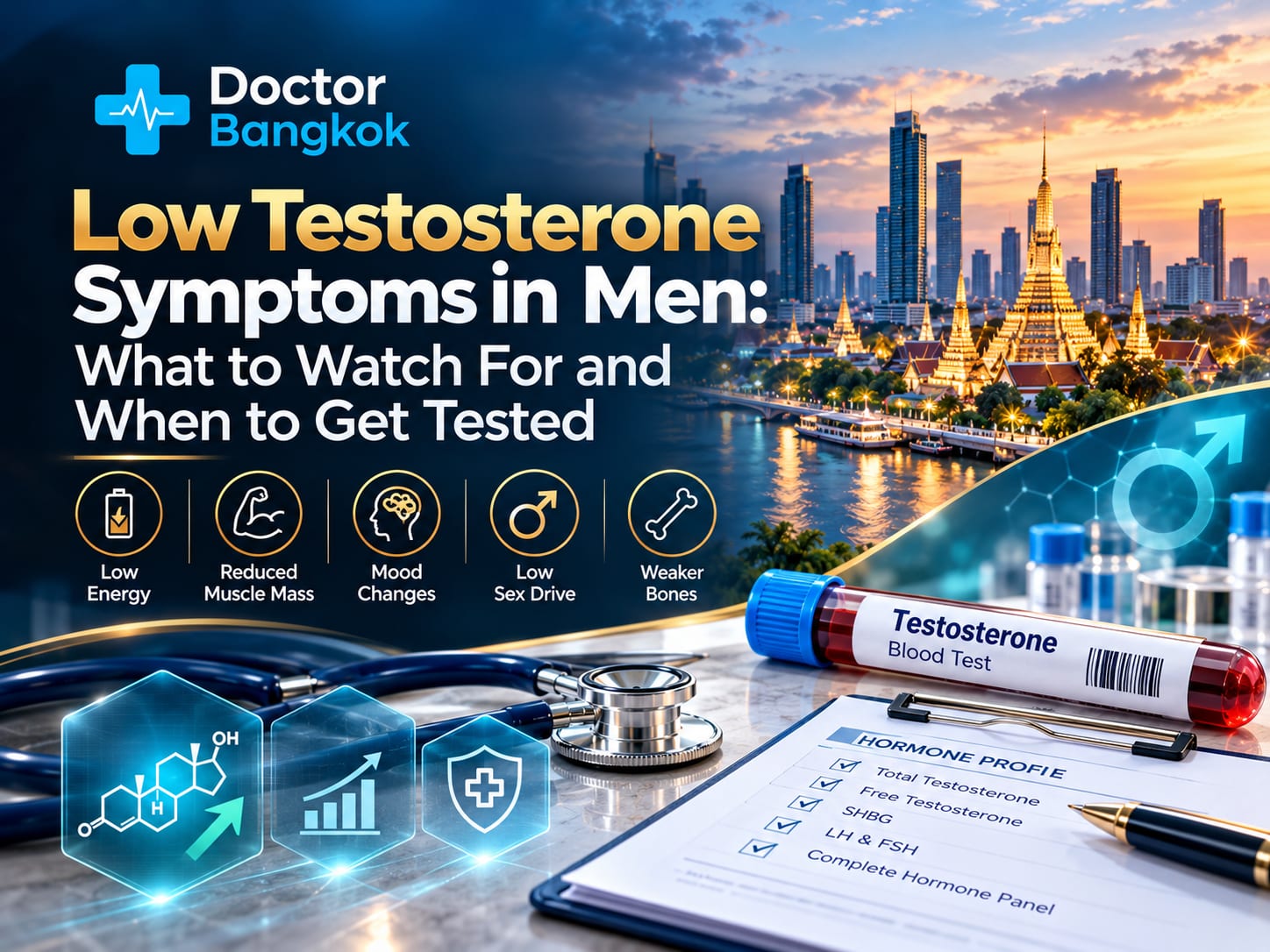
Low testosterone in men causes symptoms including reduced sex drive, fewer morning erections, fatigue that does not improve with rest, mood changes, and loss of muscle mass. These symptoms overlap with stress and normal ageing, which is why a blood test is the only way to confirm a diagnosis. Proper diagnosis requires at least two early-morning blood draws and a full hormone panel, not just total testosterone alone.
You have been tired for months. Your drive is flat, your gym sessions feel pointless, and you are not sleeping the way you used to. Bangkok heat, work pressure, late nights. It is easy to explain away. But some of those symptoms have a clinical cause worth checking.
Low testosterone symptoms in men are easy to dismiss in a city that runs fast. They are real, they build over time, and a blood test can tell you in one morning whether hormones are part of the picture.

Symptoms That Are Easy to Dismiss as Bangkok Burnout
Fatigue is the one men mention first. Not the kind that a good night’s sleep fixes. The kind that is still there on Monday after a quiet weekend.
Low libido is the second. Not a complete loss, just less interest than before and less urgency. Most men put it down to stress and move on.
The most clinically specific symptom is a change in morning erections. Fewer of them, or none at all. Men do not always track this consciously, but when you ask directly, the answer is usually clear.
Other low testosterone symptoms in men include difficulty concentrating, low mood without an obvious trigger, reduced strength despite consistent training, and gradual fat gain around the abdomen. None of these alone points clearly to low testosterone. Together, with the sexual symptoms, they form a pattern worth investigating.
Why Bangkok Life Can Accelerate the Decline
Testosterone does decline with age, at roughly one to two percent per year from around age thirty onward. But that slope can steepen quickly under the right conditions, and Bangkok provides several of them.
Chronic stress raises cortisol. Sustained high cortisol suppresses testosterone production. Expat life in Bangkok carries its own load: relocation, long work hours, frequent travel across time zones. The heat adds a physiological burden the body does not always adapt to fully.
Alcohol is the other factor. Regular heavy intake is well-documented as a suppressor of testosterone. Poor sleep, from late nights, heat, or undiagnosed obstructive sleep apnoea, compounds the problem further. Sleep apnoea is common in men with obesity and disrupts the nighttime cycle of hormone production.
This is what clinicians call secondary hypogonadism: not a problem with the testes themselves, but with the signals sent to them. Lifestyle factors interfere with those signals. The good news is that secondary causes are often addressable once identified.

Which Symptoms Are Actually Diagnostic
Not all symptoms carry the same weight. Fatigue, low mood, and brain fog are non-specific. They appear in thyroid disease, depression, sleep disorders, anaemia, and other conditions. On their own, they do not point clearly to testosterone deficiency.
The sexual symptoms are more specific. Reduced libido, a clear decline in morning erections, and erectile difficulty occurring together form the cluster most strongly associated with low testosterone. If those three are present alongside fatigue and mood changes, a hormone panel is warranted.
If you only have fatigue and mood changes without the sexual symptoms, testing is still reasonable, but the differential is wider and other causes need ruling out at the same time.
Conditions That Can Look Exactly Like Low Testosterone
Before landing on low testosterone as the answer, several conditions produce an almost identical symptom picture.
Hypothyroidism causes fatigue, weight gain, low mood, and reduced libido. A basic thyroid function test rules it in or out quickly. Depression produces low energy, loss of motivation, poor sleep, and reduced sexual interest. It can coexist with low testosterone or be the primary driver on its own.
Untreated obstructive sleep apnoea fragments sleep so severely that it mimics every fatigue and mood symptom of low testosterone, and it also directly suppresses testosterone production. Anaemia, type 2 diabetes, and chronic high cortisol all belong on the differential too.
Symptoms give you a direction. Blood results give you an answer. There is no shortcut around the test.
What the Blood Test Actually Measures, and Why One Result Is Not Enough
Total testosterone is the number most men have heard of. It is not the whole story.
SHBG, sex hormone-binding globulin, is a protein that binds testosterone in the blood and makes it unavailable to the body. A man can have a total testosterone reading that looks normal but a high SHBG, leaving very little free testosterone actually active. Without both numbers, a result can mislead in either direction.
LH and FSH, two hormones from the pituitary gland, tell us whether the problem starts in the testes or higher up in the signalling chain. That distinction changes the management approach. A full male hormone panel covers all of these.
Timing matters too. Testosterone peaks in the early morning, typically between 7 and 10 AM. An afternoon draw can return a misleadingly low reading. Current guidelines recommend at least two separate early-morning samples before confirming a low result, because levels fluctuate day to day. At Doctor Bangkok, we time draws correctly and run a complete panel.
What Low Testosterone Does Over Time If Left Unaddressed
The symptoms that bring most men in are the ones they feel daily. But testosterone deficiency has longer-term consequences that develop quietly.
Bone density decreases over time with sustained low testosterone, raising fracture risk in later years. Insulin resistance is also associated with prolonged deficiency, which links to increased cardiometabolic risk. If you want a clearer picture of your overall cardiovascular risk alongside hormonal assessment, our Cardiovascular Risk Calculator is a useful starting point.
Muscle loss is progressive if the deficit continues. This affects not just appearance but strength, metabolic rate, and long-term physical function. These are reasons to identify and address the problem earlier rather than waiting until symptoms become harder to ignore.
When to Get Tested for Low Testosterone, and What to Expect
If you have two or more of the sexual symptoms described above, get tested. Do not wait for things to feel urgent.
If you have fatigue and mood changes without the sexual symptoms, testing is still reasonable. The consultation will include a broader look at thyroid, glucose, and other markers to give you a complete picture rather than a single number.
At Doctor Bangkok, you book a consultation, see an English-speaking physician, describe your symptoms, and we draw blood the same morning. We run a full men’s hormone panel: total testosterone, free testosterone, SHBG, LH, and FSH. A borderline result on its own does not automatically mean you need treatment. We repeat it, review the full picture, and have a direct conversation about what the numbers mean for you.
For men in their thirties and forties thinking about fertility, testosterone replacement therapy can suppress sperm production. Testosterone therapy is also not appropriate for men with prostate or breast cancer, uncontrolled heart failure, a recent heart attack or stroke, or significantly elevated red blood cell counts, and these are discussed at consultation before any prescription is considered. If that is relevant to you, we discuss it before any treatment decision. Options that preserve fertility are part of the conversation. You can read more about what treatment involves on our testosterone therapy page.
When you are ready, the next step is a sexual health consultation at Doctor Bangkok. No referral needed, no waiting weeks.
If you have noticed reduced sex drive, fewer morning erections, persistent fatigue, or mood changes that do not shift, a full male hormone panel is the right next step. Doctor Bangkok offers same-day testosterone testing with English-speaking physicians at our central Bangkok clinic, BTS accessible, no referral required. We run a complete panel and give you a clear explanation of what the results mean. Book a men’s health or sexual health consultation at Doctor Bangkok to get started.
Frequently Asked Questions
Dr. Ponlawat Pitsuwan
Physician, Doctor Bangkok
a private medical clinic in central Bangkok. He sees expats, residents, and medical tourists for men’s health, sexual health, and hormone-related concerns including testosterone deficiency assessment. His approach is straightforward: evidence-based care explained in plain language.
References
- Bhasin S, Brito JP, Cunningham GR, et al. Testosterone Therapy in Men With Hypogonadism: An Endocrine Society Clinical Practice Guideline. J Clin Endocrinol Metab. 2018;103(5):1715-1744.
- Mulligan T, Frick MF, Zuraw QC, Stemhagen A, McWhirter C. Prevalence of hypogonadism in males aged at least 45 years: the HIM study. Int J Clin Pract. 2006;60(7):762-769.
- Vingren JL, Kraemer WJ, Ratamess NA, et al. Testosterone physiology in resistance exercise and training: the up-stream regulatory elements. Sports Med. 2010;40(12):1037-1053.
- Mulhall JP, Trost LW, Brannigan RE, et al. Evaluation and Management of Testosterone Deficiency: AUA Guideline. J Urol. 2018;200(2):423-432.
- Wu FC, Tajar A, Beynon JM, et al. Identification of Late-Onset Hypogonadism in Middle-Aged and Elderly Men. N Engl J Med. 2010;363(2):123-135.
The information in this article is for educational purposes only and does not constitute medical advice. It should not be used to self-diagnose or replace a consultation with a qualified physician. If you have concerns about your health, contact a licensed medical professional. For appointments at Doctor Bangkok, visit doctorbangkok.co.th.
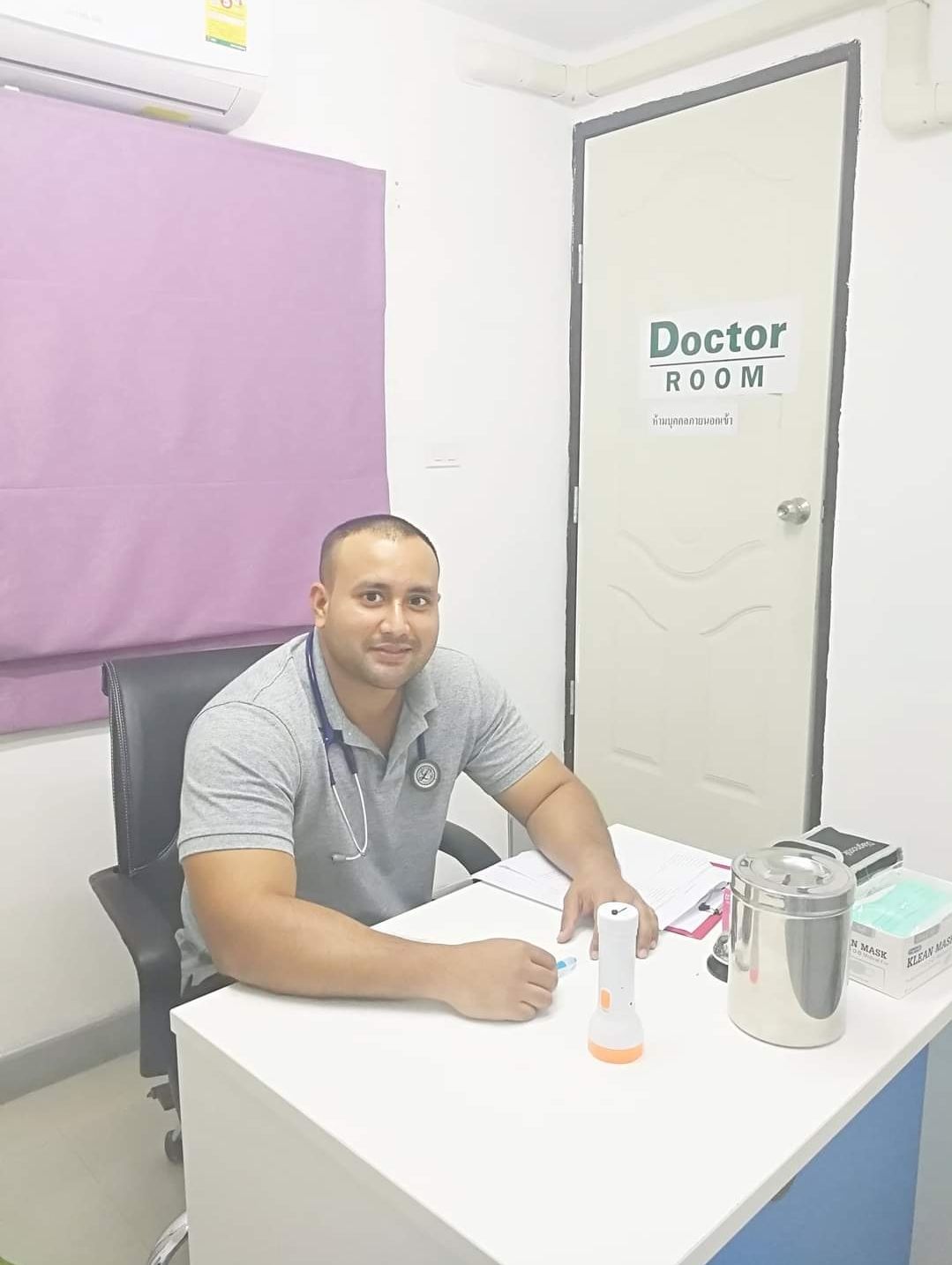
Dr. Ponlawat Pitsuwan is a physician at Doctor Bangkok, a private clinic in central Bangkok. He sees expats, residents, and medical tourists for general medicine, wellness consultations, and IV therapy. His focus is straightforward, evidence-based care delivered in plain language.