
Clinically reviewed by Dr. Ponlawat Pitsuwan, Physician, Doctor Bangkok. Last reviewed: August 2026
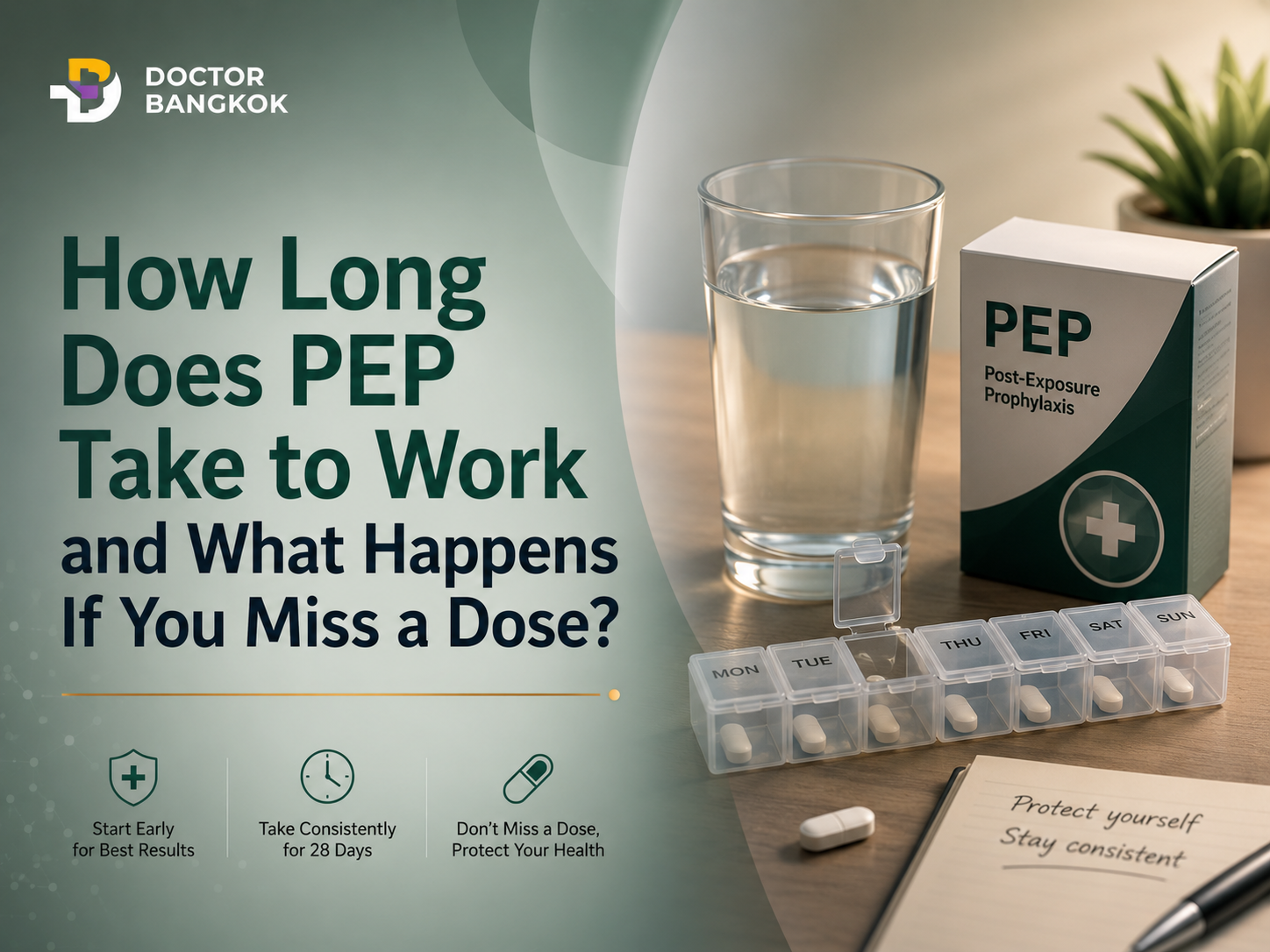
PEP starts working with your very first dose, but one dose is not enough. The drugs need 28 straight days at consistent levels in your blood to stop HIV from taking hold. Miss doses regularly, start late, or stop early, and the protection drops significantly. If you are within 72 hours of a potential exposure, do not wait.
If you are reading this right now, something happened. Maybe a condom broke. Maybe you had unprotected sex and now you are sitting in your Bangkok apartment at midnight running searches. You probably are still in time. But the clock is real, and this is not the moment to keep Googling.
PEP, post-exposure prophylaxis, is a 28-day course of antiretroviral medication that can prevent HIV infection after a potential exposure. It works. But how well it works depends almost entirely on two things: how soon you start, and how consistently you take every dose. This article covers what you actually need to know, including what to do if you have already missed a dose.

Does Your Exposure Actually Warrant PEP?
Not every exposure carries the same risk, and I want to be straight with you about this.
The highest-risk exposures are receptive anal sex with a partner of unknown or positive HIV status, sharing needles, and unprotected sex with a confirmed HIV-positive partner who is not virally suppressed. These situations clearly warrant PEP. Insertive anal sex and vaginal sex also carry real risk, particularly with unknown-status partners in Bangkok where HIV prevalence in certain groups remains significant.
Oral sex alone is considered very low risk by international guidelines. When you come in, we go through your specific situation and give you an honest assessment. If there is genuine uncertainty, we lean toward prescribing. The cost of PEP is far less than the cost of getting this wrong.
The 72-Hour Window — and Why Earlier Is Always Better
Seventy-two hours is the hard cutoff. After that, PEP is not recommended.
Within that window, earlier is meaningfully better. Starting at 12 hours is better than 24. Starting at 24 is better than 48. Starting at 48 is better than 72. I get patients who have been sitting on this for 60 hours still wondering if it is worth starting. It is. Do not self-disqualify. Come in and let a doctor make that call with you.

What Happens If You Miss a Dose?
This is the question I get most often from patients mid-course, usually with a lot of anxiety attached to it.
One missed dose is not a disaster. Take it as soon as you remember. If your next scheduled dose is coming up soon, skip the missed one and carry on normally. Never double up. That does not compensate for a missed dose and adds unnecessary side effects.
What actually threatens PEP is a pattern of missed doses. Missing two or three doses across the 28 days, or stopping a week early because you feel fine, is where the risk rises sharply. Consistency is everything. If you are struggling to stay on schedule because of side effects or simply forgetting, call your clinic. There are practical solutions that are far better than quietly falling off course.
PEP Side Effects and How to Manage Them
Most patients tolerate modern PEP regimens well. The combination most commonly used now, tenofovir, emtricitabine, and dolutegravir, has a much cleaner side effect profile than older regimens.
The most common issues in the first week are nausea, fatigue, headache, and loose stools. For most people these settle by week two. Taking your dose with food helps significantly with nausea. If symptoms are severe enough that you are vomiting shortly after each dose, come back in.
A small number of patients on dolutegravir notice sleep disturbance or vivid dreams. Switching to a morning dose usually resolves this. Side effects are manageable. Stopping PEP because of mild nausea is a far worse outcome than pushing through with some support.
PEP and Other STIs — What PEP Does Not Cover
This matters, and most patients do not hear it clearly enough. PEP prevents HIV. It does nothing for syphilis, gonorrhoea, chlamydia, hepatitis B, or hepatitis C.
The same exposure that brought you in for PEP almost certainly warrants a full STI screen. At Doctor Bangkok, we run baseline bloods at the start of PEP that include HIV antigen and antibody testing, hepatitis B and C, syphilis, and kidney function. This baseline confirms your HIV-negative status before starting and screens for infections you may already have from this or a prior exposure.
There is also an emerging option called Doxy-PEP, a short course of doxycycline taken after a potential bacterial STI exposure. It is not standard protocol everywhere yet, but it is something we can discuss if your exposure profile warrants it.
After You Finish PEP — Testing and What It Means
Finishing your 28-day course is not the end. You need follow-up HIV testing because PEP can delay the window during which a test gives a reliable result.
The standard recommendation is a fourth generation HIV test at four to six weeks after completing PEP, and a confirmatory test at three months. A negative result at three months is considered conclusive by WHO and international guidelines. At Doctor Bangkok, we schedule these follow-up appointments as part of your PEP programme so nothing falls through the gaps.
Should You Start PrEP After PEP?
If this is not the first time you have needed PEP, or if your life puts you in ongoing contact with potential HIV exposure, PEP is not the right long-term answer. PrEP, pre-exposure prophylaxis, is.
PrEP is a daily pill you take before any potential exposure. It is highly effective with strong evidence behind it when taken consistently. The transition from PEP to PrEP is straightforward: finish your 28-day course, confirm a negative HIV result, and start PrEP the following day with no gap.
Many expats I see in Bangkok who have used PEP once go on to start PrEP. If you are in a situation where PEP is relevant, PrEP is worth a serious conversation.
Getting PEP in Bangkok — What to Expect
If you are in Bangkok and within 72 hours of a potential exposure, here is exactly what happens when you come in.
You will see an English-speaking doctor for a short consultation about the exposure. We draw baseline bloods on the same visit: HIV Ag/Ab, hepatitis B, hepatitis C, syphilis, and creatinine. We dispense the full 28-day PEP course before you leave, explain the dosing schedule, cover what to do if side effects hit, and schedule your follow-up tests. The whole process takes under an hour. You do not need a referral. Walk-ins are welcome, and we are BTS accessible.
Need PEP in Bangkok? If you are within 72 hours of a potential HIV exposure, come in today. Doctor Bangkok provides same-day PEP with English-speaking physicians, baseline HIV and STI testing, and full follow-up care. Walk-ins welcome. BTS accessible. Visit doctorbangkok.co.th or call us now. Do not wait until tomorrow.
How quickly does PEP start working after the first dose?
The medication starts blocking HIV replication within hours of your first dose. But a single dose is nowhere near enough. PEP needs 28 continuous days at consistent blood levels to prevent an infection from establishing, so think of it as a sustained barrier rather than a one-time event.
Is PEP still worth starting at 60 or 70 hours after exposure?
Yes, come in. Three-drug PEP regimens still offer meaningful protection right up to the 72-hour mark, though effectiveness does decrease the longer you wait. Do not self-disqualify because you are close to the limit. Let a doctor assess the situation and make the call with you.
What happens if I miss a dose of PEP?
Take it as soon as you remember, unless your next scheduled dose is coming up soon, in which case just continue normally and skip the missed one. Never double up. One missed dose matters far less than a consistent pattern of missed doses across the 28 days.
How will I know if PEP worked? When do I get tested?
You need a fourth generation HIV test at four to six weeks after finishing PEP, and a confirmatory test at three months. A negative result at three months is conclusive by international standards. At Doctor Bangkok, follow-up appointments are included as part of the PEP programme.
Does PEP protect against other STIs?
No. PEP is specific to HIV only. The same exposure that brings you in for PEP almost always warrants a full STI screen for syphilis, gonorrhoea, chlamydia, and hepatitis B and C. We run those baseline tests on the same visit when you start PEP at Doctor Bangkok.
Can I switch from PEP to PrEP straight after finishing my course?
Yes, and for many patients it makes complete sense. Once you finish your 28-day course and confirm a negative HIV result, you can start PrEP the following day with no gap in protection. If your situation puts you at ongoing risk, PrEP is the more appropriate long-term tool.
Do I need a prescription to get PEP in Bangkok?
Yes, PEP requires a doctor consultation and prescription. At Doctor Bangkok, you get the consultation, baseline bloods, and your medication dispensed in the same visit. No referral is needed and walk-ins are welcome.
Dr. Ponlawat Pitsuwan
Physician, Doctor Bangkok
a private medical clinic in central Bangkok. He sees expats, residents, and medical tourists for HIV prevention, PEP and PrEP prescribing, STI testing and treatment, and general sexual health care. His focus is straightforward, evidence-based care delivered in plain language.
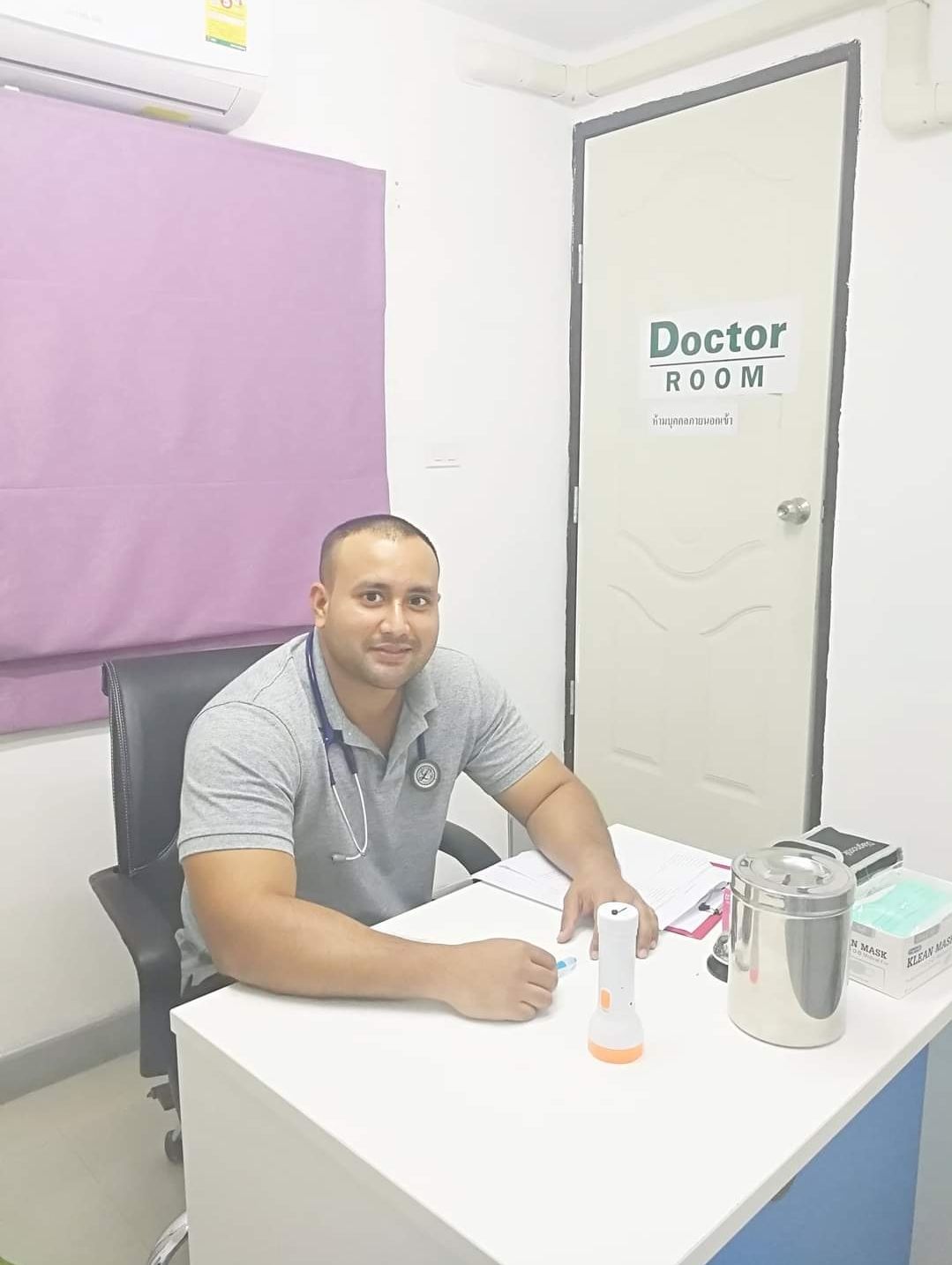
Dr. Ponlawat Pitsuwan is a physician at Doctor Bangkok, a private clinic in central Bangkok. He sees expats, residents, and medical tourists for general medicine, wellness consultations, and IV therapy. His focus is straightforward, evidence-based care delivered in plain language.