
Clinically reviewed by Dr. Ponlawat Pitsuwan, Physician, Doctor Bangkok. Last reviewed: August 2026
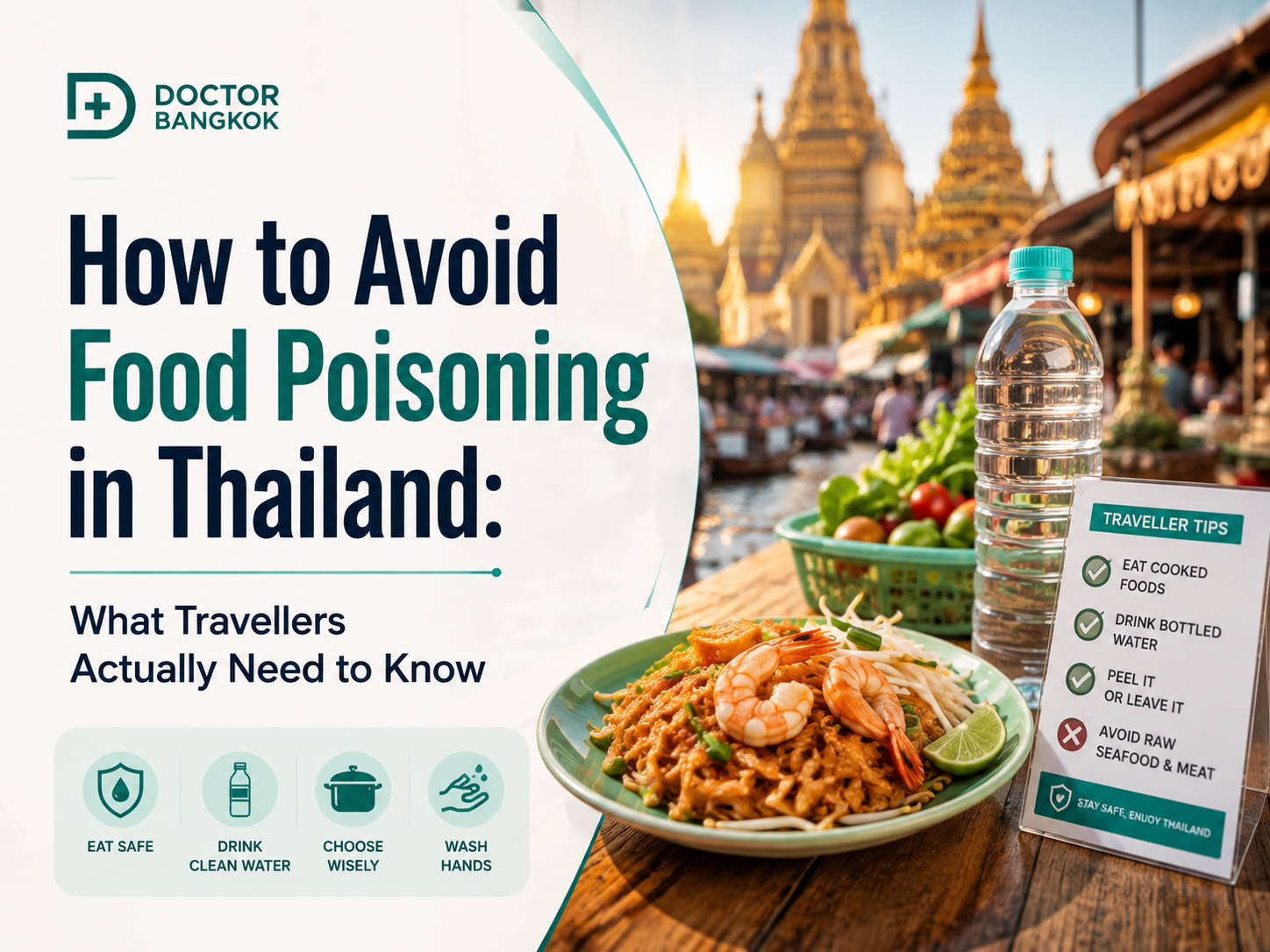
Most food poisoning in Thailand comes from a handful of specific bugs, not street food in general. Freshly cooked, piping hot food from busy stalls is usually safe. The real risks are food left sitting in the heat, raw shellfish, and tap water. If you have a high fever, blood in your stool, or cannot keep fluids down, see a doctor the same day.
You are planning a trip to Bangkok, or you are already here, and you are wondering whether every meal is a gamble. I hear this constantly from new arrivals. The honest answer is that food poisoning in Thailand is real but it is not inevitable, and most of the risk is avoidable once you know what to watch for.
What I tell my patients is this: the danger is not Thai food. It is specific situations, specific foods, and specific habits that you can learn to read quickly. This article covers all of them, plus when to stop managing things yourself and come in for help.

What Actually Makes You Sick
The bug behind most traveller’s stomach problems in Thailand is a type of E. coli called ETEC. It lives in contaminated food and water and causes the watery diarrhoea most people call Bangkok belly.
After ETEC, the next most common culprits are Campylobacter from undercooked chicken, Salmonella from eggs and meat, and norovirus, which spreads person to person as much as through food. If you ate raw or undercooked shellfish, Vibrio parahaemolyticus can make you very unwell within hours.
Most of these infections clear up on their own within one to three days with rest and fluids. Knowing the difference between "wait it out" and "get to a clinic" matters more than people realise.
High-Risk Foods to Watch in Bangkok
I am not going to tell you to avoid all street food. That is bad advice, and it would mean missing some of the best eating in the world. What I will tell you is where the actual risk concentrates.
Raw and undercooked shellfish are at the top of my list. Oysters, clams, and mussels served raw at beach restaurants or hotel buffets carry real contamination risk, especially in warmer months. Undercooked chicken, pork, and eggs come next. Som tum made with raw fermented crab is another one I see cause problems regularly.
Buffets are riskier than they look. Food sitting in a warming tray for two hours falls into what food scientists call the temperature danger zone, where bacteria multiply fast. The safest choice at any stall or restaurant is food cooked in front of you and served immediately.

Reading the Street Food Scene
Street food does not deserve its bad reputation. Vendors who have been at the same spot for years are usually running a clean operation. High turnover means food is not sitting around. A wok on all day means the heat is doing its job.
What I look for: is the food cooked to order in front of you? Is the stall busy? Does the vendor handle food and money separately? Those are better safety indicators than whether the stall has a health department sign.
What I avoid: pre-cooked food displayed at room temperature, cut fruit sitting uncovered in the sun, and blended drinks where you cannot see what ice is being used. Cold food should be cold. Hot food should be hot. That simple rule covers most situations.
The Ice Question
Most ice served in Bangkok restaurants, cafes, and established street stalls comes from commercial factories. It is made from treated water and is safe. You can usually identify it by shape: cylindrical tubes with a hollow centre, or uniform cubed blocks.
The ice to be cautious about is the kind that looks like it came from a convenience store bag or was chipped off a large block. This comes up more often at smaller smoothie stalls and market vendors.
When in doubt, ask for your drink without ice and stick to bottled water with a sealed cap.
Bangkok-Specific Risks Worth Knowing
The heat here is not just uncomfortable. It accelerates bacterial growth in food dramatically. Something safe for two hours in a cool climate may become a problem in forty minutes in Bangkok heat and humidity.
Monsoon season, roughly May through October, brings flooding and runoff that can contaminate fresh produce and water sources. I see more food-related illness during and just after heavy rains. Leafy vegetables and fresh herbs eaten raw carry higher risk during this period.
Bangkok’s 24-hour food culture means you can eat at 3am, which is wonderful. It also means some stalls have been operating for many hours with food held longer than ideal. Late-night eating from low-turnover spots carries more risk than a peak-hour meal.
Prevention Before You Arrive
Two food and water-borne illnesses have effective vaccines. Hepatitis A is spread through contaminated food and water and can cause serious liver illness. Typhoid is caused by bacteria in contaminated food and drink. Both vaccines are routinely recommended for travel to Thailand.
They do not protect against all food poisoning, but they take two significant risks off the table entirely. At Doctor Bangkok’s travel health clinic on Sukhumvit Soi 13, both are available as walk-in appointments. You can find more detail on what pre-travel vaccinations are recommended on the Thailand travel health page.
For longer stays, the evidence on probiotics is moderate rather than strong, but there is reasonable support for taking a daily probiotic before and during travel to reduce the chance and severity of traveller’s diarrhoea.
Smart Daily Habits That Actually Make a Difference
Hand hygiene is the single most effective thing you can do. Soap and water before meals, after using the bathroom, after handling money. Hand sanitiser is a backup when soap is unavailable, not a substitute.
Use bottled water with an intact sealed cap. This includes water for brushing your teeth if tap water quality at your accommodation is uncertain. Most Bangkok hotels have filtered water dispensers, which are generally fine.
Oral rehydration salts are available at every 7-Eleven in Thailand. Buy a box when you arrive and keep it in your bag. Starting oral rehydration early makes a real difference to how quickly you recover.
When Symptoms Do Not Clear Up
If symptoms are not improving after 48 hours, or if they are getting worse, that is not a sign to wait longer. It is a sign you likely need treatment.
Giardia is a parasite found in contaminated water and food. It does not cause sudden dramatic symptoms. It causes persistent loose stools, bloating, and fatigue that can drag on for weeks. Many patients come to me having been unwell for two or three weeks, thinking it was a slow recovery from a stomach bug. It is often Giardia, and it needs a specific medication to clear.
Some bacterial infections also need targeted antibiotics. Campylobacter, for example, does not respond to the antibiotics commonly used for other gut infections. Getting a prescription from a pharmacy without a proper assessment carries a real risk of getting the wrong drug. Antibiotic resistance is a growing issue in Thailand, and the wrong antibiotic fails to help while making the broader problem worse.
When to See a Doctor in Bangkok
Come in the same day if you have a high fever above 38.5 degrees Celsius alongside diarrhoea, blood in your stool, vomiting so frequent you cannot keep fluids down, or signs of serious dehydration such as dizziness when you stand, very dark urine, or confusion.
For severe dehydration, IV rehydration is the fastest and most effective treatment. Oral fluids alone may not be enough when you cannot keep anything down. At Doctor Bangkok, we can run IV fluids, assess you clinically, arrange a stool test if needed, and prescribe the right treatment based on what is actually going on.
If you are too unwell to travel, English-speaking doctors from Doctor Bangkok can visit your hotel across central Bangkok, usually within an hour. Most international travel insurance policies cover this, and we provide itemised receipts for claims.
Sick in Bangkok and not sure what to do next? Doctor Bangkok is open 24 hours a day, seven days a week, on Sukhumvit Soi 13, a short walk from BTS Nana station. English-speaking doctors. No appointment needed. If you are too unwell to travel, we can send a doctor to your hotel. Visit doctorbangkok.co.th or walk in any time.
FAQ
Is Bangkok street food actually safe, or is getting sick inevitable?
Most street food in Bangkok is safe when it is cooked to order and served hot. The risk is not the food itself but how it is stored and handled. Busy stalls with high turnover and visible cooking are consistently the safest option. With a few smart choices, most travellers eat street food every day without any problems.
How long should symptoms last before I see a doctor?
Mild symptoms that are improving usually resolve within one to three days with rest and oral rehydration. If you are not improving after 48 hours, if symptoms are getting worse, or if you have a high fever or blood in your stool, come in that day. Doctor Bangkok is open 24 hours and no appointment is needed.
Is the ice in Bangkok restaurants safe?
Commercial ice from established restaurants and cafes in Bangkok is generally safe. It is made from treated water at licensed factories. The higher-risk ice is found at some smaller street stalls or smoothie vendors where the source is less clear. When you are unsure, skip the ice and order a sealed bottled drink instead.
Should I get vaccinated before travelling to Thailand?
Yes, if you have not already. Hepatitis A and typhoid are both spread through contaminated food and water, and both have effective vaccines that are routinely recommended for Thailand travel. Doctor Bangkok’s travel health clinic offers both as walk-in appointments on Sukhumvit Soi 13, with full details available on the travel health page.
Can I treat food poisoning at my hotel, or do I need to see a doctor?
Mild cases with no fever and improving symptoms can be managed at your hotel with oral rehydration salts and rest. If symptoms are severe, you have a high fever, or you cannot keep fluids down, you need clinical care. Doctor Bangkok can send an English-speaking doctor to your hotel across central Bangkok if you are too unwell to travel, and we provide full documentation for travel insurance claims.
What is the difference between Bangkok belly and actual food poisoning?
Bangkok belly usually refers to mild, short-lived diarrhoea from a change in diet, water, or gut bacteria rather than a true infection. Food poisoning involves an actual pathogen and tends to be more intense and longer-lasting. If symptoms are severe or not improving, a clinical assessment will identify what is actually going on.
Dr. Ponlawat Pitsuwan
Physician, Doctor Bangkok
a private medical clinic in central Bangkok. He sees expats, residents, and travellers for travel medicine, gastrointestinal illness, fever assessment, and general medical consultations. His focus is straightforward, evidence-based care delivered in plain language.
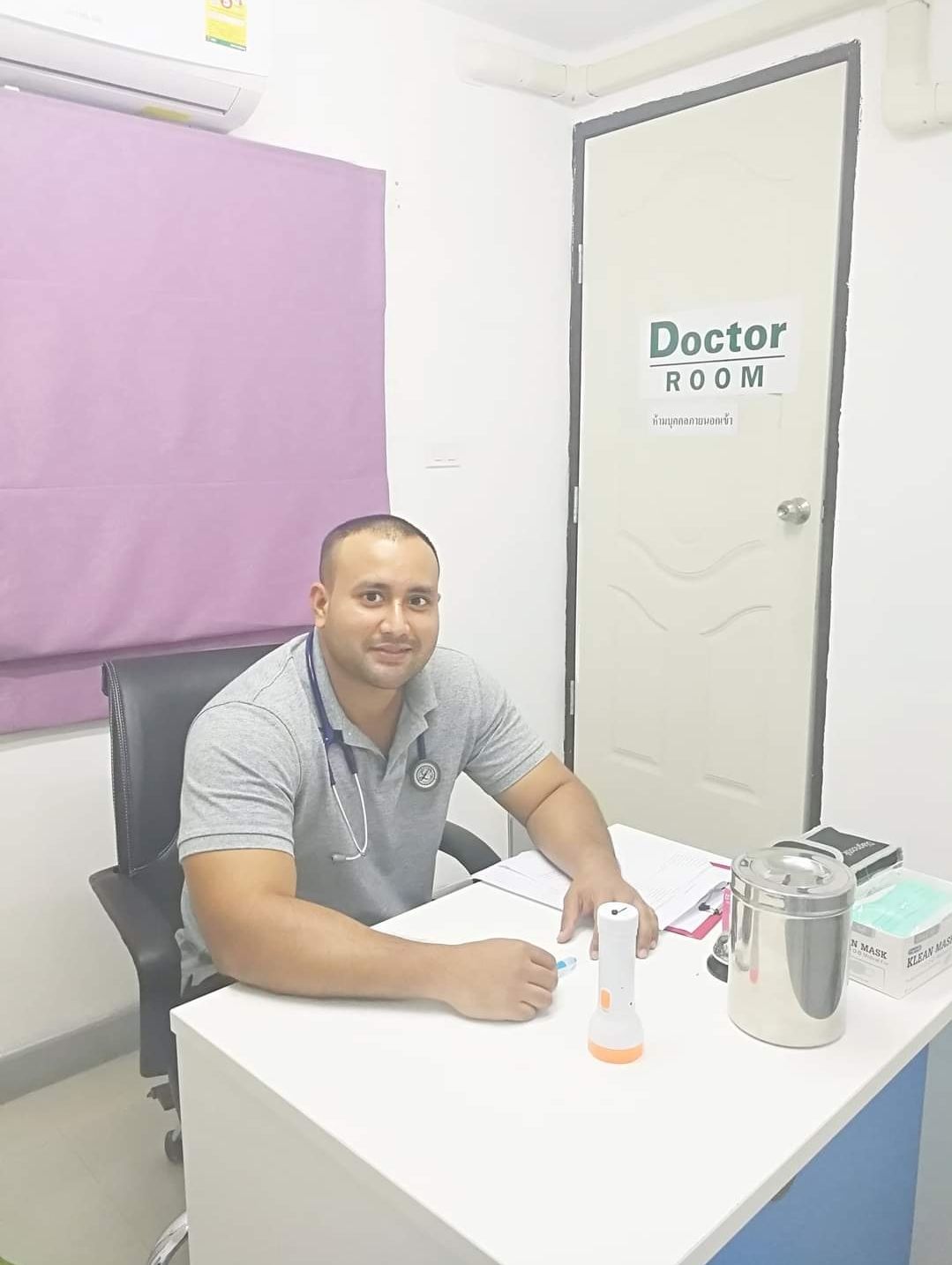
Dr. Ponlawat Pitsuwan is a physician at Doctor Bangkok, a private clinic in central Bangkok. He sees expats, residents, and medical tourists for general medicine, wellness consultations, and IV therapy. His focus is straightforward, evidence-based care delivered in plain language.