Clinically reviewed by Dr. Ponlawat Pitsuwan, Physician, Doctor Bangkok.
Last reviewed: August 2026
A full blood count checks your red blood cells, white blood cells, and platelets in a single blood draw. It can flag anaemia, infection, inflammation, and several other conditions before you feel seriously unwell. Results are usually ready within 24 hours at a private clinic in Bangkok. If something comes back outside the normal range, a doctor can explain what it means and whether you need any follow-up.
You have just received a blood test report. Maybe it was part of a routine health check, or your doctor ordered it because you have been feeling off. Either way, you are staring at a page full of numbers, abbreviations, and H or L flags, and you are not sure what any of it means.
That is exactly what this guide is for. A full blood count, also called an FBC or CBC, is one of the most common blood tests in medicine. It gives your doctor a snapshot of what is happening inside your blood, and often, what is happening in the rest of your body. Here is every major component in plain language so you can read your results with confidence.

FBC vs CBC — Same Test, Different Name
If your report says CBC rather than FBC, do not worry. They are the same test. FBC is the term used in the UK, Australia, and most of Southeast Asia, including Thailand. CBC is the American term. You will see both in Bangkok, depending on which lab or clinic ran the test.
What the Test Actually Measures
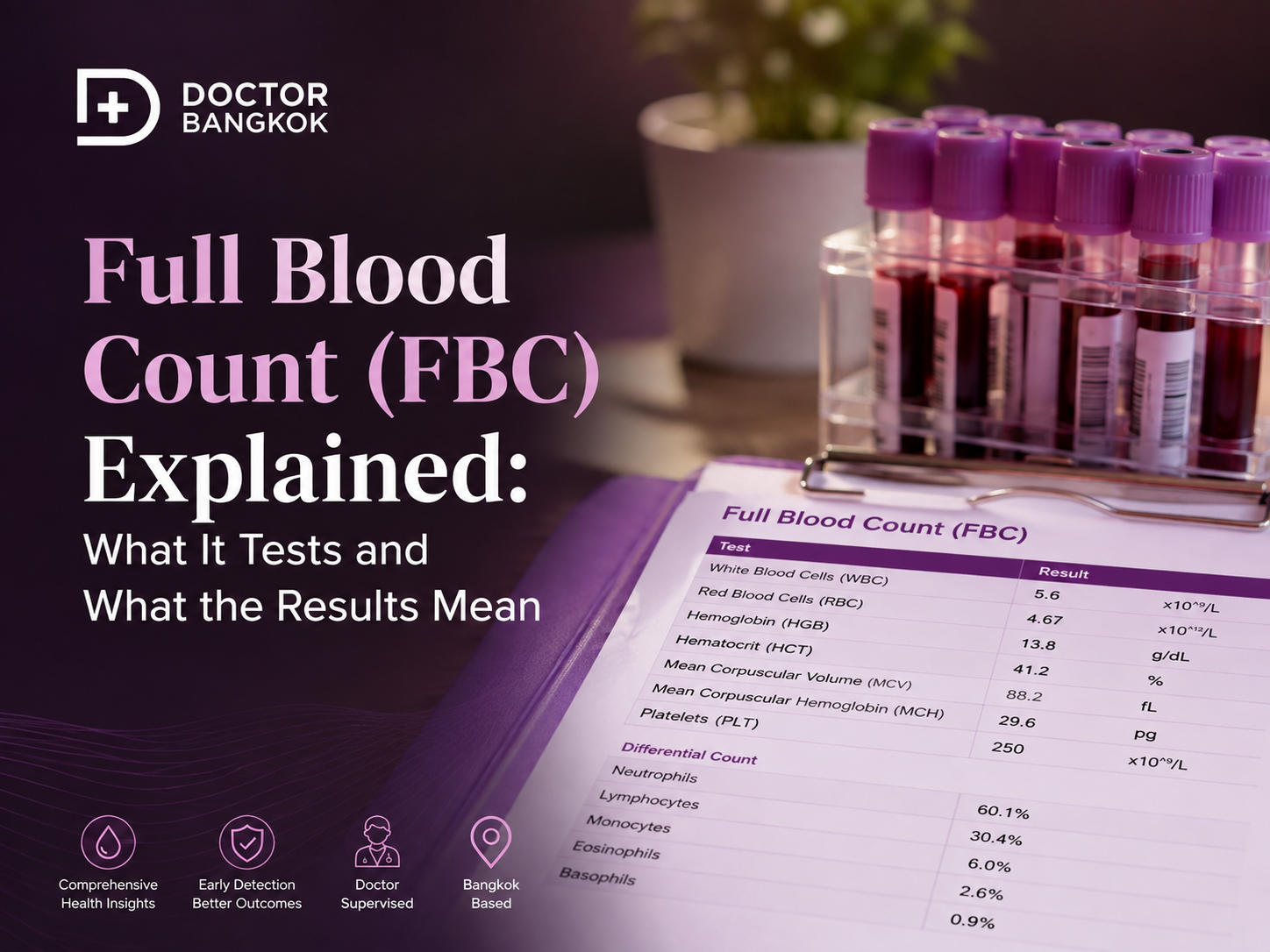
One blood draw. Several panels of information. Here is what your doctor is looking at.
Red Blood Cell Parameters
Your red blood cells carry oxygen around your body. When there are too few of them, or they are not working properly, you feel tired, breathless, or dizzy. This is anaemia, and an FBC is usually the first test that spots it.
The key numbers here are haemoglobin, haematocrit, and MCV. Haemoglobin is the protein inside red blood cells that carries oxygen. Haematocrit is the percentage of your blood made up of red blood cells. MCV tells your doctor how big your red blood cells are. Small cells usually point to iron deficiency. Large cells can suggest a B12 or folate problem.
White Blood Cell Parameters
White blood cells are your immune system. The total white blood cell count tells your doctor whether your immune system is quiet, active, or under pressure. The number that matters most is the differential, which breaks that total down into five cell types.
Neutrophils are the first responders, and a high count usually means bacterial infection or physical stress on the body. Lymphocytes tend to rise during viral infections. Eosinophils are particularly relevant in Thailand. A raised eosinophil count can mean an allergic condition, but it can also point to a parasitic infection. If you live in or travel through Southeast Asia and your eosinophils are elevated, that warrants a conversation with your doctor.
Platelet Parameters
Platelets are tiny cells that help your blood clot. Too low, and you bruise easily or bleed longer than normal. This is called thrombocytopenia. Too high, and the blood can sometimes clot too readily. If you have a fever alongside a low platelet count in Bangkok, do not wait to get it checked.

Why an FBC Matters More When You Are Living in Bangkok
This is something I talk about with expat patients regularly. Bangkok has specific health risks that do not always feature on a standard blood test checklist back home. The FBC is often the first clue that something tropical is going on.
Dengue fever is a good example. A falling platelet count combined with a low white blood cell count is a pattern I see often with dengue. If you have a fever and your results show both of those things, that is a reason to come in and get a specific dengue test done, not wait and see. You can book that through Doctor Bangkok’s diagnostics and blood testing service.
Parasitic infections are another one. Many expats have no symptoms but pick up intestinal parasites through food or water. Elevated eosinophils on a routine FBC can be the first sign. Dietary changes after moving here and changes in hydration can also shift your blood counts in ways that are worth monitoring over time.
How to Read Your FBC Report
Thai laboratory reports are printed in either Thai, English, or both. Most private labs used by clinics in Bangkok provide bilingual results. The format is consistent: the test name on the left, your result in the middle, and the reference range on the right. If your result sits outside that range, you will see an H for high or L for low.
Units follow international standards. Haemoglobin is measured in g/dL. Cell counts are reported in x10⁹/L. These are the same units used in the UK and most of Europe. One thing that matters: reference ranges vary slightly between labs and between men and women. Always compare your result to the range printed on your specific report, not a number you found online.
What Abnormal Results Can Indicate
An abnormal result does not mean something is seriously wrong. It means your doctor needs more information.
A low haemoglobin points to anaemia, but anaemia has many causes. Iron deficiency is the most common. B12 or folate deficiency is another. Chronic inflammation and kidney disease can also reduce haemoglobin. A high red blood cell count can result from dehydration, which is genuinely common in Bangkok’s heat, or from a lung condition.
High white blood cells usually mean infection or inflammation. Low white blood cells can follow a viral illness or be caused by certain medications. Low platelets alongside a fever in Bangkok should always prompt a same-day assessment. Dengue stays on the list until it is ruled out.
When an FBC Is Not Enough
The FBC gives your doctor a map. Sometimes the map shows an area that needs a closer look.
If your red blood cells look abnormal in number or size, your doctor may add iron studies or check your B12 and folate levels. If the white cell count is very high or the cells look unusual, a blood smear may be done, where a trained technician looks at your blood under a microscope. Further investigation is rarely needed from a routine FBC, but it does happen.
A single FBC is rarely the end of the conversation. It is usually the starting point. Our full blood count and diagnostics service is set up so a doctor reviews your results with you, not just hands you a printout.
Getting an FBC at Doctor Bangkok
No appointment is needed. You can walk in, have a blood draw, and have your results back within 24 hours. A doctor is available to go through them with you in English, because a number outside the reference range on its own tells only part of the story.
If your FBC is part of a broader health check, some panels, such as fasting glucose or a lipid profile, will require you to fast for eight to twelve hours beforehand. The FBC itself does not require fasting. Doctor Bangkok also works with international insurance providers, so bring your policy documents if you have coverage.
If you have been in Bangkok for more than a year and have not had any baseline blood work done, a routine FBC is a sensible place to start. You can find out more about what is included in our health check packages before you come in.
Need your FBC results explained by an English-speaking doctor in Bangkok? Doctor Bangkok offers walk-in blood testing with same-day or next-day results and a physician consultation to walk you through what the numbers mean. No referral needed. BTS accessible. Visit doctorbangkok.co.th/diagnostics/ to book or find out more.
Frequently Asked Questions
Do I need to fast before a full blood count test in Bangkok?
Fasting is not required for a standard FBC. If your blood test is bundled with fasting glucose, lipids, or liver function panels, you will need to fast for eight to twelve hours for those components. When in doubt, ask the clinic when you book so you do not have to come back a second time.
What does a high eosinophil count mean if I live in Thailand?
Eosinophilia can be caused by allergies, but in Southeast Asia it is also a recognised sign of parasitic infection. If your eosinophils are elevated and you live in or have been travelling through Thailand, your doctor will likely want to investigate further. Do not ignore it, even if you feel fine.
Can a full blood count detect dengue fever?
Not directly. But a low platelet count combined with a low white blood cell count is a pattern commonly seen with dengue. If you have those findings alongside a fever, you need a specific dengue antigen test. Come in the same day and do not wait for the fever to pass on its own.
My FBC report from a Bangkok clinic shows different units. Are the results still valid?
Yes. Thai labs use SI units, the same system used in the UK and Europe. Your results are internationally valid. If you are used to American lab formats, the units look slightly different but convert directly. Ask your doctor if any number looks unfamiliar.
How quickly can I get my FBC results in Bangkok?
At most private clinics in Bangkok, including Doctor Bangkok, results come back within 24 hours. Some panels are available the same day. Having a doctor available to explain the results matters as much as how quickly you receive them.
What is the difference between a high and low MCV on my report?
MCV tells your doctor the size of your red blood cells. A low MCV usually points to iron deficiency anaemia. A high MCV often suggests a B12 or folate deficiency. Either finding will usually lead to a few more targeted tests to confirm the cause.
I feel fine. Is there any point getting an FBC?
Yes, and this is something I tell patients often. Early anaemia, low-grade infection, and some blood disorders show up on an FBC before you feel any symptoms at all. If you have been in Bangkok for more than a year without any baseline blood work, a routine FBC is a reasonable and inexpensive step.
Dr. Ponlawat Pitsuwan
Physician, Doctor Bangkok
a private medical clinic in central Bangkok. He sees expats, residents, and medical tourists for general medical consultations, health checks, and diagnostic blood testing including full blood counts and comprehensive health panels. His focus is straightforward, evidence-based care delivered in plain language.

Dr. Ponlawat Pitsuwan is a physician at Doctor Bangkok, a private clinic in central Bangkok. He sees expats, residents, and medical tourists for general medicine, wellness consultations, and IV therapy. His focus is straightforward, evidence-based care delivered in plain language.