
Clinically reviewed by Dr. Ponlawat Pitsuwan, Physician, Doctor Bangkok.
Last reviewed: July 2026
Diarrhea after eating can be a one-off reaction to something you ate, or a sign of an ongoing condition like IBS or a food intolerance. If it happens occasionally, you can usually manage it at home with fluids and rest. If it happens after most meals, or comes with fever, blood in your stool, or signs of dehydration, you need a doctor.
You just finished eating and within minutes you are rushing to the bathroom. Maybe it happened after street food last night. Maybe it has been happening after almost every meal for weeks. Either way, you want to know what is going on and whether you need to worry.
Diarrhea right after eating is not always serious. But it is also not something to keep ignoring, especially in Bangkok, where the heat, the food environment, and the gut adjustment that comes with living here can all make things worse. This article covers why it happens, what the warning signs are, and what to do about it.

Why Diarrhea Can Hit Minutes After You Eat
Your gut has a built-in reflex. When food lands in your stomach, your colon gets a signal to move things along and make room. Most people feel a mild urge to go after a big meal. That is completely normal.
The problem is when this reflex fires too hard. In people with IBS, food intolerance, or an active gut infection, the signal gets amplified. Your colon contracts faster than it should, and the result is urgent, loose stool within 15 to 30 minutes of eating.
This is why diarrhea immediately after eating can feel so fast. It is not that your body digested the meal at speed. The reflex is already triggering movement in your lower gut before the food is even broken down.
Diarrhea After Eating in Bangkok — Why It Hits Differently Here
Bangkok is genuinely different from most cities when it comes to gut health. I say this not to alarm anyone, but because I see this pattern every week at the clinic.
Street food here is usually safe, but the bacterial load is higher than what most Western guts are used to. ETEC, short for enterotoxigenic E. coli, is one of the most common causes of traveller’s diarrhea in Thailand. Campylobacter, Salmonella, and norovirus are also frequent. Ice made from tap water, raw papaya in som tum, and food sitting out in 35-degree heat all carry risk.
There is also a gut adjustment period. Many expats feel fine for the first few weeks, then start having digestive issues once they begin eating more adventurously. That adjustment can take one to three months, and diarrhea after eating is one of the most common symptoms during that time.
The heat matters too. You lose fluids faster here than you would at home. A bout of diarrhea that might be uncomfortable elsewhere can tip you into real dehydration quickly in Bangkok.

Acute vs. Chronic — How to Tell Which You Have
This distinction matters for what you do next.
Acute diarrhea after eating started recently, usually within the last one to three days. It is most often caused by something you ate or drank. Food poisoning, traveller’s diarrhea, and viral gut infections tend to resolve within three to five days with fluids and rest. Most people who contact us after street food fall into this category.
Chronic diarrhea after eating keeps coming back. If you have had loose stools after meals for more than two to four weeks, something else is going on. The most common causes I see in long-term Bangkok residents are IBS with diarrhea (IBS-D), lactose or fructose intolerance, and bile acid malabsorption. Less often, it points to inflammatory bowel disease.
If you have been managing this yourself for more than a month without improvement, please stop self-treating and get assessed.
Common Trigger Foods in Bangkok That Make It Worse
Some foods are more likely to set off a sensitive gut. In Bangkok, the ones I see causing the most trouble are pad kra pao with extra chilli, som tum with fermented fish, strong Thai iced coffee, iced drinks made with local ice, and fruit shakes from street stalls that may use unfiltered water.
For people with IBS-D, high-FODMAP foods are a particular problem. These are foods that ferment quickly in the gut. Mango, ripe papaya, garlic, onion, and wheat-based noodles all fall into this category. A low-FODMAP approach, where you cut these foods temporarily and reintroduce them one at a time, can help identify your personal triggers. The right approach depends on what is actually causing your diarrhea, which is why I go through this with patients in person rather than giving a blanket list.
Dairy is worth mentioning separately. Lactose intolerance is very common in Southeast Asia, and many Thai dishes now include butter, cream, or condensed milk. If your diarrhea consistently follows coffee with milk or creamy curries, cut dairy for a week and see if things improve.
When to Stop Managing It Yourself and See a Doctor
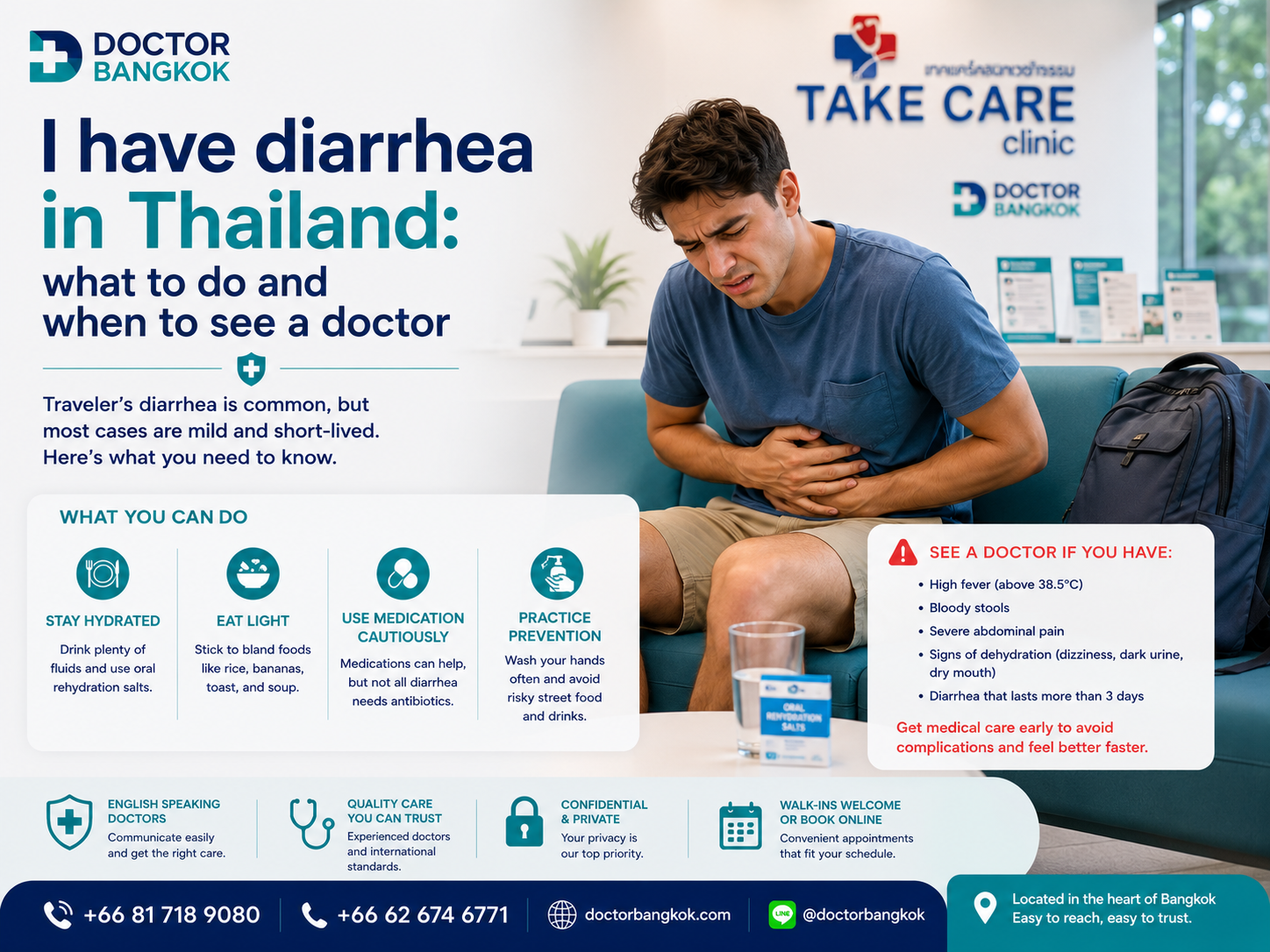
Most mild episodes, one or two loose stools after a specific meal with no fever and no blood, can be managed at home for 24 to 48 hours with oral rehydration salts and bland food.
See a doctor the same day if you have a fever above 38.5°C, blood or mucus in your stool, more than five episodes in one day, or signs of dehydration such as dizziness, dark urine, or a dry mouth. In Bangkok’s heat, dehydration moves quickly. Do not sit on it.
See a doctor within a few days if diarrhea keeps returning after meals over more than two weeks, if you are losing weight without trying, or if you have persistent cramping or bloating. These patterns need investigation, not just fluids.
What a Doctor at Doctor Bangkok Will Actually Do
Patients feel less anxious when they know what to expect, so here is the honest walkthrough.
When you come in for diarrhea after eating, we start with a conversation. How long has it been happening, how many times a day, any blood or mucus, any fever, what have you been eating, have you travelled recently. This takes about ten minutes and tells us a lot.
If we suspect an acute infection, we run a stool test and a blood panel. The stool test looks for bacterial pathogens and parasites. Results typically come back in two to three days, but in clear-cut cases we may start treatment based on your symptoms while we wait.
If you are dehydrated, we can give you IV rehydration therapy at the clinic. This works faster than drinking fluids, especially if you have been vomiting or the diarrhea has gone on for more than a day. Many patients feel significantly better within an hour.
For chronic or recurring diarrhea after eating, the workup is more involved. We look at dietary patterns, test for specific intolerances where appropriate, and work through the possibility of IBS or other gut conditions. It is not a single-appointment fix, but you leave with a clear picture and a practical plan.
Practical Steps You Can Take Right Now
If diarrhea hit you today, here is what I would tell you. Drink oral rehydration salts, not just plain water. Plain water does not replace the electrolytes you are losing. You can buy rehydration sachets at any pharmacy in Bangkok, including most 7-Elevens.
Eat light. Plain rice, toast, banana, boiled egg. Avoid spicy food, dairy, and alcohol until things settle. Avoid anti-diarrhea medications like loperamide if you have a fever or blood in your stool, as they can make bacterial infections worse.
Stay cool and rest. Bangkok heat makes dehydration worse and puts extra strain on your gut. If you feel dizzy, stop urinating, or your symptoms are getting worse after 24 hours, stop waiting and come in.
Getting diarrhea after eating in Bangkok and not sure what is causing it? Doctor Bangkok offers same-day walk-in consultations, stool testing, and IV rehydration therapy at our clinic in central Bangkok, a short walk from BTS. Our English-speaking doctors see this every day and can give you a clear answer fast. Visit doctorbangkok.co.th or walk in. We also offer hotel and home visits if you are not well enough to travel to us.
Frequently Asked Questions
Why do I get diarrhea immediately after eating Thai street food?
Rapid diarrhea after street food in Bangkok is most often an acute gut infection from bacteria like ETEC, Salmonella, or Campylobacter in contaminated food or ice. Bangkok’s heat speeds up bacterial growth in food left out and also accelerates dehydration. If it is a one-off with no fever, manage it with fluids and rest for 24 hours. If you have fever, blood in your stool, or it is not improving, come in for a same-day assessment.
Is it normal to have diarrhea every time after eating?
A single bowel movement soon after a meal can be a normal response. Diarrhea after every meal is not normal and usually points to something like IBS-D, bile acid malabsorption, or a food intolerance. If this has been your pattern for more than two to four weeks, get it assessed rather than continuing to manage it on your own.
How long should diarrhea after eating last before I see a doctor in Bangkok?
If it is mild and tied to one specific meal, you can monitor for 24 to 48 hours with oral rehydration. If you have a fever above 38.5°C, blood in your stool, or more than five episodes in a day, see a doctor the same day. Bangkok’s heat means dehydration comes on faster here, so act sooner than you think you need to.
Can stress cause diarrhea after eating?
Yes. Stress activates the connection between your brain and gut and can make the post-meal reflex much stronger. A lot of expats experience this in the early months of living in Bangkok, especially combined with unfamiliar food and disrupted routines. A consultation is still useful to rule out an infection or intolerance before putting it down to stress.
What is the difference between traveller’s diarrhea and postprandial diarrhea?
Traveller’s diarrhea is caused by a specific pathogen, usually bacteria, picked up through contaminated food or water, and typically resolves within three to five days with treatment. Postprandial diarrhea is the broader term for diarrhea triggered by eating, which can be acute like traveller’s diarrhea, or chronic and caused by IBS, food intolerance, or bile acid malabsorption. If you have been in Bangkok for months and still have diarrhea after meals, it is almost certainly not traveller’s diarrhea anymore.
Should I take anti-diarrhea tablets like loperamide?
Loperamide can help with cramps and urgency in mild cases with no fever and no blood in the stool. Do not use it if you have fever or blood in your stool, as it can make bacterial infections worse. If diarrhea after eating keeps coming back, loperamide is not the answer.
Dr. Ponlawat Pitsuwan
Physician, Doctor Bangkok
a private medical clinic in central Bangkok. He sees expats, residents, and medical tourists for diarrhea, gut infections, traveller’s illness, and general medical concerns. His focus is straightforward, evidence-based care delivered in plain language.
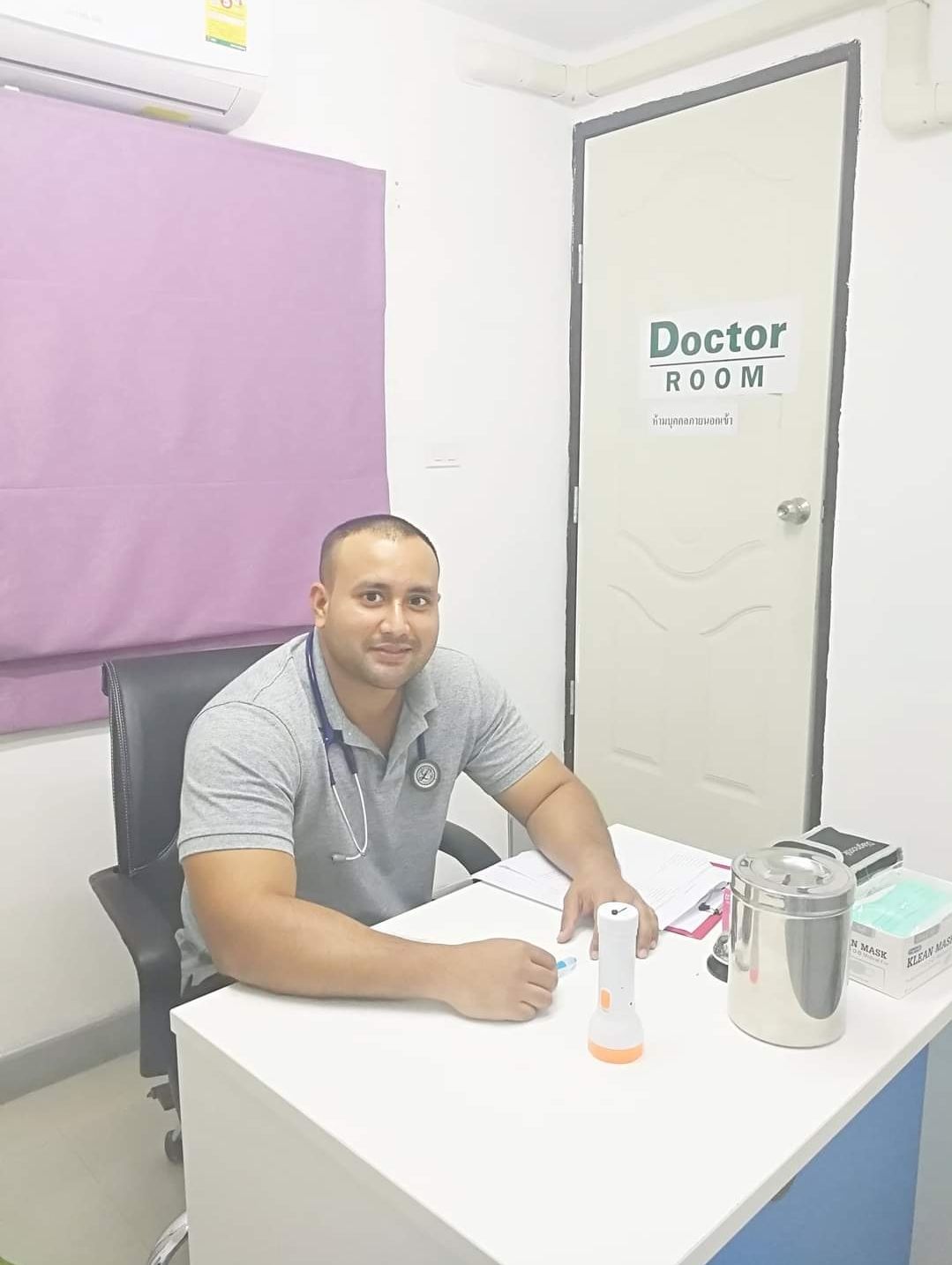
Dr. Ponlawat Pitsuwan is a physician at Doctor Bangkok, a private clinic in central Bangkok. He sees expats, residents, and medical tourists for general medicine, wellness consultations, and IV therapy. His focus is straightforward, evidence-based care delivered in plain language.