
Clinically reviewed by Dr. Ponlawat Pitsuwan, Physician, Doctor Bangkok. Last reviewed: July 2026
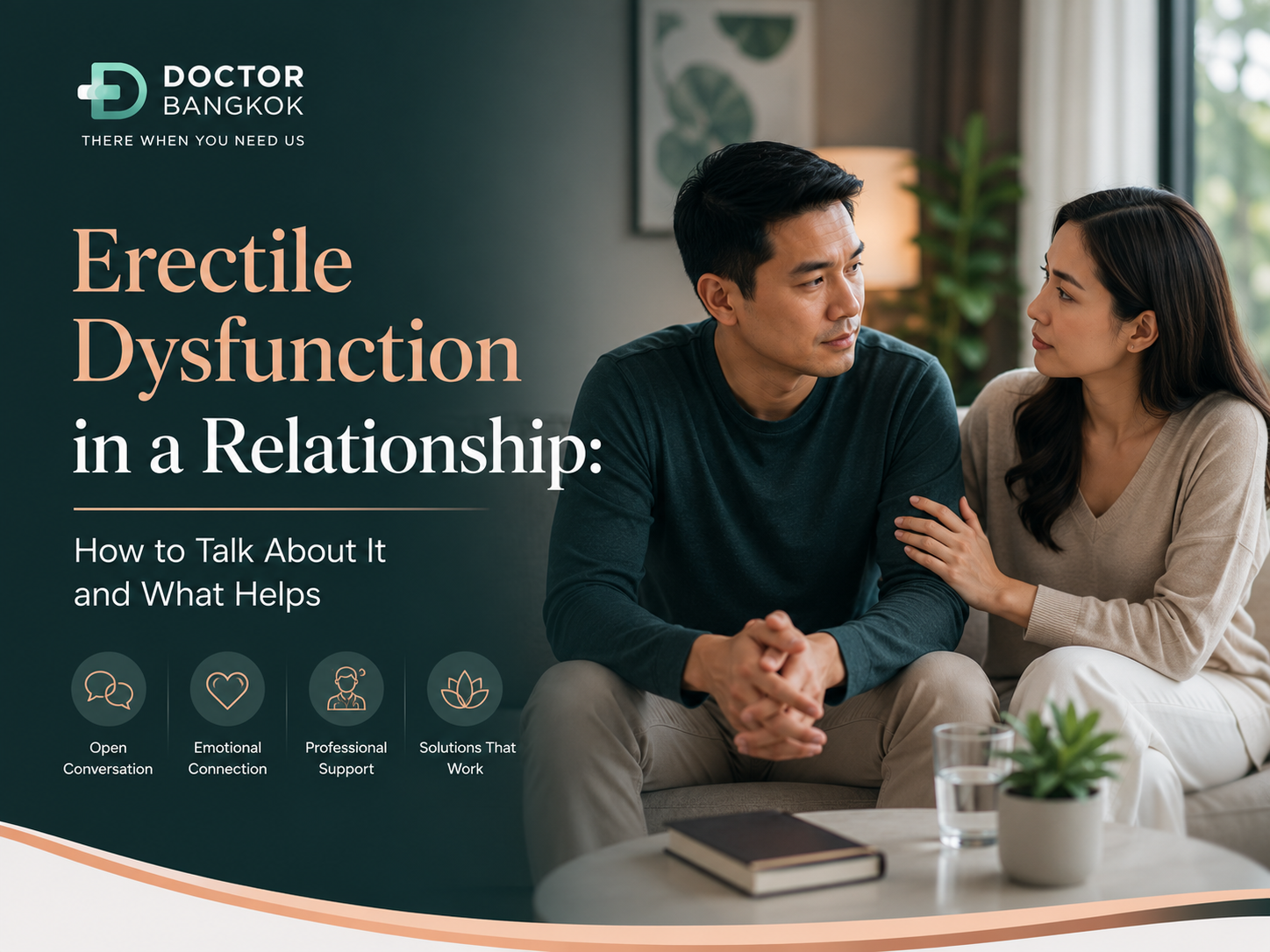
ED in a relationship is rarely just a bedroom problem. It affects both partners emotionally, and silence makes it worse. The good news is that ED is treatable in the vast majority of cases. Getting a proper diagnosis is the first step, and it is easier than most men expect.
If you are reading this, something has changed in your relationship and neither of you quite knows how to name it. Maybe erections have become unreliable. Maybe sex has quietly stopped happening. Maybe your partner thinks it is their fault, and you do not know how to tell them it is not. This is one of the most common things I see in men’s health consultations, and the pattern is almost always the same: the longer it goes unaddressed, the harder it becomes to talk about.
ED in a relationship is not just a physical issue. It sits in the space between two people and creates distance, confusion, and sometimes real pain. But it is also one of the most treatable conditions in men’s health. Most men who come in, get assessed, and follow through with treatment do significantly better, in and out of the bedroom.

Why ED Feels Like a Relationship Problem Even When It Is Not
The problem with ED is that it happens during the most intimate moments. That makes it personal, even when it is not. Your partner may wonder if they are less attractive to you. You may feel like you are letting them down. Neither of you is wrong to feel that, but both of you are likely misreading the situation.
ED has a physical cause in most men over 40. Blood flow issues, high blood pressure, diabetes, low testosterone, and regular alcohol use are the most common culprits. In younger men, performance anxiety plays a bigger role. Even then, the anxiety is almost never about the partner. It is internal pressure feeding on itself.
The relationship does not cause ED. But how a couple handles it can either help or seriously damage the relationship.
Psychological vs Physical ED: How to Tell the Difference
This is something I get asked often, and it matters because the answer shapes what you do next.
A simple starting point: do you get erections in the morning, or when you are alone? If yes, the physical side is largely working. The problem is more likely tied to anxiety, stress, or the pressure of performing with a partner. That does not make it less real. It just means the treatment focus shifts toward the mental and relational side of things.
If morning erections have also become rare, if you are over 40, if you smoke or drink regularly, or if your blood pressure or blood sugar is on the high side, a physical cause is more likely. You need a proper check, not just reassurance.
Many men have both. That is exactly why a clinical assessment matters more than self-diagnosing from a search result.

When ED Is a Warning Sign for Something Bigger
Here is something I tell patients that usually gets their attention. In men over 40, ED is sometimes the first visible sign of cardiovascular disease. The small blood vessels that supply the penis are among the first affected when arteries begin to stiffen or narrow. An erection problem today can be an early signal of heart disease or diabetes that has not yet been diagnosed.
This is not meant to alarm you. It is meant to give you a real reason to get checked. Catching a cardiovascular risk factor early is one of the best things you can do for your long-term health. Men who come in for ED and leave with a new diabetes or blood pressure diagnosis did themselves a genuine favour by showing up.
The Conversation: What Actually Helps
Most advice about this says "talk to your partner." That is true but not very useful on its own. Here is what I actually suggest.
Pick a time when you are not about to have sex, not stressed, and not mid-argument. Start with how you are feeling. Something like: "I’ve been struggling with something and I wanted to talk to you, because I don’t want it to come between us." That opens the door without putting either of you on the defensive.
Tell your partner directly that it has nothing to do with how you feel about them. That is the thing partners most need to hear, and most men never say it out loud. Then move quickly toward the practical: "I want to see a doctor and sort this out."
What not to say: anything that sounds like blame, dismissal, or a promise that it will fix itself. "It’s nothing, don’t worry" shuts the conversation down and delays getting help.
What Your Partner Can Do Without Making It Worse
If you are the partner reading this, start here. It is almost certainly not about you. I say that not to dismiss your feelings but because this misreading causes a lot of unnecessary pain.
The most helpful thing you can do is take the medical angle seriously. Frame a doctor visit as a health check. "I read that ED can sometimes be linked to blood pressure or testosterone. I think you should get checked just to be sure." That framing removes shame from the equation.
Do not pull back from physical affection altogether. Avoiding any touch because sex has become complicated makes both people feel worse. Closeness without pressure is one of the most stabilising things a couple can do while working through this. Offer to come to the appointment. Many men find that having a partner present makes the first step easier.
What Couples Can Do Together
This is not about fixing sex faster. It is about reducing the pressure that feeds the anxiety cycle.
Sensate focus is a technique from sex therapy where couples spend time being physically close without any expectation of sex. No pressure, no performance. There is moderate evidence it helps break the anxiety loop that sustains psychological ED.
Agree together that sex is off the table while you pursue treatment. That sounds counterintuitive, but removing the pressure often improves things faster than medication alone. When both partners are working toward something together rather than quietly managing failure, the dynamic shifts.
Treatment Options: What to Expect
Oral medications, specifically sildenafil and tadalafil, are the first-line treatment for most men and they work well. They do not create an erection on demand. They make it easier to respond to arousal naturally. Most men see clear improvement quickly.
If medication alone is not enough, or if there is an underlying hormonal or vascular issue, other options exist. These include low-intensity shockwave therapy and, where appropriate, testosterone replacement. A good doctor will talk you through what fits your situation after a proper assessment, rather than defaulting to one option for everyone.
Lifestyle changes matter too. Reducing alcohol, improving sleep, and managing blood pressure all have moderate evidence behind them for improving erectile function, particularly where lifestyle is a clear driver.
Getting Help in Bangkok: What Expats Should Know
Dealing with something this personal in a foreign country creates a specific kind of hesitation. I see it regularly with expats and medical tourists. Language barriers, unfamiliar clinic systems, and the nature of the problem itself mean many men put this off far longer than they should.
At Doctor Bangkok, all consultations are in English, fully private, and handled by physicians who see this routinely. A men’s health consultation covers your full medical and sexual history, relevant blood tests including a testosterone panel and metabolic screen, and a clear treatment plan. There is no referral needed and no awkward conversation at a front desk in Thai.
The clinic is BTS accessible and serves both Bangkok residents and visitors passing through. If you are ready to stop waiting and start dealing with this, booking a men’s health assessment at Doctor Bangkok is a straightforward next step. You come in, talk to a doctor, and leave with a plan.
Struggling with ED and not sure where to start? Doctor Bangkok offers private, English-language men’s health consultations in central Bangkok. We assess the physical and hormonal factors behind ED, walk you through all treatment options clearly, and handle everything with full discretion. Walk-ins welcome. Visit doctorbangkok.co.th or book online to arrange your consultation.
Can erectile dysfunction ruin a relationship?
ED itself rarely ends relationships. What damages relationships is the silence, avoidance, and unspoken assumptions that build up around it. Couples who treat it as a shared medical problem rather than a personal failure consistently do better. Getting help is the single most useful thing a couple can do.
Is my partner’s ED my fault?
Almost certainly not. In men over 40, most ED has a physical cause: blood flow, hormones, blood pressure, or metabolism. In younger men, performance anxiety is more common, and that anxiety is almost never about the partner. Feeling responsible is a natural reaction, but it is almost always the wrong reading of the situation.
How do I get my partner to see a doctor about his erectile dysfunction?
Frame it as a general health check rather than a sexual dysfunction appointment. Something like: "ED can sometimes be an early sign of blood pressure or hormone issues. I think it is worth getting checked." Offer to go with him. For expats in Bangkok, Doctor Bangkok offers private, English-language consultations for erectile dysfunction with no referral needed, which removes most of the reasons men give for putting it off.
What happens at an ED consultation in Bangkok?
A good consultation covers your medical history, lifestyle, and sexual history. The doctor will likely recommend blood tests including testosterone, blood sugar, and lipids. Treatment options are then discussed clearly based on your results. At Doctor Bangkok, the whole appointment is in English and handled with complete discretion.
Can stress and lifestyle cause ED in otherwise healthy men?
Yes, and this is very common, especially among expats in Bangkok where alcohol, late nights, and work stress are part of the social environment. Poor sleep, high cortisol, and regular alcohol all suppress testosterone and affect blood flow. Lifestyle-driven ED is often highly reversible. Getting assessed helps clarify how much of it is lifestyle versus something that needs medical treatment.
Do I need to take medication forever if I start treatment for ED?
Not necessarily. For men whose ED is primarily driven by anxiety or lifestyle, treatment may be short-term while underlying issues are addressed. For men with vascular or hormonal causes, ongoing management is more likely. Your doctor will give you a realistic picture based on your specific results, not a generic answer.
Dr. Ponlawat Pitsuwan
Physician, Doctor Bangkok
a private medical clinic in central Bangkok. He sees expats, residents, and medical tourists for men’s health concerns including erectile dysfunction, hormonal assessment, and general medical consultations. His focus is straightforward, evidence-based care delivered in plain language.
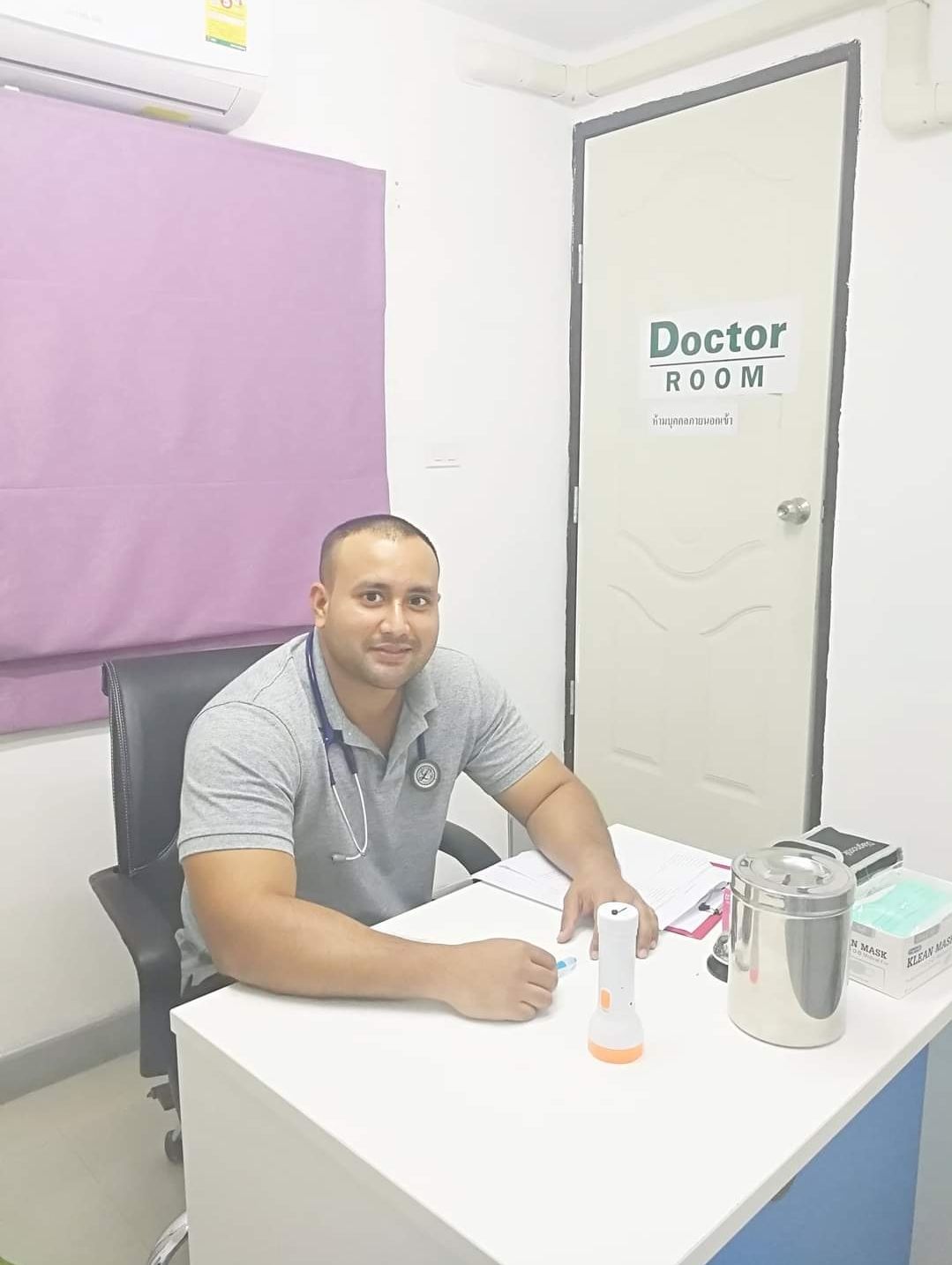
Dr. Ponlawat Pitsuwan is a physician at Doctor Bangkok, a private clinic in central Bangkok. He sees expats, residents, and medical tourists for general medicine, wellness consultations, and IV therapy. His focus is straightforward, evidence-based care delivered in plain language.